Cannonball Fishing Weights: How to Choose the Right Size
You use cannonball fishing weights to achieve fast, vertical drops and precise depth control, essential for salmon, steelhead, and deep-drop offshore fishing.
Their spherical design minimizes drag and reduces line drift, keeping bait in strike zones longer.
Typically made of lead or aluminum, many feature vinyl coatings to protect your boat deck from damage and corrosion.
Proper rigging with corrosion-resistant swivels guarantees stability in strong currents.
Explore how size selection and setup techniques optimize your fishing success.
Key Takeaways
- Cannonball fishing weights have a round, low-drag design for fast, vertical descent and precise depth control in currents.
- Lead is commonly used for its density, while aluminum offers a lighter, corrosion-resistant alternative.
- Vinyl coatings protect both the weight and boat deck from damage and saltwater corrosion.
- Attach weights via brass eyelets with corrosion-resistant swivels to ensure secure, twist-free rigging under heavy loads.
- Choose weight sizes based on target species and depth, typically 4–10 oz for salmon and 15–30 oz for deep-drop fishing.
What Are Cannonball Fishing Weights and How They Work?
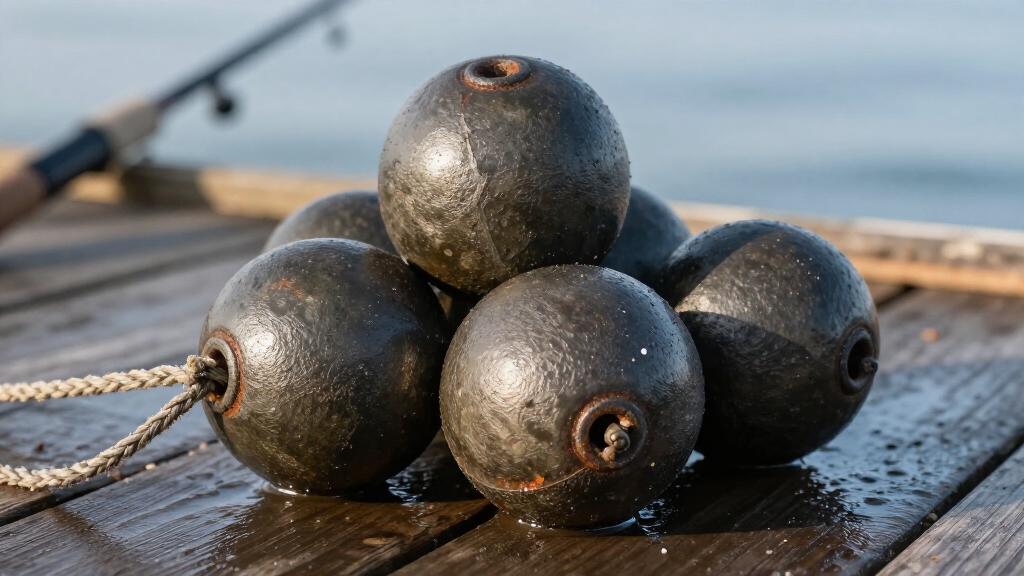
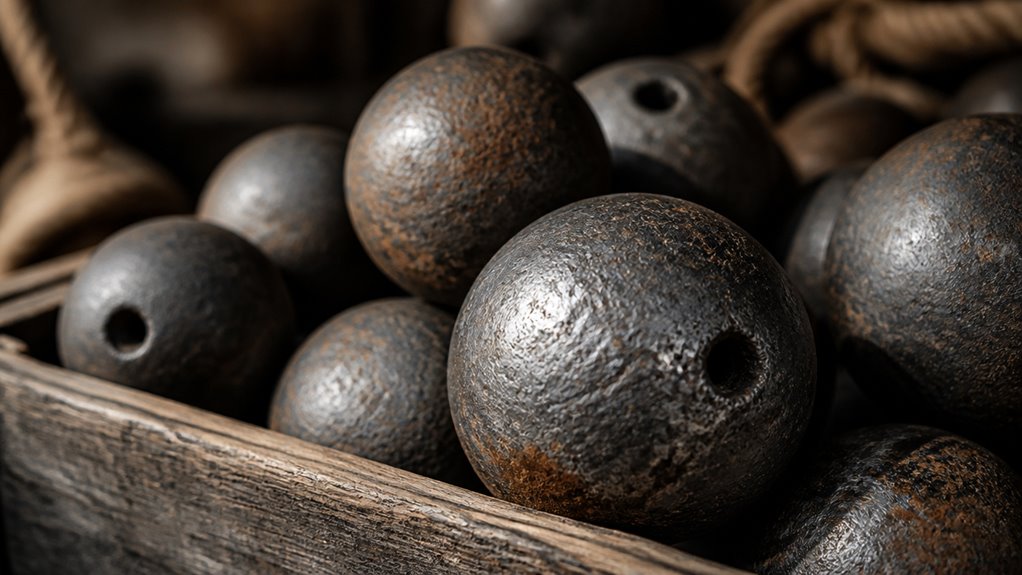
Although you might hear them called salmon balls or bounce ball weights, cannonball fishing weights are specifically designed round sinkers that drop straight with minimal resistance.
Known as salmon balls or bounce balls, cannonball weights drop straight with minimal resistance for precise fishing.
Their spherical shape minimizes drag, allowing them to reach the desired depth quickly and maintain stability in current.
Most models feature a brass eyelet at the top for secure rigging, while heavier versions incorporate stainless steel swivels to handle greater stress.
These weights excel in applications like salmon, steelhead, and deep-drop offshore fishing, where precise depth control is essential.
By reducing lateral drift, cannonball weights keep bait or lures consistently in the strike zone.
Their core design optimizes vertical descent and supports downrigger-style presentations, making them indispensable for anglers targeting species in varying water conditions.
Using swivels with the correct corrosion-resistant materials ensures durability and prevents line twists during heavy-duty fishing setups.
Materials and Coatings of Cannonball Weights
The reliable performance of cannonball fishing weights starts with their materials and coatings, which directly influence durability, handling, and environmental impact.
Most cannonball weights use lead due to its high density, ensuring a compact, fast vertical drop with minimal resistance. Some models feature aluminum bodies, offering lighter alternatives with reduced environmental concerns.
The construction typically involves a cast body integrated with a brass eyelet for secure rigging. For enhanced durability and deck protection, manufacturers apply vinyl coatings that resist chipping and corrosion.
Larger weights may incorporate stainless steel swivels or reinforced hardware to handle heavy loads and prevent line twist. Choosing weights with appropriate materials and coatings helps maintain performance integrity while reducing damage to fishing gear and boat surfaces during use.
Additionally, aluminum’s natural oxide layer provides superior corrosion resistance, extending the lifespan of fishing weights in harsh marine environments.
How to Handle Lead Cannonball Weights Safely?
When you’re dealing with lead cannonball weights, it’s super important to keep direct skin contact to a minimum. Always wash your hands afterward to help reduce any lead exposure.
If you’re planning to melt lead for DIY weights, make sure to do it outdoors. Good ventilation is key! And don’t forget to wear heat-resistant gloves and eye protection to protect yourself from burns and splashes.
To ensure safety, regularly inspect your equipment for any damage or leaks that could expose you to hazardous materials.
Lead Handling Precautions
Since lead cannonball weights involve direct handling of a toxic heavy metal, you must follow strict safety measures to minimize exposure risks.
Always wear disposable gloves to prevent skin contact and avoid inhaling lead dust or particles.
Handle weights in well-ventilated areas to reduce airborne contaminants.
Never eat, drink, or smoke while handling lead to prevent ingestion.
Wash your hands thoroughly with soap and water immediately after handling, even if gloves were worn.
Store lead weights separately from food and children’s areas to avoid accidental exposure.
Use dedicated tools and surfaces for lead handling, and clean them regularly to prevent cross-contamination.
For long-lasting use of your equipment, consider proper maintenance and timely repairs to ensure safety and effectiveness.
Safe Melting Practices
Although melting lead cannonball weights can be an effective way to customize sinker sizes, you must follow strict safety protocols to prevent burns, toxic exposure, and accidental fires.
Always melt lead outdoors or in a well-ventilated area to avoid inhaling harmful fumes. Use a lead-specific melting pot and avoid open flames near flammable materials.
Wear heat-resistant gloves, long sleeves, and eye protection to shield yourself from splashes and burns. Never leave molten lead unattended, and keep a fire extinguisher nearby.
Pour slowly to minimize splatter and ensure your workspace is clear of clutter. After cooling, wash your hands thoroughly to remove any lead residue.
Following these precise steps secures safe handling while casting or reusing lead cannonball weights. Additionally, proper lubrication with corrosion inhibitors can protect your fishing gear from damage caused by exposure to lead and moisture.
Choosing the Right Size Cannonball Weight for Your Fishing Conditions
When it comes to picking the right cannonball weight for your fishing spot, it’s all about matching it to the depth and current of the water. You want to ensure your bait stays in the sweet spot, right where the fish are most likely to strike.
Think about the species you’re targeting and their usual strike zone. This is key! Adjusting your weight helps keep your lure steady without creating too much drag. If you go with a weight that’s too light, your bait mightn’t get to where it needs to be.
On the flip side, a weight that’s too heavy can throw off your presentation completely. The weight and size of your fishing weight should be chosen carefully to ensure optimal performance in different water conditions.
Depth And Current
When selecting a cannonball fishing weight, matching the size to the fishing depth and water current is essential for peak performance. You want a weight that drops quickly yet resists being swept away by currents.
Consider these factors:
- Depth: Heavier weights reach deeper zones faster, minimizing drift.
- Current Speed: Stronger currents require larger weights to maintain position.
- Line Drag: Proper sizing reduces lateral movement, keeping bait in the strike zone.
- Rig Strength: Ensure your gear can handle the weight without compromising durability.
Additionally, understanding the corrosion resistance of your gear is crucial when fishing in saltwater environments to maintain performance and longevity.
Target Species Weight
Selecting the ideal cannonball weight hinges on understanding your target species’ behavior and habitat.
For salmon and steelhead, moderate weights between 4 and 10 ounces provide peak control in currents without spooking fish.
Heavier weights, ranging from 15 to 30 ounces, suit deep-drop fishing for halibut or walleye, ensuring your bait reaches the bottom quickly despite strong currents.
Consider the species’ typical depth and water velocity; heavier weights counteract drift, maintaining lure position in the strike zone.
Avoid excessive weight that compromises sensitivity and gear balance.
Match your cannonball weight with your rod, reel, and line strength to prevent hardware failure.
Choosing a rod and reel combo with appropriate line weight compatibility ensures optimal performance and prevents equipment strain.
Rigging Cannonball Weights: Tips for Secure and Effective Setup
Although rigging cannonball weights may seem straightforward, ensuring a secure and effective setup is essential for peak performance and safety. You must attach the weight firmly through the brass eyelet to prevent slippage during casting or retrieval.
Properly securing cannonball weights through the brass eyelet is crucial for safety and optimal performance.
Follow these key tips:
- Use strong, abrasion-resistant line or leader material rated above the weight’s load.
- Tie a precise, reliable knot such as the Palomar or improved clinch for secure attachment.
- Inspect the brass eyelet for damage or deformation before rigging to avoid failure.
- Position the weight to minimize lateral movement, ensuring vertical drop and stable tracking.
Additionally, matching the swivel or attachment strength slightly above the leader test helps maintain rigging reliability and prevents gear failure under stress.
Using Heavy-Duty Swivels With Large Cannonball Weights
When you’re working with large cannonball weights, it’s essential to use heavy-duty swivels that can handle loads of 700 pounds or more. This ensures your rigging is secure and reliable.
Make sure to attach the swivel directly to the sinker’s brass eyelet. This connection maintains strength and helps reduce line twist, especially when you’re under heavy strain.
And don’t forget, using proper rigging techniques is key. It not only maximizes the durability of your setup but also keeps your bait presentation smooth, even in those strong currents. Happy fishing!
For best results, selecting a barrel swivel is recommended to prevent line twist and maintain rig integrity under heavy loads.
Swivel Strength Ratings
Make sure your rig can handle the stress by choosing heavy-duty swivels rated for the weight of your cannonball sinkers. Using swivels with insufficient strength risks failure under load, especially when targeting large species or fishing in strong currents.
When selecting swivel strength ratings, consider these factors:
- Match swivel rating to or above the maximum weight of your cannonball sinker.
- Prefer stainless steel swivels for corrosion resistance and durability.
- Verify manufacturer load ratings, which can exceed 700 lb on heavy-duty models.
- Confirm swivel design minimizes line twist while supporting heavy loads.
Rigging Techniques
For securing large cannonball weights effectively, using heavy-duty swivels is essential to maintain rig integrity and prevent line twist under heavy loads. You should select swivels rated to match or exceed the weight of your cannonball sinker, often 700 lb or more for the heaviest models.
Attach the swivel directly to the brass eyelet atop the weight, ensuring a solid, corrosion-resistant connection. This setup allows the weight to drop vertically with minimal resistance while the swivel compensates for currents and bait movement, reducing line twist.
Use appropriate crimps or knots to secure the swivel to your mainline or leader, verifying all connections for durability. Proper rigging with heavy-duty swivels optimizes performance, stability, and safety during deep-drop or heavy-current fishing scenarios.
Why Salmon Anglers Prefer Cannonball Weights?
Salmon anglers choose cannonball weights because their round shape guarantees a quick, vertical drop with minimal resistance. This allows you to maintain precise depth control during trolling.
You’ll appreciate their efficiency in achieving consistent depth, which is vital when targeting salmon in varying currents. Here’s why salmon anglers prefer these weights:
- The low-drag profile minimizes line drift, keeping bait in the strike zone longer.
- A brass eyelet or stainless steel swivel assures secure rigging under heavy loads.
- The weight range suits various depths and current strengths, offering versatility.
- Durable coatings protect both the weight and your boat deck during handling.
How Cannonball Weights Improve Depth Control and Presentation?
Because cannonball weights feature a low-drag, round profile, they descend vertically with minimal lateral movement. This allows you to maintain precise depth control even in strong currents.
This streamlined shape reduces line drift, keeping your bait or lure stable within the strike zone longer. By rigging through the brass eyelet or integrated swivel, you guarantee secure attachment and smooth rotation, minimizing line twist.
The quick vertical drop enables you to reach target depths efficiently, improving presentation accuracy. Additionally, vinyl coatings protect your gear and boat deck from damage during handling.
When you select the appropriate weight size for current strength and depth, you optimize stability and control. This makes cannonball weights an essential tool for maintaining consistent, effective presentations in dynamic fishing environments.
Offshore and Deep-Drop Fishing With Cannonball Weights
Maintaining stable depth and minimizing line drift aren’t just important in rivers; they’re equally vital when fishing offshore or deep-drop environments. Cannonball weights excel here due to their low-drag round profile and quick vertical drop.
When you use them offshore, you benefit from:
- Precise depth control, keeping bait in strike zones over deep reefs or wrecks.
- Reduced lateral line drift in strong currents, improving bait presentation.
- Robust rigging options with brass eyelets or heavy-duty swivels, supporting weights up to 70 lbs.
- Efficient descent allowing quick bottom contact, letting you detect bites faster.
These characteristics make cannonball weights ideal for targeting species like halibut or deep-water cod. They ensure your rig maintains stability and responsiveness in challenging offshore conditions.
Protecting Your Boat Deck With Vinyl-Coated Cannonball Weights
When handling cannonball fishing weights on your boat, protecting the deck from damage is essential.
Vinyl-coated cannonball weights provide a durable barrier between the heavy lead sinkers and your boat’s surface, minimizing scratches, dents, and paint chipping.
The vinyl coating absorbs impact and prevents direct contact with the deck, which can degrade surfaces over time.
Additionally, the coating resists corrosion caused by saltwater exposure, extending the lifespan of both the weights and your boat’s finish.
When selecting vinyl-coated weights, make certain the coating is thick and uniformly applied to maintain protection during repeated use.
Using these coated weights reduces maintenance needs and preserves your boat’s value, making them a practical choice for anglers who prioritize both performance and equipment care.
Frequently Asked Questions
Can Cannonball Weights Be Used for Freshwater Species Other Than Salmon?
Yes, you can use cannonball weights for freshwater species beyond salmon, like steelhead and walleye. Their round shape provides quick vertical drops and stable tracking in currents.
This helps keep your bait in the strike zone longer. Just match the weight size to your fishing depth and target species.
Their low drag and strong rigging options make them versatile for various freshwater applications where precise depth control is critical.
How Do Environmental Regulations Affect the Use of Lead Cannonball Weights?
Environmental regulations often restrict or ban lead fishing weights due to lead’s toxicity and environmental persistence.
You’ll need to comply with local laws that may require switching to non-toxic alternatives like tungsten, steel, or aluminum weights.
Using lead weights illegally risks fines and environmental harm.
Always check regional guidelines before fishing, and consider coated or non-lead options to reduce ecological impact while maintaining effective rigging and weight performance.
Are There Eco-Friendly Alternatives to Traditional Lead Cannonball Weights?
You absolutely can’t ignore eco-friendly alternatives to lead weights. They’re everywhere! You’ll find options made from tungsten, steel, or even biodegradable composites that reduce environmental harm drastically.
These materials offer similar density and durability while avoiding lead’s toxicity. Switching to these alternatives guarantees you stay compliant with regulations, protect aquatic ecosystems, and maintain effective fishing performance without sacrificing strength or precision in your rigging setups.
What Maintenance Is Required to Prevent Corrosion on Brass Eyelets?
To prevent corrosion on brass eyelets, you should regularly rinse them with fresh water after exposure to saltwater.
Dry thoroughly to avoid moisture retention.
Apply a thin layer of corrosion-resistant lubricant or marine-grade grease to protect the surface.
Inspect eyelets frequently for signs of wear or pitting, and clean with a mild brass cleaner if needed.
Avoid abrasive tools that can damage the protective patina, ensuring longevity and reliable performance.
Can Cannonball Weights Be Customized for Specialized Fishing Techniques?
Yes, you can customize cannonball weights to fit specialized fishing techniques.
You might add heavier swivels for stronger drag resistance or use vinyl coatings to protect your deck and reduce noise.
Adjusting size and weight lets you match depth and current conditions precisely.
Some anglers even modify the eyelet orientation or add quick-attach rigging for faster setup.
Just make sure your modifications maintain structural integrity and compatibility with your fishing gear.
Why Use Cannonball Fishing Weights for Deep-Drop Fishing?
When you choose cannonball fishing weights, you’re not just adding gear. You’re mastering control over depth and presentation with precision.
Their unique design lets you fish confidently in challenging conditions, whether offshore or deep-drop. Just remember to handle lead weights carefully and consider vinyl coatings to protect your boat.
Like a steady anchor in turbulent waters, these weights give your setup the stability it needs. They turn every cast into a calculated step toward success.