What Colours Do Trout Like: Everything Anglers Need to Know
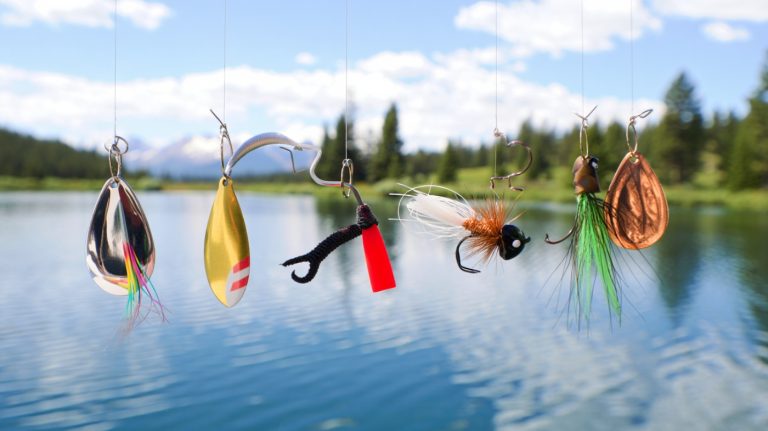
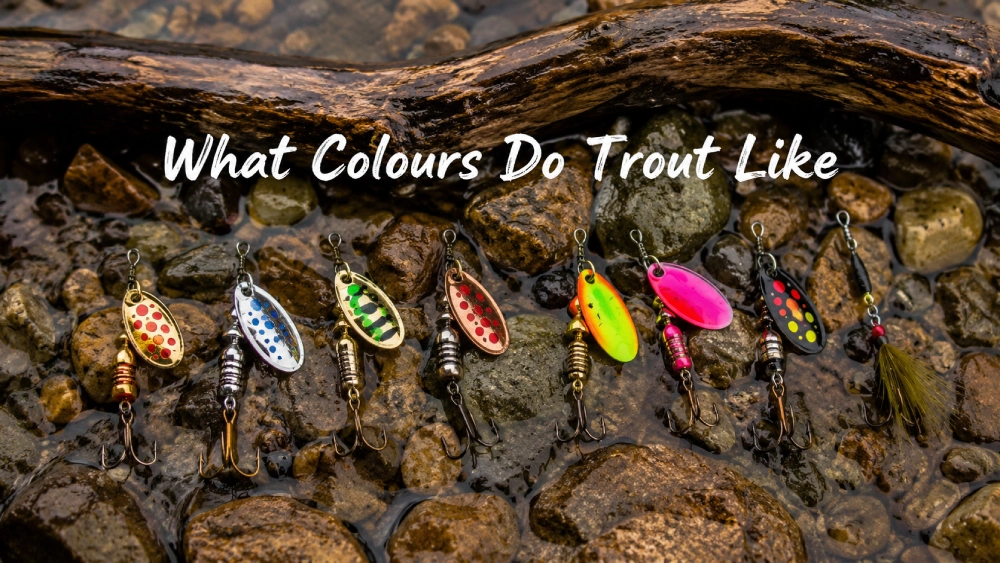
You should choose lure colors that match trout’s trichromatic vision, which favors blue, green, and fluorescent shades like chartreuse.
Reds and oranges work well only in shallow, clear water because red light fades quickly with depth.
In low light or stained water, focus on high-contrast colors such as black, white, or violet to improve visibility.
Understanding how depth and water clarity affect color perception can greatly increase your lure’s effectiveness. There’s more to consider for adapting your approach successfully.
Key Takeaways
- Trout see blue, red, and green best, with reds appearing brighter and blues most detectable in clear, shallow water.
- Fluorescent reds, oranges, and yellows attract trout in clear, shallow water due to high light penetration and forage mimicry.
- High-contrast colors like black and white improve lure visibility in low light, murky water, or deeper depths where color fades.
- Chartreuse and green hues mimic natural prey and remain effective in moderate clarity and low-light conditions.
- Color effectiveness diminishes rapidly with depth and turbidity, so matching lure color to water clarity and contrast needs is essential.
How Trout See Colors Underwater?
Because trout rely on trichromatic vision sensitive to blue, red, and green wavelengths, understanding how they perceive colors underwater is essential for selecting effective lures.
Their vision excels at detecting blues, which appear most vivid, and reds, which are brighter to them than to humans. Greens are less vivid but perceived as natural, especially by brown and rainbow trout.
However, color visibility diminishes rapidly with depth: red is absorbed around six feet, appearing gray beyond that, while blue fades near four feet. This limits trout’s color discrimination to short distances in clear, shallow water.
Additionally, trout are more sensitive to the violet spectrum. When choosing lures, you must factor in these optical properties to optimize color visibility within their perceptual range.
Unlike walleye, trout maintain better color discrimination at moderate depths due to their trichromatic cone sensitivity.
Top Lure Colors for Clear Water
How do you select the most effective lure colors for trout in clear water?
You should prioritize colors that remain visible under high light penetration and minimal turbidity.
Fluorescent red, orange, and yellow stand out due to their high visibility and contrast, making them effective in shallow, sunny conditions.
Silver and gold mimic natural forage reflections, attracting trout through brightness and flash.
Olive and green hues simulate aquatic vegetation and prey, appealing to trout’s innate preference for natural colors.
Black and white provide strong contrast profiles, especially at varying depths.
Since color absorption varies, red fades beyond six feet and blue beyond four.
You must match lure depth with color longevity.
Combining these insights guarantees your lure color choices align with trout’s visual sensitivity and environmental optics in clear water.
Additionally, using lures with UV-reactive sleeves can enhance visibility and attractiveness in clear water conditions.
Why Red and Orange Work in Shallow Water?
When you fish in shallow water, red and orange lures excel due to their visibility within the limited depth range where these colors retain their vibrancy.
Red wavelengths are absorbed quickly beyond six feet, but in shallow zones, their brightness triggers trout’s attraction effectively.
Orange, slightly more persistent, enhances detection under bright conditions.
Trout’s trichromatic vision, particularly sensitive to red and orange in clear water, makes these colors stand out, mimicking prey signals.
Trout tend to feed more during the day, especially in sunny spots, which makes the use of these colors even more effective in daylight feeding behavior.
| Color | Max Visibility Depth | Trout Response |
|---|---|---|
| Red | Up to 6 feet | High attraction, vivid |
| Orange | Up to 10 feet | Strong contrast |
| Yellow | Up to 10 feet | Moderate attraction |
| Blue | Up to 4 feet | Less effective shallow |
Use red and orange lures strategically in clear, shallow water for peak results.
Using Chartreuse and Green to Mimic Natural Prey
Employing chartreuse and green lures effectively capitalizes on trout’s perception of these colors as natural and edible.
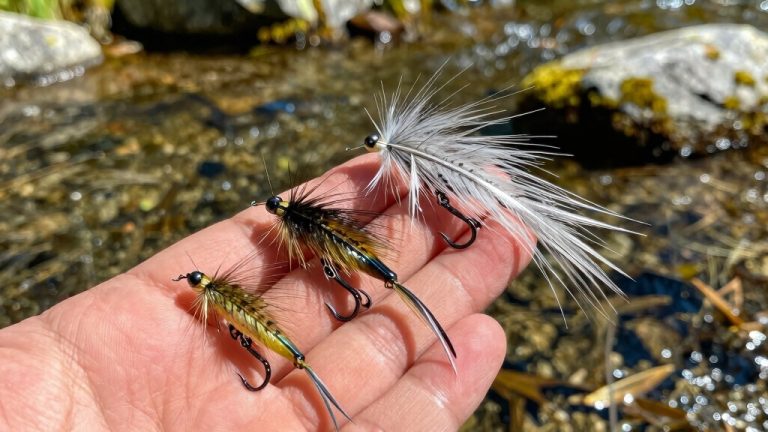
These hues closely resemble common aquatic prey like mayflies, caddisflies, and small crustaceans, which predominantly exhibit greenish tones.
Chartreuse, a fluorescent yellow-green, remains visible in various water clarities, enhancing lure detectability beyond the limited distance trout can discern color.
Green blends naturally into freshwater environments, aligning with trout’s trichromatic vision that favors blue and red, while perceiving green less vividly but still recognizing it as a food signal.
When you fish in green or algae-rich waters, these colors mimic the ambient environment, reducing suspicion and increasing strikes.
Using chartreuse and green lures consequently employs an adaptive strategy grounded in trout’s sensory biology and ecological feeding behavior.
Choosing line colors that match water conditions can further enhance lure effectiveness by minimizing spooking and improving presentation.
Best Lure Colors for Low Light and Dusk Conditions
When fishing in low light or dusk conditions, you’ll want to consider your lure colors carefully.
Dark colors like black and deep blue really stand out against the fading light, creating strong silhouettes that make your lure more visible.
Another great option is fluorescent lures. They work wonders by reflecting any available light, which can be especially helpful in clear water as the sun sets.
And don’t forget about high-contrast patterns! Combining colors like black and white can really sharpen your lure’s profile, making it even more enticing in those dim conditions.
Additionally, slightly stained water during rainy or low-light conditions can reduce trout wariness, making them more receptive to high-contrast lures and increasing your chances of a successful catch.
Effective Dark Color Choices
Although trout color vision diminishes in low light, dark hues like black, blue, and violet remain highly effective lures during dusk or overcast conditions.
These colors provide strong contrast against dim backgrounds, enhancing lure visibility through silhouette detection rather than color recognition.
Black, in particular, creates a distinct outline that trout can easily discern, even at reduced light levels.
Blue and violet align with trout’s heightened sensitivity to shorter wavelengths, making them advantageous in fading light.
You should prioritize lures with sharp dark/light contrasts over blended or muted tones, as contrast triggers trout’s predatory response more effectively.
Additionally, these dark colors maintain visibility at greater depths when ambient light is scarce, ensuring your lure stands out in low-visibility environments typical of dawn, dusk, or cloudy days.
This effectiveness is further supported by trout’s natural circadian feeding peaks that optimize their activity during low light conditions.
Fluorescent Lure Advantages
When light levels drop during dusk or in shaded environments, fluorescent lure colors such as red, orange, and yellow enhance visibility by emitting wavelengths that penetrate deeper into clear water.
These colors stimulate trout’s trichromatic vision, particularly in the red and orange spectra, which remain discernible beyond typical absorption depths.
Fluorescent pigments effectively amplify available light, increasing contrast without relying solely on ambient illumination.
This optical advantage improves lure detection in low-light scenarios, where standard colors may lose vibrancy.
While red wavelengths are absorbed quickly, fluorescence compensates by re-emitting light, extending visual range.
By selecting fluorescent lures, you exploit trout’s sensitivity to specific spectral bands during dusk or shaded conditions, optimizing attraction and strike rates.
This makes fluorescent colors scientifically superior for clear water low-light fishing.
Additionally, understanding trout’s preference for darker water habitats can guide the effective use of fluorescent lures in these environments.
Contrast Importance In Low Light
Consistently, contrast plays a critical role in lure visibility during low light and dusk conditions, where ambient illumination is minimal.
You’ll notice trout are more responsive to distinct color contrasts than blended hues in these settings.
Since light absorption reduces color differentiation, using lures with high contrast guarantees they stand out against the dim background.
Consider these factors when selecting colors:
- Black and white combinations create sharp profiles easily distinguished by trout.
- Dark colors like black provide defined silhouettes in near-darkness.
- Fluorescent attractors enhance visibility in clear, deep water low light.
- Green mimics natural forage, effective during dawn and dusk low light.
Additionally, adjusting lure presentation based on water conditions can significantly increase your catch rate in low light situations.
Using Black, White, and Purple for Contrast in Low Light
Because trout rely heavily on contrast to detect prey in low-light environments, using black, white, and purple lures can markedly improve your chances of attracting them.
Trout detect prey through contrast, making black, white, and purple lures highly effective in low light.
Black provides a strong silhouette against dim backgrounds, enhancing visibility by creating a sharp outline.
White offers a bright contrast that stands out even when ambient light is minimal, facilitating prey recognition.
Purple, perceived through trout’s trichromatic vision as a combination of blue and red, remains visible longer at depth due to slower absorption of blue wavelengths.
These colors exploit trout’s sensitivity to contrast rather than relying solely on hue, which diminishes with decreasing light.
Additionally, trout’s predation behavior is influenced by water temperature, which affects their metabolic demand and activity levels, making lure color choice even more critical.
Which Lure Colors Stand Out in Dirty or Stained Water?
Low-light environments demand lures with high contrast to attract trout. However, murky or stained water presents a different set of visual challenges.
In these conditions, light penetration diminishes, reducing color discernment. Fluorescence becomes ineffective due to UV light scattering. Focus on colors and patterns that maximize silhouette visibility and contrast instead of relying on hue.
Consider these factors when choosing lure colors in dirty water:
White lures provide excellent visibility by reflecting available light.
Dark colors like black create a strong, defined outline.
Fluorescent colors lose effectiveness as UV light is scattered.
Color importance decreases; shape and contrast dominate trout’s detection.
Using a tippet with appropriate diameter can also improve presentation and increase the chance of a strike in challenging water conditions.
How Depth Changes What Trout See?
As you dive deeper underwater, something interesting happens with colors. For instance, red completely disappears by about six feet. Can you believe it?
Then, as you go a bit deeper, orange, yellow, and green hang around for a while longer, sticking around until about ten feet before they start fading to gray.
This absorption of light really affects how trout see things. Because of it, the colors you choose for your lure mightn’t be as visible at certain depths. So, knowing how these changes work can really help you pick out colors that trout can actually see at the depth you’re fishing.
Color Absorption By Depth
When you fish at varying depths, you need to take into account how water absorbs different colors of light, altering what trout can see. Water selectively filters wavelengths, causing color visibility to diminish as you go deeper.
For instance, red light is absorbed quickly, making red hues appear gray beyond six feet. In contrast, blue and green penetrate further, remaining visible at greater depths. This selective absorption influences trout’s color perception and your lure choice.
Red is absorbed by six feet, losing visibility. Orange, yellow, and green maintain color up to ten feet. Beyond four meters, distinct colors fade into gray. Blue wavelengths penetrate deepest, enhancing lure visibility.
Adjusting lure colors accordingly improves your chances at various depths.
Visibility Limits Underwater
Understanding how depth affects color absorption leads directly to examining the overall visibility limits underwater and how they shape what trout actually see.
As you descend, water attenuates light, reducing both brightness and color range. Red disappears by six feet, blue by four, forcing trout to rely increasingly on contrast rather than hue. This limits your lure color effectiveness with depth.
| Depth Range | Dominant Visible Colors | Trout Visual Perception |
|---|---|---|
| 0–3 feet | Full spectrum | Trichromatic, vivid colors |
| 3–6 feet | Blue, green | Reduced red detection, contrast |
| 6+ feet | Blue, gray scale | Monochromatic, silhouette focus |
Adjust your lure choices accordingly to match these visibility constraints for prime trout attraction.
Matching Lure Colors to Water Clarity and Light
Although trout respond differently to colors depending on water clarity and light conditions, selecting the right lure color markedly improves your chances of a catch.
You need to take into account how water absorbs wavelengths and how light penetration varies with clarity.
In clear, shallow water, fluorescent reds and oranges remain visible.
Deeper or stained water diminishes color perception.
Contrast becomes essential in low light or murky water, where dark or white lures stand out best.
Use fluorescent red, orange, or yellow in clear, bright conditions for maximum visibility.
Choose black or dark blue lures during low light to enhance contrast.
Opt for white or dark colors in stained water where colors fade rapidly.
Match lure colors to natural forage hues when possible to increase realism and attraction.
Switching Lure Colors by Conditions: Practical Tips
Want to catch more trout? It’s all about picking the right lure colors based on the conditions around you. Think about the light and water clarity—it really makes a difference!
When you’re fishing in clear, bright water, go for colors like fluorescent red or orange. These shades really stand out and attract attention. On the flip side, if you’re in low light or dealing with stained water, darker or contrasting colors can work wonders.
Adjust Colors For Light
When light conditions change, switching lure colors becomes essential to maintain visibility and effectiveness. You need to take into account how light intensity and spectrum influence trout’s color perception. Red fades beyond six feet, and blues remain vivid at deeper depths. Adjust your lures based on ambient light to optimize attraction.
Use black, blue, or violet in low light for strong contrast and visibility. Choose fluorescent colors like orange or yellow in bright, clear conditions to enhance detectability. Favor green during dawn or dusk when light is dim but still penetrates. Avoid colors like red in deeper or shaded water where they quickly lose visibility.
Match Water Clarity
Adjusting lure colors based on water clarity markedly influences trout attraction and strike rates.
In clear water, you should prioritize fluorescent reds, oranges, and yellows. These colors remain visible and mimic natural forage.
Since red light penetrates only about six feet, use brighter colors for deeper casts.
In stained or dirty water, switch to high-contrast colors like white or black. These maintain visibility despite limited light penetration and color absorption.
Fluorescent colors lose effectiveness in turbid water due to UV scattering.
When water clarity is moderate, chartreuse and green provide natural profiles trout recognize.
Always assess water clarity first, then select lure colors that optimize contrast and visibility within the specific light absorption characteristics and depth. This will enhance your chances of triggering strikes.
Frequently Asked Questions
How Do Trout Respond to Lure Color Movement Versus Color Itself?
You’ll find trout respond more strongly to lure movement than color alone. Motion triggers their predatory instincts.
While color aids detection, especially in specific light and water conditions, it’s the subtle, natural movement patterns that compel strikes.
You should prioritize realistic action and vibration in your lure presentation. Trout rely on visual cues combined with lateral line sensitivity, making movement a critical factor in provoking a response beyond mere color appeal.
Can Water Temperature Affect Trout Color Preference?
Yes, water temperature can influence trout’s color preference indirectly by affecting their metabolism and activity levels.
In colder water, trout may become less active, favoring slower, more natural-colored lures like green or olive to conserve energy.
In warmer water, increased activity might make them more responsive to brighter or fluorescent colors.
Do Trout Color Preferences Change Seasonally?
You might find that trout subtly adjust their color preferences as the seasons shift.
This seasonal variation reflects changes in water clarity, light availability, and aquatic vegetation.
In spring and summer, brighter colors like orange and chartreuse perform well, matching vibrant surroundings.
As autumn and winter approach, trout favor darker, muted tones such as black and olive, aligning with diminished light and murkier waters.
Your lure choice should adapt accordingly.
How Does Lure Size Impact Trout Attraction Compared to Color?
Lure size markedly affects trout attraction by influencing visibility and perceived prey size.
You’ll find larger lures create stronger visual cues but may intimidate wary trout. Smaller lures mimic natural forage more accurately, increasing strike likelihood.
Compared to color, size impacts detection from greater distances and triggers predatory responses differently.
Optimizing both size and color according to water clarity, depth, and trout behavior enhances your fishing success effectively.
Are There Differences in Color Preference Among Trout Species?
Yes, different trout species show distinct color preferences based on their habitat and vision.
Brown and rainbow trout favor green hues, associating them with natural, edible prey.
Cutthroat trout respond well to fluorescent colors under varied light.
You’ll notice that species in clearer waters prefer brighter colors like red or chartreuse.
Those in stained waters rely more on contrast, such as black or white, due to limited color visibility at depth.
How Water Clarity Affects the Colors Trout See and Strike
When fishing for trout, you’ll want to adjust lure colors based on water clarity and light.
For example, in clear water on a bright day, using natural greens mimics prey effectively, increasing your catch rate.
Conversely, in murky water or low light, bright chartreuse or orange lures stand out better.
By understanding how trout perceive colors at different depths and conditions, you can precisely match your lure choice to maximize your success on the water.