
Where Do You Catch Mackerel: Everything You Need to Know
You catch mackerel in coastal waters where temperatures are between 8°C and 20°C, typically at depths of 50 to 80 feet.
Look for moderate to strong currents that bring oxygen and plankton near structures like piers, reefs, estuaries, and rocky shores.
Clear water helps you spot feeding schools drawn by nutrient upwellings.
Mackerel migrate seasonally, following temperature shifts and food availability.
To optimize your catch, understanding their preferred habitats, movements, and techniques can make all the difference.
Key Takeaways
- Mackerel are commonly caught near offshore reefs, rocky shores, piers, and underwater shelves where plankton and baitfish concentrate.
- Prime fishing locations include Cape Cod, Montauk, Outer Banks, Florida Keys, and Mediterranean coastal waters.
- Schools prefer depths of 50–80 feet, often found in mid-water columns away from turbulent surface or deep bottom zones.
- Seasonal migrations bring mackerel to northern US Atlantic coasts in summer and southern warmer waters in winter.
- Nutrient-rich bays, estuaries, and areas with moderate to strong currents improve oxygenation and attract large mackerel schools.
How Water Conditions Shape Where Mackerel Live
Understanding water conditions is essential for locating mackerel because these fish thrive in specific environments characterized by temperature, currents, and nutrient availability.
Locating mackerel hinges on understanding their preferred water conditions: temperature, currents, and nutrient levels.
You’ll find mackerel favoring waters between 8°C and 20°C, where moderate to strong currents promote oxygenation and transport plankton, their primary food source.
When currents bring nutrients to surface layers, plankton blooms increase, attracting mackerel schools.
You should also consider water clarity, as mackerel rely on sight for feeding; clearer waters improve their hunting efficiency.
Seasonal temperature shifts drive their migratory patterns, moving them toward warmer or cooler regions to optimize metabolic functions.
Additionally, mackerel tend to move into shallower waters after rain when cooler, oxygen-rich water and baitfish attract predators, enhancing feeding activity and catch opportunities in these zones. This behavior is influenced by rising barometric pressure and improved oxygen levels.
Best Coastal Habitats and Structures for Mackerel Fishing
Coastal habitats with specific physical structures frequently concentrate mackerel populations, making them prime fishing locations.
These environments create favorable conditions by offering shelter, food availability, and strong currents, which mackerel utilize for feeding and migration.
You’ll find mackerel most abundant near:
- Piers and jetties providing direct access to deep tidal runs
- Rocky shores and breakwaters generating surface currents and shelter
- Harbors and estuaries rich in nutrients attracting large schools
- Offshore reefs and underwater shelves serving as feeding grounds
- Coastal zones with minimal surf improving water clarity and visibility
Targeting these habitats enhances your chances of locating dense mackerel schools.
They rely on these structures for survival and foraging efficiency.
Understanding these patterns helps you fish more effectively.
Fishing during the middle flood tides in these areas can significantly increase your success rate.
Top US Mackerel Fishing Spots
If you’re on the hunt for prime mackerel fishing spots along the US coast, you’ve got some great options. Cape Cod, Montauk, and the Outer Banks are all fantastic locations, each with its own unique habitats and seasonal fish movements.
Now, understanding these migration patterns is key. Mackerel tend to concentrate near reefs, channels, and estuaries, especially during certain times of the year. So, if you can time your trip right, you’ll have a better chance of hooking some nice catches.
When it comes to fishing techniques, a couple of methods really stand out. Drifting with the current can be super effective, as well as jigging near underwater structures. Give these techniques a try, and you might just find your luck improving out on the water! Choosing the right gear, such as rods with balanced responsiveness, can enhance your fishing experience and reduce fatigue during long sessions.
Prime Locations Overview
Prime mackerel fishing spots along the US coastline offer diverse environments where you can target various species effectively.
These locations feature distinct ecological characteristics such as nutrient-rich waters, strong tidal currents, and underwater structures that support feeding and schooling behavior.
Understanding these habitats helps you optimize fishing strategies and improve catch success.
Key prime locations include:
Cape Cod, Massachusetts: offshore reefs and bays with abundant Atlantic mackerel.
Montauk, New York: rocky structures supporting rich feeding grounds.
Outer Banks, North Carolina: deep channels and strong currents ideal for mackerel.
Florida Keys and Gulf Coast: summer habitats for Spanish and King mackerel.
Florida’s Atlantic Coast, including Biscayne Bay: prime zones for Spanish mackerel.
These areas provide varied water depths and current conditions essential for effective mackerel fishing.
Seasonal migrations and water temperature shifts often influence mackerel presence, making understanding migration timing crucial for anglers.
Seasonal Fish Movements
As water temperatures rise in spring and summer, mackerel migrate northward along the US Atlantic coast. They concentrate in productive feeding areas such as Cape Cod and Montauk.
You’ll find these fish following prey abundance near offshore reefs, rocky structures, and nutrient-rich estuaries. By summer, Spanish and King mackerel appear further south in the Florida Keys and Gulf Coast, responding to warmer waters.
Mackerel movements correlate strongly with temperature gradients, salinity, and current patterns, driving seasonal shifts in distribution. You can expect Atlantic mackerel schools to inhabit deeper channels and shelf edges during these periods, optimizing access to food sources.
Understanding these migration patterns helps you target locations with high mackerel densities. This knowledge improves your chances of a successful catch during peak seasons.
Many anglers find that using species-specific tackle tailored to mackerel behavior can significantly enhance fishing success.
Effective Fishing Techniques
Targeting mackerel in top US fishing spots requires specific techniques tailored to local conditions and fish behavior. You’ll need to adapt your approach based on water depth, currents, and seasonal movements. Effective methods focus on precise lure presentation and strategic positioning near underwater structures.
Consider these techniques:
Use depth finders to locate schools typically between 50-80 feet.
Employ shiny sabiki lures or red flannel tracers to attract bites in low visibility.
Drift with the current while positioning upwind of diving birds to increase catch chances.
Jig at waist height when fishing from piers, dropping bait directly below.
Focus on areas with strong currents adjacent to reefs or rocky structures, as mackerel favor these habitats.
Applying these targeted strategies will improve your success in popular spots like Cape Cod and the Outer Banks. Using weighted trolling lures can also enhance your ability to maintain proper depth and attract more strikes during trolling.
Top UK and European Mackerel Fishing Spots
When fishing for mackerel in the UK and Europe, you’ll find some of the most productive locations along Cornwall’s south coast, including Mevagissey, Looe, and Brixham. These sites offer access to rocky shorelines and offshore reefs, creating prime habitats where strong currents and nutrient-rich waters attract dense mackerel schools.
Cornwall’s south coast, with its rocky shores and reefs, is a top hotspot for dense mackerel schools.
Additionally, Devon’s rocky coastlines and Dorset’s Chesil Beach provide excellent shore and boat fishing opportunities. In northern England, Flamborough Head and Scotland’s west coast feature abundant populations due to favorable tidal runs and underwater structures.
Northeast England locations like Seahouses and Tynemouth also yield consistent catches from piers and estuaries. Welsh and Irish coasts, such as Galway Bay and the Dingle Peninsula, further support active mackerel fisheries.
Targeting these areas improves your chances by focusing on habitats with strong currents, sheltered waters, and underwater reefs where mackerel concentrate. Similar to tuna, mackerel are often found near offshore reefs and current convergences that concentrate baitfish and nutrients, enhancing feeding opportunities.
Pacific Coast and Worldwide Mackerel Fishing Spots
Beyond the rich mackerel fishing grounds of the UK and Europe, the Pacific Coast offers a range of productive spots for various mackerel species.
You’ll find consistent catches of Pacific Chub Mackerel along California piers, from Imperial Beach to Monterey Bay. Monterey Bay and Santa Barbara provide year-round access to warm-water mackerel species.
Globally, Japan’s coastal waters and the Mediterranean Sea host diverse mackerel populations, reflecting their broad ecological range. The Gulf of Mexico and Florida’s East Coast are key habitats for Spanish mackerel during summer.
Consider these prime locations:
- California piers (Imperial Beach to Monterey Bay)
- Monterey Bay and Santa Barbara
- Gulf of Mexico and Florida East Coast
- Japan’s coastal waters
- Mediterranean Sea
Each site offers unique environmental conditions that support robust mackerel fisheries. Using specialized gear like rods with stiff butt sections can enhance your ability to lift strong fish in these productive areas.
Mackerel Seasonal Migration Patterns
Although mackerel populations remain relatively stable within their geographic ranges, they undertake predictable seasonal migrations that reflect changes in water temperature and food availability.
You’ll notice Atlantic mackerel move northward during summer months, seeking cooler, nutrient-rich waters from Maine to New Jersey. They then shift southward in winter toward warmer regions like the Gulf of Maine and North Carolina.
In Europe, they migrate between Norway and the Mediterranean, adjusting to seasonal thermal gradients. Pacific mackerel exhibit similar patterns, congregating near California’s coastal waters in warmer months.
These migrations guarantee access to optimal feeding grounds and spawning sites. Understanding these patterns helps you anticipate where mackerel schools concentrate throughout the year, improving your chances of locating active populations in both coastal and offshore habitats. Seasonal presence is often tied to oceanographic conditions such as temperature and upwellings that influence their movement and feeding behavior.
Mackerel Fishing Techniques and Gear
If you’re looking to catch mackerel, you’ll want to go for shiny sabiki lures or red flannel tracers. These are fantastic options, especially when visibility is low. Trust me, they really help in attracting those fish!
Now, when it comes to where to fish, aim for depths between 50 and 80 feet. That’s where you’ll often find schools gathering, particularly during their spawning periods.
And here’s a tip: try using boat drifting techniques. Position yourself upwind of diving birds, and you’ll significantly boost your chances of landing a successful catch. Happy fishing!
Using a castable fish finder can help you precisely locate schools of mackerel by detecting underwater structures and fish at your target depths.
Effective Lure Choices
Selecting the right lure plays a pivotal role in maximizing your mackerel catch. Mackerel respond best to lures that mimic their natural prey’s movement and appearance. You want to optimize visibility and motion to trigger their predatory instincts effectively.
Consider these lure choices for efficiency:
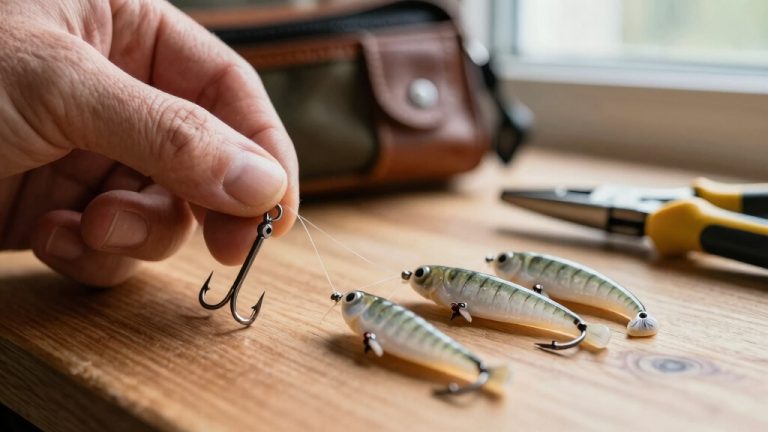
Shiny sabiki rigs reflect light, attracting mackerel in low visibility.
Red flannel tracers simulate injured baitfish, enhancing strike rates.
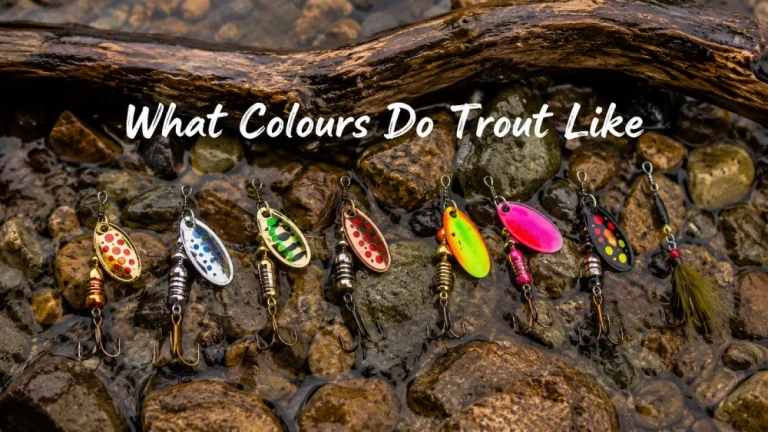
Metal spoons with a fluttering action mimic small fish.
Small jigs worked with a quick, erratic retrieve provoke attacks.
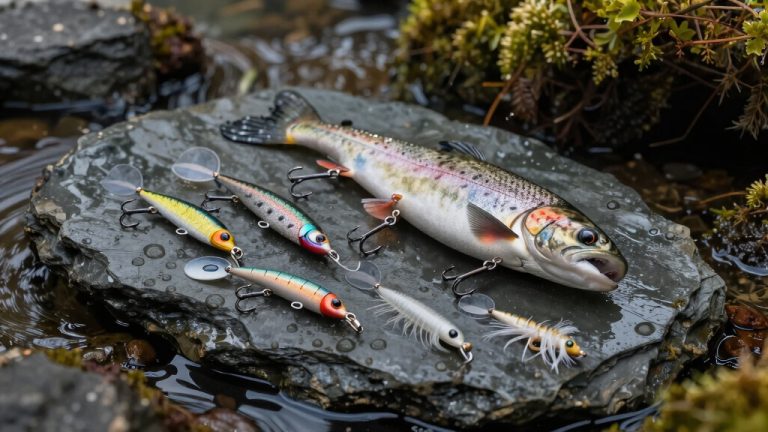
Feathered lures provide additional visual stimuli through movement.
Using these scientifically proven lure types increases your chances of a successful catch by exploiting mackerel’s sensory preferences.
Best Fishing Depths
When targeting mackerel, fishing at depths between 50 and 80 feet often yields the best results. This is especially true during their May spawning season in bays.
Mackerel tend to school within this depth range due to ideal temperature, oxygen levels, and prey availability. Using a depth finder can help you accurately locate these concentrations.
In coastal areas, focus near underwater structures like reefs or shelves where currents concentrate plankton and small fish, attracting mackerel.
Avoid fishing too shallow, as mackerel schools typically avoid turbulent surface waters unless feeding. Conversely, depths beyond 80 feet may reduce catch rates since mackerel prefer mid-water columns.
Precise depth targeting enhances your efficiency by positioning lures or bait within the active feeding zone. This increases strike probability while minimizing gear loss and effort.
Boat Drifting Techniques
Although currents and wind can complicate positioning, mastering boat drifting techniques markedly increases your chances of locating and catching mackerel schools.
You need to control drift speed and direction, keeping your boat aligned with currents without spooking fish. Use depth finders to locate schools 50-80 feet deep, then position your boat upwind or upstream to drift naturally over them.
Observing diving birds can indicate active feeding zones, improving targeting accuracy.
Key boat drifting techniques include:
- Adjusting drift speed to match current velocity
- Positioning upwind or upstream of fish sightings
- Utilizing GPS and sonar for precise location tracking
- Monitoring weather and tidal conditions continuously
- Employing multi-line rigs to maximize strike potential during drift
These methods optimize your approach, enhancing mackerel catch efficiency scientifically and objectively.
Frequently Asked Questions
What Is the Best Time of Day to Fish for Mackerel?
You’ll find the best time of day to fish for mackerel is during early morning or late afternoon.
Mackerel are most active in low light conditions, feeding near the surface as the sun rises or sets.
These periods coincide with tidal movements, increasing their feeding activity.
You’ll want to plan your fishing trips around these times to maximize your catch, especially during the spawning season when mackerel concentrate in coastal waters.
How Do Mackerel Tastes Compare to Other Fish?
Think of mackerel as the bold artist among fish, painting flavors richer and deeper than many others.
You’ll notice its taste is distinctly oily, with a strong, savory profile full of umami, unlike the milder, flakier white fish like cod or haddock.
This oiliness provides higher omega-3 fatty acids, giving it a nutritional edge.
If you prefer robust, intense flavors, mackerel stands out scientifically due to its fat content and muscle structure.
What Are Common Predators of Mackerel?
You’ll find that common predators of mackerel include larger fish like tuna, sharks, and cod, as well as marine mammals such as dolphins and seals.
Seabirds also prey on juvenile mackerel near the surface.
These predators target mackerel due to their schooling behavior and nutrient-rich bodies.
Understanding this helps you recognize the ecological role mackerel play as both predator and prey within marine food webs.
How Long Do Mackerel Typically Live?
You’ll find that mackerel typically live around 12 to 15 years, though many don’t reach that age due to predation and fishing pressure.
Their lifespan varies depending on species and environmental conditions.
For example, Atlantic mackerel often mature quickly, spawning within their first two years.
This supports population resilience despite their relatively short lives.
Understanding their lifespan helps you manage sustainable fishing and conservation efforts effectively.
Are Mackerel Safe to Eat Raw in Sushi?
Yes, you can eat mackerel raw in sushi, but you need to be cautious.
Mackerel spoils quickly due to high oil content, increasing the risk of parasites and bacteria.
To guarantee safety, only consume sushi-grade mackerel that’s been properly flash-frozen to kill parasites.
Always source your fish from reputable suppliers who follow strict handling and storage protocols.
Proper preparation and freshness are critical to prevent foodborne illness when eating raw mackerel.
Follow Seasonal Patterns to Find More Mackerel
When you fish for mackerel, think of their movement like clockwork. Scientific studies show they follow water temperature and salinity shifts precisely.
Just as a tide pulls sand predictably, mackerel migrate seasonally to prime habitats. This makes timing and location critical.
By understanding these patterns and using targeted gear, you’ll increase your catch efficiency. Remember, like solving a complex equation, mastering mackerel fishing requires observing environmental variables and adapting your strategy accordingly.