
How to Rig a Tip Up for Pike: Step-by-Step Guide
Choose a sturdy tip-up with smooth line feed. Spool heavy-duty Dacron line about three-quarters full to avoid snags.
Attach a strong 40–60 lb leader; Dacron or fluorocarbon works well. Rig quick-strike hooks spaced 3 to 5 inches apart for better hook-ups.
Hang your bait naturally at mid-depth, adjusting for water clarity and pike behavior. Use solid gear and handle strikes calmly to land big pike safely.
Let’s explore how to fine-tune each step for success.
Key Takeaways
- Choose a sturdy tip-up with a smooth spool hole and spool heavy-duty Dacron line about three-quarters full for snag-free runs.
- Use a 40–60 lb test leader, preferably heavy-duty Dacron or fluorocarbon, with strong swivels to handle pike teeth and powerful strikes.
- Rig a quick-strike rig with two sharp treble hooks spaced 3 to 5 inches apart for improved hook-up rates and natural bait movement.
- Present dead bait horizontally at mid-water or adjusted depth based on water clarity, avoiding excess weight to maintain lifelike action.
- Space multiple tip-ups properly, check gear regularly, and use gloves or a long-handled net for safe handling during pike strikes.
Pick the Right Pike Tip-Up and Spool Your Line
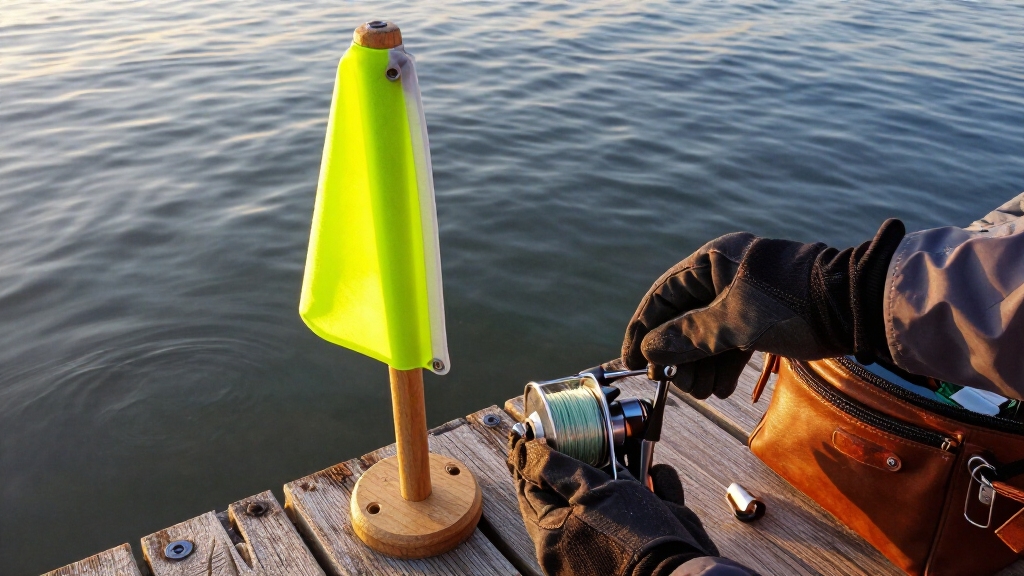
Choose a sturdy tip-up designed to let the line feed freely through the spool’s hole for smooth, snag-free runs.
Select a durable tip-up that allows the line to feed effortlessly for snag-free fishing.
Start by spooling your main line to about three-quarters full.
This leaves enough room for the line to expand if it gets wet or icy.
Use heavy-duty Dacron line, which handles well and has low memory.
This is ideal for pike fishing.
Make sure you securely knot the line to the spool; slippage under load can ruin your chances.
Keep the line path clear and unobstructed above the ice hole to prevent hang-ups during a strike.
Using a tip-up with durable construction can improve reliability and longevity during harsh ice fishing conditions.
By following these steps, you guarantee your tip-up setup runs smoothly.
This gives you better control and improves your chances of landing a pike without unnecessary frustration.
Set Up Strong Leaders and Quick-Strike Hooks for Pike
Secure a strong leader rated between 40 and 60 pounds of test to handle pike’s sharp teeth and powerful runs. Choose heavy-duty Dacron or fluorocarbon, or consider wire leaders in abrasive conditions.
Attach a quick-strike rig with two hooks spaced about 3 to 5 inches apart to improve hook-up rates. Position one treble hook near the bait’s head and the other mid-body or toward the tail, ensuring they’re sharp and sturdy.
Use robust swivels and connectors to prevent failures during hard runs. Keep the leader length manageable to avoid tangles and maintain natural bait movement.
This setup maximizes your chances of hooking aggressive pike quickly while withstanding their thrashing. It gives you confidence when the flag trips on your tip-up.
For optimal performance in rigging, consider using braided line with high abrasion resistance to withstand the rough conditions pike often inhabit.
Rig Your Bait for Natural Pike Action
Rigging your bait to mimic natural movement dramatically boosts your chances of enticing pike strikes. Use a quick-strike rig with two treble hooks placed near the head and mid-body or tail to maintain lifelike action.
Position hooks just under the skin or near the dorsal area to keep the baitfish’s natural swimming motion. Avoid adding excess weight that drags the bait unnaturally; dead bait should hang horizontally in the water column.
Choose appropriately sized live or dead bait to match local pike preferences. Secure hooks firmly to prevent slippage but allow enough flexibility for natural movement.
This setup enhances presentation, making your bait irresistible. Proper bait rigging directly improves hookup rates and helps you catch more pike through the ice.
For better handling and safety during landing, consider using a landing net with fish-friendly silicone netting to reduce injury and stress on the fish.
Set Your Tip-Up Depth for the Best Pike Bites
Once your bait is rigged for natural movement, focus on setting the tip-up at the right depth to increase your chances of hooking pike.
Start by measuring the water depth with a clip-on depthfinder weight to find the bottom. A good rule of thumb is to set your bait halfway between the surface and bottom.
If you’re in 20 feet of water, set it around 10 feet deep. Adjust depth based on water clarity and pike behavior. Shallower setups under 6 feet work well in stained water, while a few feet off the bottom can be effective in clearer lakes.
Mark your line to replicate depth quickly after a bite. Accurate depth placement keeps your bait in the strike zone, maximizing pike interest and improving hook-up rates.
Understanding how water clarity and depth influence fish behavior can help optimize your tip-up setup for better success.
Maximize Tip-Up Hooks and Handle Big Pike Safely
To maximize your tip-up’s hooking power and safely handle big pike, you need to choose strong, reliable hooks and use gear built to withstand heavy runs.
Opt for a quick-strike rig with two sharp hooks spaced 3 to 5 inches apart. Use heavy-duty swivels and connectors to prevent failure.
Use leaders made of 40–60 lb Dacron or 30–60 lb fluorocarbon, or wire in toothy conditions.
When a pike strikes, stay calm and use gloves or a long-handled net to avoid injury from sharp teeth and treble hooks.
Always keep your line path clear for smooth runs and check your gear regularly.
Prioritize safety by spacing multiple tip-ups properly and handling hooks carefully during hook removal or bait changes.
For safely landing big pike, consider using a folding fishing net with a long telescoping handle and rubber-coated mesh to reduce fish stress and avoid hook tangles.
Frequently Asked Questions
What Ice Thickness Is Safe for Using Multiple Tip-Ups?
You should have at least 8 to 12 inches of clear, solid ice before setting multiple tip-ups. This thickness supports your weight and the gear safely, reducing the risk of accidents.
Always check ice conditions regularly, as thickness can vary across a lake. Avoid areas with cracks, slush, or open water.
Prioritize safety by testing ice with an auger and never assume uniform thickness when deploying several tip-ups.
Are There Legal Limits on the Number of Tip-Ups per Angler?
Yes, legal limits on the number of tip-ups per angler vary by location.
You’ll want to check your local fishing regulations before heading out. States or provinces often set specific maximums to prevent overcrowding and guarantee fair fishing.
Ignoring these rules can lead to fines or confiscation of gear. Staying informed helps you fish responsibly and enjoy a safer, more productive ice-fishing experience.
How Do I Prevent My Tip-Up Lines From Freezing in Cold Weather?
Don’t let ice turn your tip-up lines into frozen snakes. Keep your lines moving regularly by gently pulling or shaking them to prevent ice buildup.
Apply a light coating of ice-release spray or rub the line with a silicone-based lubricant. Cover line guides and holes with insulated sleeves or foam to reduce cold exposure.
Staying proactive stops the freeze and keeps your line running smooth, ready for the next pike strike.
What Are the Best Practices for Transporting Caught Pike on Ice?
To transport caught pike on ice, keep them cool and fresh by placing them on a clean, wet towel or in an insulated container with ice packs. Avoid direct contact with ice to prevent damage.
Use a sturdy fish bag or cooler for easier carrying. Handle the fish carefully to protect yourself from sharp teeth and hooks.
Drain water regularly to prevent spoilage and follow local regulations on fish transport and storage.
How Should I Space Tip-Ups to Avoid Line Tangles and Accidents?
You should space your tip-ups at least 15 to 20 feet apart to prevent line tangles and ensure safety.
This distance gives each line enough room to move freely without crossing others during a strike.
Also, keep your holes clearly marked and visible to avoid accidents.
Proper spacing reduces the risk of snagging lines when retrieving fish or moving around, making your ice fishing setup safer and more efficient.
The Bottom Line on Setting Up a Pike Tip-Up
By choosing the right tip-up and spooling it properly, you set a solid foundation.
Using strong leaders with quick-strike hooks guarantees you’re ready for pike strikes.
Rigging your bait to mimic natural movement increases your chances of enticing bites.
Adjusting tip-up depth helps target pike where they feed.
Maximizing hook efficiency and handling big pike carefully keeps your catch safe and the fight manageable.
Follow these steps, and you’ll rig your tip-up for pike like a pro.