What Is Good Shark Bait: Expert Guide for Beginners
You want oily, firm, and bloody baits to reliably attract sharks across species and regions.
Offshore, bonito’s high oil content and scent work well, while firm king mackerel suits Gulf Coast sharks.
Coastal sharks respond to oily mullet and blood-rich bluefish used for chum trails.
Live baits like mullet and jack crevalle provoke active strikes.
Combining cut bait on hooks with continuous chumming maximizes attraction and hook-up chances.
Exploring bait types by species and environment will deepen your approach.
Key Takeaways
- High oil content baits like bonito and menhaden create strong, long-lasting scent trails that effectively attract sharks from a distance.
- Firm baits such as king mackerel provide durability on hooks and steady aroma release for sustained shark interest.
- Oily, durable baits like mullet are versatile and ideal for both chunk and live bait presentations targeting coastal and offshore sharks.
- Bloody baits, especially bluefish, rapidly disperse blood to form effective chum slicks that draw sharks quickly to the area.
- Live baits, such as live mullet or bonito, provoke predatory chase responses and trigger active hunting behavior in sharks.
Choosing the Best Shark Bait for Offshore Fishing
When targeting offshore sharks, you’ll want to focus on baits that emit strong scents and maintain durability in open water conditions.
Bonito ranks highest due to its high oil content and potent scent profile, which disperses attractants effectively over distance.
Bonito excels with its rich oils and strong scent, spreading attractants far offshore.
You’ll also find that king mackerel offers firm flesh with aromatic qualities ideal for Gulf Coast waters.
Mullet provides durability and releases oily trails that appeal to a range of pelagic species offshore.
Selecting baits with oily flesh helps maintain scent plumes longer, increasing your chances of attracting sharks in current-prone environments.
Avoid baits that degrade quickly or lack sufficient oil content, as they fail to sustain olfactory cues critical for shark detection in expansive offshore zones.
Using baits with material durability suitable for saltwater environments ensures they remain effective throughout your fishing trip.
Choosing Between Firm, Oily, or Bloody Baits to Catch More Sharks
Although firm, oily, and bloody baits each attract sharks differently, understanding their specific properties can improve your catch rate markedly.
Firm baits, such as king mackerel, offer durability on hooks and emit steady aromas that appeal to Gulf Coast sharks.
Oily baits like bonito and menhaden release scent trails over time, attracting species sensitive to chemical cues, including nurse and reef sharks.
Bloody baits, exemplified by bluefish, disperse blood rapidly, creating an effective chum slick that draws sharks from greater distances.
Selecting the best bait depends on target species and fishing conditions.
For instance, oily baits suit sustained chumming, while bloody baits excel in short-term attraction.
Incorporating baits with strong natural amino acids and scent infusion can significantly enhance shark attraction and hook retention.
Mullet’s Role in Attracting Coastal and Pelagic Sharks
Since mullet releases a distinctive oily trail and possesses durable flesh, it effectively attracts both coastal and pelagic shark species.
Its oily skin disperses scent gradually, creating an extended attractant plume in the water column. This characteristic makes mullet ideal for chunk bait or live presentations, especially when targeting species like blacktip and blue sharks.
Its firm texture allows it to stay on hooks longer without disintegrating, providing consistent scent release. Additionally, mullet’s size range from 9 to 19 inches suits various rigging methods, enhancing versatility.
When you use mullet, you capitalize on both scent and durability, which are essential for sustained shark attraction in dynamic coastal and offshore environments.
This balance solidifies mullet’s role as a reliable bait choice for diverse shark species.
Moreover, understanding local regulations such as the freshwater fishing license requirements helps ensure responsible and legal fishing practices when using mullet as bait.
Bluefish for Creating Effective Bloody Chum Trails
Bluefish are great at spreading bloody flesh quickly, which helps create a strong chum trail that really attracts sharks.
When they disperse that scent rapidly, it enhances the scent plume, allowing sharks to detect the bait from a much greater distance.
So, if you’re looking to improve shark attraction in coastal areas, using bluefish for chum is a smart move.
It really leverages those benefits to make your fishing experience more successful!
Additionally, using chum with durable construction ensures that the bait maintains its effectiveness in saltwater conditions.
Bloody Flesh Dispersal
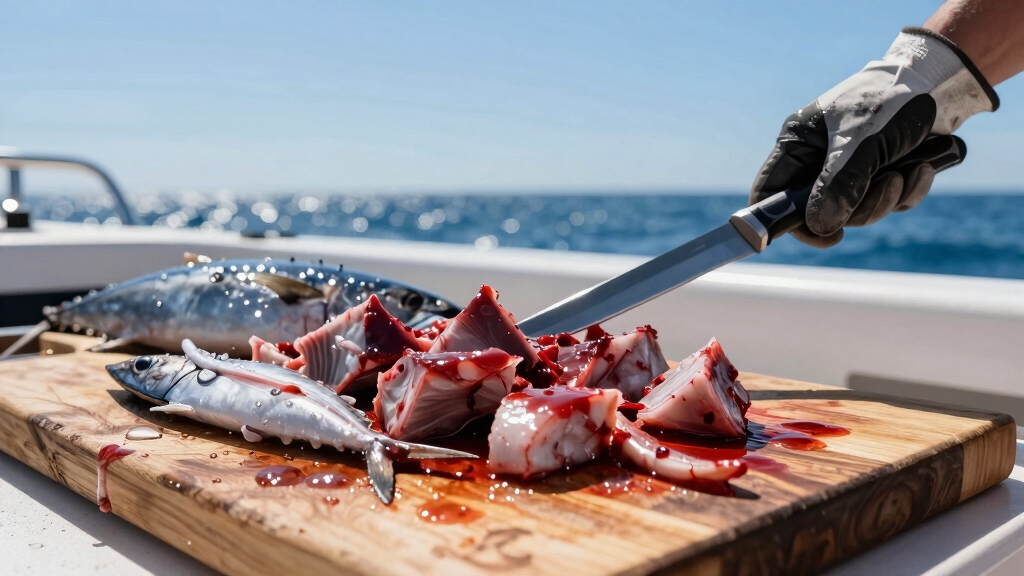
Bluefish rapidly disperse bloody flesh when cut, creating effective chum trails that attract sharks over a wide area. When you use bluefish chunks, their soft, oily flesh releases blood quickly, forming a scent plume that predators detect from afar.
This rapid dispersal increases your bait’s reach, drawing sharks into your fishing zone efficiently. Understanding how the bloody flesh diffuses in water helps you optimize chum placement and timing for maximum effect.
| Factor | Description | Effect on Dispersal |
|---|---|---|
| Flesh Texture | Soft, oily | Quick blood release |
| Water Temperature | Warm | Faster dispersion rate |
| Current Speed | Moderate | Wider chum trail spread |
| Blood Volume | High | Stronger scent plume |
| Chunk Size | Medium to large | Sustained release over time |
Using the right lure weight helps maintain the chum’s position in currents, ensuring consistent scent distribution.
Chum Effect Advantages
Frequently, anglers rely on bluefish to generate highly effective bloody chum trails due to their flesh’s rapid blood dispersal properties.
When you use bluefish chunks, the blood and oils spread quickly, creating a strong scent plume that attracts sharks from significant distances.
This rapid dispersion enhances your chumming efficiency, increasing the likelihood of drawing in predatory sharks.
Additionally, the oily content in bluefish flesh sustains the scent trail longer than leaner fish varieties, maintaining shark interest over time.
By deploying bluefish as chum, you create a dynamic chemical signal that stimulates sharks’ olfactory senses effectively.
As a result, bluefish provide a reliable advantage in producing consistent, potent chum slicks essential for successful shark fishing in coastal environments.
Using scent dispersion techniques similar to those found in top surf fishing baits can further improve the effectiveness of your chum trails.
Best Live Bait Options for Targeting Different Shark Species
Selecting the appropriate live bait particularly enhances your chances of attracting specific shark species. Different sharks exhibit preferences for distinct live prey based on behavior and habitat. For instance, blacktip sharks actively chase live prey like mullet, while tiger sharks respond well to larger live baits such as jack crevalle. Offshore trophy sharks favor bonito due to its oily scent and easy catchability.
| Shark Species | Preferred Live Bait | Key Trait |
|---|---|---|
| Blacktip | Mullet (9-19 in) | Oily skin, active swimmer |
| Tiger | Jack Crevalle (up to 40 in) | Strong fight, large size |
| Offshore Sharks | Bonito | High oil content, strong scent |
| Coastal Sharks | Blue Runners | Rapid blood dispersal |
| Nurse Sharks | Menhaden | Oil release, bottom dwelling |
Choosing live bait aligned with shark feeding behavior improves your catch efficiency. The full moon’s tidal effects can influence shark feeding activity by increasing prey availability and movement in coastal and estuarine areas.
Cut Bait Choices That Draw Sharks From Far and Wide
Cut bait is a game changer when it comes to attracting sharks, and let me tell you, the smell is key! You’ll notice that baits with a strong odor can really draw sharks in from quite a distance. It’s all about those oils and blood dispersing in the water, creating a scent trail that sharks can’t resist.
Now, when it comes to versatile options, chunk baits like barracuda or menhaden are fantastic choices. They not only provide a strong scent but also keep that aroma flowing, which can appeal to various shark species. So, if you want to up your shark fishing game, understanding these olfactory cues is essential. Choosing the right cut bait can make all the difference in maximizing your chances of a big catch!
Proper handling and storage, such as refrigerating below 40°F or freezing at 0°F, help maintain bait quality and scent longevity, which is crucial for attracting sharks using effective bait preservation.
Strong Smell Effects
When you use cut bait with a strong smell, such as barracuda or large menhaden chunks, you create an effective chemical signal that can attract sharks from considerable distances.
These baits release oils and blood rapidly, dispersing scent plumes that sharks detect through their highly sensitive olfactory systems.
The intensity and persistence of these odor plumes influence the range and speed at which sharks locate the bait.
For example, barracuda chunks produce a potent blend of oils and blood, drawing sharks across wide areas.
Meanwhile, menhaden chunks release oils quickly, targeting nurse and reef sharks effectively.
Utilizing cut bait with strong olfactory cues maximizes your chance of attracting diverse shark species by exploiting their acute scent detection and predatory response mechanisms.
Environmental factors such as water temperature and clarity can also affect how scent plumes disperse and how effectively sharks respond to these chemical signals, emphasizing the importance of considering environmental conditions when selecting bait.
Versatile Chunk Bait
Chunk bait offers a reliable method to attract sharks by releasing strong olfactory cues that spread widely through the water.
You can use various cut bait types depending on your target species and location.
Barracuda chunks produce potent smell, oil, and blood, effectively drawing sharks from long distances.
Menhaden or pogies release oils rapidly, making them ideal for nurse and reef sharks.
Mackerel’s pungent oily flesh remains available year-round and appeals broadly to coastal sharks.
Grouper or snapper scraps provide strong scents that attract scavenging species.
When you deploy these chunks, their blood and oil disperse, creating a chemical trail sharks instinctively follow.
Selecting versatile chunk bait guarantees you engage a wide range of sharks, maximizing your chances of a successful catch across various environments.
For best results, always ensure your bait is used with corrosion-resistant reels and tackle designed for saltwater durability to withstand deep sea conditions.
Chum Techniques for Effective Shark Baiting
Mastering chum techniques markedly enhances your ability to attract sharks by creating scent plumes that simulate natural feeding conditions. Chum typically combines chopped fish, bones, and blood, forming an olfactory signal sharks can’t resist.
To optimize effectiveness, follow these methods:
- Use oily fish parts like bunker or menhaden to disperse scent steadily.
- Incorporate blood-rich components such as bluefish flesh for rapid attraction.
- Employ offal or animal organs for long-lasting aroma persistence.
- Combine chopped solids with liquid blood to create a layered scent plume.
These techniques produce dynamic scent trails mimicking feeding events, increasing shark approach rates. Proper dispersion and ingredient choice make certain you target the desired shark species without wasting bait.
You’ll gain precision and control in your shark baiting strategy by applying these scientifically grounded chum methods.
Matching Shark Species With Their Preferred Bait Types
Did you know that different shark species have their own favorite bait types? It’s pretty fascinating! Whether it’s live bait or cut bait, sharks can be quite particular. By getting a handle on these preferences, you can pick the best bait for the area and species you’re targeting.
Species-Specific Bait Preferences
When targeting specific shark species, understanding their bait preferences markedly increases your chances of success.
Different sharks respond uniquely to bait types based on feeding habits and sensory cues.
For example:
- Blacktip sharks prefer live prey like mullet or blue runners, favoring active movement.
- Nurse sharks are attracted to oily menhaden chunks, suited for their bottom-feeding behavior.
- Blue sharks readily take cut-bait rigs, responding to scent dispersion in open water.
- Tiger sharks target robust live baits such as jack crevalle, matching their aggressive predation style.
Live Versus Cut Bait
Understanding the bait preferences of different shark species naturally leads to evaluating the effectiveness of live versus cut bait in various fishing scenarios.
You’ll find blacktip sharks prefer live prey, such as mullet or blue runners, which provoke active chase behavior. Conversely, species like blue sharks respond readily to cut bait rigs, where oily chunks or bloody scraps disperse scent effectively.
Nurse sharks target menhaden chunks on bottom rigs, exploiting their scavenging nature. Live bait offers movement and visual stimuli, essential for predators relying on hunting instincts.
Cut bait emits stronger olfactory cues, attracting sharks over greater distances. Selecting between live and cut bait depends on the target species’ feeding habits, habitat, and water conditions.
Matching these factors optimizes bait presentation and increases your chances of a successful catch.
Regional Shark Bait Choices
Although shark species exhibit varied feeding behaviors, selecting regional bait that aligns with their preferences markedly enhances catch rates.
Matching bait to local shark populations optimizes scent dispersion, durability, and appeal.
You should consider these regional bait choices:
- Gulf Coast anglers favor king mackerel for its firm flesh and aromatic qualities, targeting species like blacktip and tiger sharks.
- Coastal areas utilize mullet, whose oily skin and durability attract pelagic and coastal sharks effectively.
- Offshore environments prize bonito due to its high oil content and strong scent, ideal for large makos and blue sharks.
- Reef and nurse sharks respond best to menhaden chunks, releasing oils that stimulate bottom-feeding behavior.
Regional Shark Bait Favorites and Their Unique Benefits
Since regional bait selection markedly impacts shark fishing success, anglers prioritize species that thrive locally and offer distinct advantages.
Effective shark fishing hinges on choosing locally abundant baits with unique attractant qualities.
Along the Gulf Coast, king mackerel provides firm flesh and an aromatic quality that effectively attracts sharks.
Coastal anglers favor bluefish for their ability to rapidly disperse bloody flesh, enhancing chum slicks.
Offshore, bonito ranks supreme due to its high oil content and strong scent profile, ideal for targeting pelagic sharks.
In reef and nurse shark habitats, menhaden chunks release oils quickly, appealing to scavengers.
Sea catfish offer durability and a robust odor, maintaining hook presence longer.
Deepwater techniques incorporate skate or ray livers, producing persistent scent plumes.
Selecting these region-specific baits optimizes scent dispersion, durability, and attractant properties, thereby increasing shark catch rates efficiently.
How to Combine Live, Cut, and Chum Baits for Better Shark Catching?
Building on the advantages of regional bait selections, combining live, cut, and chum baits strategically enhances your chances of attracting and hooking sharks. Live baits like mullet or bonito provoke predatory chase responses.
Cut baits such as barracuda or menhaden emit strong olfactory cues that disperse in water. Chumming creates scent plumes that draw sharks from a distance.
To optimize your approach:
- Deploy live bait to trigger active hunting behavior.
- Attach cut bait to the hook, maximizing scent release at the strike zone.
- Continuously chum with oily fish parts or blood-rich scraps to maintain attraction.
- Adjust bait types based on target shark species’ feeding preferences and regional abundance.
This multi-modal baiting method scientifically increases encounter rates and hook-up probabilities.
Frequently Asked Questions
How Do Water Temperature Changes Affect Shark Bait Effectiveness?
You’ll notice water temperature changes directly influence shark bait effectiveness by affecting sharks’ metabolism and activity levels.
In warmer waters, sharks become more active and respond strongly to oily, high-scent baits like bonito or bluefish.
Colder temperatures slow their metabolism, making them less aggressive and selective.
Using fresher, more aromatic cut baits or live bait increases attraction.
Adjust your bait type and presentation based on these thermal shifts for peak results.
What Is the Best Time of Day to Use Shark Bait?
You’ll find the best time of day to use shark bait is during dawn and dusk when light levels soften and sharks actively hunt.
These low-light periods increase shark activity due to cooler temperatures and reduced visibility, enhancing bait attraction.
Scientific observations confirm sharks rely more on scent and movement then, so deploying oily, fragrant bait as the sun rises or sets maximizes your chances of drawing sharks within effective striking distance.
How Long Should Shark Bait Be Kept Fresh Before Use?
You should keep shark bait fresh for no more than 24 hours before use to maintain its scent potency and oil content. These factors are critical for attracting sharks.
Store bait on ice or in a refrigerated environment to slow decomposition and preserve blood and oils.
Using bait beyond this period reduces its effectiveness, as bacterial breakdown diminishes the aroma and oily trails essential for triggering shark feeding responses.
Are There Legal Restrictions on Types of Shark Bait?
You’d think you could toss anything into the water and call it shark bait, but laws are stricter than you imagine.
Yes, there are legal restrictions on shark bait types, varying by region and species protection status.
You must avoid endangered species and prohibited bait to comply with regulations.
Always check local fishery rules before using live, cut, or chum bait, ensuring your methods align scientifically with conservation and safety standards.
How Does Bait Size Influence Shark Bite Rates?
You’ll find that bait size directly affects shark bite rates by influencing visibility and scent dispersion.
Larger bait releases more blood and oils, creating stronger scent trails that attract sharks from greater distances, increasing bite likelihood.
However, excessively large bait might deter smaller shark species or result in handling difficulty.
Conversely, smaller bait offers less scent but may target smaller sharks effectively.
Optimizing bait size balances attracting the intended shark species while maximizing bite rates.
Choosing the Right Shark Bait: The Final Key to a Smarter Catch
When selecting shark bait, you’re fundamentally fine-tuning your underwater invitation. By understanding the preferences of different shark species and regions, you can craft a subtle yet effective approach, whether using firm, oily, or blood-infused options.
Combining live, cut, and chum baits enhances your chances without overwhelming the ecosystem.
Ultimately, your thoughtful bait choice influences the marine dance, ensuring a strategic and respectful pursuit of these remarkable predators.