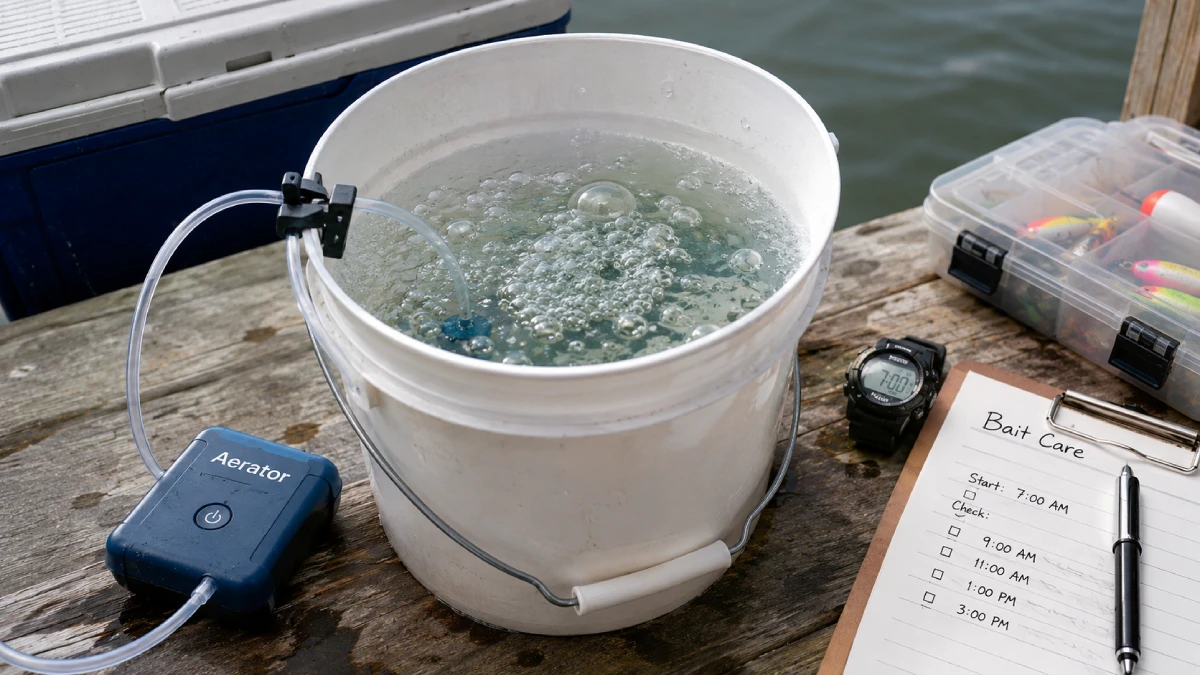
How Long Will Shrimp Stay Alive in Bucket With Aerator
You can keep shrimp alive in a bucket with a continuous battery-powered aerator for 24 to 48 hours under ideal conditions.
Maintaining steady dissolved oxygen near saturation slows stress and supports metabolism.
Controlling temperature between 50°F and 70°F and using partial water changes every 1–2 hours to reduce ammonia buildup further extends survival.
Proper stocking density is essential to avoid oxygen depletion and toxic waste accumulation.
Understanding these factors helps you optimize shrimp longevity during holding.
Key Takeaways
- With continuous aeration and proper care, shrimp can survive 24 to 48 hours in a bucket.
- Battery-powered aerators maintain oxygen levels, preventing hypoxia and extending shrimp survival.
- Water temperature between 50°F and 70°F slows metabolism, helping shrimp survive longer in aerated buckets.
- Partial water changes of 20–30% every 1–2 hours dilute toxins and improve shrimp survival duration.
- Avoid overcrowding; keeping shrimp density low reduces oxygen depletion and toxic waste buildup.
Shrimp Survival Time in Aerated Buckets
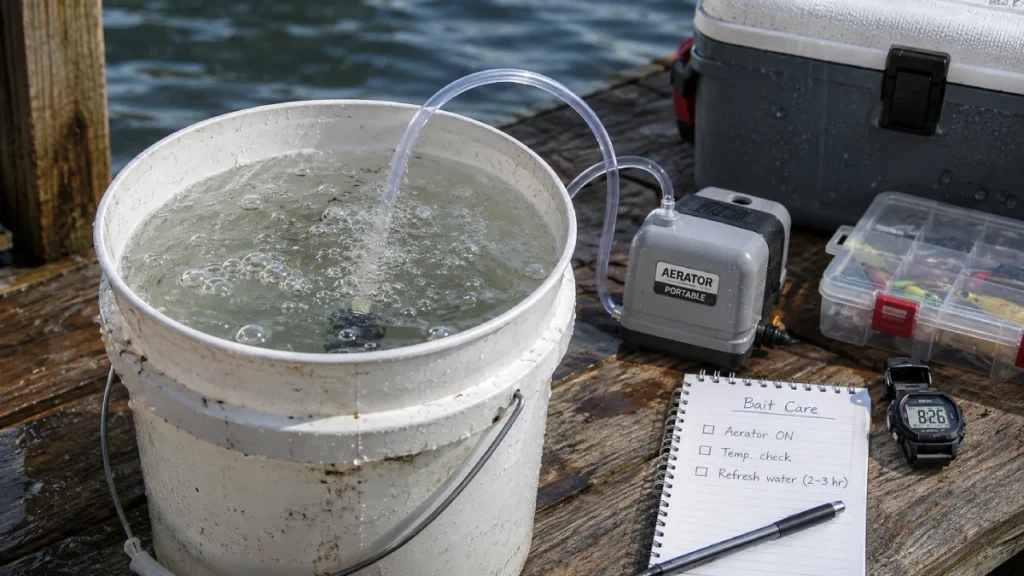
Understanding how long shrimp can survive in an aerated bucket is essential for anglers and aquaculture practitioners aiming to maintain live bait quality.
Typically, shrimp last 4–6 hours in a well-aerated bucket with regular water changes. With optimized conditions, such as a battery-powered aerator, insulated bucket, and sensible stocking density, they may survive a full day.
Proper setups can extend survival to 24–48 hours. Without aeration, survival plummets to less than an hour on warm days and only a few hours under cooler conditions.
Temperature, stocking density, water quality, and handling stress strongly influence survival duration. Overcrowding and waste accumulation increase oxygen demand and toxicity, reducing lifespan.
Maintaining cool, oxygen-rich water with controlled shrimp density directly affects how long shrimp remain viable in aerated buckets. Using containers made from durable materials with waterproof features can help maintain water quality and temperature stability.
How Constant Aeration Extends Shrimp Survival
Because live shrimp demand a continuous supply of oxygen, constant aeration plays a crucial role in extending their survival in a bucket.
Aerators maintain dissolved oxygen levels by promoting gas exchange at the water’s surface and circulating oxygen-rich water around the shrimp. This prevents hypoxia, a critical stressor that rapidly decreases shrimp viability.
Without steady aeration, oxygen depletes quickly due to shrimp respiration and bacterial activity. You’ll notice survival times drop from potentially 24–48 hours with aeration to under an hour without it, especially in warm conditions.
Continuous bubbling also reduces stratification, evenly distributing oxygen and preventing localized low-oxygen zones. To maximize survival, use a battery-powered aerator that runs uninterrupted and monitor oxygen levels if possible.
This guarantees shrimp remain in an oxygenated environment, sustaining metabolic needs and prolonging their viability in confined bucket conditions. Maintaining low memory in aeration equipment can improve its efficiency and reliability during extended use.
How Water Temperature Affects Shrimp Survival in Buckets?
When water temperature rises, it directly reduces the amount of dissolved oxygen available to shrimp. This forces them to respire faster and consume oxygen more rapidly. Higher temperatures decrease oxygen solubility, so even with aeration, the oxygen concentration is lower. This intensifies metabolic stress.
Accelerated shrimp metabolism increases oxygen demand while simultaneously limiting supply. Consequently, survival time shortens markedly in warm water. To mitigate this, keep your bucket shaded and insulated. Avoid temperature spikes that can quickly deplete oxygen and elevate ammonia toxicity.
Use cooling methods that don’t dilute salinity, like sealed ice packs. Maintaining water between 50°F and 70°F optimizes oxygen availability and slows shrimp metabolism, extending survival. Monitoring and controlling temperature is critical because it directly impacts oxygen levels and shrimp physiology. Ultimately, this affects how long they remain viable in your bucket.
Additionally, using aerated containers with small holes enhances oxygen exchange and helps sustain shrimp health during storage.
How Stocking Density Influences Shrimp Survival?
Stocking density critically affects shrimp survival by directly influencing oxygen availability and waste accumulation in the bucket.
When you overcrowd shrimp, their combined oxygen demand rises sharply, and the aerator may struggle to maintain sufficient oxygen levels.
Additionally, higher densities accelerate the buildup of metabolic waste and ammonia, which can rapidly degrade the water environment.
For instance, a 5-gallon bucket generally supports about 25–50 shrimp. Exceeding this range increases stress and shortens survival.
You can improve survival by maintaining lower densities, especially in warm conditions where oxygen dissolves less readily.
If you must stock densely, guarantee enhanced aeration and frequent partial water changes to offset oxygen depletion and waste accumulation.
Proper stocking density balances shrimp health, oxygen supply, and water quality, maximizing survival time in your aerated bucket.
Maintaining water temperature below 60°F further enhances oxygen retention and reduces shrimp stress, improving overall survival in confined spaces such as buckets with an aerator system.
How Water Quality Affects Shrimp Survival?
You really need to keep a close eye on ammonia levels. Shrimp can produce waste quickly, and when that builds up in confined water, it can become toxic.
It’s pretty crucial to do regular partial water changes to help dilute those harmful substances and keep the oxygen levels balanced.
If you don’t manage the water properly, you’ll see survival times plummet, even if you’re aerating and cooling the water.
Using marine-grade epoxies can help ensure that any repairs to your aerator equipment maintain water quality and function effectively.
Ammonia Buildup Risks
Although constant aeration supplies oxygen, water quality can quickly deteriorate in a confined bucket, leading to toxic ammonia buildup that threatens shrimp survival. Ammonia originates mainly from shrimp excretion and decomposing organic matter.
Its accumulation disrupts cellular function and causes gill damage, reducing shrimp resilience.
You should monitor and manage ammonia because:
- Ammonia concentration rises rapidly in still or overcrowded water, even with aeration.
- Elevated ammonia impairs oxygen transport, negating aerator benefits.
- Toxicity thresholds vary, but concentrations above 0.02 mg/L can cause stress and mortality.
High levels of ammonia and other pollutants can damage gills and impair oxygen extraction, compounding the risks to shrimp health.
To mitigate risks, perform regular partial water changes and maintain low stocking densities. Aeration alone won’t prevent ammonia toxicity. Controlling waste input and replacing water are essential to preserve water quality and extend shrimp survival in your bucket.
Waste Accumulation Effects
Monitoring waste accumulation plays a critical role in maintaining water quality and ensuring shrimp survival in a bucket.
As shrimp respire and excrete, ammonia and organic waste rapidly build up in the confined water, degrading its quality. Elevated ammonia concentrations are toxic, disrupting shrimp’s gill function and impairing oxygen uptake.
Additionally, decomposing waste consumes dissolved oxygen, reducing availability despite aeration. You must keep stocking densities moderate to limit waste production and avoid overcrowding, which accelerates waste accumulation and oxygen depletion.
Dead shrimp exacerbate these effects by releasing decay products that further deteriorate water chemistry. While aerators maintain oxygen levels, they don’t remove harmful metabolites.
Consequently, managing waste buildup directly influences survival time by preserving water chemistry within tolerable thresholds. This ensures shrimp remain healthy throughout the holding period.
Using high carbon hooks in fishing gear demonstrates the importance of material quality in environments requiring durability and sensitivity, paralleling the need for maintaining water quality to support shrimp survival.
Importance Of Water Changes
Performing regular water changes markedly enhances shrimp survival by maintaining ideal water quality in the holding bucket. As shrimp metabolize, they produce ammonia and other wastes that rapidly degrade water chemistry, stressing or killing them.
To optimize survival, you should:
- Replace 20–30% of the bucket water every 1–2 hours to dilute toxins and maintain oxygen levels.
- Use dechlorinated seawater at similar temperature and salinity to avoid shock.
- Remove dead shrimp immediately to prevent accelerated waste buildup.
These steps stabilize pH and minimize harmful ammonia concentrations, which can cause gill damage and reduce oxygen uptake.
Water changes also help counteract temperature increases, preserving dissolved oxygen critical for shrimp respiration. Additionally, maintaining moisture and oxygen levels is crucial to reduce metabolic stress and improve overall survival during temporary confinement.
Best Bucket Setup for Longer Shrimp Survival
To keep your shrimp alive for longer, you really need to focus on two key things: aeration and temperature.
First off, constant and efficient aeration is a must. Shrimp are little oxygen hogs, and they consume it quickly, so keeping that water oxygen-rich is essential.
Now, let’s talk about temperature. It’s super important to control it. Using insulated and shaded buckets is a great start. You might also want to consider cooling methods that won’t mess with the salinity of the water. Sealed ice packs work well for this—just make sure they stay sealed!
When you combine these strategies, you’re not just keeping the shrimp alive; you’re actually slowing down their metabolism and stabilizing their environment. This means they can thrive longer in the bucket. So, with a little planning, you can really extend their lifespan!
Additionally, maintaining proper water oxygenation is crucial to prevent stress and promote longer survival.
Aeration And Oxygen
Maintaining ideal oxygen levels is essential for extending shrimp survival in a bucket. Live shrimp demand constant access to oxygen-rich water.
To optimize aeration and oxygen, you should:
- Use a reliable battery-powered aerator that runs continuously. This ensures steady oxygen diffusion and prevents hypoxia.
- Monitor stocking density carefully. Overcrowding increases oxygen consumption and waste, rapidly depleting dissolved oxygen.
- Perform regular partial water changes every 2 hours. This removes ammonia and replenishes oxygen without stressing shrimp.
Proper aeration maintains dissolved oxygen levels near saturation. This is critical because shrimp metabolism rapidly consumes oxygen.
Without continuous aeration, oxygen levels plummet, causing stress and mortality within hours.
By combining consistent aeration with controlled stocking and water management, you can markedly extend shrimp survival.
In a well-maintained bucket setup, shrimp survival can be extended up to 24–48 hours.
Using a 12V 20Ah lithium battery can provide reliable power for your aerator during shorter shrimp-keeping sessions.
Temperature Control Methods
Alongside consistent aeration, controlling water temperature directly influences shrimp survival in a bucket. Warmer water holds less dissolved oxygen, increasing shrimp metabolic rates and oxygen demand, which shortens survival time.
To maintain prime conditions, keep your bucket shaded and insulated to reduce temperature fluctuations. Avoid adding ice directly to seawater since it dilutes salinity and stresses shrimp. Instead, use sealed ice packs or bottles submerged without mixing.
Regularly monitor water temperature, aiming to keep it as close as possible to natural seawater temperatures, ideally between 60°F and 75°F (15°C–24°C). This controlled environment slows shrimp metabolism, reduces oxygen consumption, and limits waste buildup.
How to Maintain Water Quality in Your Bucket?
Regularly renewing the water in your shrimp bucket markedly reduces ammonia buildup and waste accumulation, which are primary threats to shrimp survival.
To maintain optimal water quality, focus on these key practices:
- Partial Water Changes: Replace 20–30% of the water periodically with clean, dechlorinated seawater to dilute toxins without shocking shrimp.
- Remove Debris: Promptly remove dead shrimp and uneaten food to prevent organic decay that elevates ammonia.
- Maintain Aeration: Keep your aerator running continuously to guarantee oxygen saturation, which supports nitrifying bacteria that help break down ammonia.
How Often to Change Water to Maximize Survival?
Hey there! If you’re keeping shrimp in an aerated bucket, it’s super important to change the water regularly. Ideally, you want to do this every two hours. Why, you ask? Well, it helps control ammonia and waste buildup, which can really harm your little friends.
By making those regular partial changes, you’re not just keeping the water fresh; you’re also stabilizing oxygen levels and temperature. That’s a big win for shrimp survival!
If you let that frequency slide, though, toxins can build up, and your shrimp won’t be living their best lives for long. So, keep an eye on that water change schedule to help them thrive!
Frequency Of Water Changes
Frequently changing the water in your shrimp bucket is essential to maintaining peak oxygen levels and minimizing toxic waste buildup like ammonia.
To maximize survival, you should adhere to a precise water change schedule based on shrimp density and conditions.
Here’s a practical guideline:
- Change at least 25–30% of the water every 2 hours to prevent ammonia accumulation and maintain oxygen saturation.
- Increase frequency if shrimp density exceeds 40 per 5-gallon bucket or if water temperature rises above 75°F, as metabolism and waste production accelerate.
- Use dechlorinated seawater at matching salinity and temperature to avoid stress during changes.
Water Quality Maintenance
Maintaining peak water quality hinges on timely and adequate water changes to control ammonia levels and sustain oxygen availability. You should perform partial water changes every two hours to prevent toxic ammonia buildup from shrimp waste.
Replace roughly 20–30% of the bucket’s water with dechlorinated seawater at the same temperature and salinity to avoid stressing the shrimp. Avoid full water changes that cause sudden shifts in water chemistry.
Continuous aeration aids oxygen retention but can’t offset deteriorating water quality alone. Monitor water clarity and odor; murky or foul-smelling water signals an urgent need for change.
If you use a flow-through system, maintain a gentle inflow of fresh seawater to stabilize temperature and oxygen. Proper water quality maintenance maximizes shrimp survival without causing undue stress from abrupt environmental fluctuations.
Impact On Shrimp Survival
Although continuous aeration supplies necessary oxygen, changing the water at regular intervals critically reduces ammonia and waste buildup that threaten shrimp survival.
To maximize shrimp longevity in your bucket, you should follow these water management guidelines:
- Change 20–30% of the water every 2 hours to dilute toxic ammonia and maintain ideal oxygen levels.
- Use dechlorinated seawater at a similar temperature and salinity to avoid osmotic stress during water replacement.
- Remove dead shrimp promptly to prevent rapid water quality degradation.
How to Keep Water Cool Without Diluting Salinity?
Keeping water cool without diluting salinity is crucial for preserving the ideal environment live shrimp require in a holding bucket.
You want to avoid adding freshwater or melted ice directly, as this lowers salinity and stresses shrimp.
Instead, place sealed ice packs or bottles filled with frozen seawater into the bucket.
These coolers absorb heat without altering the salinity.
Insulating the bucket with foam or reflective materials also helps maintain temperature stability by limiting heat exchange.
Keep the bucket shaded from sunlight to reduce warming.
Continuous aeration is essential to maintain dissolved oxygen levels, which drop faster in warm water.
By combining these methods—sealed ice containers, insulation, shading, and aeration—you can effectively lower water temperature while preserving salinity.
This optimizes shrimp survival during extended holding periods.
Handling Shrimp to Reduce Stress and Maximize Survival
Handle shrimp gently and deliberately to minimize stress, which is a critical factor in their survival during holding. Stress triggers metabolic spikes, depleting oxygen reserves and increasing mortality risk.
To reduce handling stress, follow these precise steps:
- Use soft, fine-mesh nets or gently scoop shrimp by hand to avoid physical injury and damage to their exoskeleton.
- Acclimate shrimp gradually by matching water temperature and salinity between capture and holding containers to prevent shock.
- Minimize exposure time outside water; transfer shrimp quickly yet calmly to reduce oxygen deprivation and stress responses.
Implementing these measures preserves shrimp physiological stability, maintaining peak oxygen consumption rates and improving survival times in aerated buckets. Careful handling directly supports your goal of maximizing shrimp longevity during transport or holding.
Frequently Asked Questions
Can I Use Tap Water Directly in the Shrimp Bucket With Aerator?
Imagine inviting a guest to a dinner party and serving them water from a polluted stream. Your shrimp would feel the same if you used tap water directly.
You shouldn’t do that because tap water often contains chlorine and chemicals harmful to shrimp. Instead, always use dechlorinated water or seawater to maintain their delicate balance.
This preserves water quality, prevents stress, and supports oxygen retention. Ensuring your shrimp thrive longer in the bucket with aeration is essential.
What Type of Aerator Is Best for Shrimp Survival?
You’ll want a battery-powered aerator designed for saltwater use, as it provides consistent oxygenation without relying on external power.
Look for models with adjustable airflow to control bubbles and minimize shrimp stress. Fine bubble diffusers or air stones work best, enhancing oxygen dissolution.
Avoid aerators that create strong currents or excessive turbulence, which can harm shrimp.
Pairing aeration with insulation and shading optimizes survival by maintaining stable temperature and oxygen levels.
Is It Safe to Transport Shrimp in the Same Bucket Used for Fishing?
Transporting shrimp in the same bucket you use for fishing is like juggling flaming torches. It’s possible but risky.
You’ll want to avoid contamination from bait, fish slime, or debris that can stress shrimp or degrade water quality. If you must, thoroughly clean and aerate the bucket, keep shrimp density low, and monitor water parameters closely.
For ideal shrimp health, use a dedicated, well-aerated, insulated container to minimize stress and maximize survival.
How Do I Identify if Shrimp Are Stressed in the Bucket?
You can identify stressed shrimp by observing abnormal behavior such as erratic swimming, lethargy, or excessive surface gasping.
Look for discoloration, such as pale or darkened shells, and physical damage like broken antennae or missing limbs.
Shrimp that cluster near the aerator or crowd the surface may also be stressed due to low oxygen.
Additionally, rapid mortality or a foul odor indicates deteriorating water quality, stressing your shrimp further.
Can Adding Salt Improve Shrimp Survival in Freshwater Buckets?
Like a puzzle piece fitting perfectly, adding salt to freshwater buckets can indeed improve shrimp survival by mimicking their natural saline environment.
You’ll want to use marine or aquarium salt at appropriate concentrations to maintain osmotic balance, reducing stress and preventing dehydration.
Be precise with salinity levels; too little or too much salt can harm shrimp.
Proper salt addition, combined with aeration and temperature control, enhances shrimp essentialness and longevity effectively.
Final Thoughts on Keeping Shrimp Alive in an Aerated Bucket
You might think keeping shrimp alive in an aerated bucket is straightforward, but the reality is nuanced.
Survival hinges on balancing temperature, water quality, and stocking density. Each factor quietly tips the scales.
Neglect one, and the delicate ecosystem collapses faster than you expect.
So, next time you rely on that bucket, remember: every detail matters.
Master these, and you’ll unleash the true potential of prolonged shrimp survival, far beyond what meets the eye.