
Is a 12V 20Ah Lithium Good for a Trolling Motor? Key Facts
A 12V 20Ah lithium battery works well if your trolling motor draws under 20 amps and you’re taking short, light-load trips.
It delivers about 1 to 2 hours of runtime at moderate current and maintains voltage better than lead-acid types.
However, it’s not suited for high-thrust motors or extended use, as higher draws shorten battery life and performance.
If you want to understand how to optimize or when to upgrade, there’s more useful info ahead.
Key Takeaways
- A 12V 20Ah lithium battery suits small trolling motors drawing under 20 amps for short trips and light trolling sessions.
- It provides roughly 1 to 2 hours of runtime at moderate current draws (10–20 amps).
- Not ideal for high-speed or extended trolling requiring sustained high current or motors over 30 amps.
- Best used for low-speed cruising, calm waters, and as backup power in kayaks or jon boats.
- Upgrade to higher capacity batteries if longer runtime or heavier motor loads are needed.
Is a 12V 20Ah Lithium Battery Right for Your Trolling Motor?
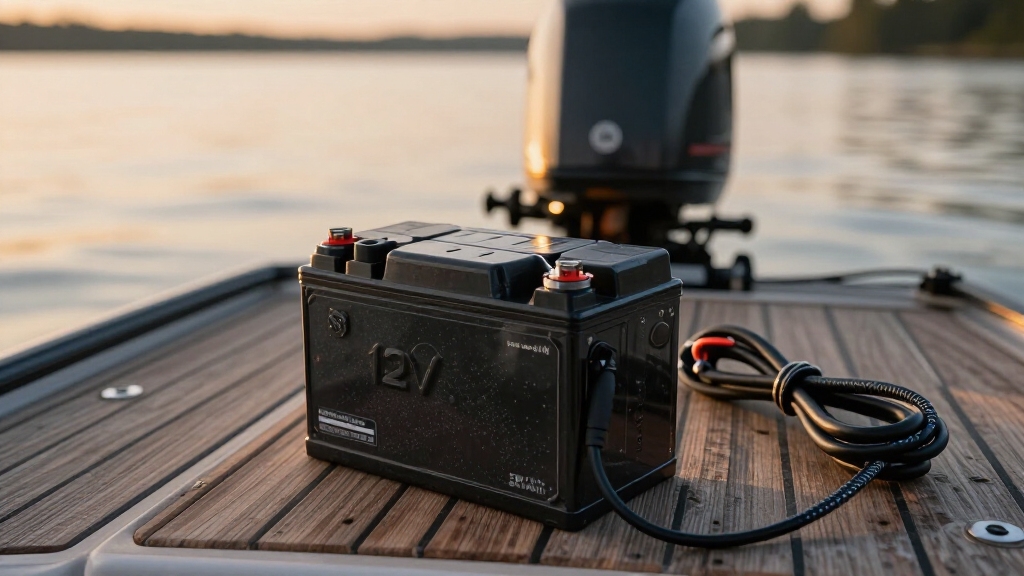
When deciding if a 12V 20Ah lithium battery suits your trolling motor, check the motor’s power demands against the battery’s capacity and discharge limits.
A 12V 20Ah pack delivers limited runtime, typically about 1 to 2 hours at moderate draws of 10 to 20 amps.
It fits small, low-thrust motors better, especially those under 40 lbs thrust with lighter current requirements.
Higher draw motors may quickly exceed the battery’s continuous discharge rating, risking voltage drops or overheating.
Also, verify the battery voltage aligns with your motor’s specifications. Lithium batteries maintain voltage longer than lead-acid types.
This size is best for brief trips, low-speed trolling, or backup power.
For extended or high-speed use, larger batteries with higher amp-hour ratings and discharge capacities are necessary.
Keep in mind that lithium batteries deliver close to 100% of their rated amp-hour capacity, offering more usable energy than lead-acid alternatives.
How to Match Battery Capacity to Your Trolling Motor’s Amp Draw?
To match your battery capacity with your trolling motor’s amp draw, first, you’ll want to figure out the average current draw of your motor when you’re using it. This is a key step because it helps you understand how much power your motor typically consumes.
Next, think about how long you need your motor to run. This will depend on the average draw you calculated earlier and the amp-hour rating of your battery.
By doing this, you can ensure that you choose a battery that has enough power to keep you going without cutting out unexpectedly.
This way, you can enjoy your time on the water without worrying about premature shutdowns—nobody wants that!
Keep in mind that 12V systems typically use a single battery for simpler installation but have limited runtime and thrust compared to 24V setups.
Calculating Amp Draw
Calculate your trolling motor’s amp draw to accurately match it with a suitable battery capacity. Start by referring to your motor’s specifications, which typically list current draw at various speeds or thrust levels.
For example, a small 12V motor may draw between 10 and 15 amps at low speed, while higher speeds or loads can push that to 20–30 amps or more. Use a multimeter for a direct measurement if specs aren’t available: connect it in series with the motor and record the amp draw under normal operating conditions.
Knowing this figure allows you to select a battery with sufficient amp-hour capacity and continuous discharge rating. For a 20Ah battery, make sure your motor’s average draw doesn’t exceed its limits to avoid rapid depletion or damage. Additionally, consider the thrust ratings of your trolling motor to ensure the battery can support the power demands during extended use.
Estimating Runtime Needs
Estimate your trolling motor’s runtime by matching its amp draw with the battery’s amp-hour capacity. This ensures your power source meets your outing’s duration needs.
For example, a 12V 20Ah lithium battery delivers about 20 amp-hours. If your motor draws 10 amps continuously, expect roughly 2 hours of runtime under ideal conditions.
Increase the draw to 20 amps, and runtime drops to around 1 hour. Keep in mind real-world factors like wind and speed changes reduce efficiency and runtime.
To optimize, select a battery whose amp-hour rating aligns with your motor’s average current draw and your planned trip length. For short, light trolling, 20Ah might suffice.
However, longer outings or higher draws require larger capacities to avoid power loss and premature depletion.
Using a battery with rechargeable batteries and power-saving features can further enhance your trolling motor experience by ensuring longer operational times.
Which Motor Sizes Suit a 12V 20Ah Lithium Battery?
When choosing a motor size for a 12V 20Ah lithium battery, you’ll want to focus on small to moderate trolling motors with lower current draws.
Typically, motors rated around 30 to 40 pounds of thrust operating at low to moderate speeds suit this battery well, as their average current draw stays near or below 20 amps.
Smaller motors drawing 10 to 15 amps under light load are ideal, ensuring the battery’s limited capacity isn’t rapidly depleted.
Avoid motors exceeding 30 amps continuous draw, as this shortens runtime and strains the battery’s discharge limits.
This battery best supports brief, low-speed trolling on calm waters or small boats where power demands remain modest.
Larger high-thrust motors require bigger batteries to maintain efficiency and prevent early voltage sag or capacity exhaustion.
For optimal performance and longevity, consider trolling motors with efficient drag systems that can reduce power consumption during use.
How Long Will a 12V 20Ah Battery Run Your Trolling Motor?
Although a 12V 20Ah lithium battery can power your trolling motor, its runtime depends heavily on the motor’s current draw.
For example, if your motor pulls around 10 amps, expect roughly 2 hours of operation under ideal conditions. At 20 amps, runtime drops to about 1 hour, and at 30 amps, you’re looking at approximately 40 minutes.
Keep in mind, real-world factors like wind, speed changes, and battery efficiency reduce these estimates. Smaller motors with lighter loads typically draw less current, extending runtime, while heavier use consumes capacity quickly.
Since the battery provides limited amp-hours, it’s pivotal to match your motor’s average current draw to the battery’s capacity to avoid premature depletion during outings.
For optimal use in jon boats, consider pairing your battery with a trolling motor and fish finder system designed for low power consumption and efficient operation, such as units featuring transom and trolling motor mounting.
Why Short Trips and Light Use Suit 12V 20Ah Batteries for Trolling Motors?
If you’re planning short trips, a 12V 20Ah battery is a great choice. Why? Well, it has a limited runtime capacity, which makes it perfect for those quick outings.
The power output of this battery pairs nicely with low-draw trolling motors, especially on small boats or kayaks.
This combo really shines when you’re out for light trolling sessions. It ensures that you’re getting the most out of your battery without putting too much strain on it.
For longer or more demanding trips, considering batteries with higher amp-hour capacity can extend your motor’s runtime significantly.
Limited Runtime Capacity
Frequently, the limited capacity of a 12V 20Ah lithium battery restricts its use to short trips or light trolling applications. You should expect roughly 1 to 2 hours of runtime under ideal conditions, depending on motor draw. This battery suits brief outings where extended power isn’t critical.
Keep these points in mind:
- At 10 amps, runtime approximates 2 hours; at 20 amps, about 1 hour.
- Real-world factors like wind and speed changes reduce actual runtime.
- High current draws quickly deplete the battery, limiting continuous use.
- It’s best paired with small motors or light throttle to avoid premature shutdown.
Choosing this battery means accepting shorter trips and careful energy management to avoid running out of power mid-use. For longer or more demanding sessions, consider batteries with longer battery life to ensure consistent performance.
Low Power Demand Compatibility
Because a 12V 20Ah lithium battery delivers limited continuous current, it pairs best with trolling motors that draw low amperage, typically under 20 amps.
You’ll find it ideal for short trips or light use when the motor’s average current stays well within the battery’s discharge capabilities.
This battery suits low-speed cruising and calm water conditions, where power demand remains moderate and runtime of one to two hours is acceptable.
If your motor frequently exceeds 20 amps, the battery’s capacity and current limits will reduce performance and lifespan.
You want to avoid high-speed or extended trolling that demands sustained high current.
In practice, a 12V 20Ah lithium battery matches well with small, light-duty trolling motors, providing efficient power for brief outings without stressing the battery’s capabilities.
For more advanced power needs, powered anchor systems often rely on a 12V power supply to handle higher current demands and complex controls.
Ideal For Small Boats
Small boats like kayaks and jon boats benefit from a 12V 20Ah lithium battery due to its compact size and manageable weight, which won’t overload the vessel. This battery suits short trips and light trolling demands, ensuring you maintain efficient power without excess bulk.
You’ll find it ideal when your motor’s current draw stays low and runtime needs are limited.
Consider these key factors:
- Runtime: Around 1–2 hours at 10–20 amps, fitting brief outings.
- Weight: Keeps small boats balanced, improving handling.
- Power: Supports low-speed trolling and positioning without strain.
- Compatibility: Matches motors with moderate current draw, avoiding overload.
Use a 12V 20Ah lithium battery when light use and short trips define your boating needs. However, if you plan to use your trolling motor in saltwater environments, be aware that saltwater exposure can accelerate corrosion and reduce battery and motor longevity.
What Are the Limitations of Using a 12V 20Ah Lithium Battery?
One key limitation you’ll encounter with a 12V 20Ah lithium battery is its short runtime. This restricts its use to brief trolling sessions or light motor demands.
With a capacity of only 20 amp-hours, you’ll get roughly 1 to 2 hours of operation at moderate draws (10–20 amps).
Higher draws dramatically reduce runtime, making it impractical for extended or high-speed trolling.
Additionally, some larger or high-thrust trolling motors may exceed the battery’s continuous discharge capability. This can risk voltage drops or reduced battery life.
You also need to verify voltage compatibility since lithium batteries maintain higher voltages longer than lead-acid types. This can potentially stress older motor electronics.
When Should You Upgrade Beyond a 12V 20Ah Lithium Battery?
If your trolling motor demands longer runtimes or higher current draws than a 12V 20Ah lithium battery can support, it’s time to contemplate an upgrade.
This battery suits light trolling and short trips but falls short for extended or heavy use.
Consider upgrading if:
- Your motor’s continuous current exceeds 20 amps regularly, risking battery strain.
- You need runtimes beyond 2 hours at moderate speeds.
- You operate larger motors (30+ lb thrust) that demand higher discharge capacity.
- You plan full-day trolling sessions requiring sustained power without voltage drops.
Upgrading to a higher amp-hour battery (50Ah or more) guarantees compatibility with your motor’s load, improves runtime, and maintains peak voltage stability under heavier draws.
Frequently Asked Questions
How Do Temperature Changes Affect a 12V 20AH Lithium Battery’s Performance?
Temperature changes impact your 12V 20Ah lithium battery by affecting its capacity and discharge efficiency.
Cold temperatures reduce available capacity and increase internal resistance, lowering runtime and power output.
High heat can accelerate degradation and shorten battery life.
You’ll notice reduced performance below freezing and risk overheating above 45°C.
To maintain peak function, keep the battery within recommended temperature ranges and avoid extreme conditions during storage and operation.
Can I Use a 12V 20AH Lithium Battery for Trolling Motor Battery Charging?
Sure, if you enjoy the thrill of living on the edge with brief, underpowered outings, a 12V 20Ah lithium battery can charge your trolling motor battery.
But don’t expect marathon sessions. It’s practical only for quick top-offs or light trolling demands.
For reliable, extended charging, you’ll want a larger capacity battery with higher continuous discharge ratings that matches your motor’s draw and charging needs precisely.
Choose wisely to avoid mid-trip power hiccups.
What Maintenance Is Required for a 12V 20AH Lithium Battery?
You should keep your 12V 20Ah lithium battery clean and dry, avoiding extreme temperatures.
Charge it with a compatible lithium charger to prevent overcharging or deep discharge.
Regularly check the voltage and state of charge to guarantee peak performance.
Store it at about 50% charge if unused for long periods.
Avoid physical damage and monitor for swelling or unusual heat during use.
Proper maintenance prolongs battery life and safety.
Are 12V 20AH Lithium Batteries Safe to Use in Saltwater Environments?
When it comes to saltwater, you can’t just throw caution to the wind.
12V 20Ah lithium batteries are generally safe if you protect them from direct saltwater exposure, which can cause corrosion.
Use waterproof enclosures and guarantee proper sealing of terminals.
Regularly inspect connections and clean any salt residue.
With these precautions, you’ll keep your battery running reliably even in harsh marine environments without risking damage.
How Does a 12V 20AH Lithium Battery Compare to Lead-Acid for Trolling Motors?
You’ll find a 12V 20Ah lithium battery lighter and more efficient than lead-acid, offering higher voltage stability and faster charging.
However, its capacity is smaller, providing shorter runtimes for trolling motors.
Lead-acid batteries are bulkier but usually offer more amp-hours at a lower cost, better suited for longer trips.
For short, light trolling, lithium works well, but for extended use, lead-acid’s larger capacity generally outperforms a 20Ah lithium pack.
Final Thoughts on a 12V 20Ah Lithium Battery for Trolling Motors
Choosing a 12V 20Ah lithium battery for your trolling motor is like selecting a compact toolkit. It’s perfect for light tasks and short trips but not for heavy-duty jobs.
If your motor’s amp draw stays low and your outings are brief, this battery delivers reliable power without excess weight. However, for longer runs or bigger motors, you’ll need to upgrade to avoid running dry mid-adventure.
Match capacity wisely to keep your fishing smooth and efficient.