
Poppers for Boundary Waters Review: Best Options Compared
You’ll find poppers highly effective for smallmouth bass in the Boundary Waters, especially in calm, late-summer conditions when surface activity peaks.
Use stop-and-go retrieves with precise twitching and pauses to mimic injured prey. Target rocky shorelines, submerged boulders, and weed edges.
Match popper size, color, and hook gape to water clarity and bass behavior for peak strikes. Selecting proper rod and rigging enhances hook sets and presentation.
Explore specific tactics and gear setups to maximize your success.

- Has three of the most productive Pop-Rs in the best bass catching color patterns mean more topwater…
- The Rebel Pop-R has been the standard by which all topwater poppers/chuggers have been judged for…
- Legendary topwater bait that’s won hundreds of thousands of dollars for anglers in bass…

Key Takeaways
- Poppers excel in calm, late-summer Boundary Waters conditions by mimicking surface prey and triggering aggressive smallmouth bass strikes.
- Rocky shorelines, submerged boulders, and weed edges offer prime casting zones for effective popper presentations near bass ambush points.
- The stop-and-go retrieve with twitches and pauses mimics injured prey, increasing strike rates especially during low-light periods like dawn and dusk.
- Deer hair and standard hard-headed poppers sized 6 to 1/0 balance natural movement and hook efficiency, with color tuned to water clarity and light.
- Use a 5–6 weight rod and floating line for precise casts and strong hook sets, adapting popper size and retrieve speed by species targeted.
Why Poppers Are a Top Choice for Boundary Waters Bass?
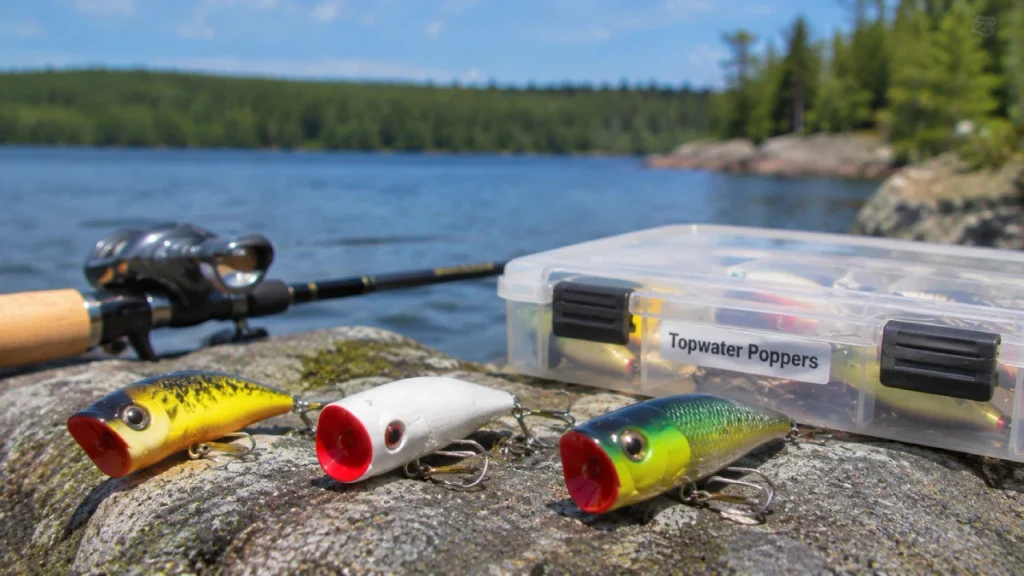
Poppers consistently excel as a topwater option for targeting smallmouth bass in the Boundary Waters due to their ability to mimic surface prey and trigger aggressive strikes.
You’ll find that the region’s rocky shorelines, submerged boulders, and weed edges create ideal ambush points where bass react explosively to well-presented poppers.
The calm, late-summer conditions intensify surface activity, making poppers particularly effective.
When you use a precise stop-and-go retrieve, the bass often strike during pauses, responding to the subtle disturbance that mimics struggling insects or small fish.
Additionally, the relatively unpressured wilderness waters encourage more instinctive strikes, allowing you to exploit the aggressive feeding behavior of smallmouth bass.
This combination of habitat, behavior, and presentation solidifies poppers as a reliable topwater choice in the Boundary Waters.
The rocky substrates and diverse flow patterns in these waters contribute to complex microhabitats that support abundant prey species, enhancing the effectiveness of poppers as lures in this rocky stream environment.
Best Popper Styles for Smallmouth Bass in the Boundary Waters
When targeting smallmouth bass in the Boundary Waters, selecting the right popper style can materially impact your success. The diverse structure and clear water demand poppers that balance subtlety with effective surface disturbance. You want a profile that triggers strikes without spooking wary bass.
Consider these key popper styles:
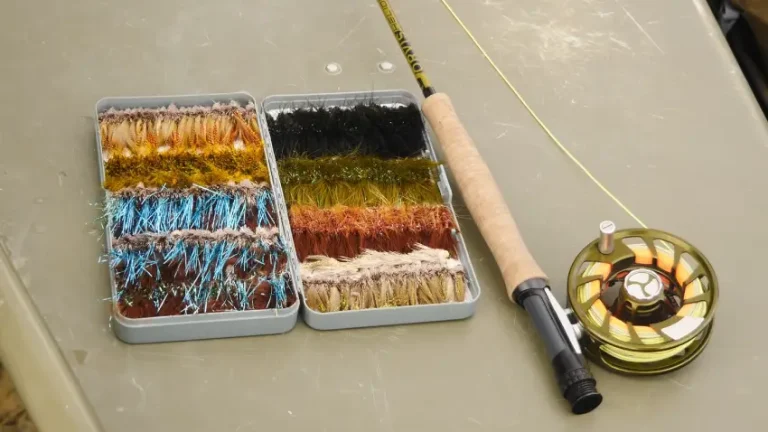
Deer hair poppers for lifelike buoyancy and natural movement.
Standard hard-headed poppers offering strong chugging action.
Bass-bug style poppers sized up to 1/0 for adequate hook gape.
Smaller, subtle poppers that outperform larger models on pressured fish.
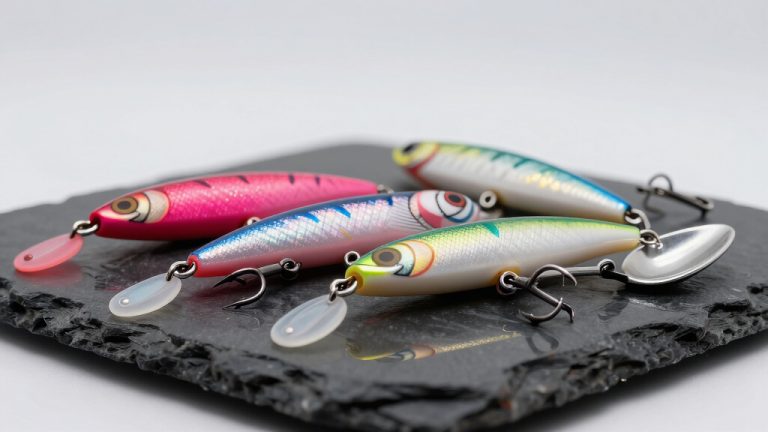
Pop-R and Hula Popper style plugs for varied surface disturbance patterns.
Choosing poppers with appropriate size and hook design ensures better hookups across rocky, weed-lined Boundary Waters habitats.
Matching your lure selection to the rod’s power and action enhances strike detection and hookup success.
How to Match Popper Size and Color to Local Conditions?
When it comes to choosing popper sizes, think about finding that sweet spot between visibility and subtlety. In the Boundary Waters, for example, smaller profiles usually do the trick, especially since the waters are clear and packed with structure.
Now, let’s talk color. It’s all about matching your poppers to the local light and water conditions. If you’re fishing in low light, chartreuse can be a game changer. On the other hand, if the water is clear and bright, you might want to stick to more natural tones. Additionally, incorporating lures with UV-reactive sleeves can enhance visibility and attract more strikes in varying light conditions.
Choosing Effective Popper Sizes
Selecting the right size and color of popper plays a pivotal role in matching local Boundary Waters conditions to maximize bass response.
When choosing popper sizes, consider how bass behavior and water structure influence strike likelihood. Smaller poppers often outperform larger ones in rocky, boulder-strewn areas due to subtle presentation.
Conversely, bigger poppers can provoke aggressive strikes in open water or during low light.
Key sizing considerations include:
Use sizes ranging from 6 to 1/0 for versatility across habitats.
Match hook gape to avoid interference from bulky heads.
Favor smaller poppers for calm, clear water and late summer conditions.
Select larger profiles when bass show aggressive surface activity.
Adjust size to maintain balance between visibility and natural movement.
This analytical approach improves hookup rates and effectively targets Boundary Waters bass.
Additionally, adapting tactics to environmental changes such as water temperature and flow can further enhance your fishing success.
Selecting Colors For Conditions
In Boundary Waters fishing, matching popper color to local conditions materially influences bass response and strike frequency.
You’ll want to assess water clarity, light levels, and forage presence before selecting colors.
In clear water, natural tones like olive, brown, and muted chartreuse mimic local forage and reduce spooking wary smallmouth bass.
Conversely, in stained or darker water, bright chartreuse, white, or fluorescent patterns improve visibility and trigger reaction strikes.
During low-light periods, such as dawn, dusk, or overcast skies, contrasting colors with reflective or fluorescent elements enhance detection.
Size complements color; smaller poppers with subtle hues excel in pressured, clear waters, while larger, vivid patterns dominate in murkier conditions.
Additionally, considering how light penetration affects color visibility at depth can further optimize your popper selection for specific water conditions.
Where to Cast and Present Poppers for Bass Strikes?
When you’re out fishing for smallmouth bass, it’s a great idea to cast your poppers near rocky shorelines and along weed edges. These are the spots where these bass commonly hang out, so you’re definitely in the right zone to catch their attention.
Try to focus on these structural hotspots; they really can make a difference in your chances of getting a strike. And when it comes to your retrieve, go for a stop-and-go technique. Those pauses can really trigger aggressive surface bites, so don’t be afraid to mix it up a bit! Consider adjusting your retrieval speed and pauses to mimic wounded prey, which can provoke more aggressive strikes.
Target Rocky Shorelines
Rocky shorelines offer prime structure where smallmouth bass congregate, making them ideal spots to cast poppers. These areas provide cover and ambush points, so precise placement near submerged boulders and ledges increases strike probability.
When targeting these zones, focus on casting just beyond or directly onto visible rocks to stimulate investigative strikes.
Employ a stop-and-go retrieve with intermittent pauses to trigger reactive bass.
Use smaller poppers with adequate hook gape for effective hookups around complex structure.
Avoid excessive chugging that might spook wary fish holding tight to rocks.
Position yourself for a low, parallel cast to reduce drag and enable subtle popper action.
For enhanced casting distance and control in these conditions, consider using a medium-fast action fly rod to balance power and flexibility.
Focus Weed Edges
Target weed edges with deliberate casts to access prime feeding zones where smallmouth bass often lurk. These transitional zones between open water and dense vegetation concentrate forage, making them ideal strike points for poppers.
Focus your casts just beyond weed tips, allowing the popper’s splash to provoke strikes from bass positioned in ambush.
| Cast Location | Expected Bass Behavior |
|---|---|
| Outer weed edge | Aggressive surface strikes |
| Inside weed fringe | Cautious, short-range hits |
| Gaps in weed beds | Opportunistic following |
Present your popper with steady retrievals, maintaining proximity to weed edges to exploit bass territorial instincts.
Avoid deep casting into weeds to reduce snag risk and maintain popper visibility. This precision targets bass feeding patterns effectively.
Using a rod with fast action can improve hook sets when bass strike aggressively near weed edges.
Use Stop-And-Go
After focusing your casts along weed edges, refining your retrieval to incorporate a stop-and-go technique can markedly increase bass strike rates. This method exploits bass ambush behavior by mimicking injured prey with intermittent movement and pauses.
You’ll want to cast near submerged boulders, weed pockets, and rocky points where bass hold. When retrieving, vary the cadence to trigger reactive strikes.
Key stop-and-go tips:
Cast just beyond cover to provoke strikes on the popper’s return.
Twitch the popper 2-3 times, then pause for 3-5 seconds.
Watch for surface disturbances during pauses; strikes often occur then.
Adjust pause length based on bass activity and water temperature.
Use smaller poppers for subtle presentations in clear water conditions.
This approach maximizes strike potential in Boundary Waters’ complex habitats. Early morning and late evening low-light periods can further increase strike rates by boosting bass aggression and feeding activity, similar to patterns seen in dawn and dusk productivity.
Stop-And-Go Popper Retrieve Technique for Bass Fishing
Mastering the stop-and-go popper retrieve technique markedly increases your chances of provoking strikes from smallmouth bass in the Boundary Waters.
You start by casting toward rocky shorelines or submerged boulders. Then twitch the popper lightly to create subtle surface disturbances.
After a brief chug, pause completely. This cessation triggers aggressive strikes as bass interpret the popper as vulnerable prey.
Repeat this sequence rhythmically, varying pause durations between one and three seconds to match bass responsiveness.
Maintain a balance between subtle twitches and more pronounced pops. Excessive movement can spook wary fish, while too little fails to draw attention.
This technique exploits the bass’s predatory instincts during calm, late-summer conditions when surface activity intensifies.
Precision in timing and cadence is critical to maximize hook-up rates using Boundary Waters poppers.
For prolonged comfort and durability during your fishing float trips, consider using gear made from puncture-resistant materials designed to withstand rocky environments.
Choosing the Right Rod, Line, and Rigging for Boundary Waters Poppers
When gearing up for popper fishing in the Boundary Waters, selecting the right rod, line, and rigging is essential to optimize presentation and hook sets. You’ll want equipment that balances sensitivity, strength, and control for precise casts and quick hook penetration.
Use a 5-6 weight rod for adequate backbone and finesse in casting floating poppers. Choose a floating line for surface presentation and to maintain line visibility.
Select poppers with hook sizes up to 1/0, ensuring a wide gape without excessive bulk. Consider cutting weed guards to improve hook penetration when fishing in clearer June waters.
Rig with strong, sharp hooks to handle aggressive strikes and fish species like bass and pike. This setup maximizes popper effectiveness and enhances your Boundary Waters fishing success.
Using Poppers for Pike, Walleye, and Trout in the Boundary Waters
Frequently overlooked in popper fishing discussions, pike, walleye, and trout present distinct challenges and opportunities in the Boundary Waters.
Pike, walleye, and trout each offer unique challenges and rewards in Boundary Waters popper fishing.
When targeting pike, use robust poppers with strong hooks. Their aggressive strikes and sharp teeth can bend lighter tackle.
Opt for larger profiles with pronounced chugging action to provoke reaction strikes near submerged structure.
Walleye require subtler presentations; smaller poppers with restrained twitches and longer pauses work best, especially in low light.
Trout, including lake and brook varieties, respond to delicate popper action mimicking surface insects. They demand precise placement near rocky shorelines or shallow riffles.
You’ll need to adjust retrieve speed and popper size to match species-specific feeding behavior.
Aggressive for pike, cautious for walleye and trout. This analytical approach maximizes strike probability without compromising hookup success.
Tips for Safe, Successful Boundary Waters Popper Trips
Plan your Boundary Waters popper trips with safety and efficiency by prioritizing preparation, gear selection, and environmental awareness.
Start by selecting appropriate tackle. 5-6 weight rods with floating lines and poppers sized for hook penetration improve performance and reduce lost fish.
Factor in the rugged terrain; wear sturdy footwear and carry a first aid kit.
Respect wilderness regulations by camping only at designated sites to preserve habitat.
Monitor weather conditions closely, as sudden changes impact safety and fish behavior.
Use waterproof storage to protect gear and electronics.
Pack sufficient water and high-energy food for remote access.
Employ insect repellent to mitigate biting insects endemic to the region.
Maintain a canoe or boat in good condition for reliable transport.
Practice catch-and-release to sustain healthy fish populations.
These measures optimize your Boundary Waters popper experience while ensuring safety and conservation.
Adapting Popper Tactics for Different Boundary Waters Species
Mastering popper tactics requires adjusting your approach to match the distinct behaviors and habitats of Boundary Waters species.
For smallmouth bass, focus on rocky shorelines and weed edges during calm evenings. Use small, chartreuse deer hair poppers with stop-and-go retrieves to trigger strikes after pauses.
When targeting northern pike, opt for larger, more robust poppers with stronger hooks to withstand aggressive bites. Retrieve with vigorous chugs.
Walleye and lake trout demand subtler presentations. Use smaller poppers with minimal disturbance, employing slow twitches and extended pauses near submerged structure.
Adjust your popper size and action based on species-specific feeding patterns and habitat preferences. This precision enhances hookup rates and minimizes gear failure, optimizing your success across diverse Boundary Waters targets.
Frequently Asked Questions
How Do Weather Changes Affect Popper Fishing Success in Boundary Waters?
You’ll find popper fishing success in Boundary Waters closely tied to weather shifts.
Calm, warm evenings and late-summer conditions boost topwater activity, making poppers more effective.
Conversely, windy or cooler weather can suppress surface strikes, requiring you to adjust your retrieve.
Consider using more aggressive chugging or deeper dropper rigs.
Sudden weather changes often trigger fish to pause before striking, so mastering stop-and-go retrieves during variable conditions is vital for consistent hookups.
What Are the Best Times of Day for Popper Fishing in the Boundary Waters?
You’ll find early mornings and calm evenings are the best times for popper fishing in the Boundary Waters. During these periods, surface activity increases, making topwater strikes more frequent.
Late summer evenings, in particular, enhance popper effectiveness as fish become more aggressive near shorelines. Focus on low-light conditions with minimal wind to maximize visibility of popper action.
Capitalize on the strike-triggering pauses in your retrieve.
Can Poppers Be Effectively Used From Shore or Only by Canoe?
You can effectively use poppers from shore in the Boundary Waters, especially during late summer when small bass are near rocky shorelines and weed edges.
Shore fishing allows precise casts to structure where bass hold. Making subtle retrieves with pauses triggers strikes.
While canoe access expands your range, shore-based popper fishing remains productive.
Focus on calm conditions and employ stop-and-go retrieves to imitate vulnerable prey.
How Should Poppers Be Stored and Maintained During Multi-Day Trips?
Oh, sure, just toss your popperssin the bottom of your pack and hope for the best.
But if you want them intact, store poppers in a ventilated fly box to prevent moisture buildup and rust.
Rinse with fresh water after exposure to dirt or sweat.
Dry them thoroughly before packing each evening.
Check hooks for sharpness and replace damaged weed guards to maintain peak hookup rates during your multi-day Boundary Waters trip.
Are There Any Local Regulations Specific to Using Poppers in Boundary Waters?
No, there aren’t specific regulations restricting the use of poppers in the Boundary Waters.
You must comply with general fishing regulations, like possession limits, size limits, and seasonal restrictions that apply to all lures.
Make certain your hooks meet state standards, especially when targeting multiple species.
Also, respect wilderness rules, such as camping only at designated sites.
Always verify updated regulations before your trip, as policies can change with new management directives.
- Has three of the most productive Pop-Rs in the best bass catching color patterns mean more topwater…
- The Rebel Pop-R has been the standard by which all topwater poppers/chuggers have been judged for…
- Legendary topwater bait that’s won hundreds of thousands of dollars for anglers in bass…
Final Thoughts on Using Poppers for Boundary Waters Bass Fishing
You’ve seen why poppers dominate Boundary Waters bass fishing: precision, versatility, and strike appeal.
But here’s the catch: mastering size, color, and retrieve isn’t just skill; it’s your edge.
Cast in the right spots, adjust your rig, and watch strikes explode.
Don’t underestimate adapting tactics for pike or walleye; they demand subtle shifts.
So, are you ready to transform your popper game and unleash the full potential of Boundary Waters fishing?
The next cast will reveal all.
Last update on 2026-11-17 / Affiliate links / Images from Amazon Product Advertising API