
How to Fish for Pike in the Summer: Expert Fishing Tips
You’ll find summer pike near cooler weed edges, drop-offs, and offshore humps, especially where water stays between 14–18°C.
Use faster, controlled retrieves with lures like spinnerbaits or jointed swimbaits that mimic fleeing baitfish.
Target early mornings, late afternoons, or cooler pockets to increase strikes.
Troll deep weedlines at steady speeds with heavy-duty gear and strong leaders for best results.
Mastering these tactics boosts your chances. There’s more to sharpen your approach and gear up effectively.
Key Takeaways
- Target pike near weed edges, deep weedlines, offshore humps, and cooler water pockets in 6–20 feet depth.
- Fish during early mornings, late afternoons, or just before storms when water temperature is 14–18°C.
- Use spinnerbaits, spoons, and jerkbaits with a fast, controlled retrieve to mimic fleeing or wounded baitfish.
- Troll at steady speeds around 15–20 feet depth along deep weedlines and humps to cover large areas efficiently.
- Employ heavy-duty gear with strong wire leaders and abrasion-resistant tackle to handle aggressive strikes and sharp teeth.
Where Can You Find Pike in Summer Lakes?
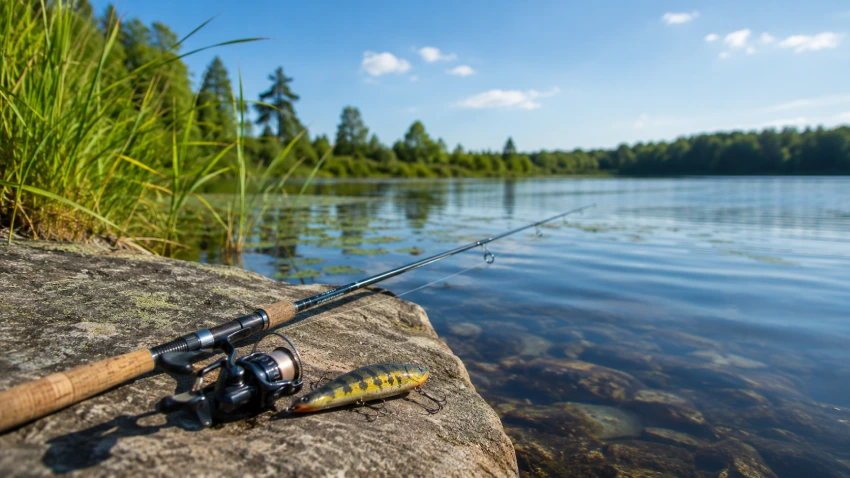
When fishing for pike in summer lakes, start by focusing on weed edges where the fish like to hang out.
Begin your summer pike fishing by targeting the edges of weedbeds where these fish often linger.
Pike often patrol both the inside and outside edges of weedbeds, especially in 6 to 12 feet of water.
If shallow spots get too warm, shift your attention to deeper weedlines where pike find cooler refuge.
Offshore humps, reefs, drop-offs, and main-lake points also hold pike when they move away from dense cover.
You’ll want to prioritize cooler areas, such as springholes or spots where localized cold water enters the lake.
Pike gather there during heat. By targeting these spots, you’ll increase your chances of locating active pike without wasting time in overly warm or barren waters.
During summer, pike prefer deep, cool water near drop-offs and springs, making these key locations for successful fishing.
How Does Water Temperature Affect Pike Behavior?
You’ll find pike are most active when the water temperature is between 14 and 18°C. In this range, they feed consistently and efficiently, making it a prime time for fishing.
But when the water warms up beyond that, things change a bit. Pike tend to limit their feeding to cooler pockets of water and often stick to specific times of the day.
Rain and cooler water can increase oxygen levels and metabolism, which may temporarily boost pike feeding activity in summer oxygen levels.
Optimal Temperature Range
Because pike thrive best in water temperatures between 14 and 18°C, targeting cooler pockets during summer can markedly improve your chances.
You’ll find pike lingering near springholes, deep weedlines, or shaded drop-offs where water stays cooler than surrounding areas.
Avoid uniformly warm flats, as pike tend to leave those in search of comfort.
Focus on depths around 6 to 12 feet near weed edges or deeper structures to locate these cooler refuges.
Keep in mind that water temperature directly influences pike activity, so consistently check your thermometer and adjust your spot accordingly.
Prioritizing stable, cooler zones helps you fish where pike feel most comfortable, setting you up for more strikes and efficient summer fishing sessions.
Additionally, understanding how wind oxygenates water can help you identify feeding hotspots where pike may be more active during breezy conditions.
Temperature Impact On Feeding
Although pike tolerate a range of temperatures, their feeding activity peaks within a narrow window, typically around 14 to 18°C.
When water warms above this, pike slow down, seeking cooler, deeper spots or shaded weed edges. You’ll notice their feeding becomes more selective and less frequent as heat rises. Targeting cooler pockets or early mornings helps.
Pike favor stable conditions in this temperature range, feeding efficiently rather than constantly. When temps drop below 14°C, their metabolism slows, reducing aggression and strike rates.
To maximize your chances, focus on cooler water areas, such as deep weedlines or springholes, especially during summer’s hottest hours.
Understanding this temperature-feeding link allows you to adjust your tactics and timing for more consistent summer pike success. Using lure color and action tailored to water clarity can further improve your chances during these feeding windows.
When Is the Best Time to Fish for Summer Pike?
During the summer months, timing your fishing trips around the cooler parts of the day can make a big difference in your success with pike.
Early mornings and late afternoons offer the best windows when water temperatures dip closer to pike’s preferred 14 to 18°C range. Pike tend to feed aggressively during these cooler periods, so plan your outings accordingly.
Early mornings and late afternoons are prime times when pike feed most actively in cooler waters.
Also, fishing just before major storms can trigger active feeding, giving you an edge. Avoid midday heat when pike retreat to deeper, cooler spots and feed less.
Focus on stable weather days with consistent barometric pressure to increase your chances. By aligning your fishing with these natural rhythms, you’ll maximize your opportunity to target summer pike effectively.
Additionally, falling barometric pressure before storms often stimulates aggressive feeding in predatory fish like pike.
Which Lures Work Best for Summer Pike?
When you’re out there targeting summer pike, it’s all about choosing the right lures. Spinnerbaits, spoons, and jerkbaits are your go-to options. They really shine near weed edges and deeper cover, where pike like to hang out.
Now, when you’re retrieving these lures, try using a faster pace with some occasional pauses. This keeps the lure lively and really helps trigger strikes from those active fish. Using swivels can improve your casting and retrieval by preventing line twists and tangles, making your lure action more effective.
Top Effective Lures
Summer pike often respond best to a select group of lures designed to mimic their natural prey and cut through weed-choked waters.
You’ll want lures that are versatile and effective around weed edges and deeper vegetation where pike hide.
Here are the top effective lures for summer pike:
- Johnson Silver Minnow weedless spoon (3-4 inches) is great for casting through weeds without snagging.
- Bucktail spinners like Mepps Musky Killer are excellent for working weed tops and edges.
- Jointed swimbaits mimic injured baitfish and trigger aggressive strikes.
- Inline spinners and rattle traps provide flash and vibration to attract pike in stained or low-light conditions.
Using these lures increases your chances of enticing strikes during peak summer feeding times. Additionally, selecting lures with appropriate weight and blade configuration helps maintain optimal casting performance and realistic action in pike habitat.
Retrieval Techniques
To bring out the best strikes from pike, you’ll want to focus on a faster retrieve that keeps lures just above the weed tops instead of letting them get tangled in vegetation.
Stick to a straight retrieve with occasional pause-and-twitch actions to provoke aggressive strikes. Use lures like spinnerbaits, bucktail spinners, and weedless spoons. These work well when kept controlled and close to weed edges.
Short casts help maintain lure position over cover, preventing snags. For shallow edges, a slow roll just under the surface can also trigger bites.
Remember, summer pike prefer quicker, more deliberate movements. So don’t hesitate to speed up your retrieve compared to spring fishing.
Using fish-friendly netting can help safely land pike without causing damage, supporting catch-and-release efforts.
Mastering these techniques will keep your lure visible and enticing, increasing your catch rate.
How Should You Retrieve Lures to Maximize Pike Strikes?
Mastering your lure retrieval can markedly boost your chances of triggering aggressive strikes from pike.
Mastering lure retrieval significantly increases the odds of provoking aggressive pike strikes.
Pike in summer favor a faster, controlled retrieve that keeps lures visible and enticing above or near weed edges. You want to adapt your speed and action to provoke reaction strikes without spooking fish.
Follow these tips to maximize strikes:
- Use a straight retrieve with occasional pause-and-twitch moves to imitate wounded prey.
- Keep your lure just above weeds, avoiding snagging and maintaining visibility.
- Employ a slow roll retrieve near shallow cover to tempt wary pike.
- Make short, precise casts to maintain tight lure control over targeted spots.
Additionally, varying your retrieve speed and incorporating fast, erratic retrieves can effectively mimic fleeing baitfish and provoke strikes in strong currents.
What Are the Best Trolling Techniques and Tackle for Summer Pike?
Although trolling covers large areas efficiently, it also demands the right gear and techniques to target summer pike effectively.
You’ll want to troll at depths around 15 to 20 feet, focusing on deep weedlines, offshore humps, and cooler water pockets where pike gather.
Use heavy-duty casting gear paired with a strong wire leader to handle aggressive strikes and sharp teeth.
For lures, plugs, spoons, and bucktail spinners work well when run at the correct depth.
Keep your trolling speed steady but fast enough to trigger strikes, usually faster than spring fishing speeds.
Equip yourself with a sturdy net and long-handled pliers to quickly land and release fish, minimizing stress.
Mastering these tactics boosts your chances of hooking and landing summer pike consistently.
Consider using abrasion-resistant leaders to prevent line damage from sharp teeth and underwater structures during trolling.
Frequently Asked Questions
How Do Weather Changes Impact Pike Feeding Activity in Summer?
Ever wonder why pike suddenly go silent or aggressive during summer?
Weather changes, especially stable barometric pressure and approaching storms, directly influence their feeding.
You’ll notice pike feed more actively ahead of major storms, taking advantage of comfortable conditions.
Conversely, unstable weather or rapid temperature shifts can reduce their activity.
So, when planning your trip, watch the weather closely.
Timing your fishing around these shifts can make all the difference in your catch rate.
What Safety Precautions Should I Take When Fishing for Pike?
You should always wear polarized sunglasses to protect your eyes from sharp hooks and sudden strikes. Use a sturdy wire leader to avoid bite-throughs.
Handle pike with long-handled pliers and a net to keep distance from their sharp teeth. Keep your fingers clear when unhooking, and release fish quickly to minimize stress.
Also, stay aware of weather changes and lake conditions to stay safe and avoid accidents on the water.
How Can I Properly Handle and Release a Caught Pike?
Handling a pike is like holding lightning in your hands; quick and careful.
Use a sturdy net to land the fish, then grab it firmly behind the head or around the gills with long-handled pliers to avoid its sharp teeth.
Keep the pike wet and supported horizontally to reduce stress.
Release it gently back into the water, making sure it’s revived and swimming strong before letting go.
Quick, respectful handling guarantees the pike’s safe return.
Are There Specific Baitfish Species Pike Prefer in Summer?
Yes, pike favor certain baitfish in summer, mainly species like perch, shiners, and smaller whitefish.
You’ll want to focus on areas where these baitfish congregate because pike actively target them.
Matching your lure size and color to the local baitfish improves your chances.
Observing what’s schooling near weed edges or drop-offs helps you pick the right imitation, making your presentations more natural and effective during those warmer months.
What Are Common Mistakes to Avoid When Summer Pike Fishing?
Don’t fish shallow flats during peak heat; pike move to cooler, deeper weed edges or offshore structures.
Avoid slow, sloppy retrieves; pike prefer faster, controlled lure action above weeds.
Don’t ignore water temperature; stay in 14-18°C zones.
Skimping on heavy leaders can cost you when pike strike hard.
Also, don’t neglect early morning or late afternoon prime feeding times.
Finally, avoid overhandling fish; use proper tools and release quickly to keep them healthy.
The Secret to Successful Summer Pike Fishing
Fishing for pike in summer is like solving a thrilling puzzle. You’ve got to know where they hide, what lures tempt them, and the best times to strike.
By understanding their behavior in warmer water and mastering your retrieval and trolling techniques, you’ll dramatically increase your chances of success.
Keep these tips in your tackle box, stay patient, and watch as the elusive summer pike finally takes the bait. Happy fishing!