
What Size Reel for Steelhead
You’ll want a steelhead reel sized between 2500 and 4000, chosen based on your rod length, line weight, and river conditions.
Use 2500 reels for lighter lines and small rivers. Opt for 3000–3500 for versatility in medium rivers.
Choose 4000 for heavy currents or large rivers demanding extra capacity and drag.
Make certain your reel holds at least 150 yards of 8–10 lb test line.
It should feature a smooth, sealed drag system to handle strong runs. More details clarify ideal matches and features.
Key Takeaways
- Reel sizes 2500–4000 are typical for steelhead, with 3000 or 3500 offering the best versatility across river types and line weights.
- Use a 2500 reel for lighter lines and smaller steelhead in small rivers, and a 4000 reel for large rivers and heavy currents.
- Match reel size to rod length and power: shorter rods with 2000–2500 reels, longer rods with 3000–3500 reels for balanced performance.
- Ensure the reel holds at least 150 yards of 8–10 lb test line to handle long runs and deeper waters effectively.
- Prioritize reels with smooth, sealed multi-disc drag systems to manage strong runs and protect internal components from grit and corrosion.
Key Factors for Choosing the Right Steelhead Reel Size
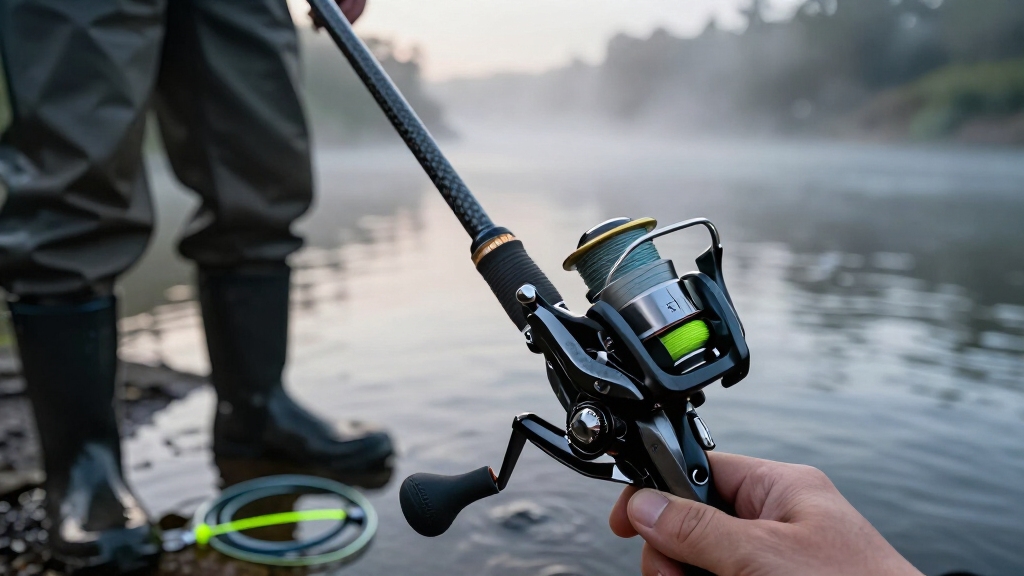
Selecting the right reel size for steelhead fishing hinges on balancing several technical factors.
You need to give thought to rod length, line weight, and fishing conditions to match reel size appropriately.
Most anglers use spinning reels sized between 2500 and 4000. A 3000 or 3500 reel suits a wide range of rivers and line setups.
The 4000 size handles heavier lines and larger runs. Line capacity is essential; your reel should hold at least 150 yards of 8- to 10-pound test line to handle strong steelhead runs.
Additionally, drag system performance is indispensable, but you’ll prioritize size compatibility first.
Ultimately, choose a reel that balances capacity, weight, and compatibility with your rod for prime control and efficiency.
Reels with drag strengths ranging from around 6 lbs up to nearly 40 lbs offer options to match the power needed for steelhead fishing.
Picking the Right Reel for Different River Types
When you fish different rivers, matching your reel size to the water conditions is essential for performance and control.
On small rivers, a 2500 or 3000 reel provides adequate line capacity and lightweight handling. This setup is perfect for lighter presentations and smaller steelhead.
Medium rivers demand a 3000 or 3500 reel to balance line capacity and drag strength. This accommodates stronger currents and larger fish.
For big rivers with heavy flows, a 4000 reel is preferable. It offers extra line capacity and a robust drag system to manage long runs and heavier lines.
Consider river-specific factors like current speed and water depth, as these influence drag requirements and line capacity.
Choosing the right reel size ensures you maintain control and respond effectively to steelhead behavior in varying river environments.
Additionally, selecting a reel with a smooth disc drag system helps manage powerful, sudden steelhead runs without jerks.
Matching Reel Size to Rod Length and Power
Understanding the right reel size for your rod length and power sharpens your control and casting efficiency. For rods between 9 and 10 feet, you’ll typically match them with reels sized from 2500 to 4000, depending on rod power and fishing conditions.
Shorter rods, around 8 to 8.5 feet, pair best with smaller 2000 to 2500 reels, which balance well and handle lighter line weights.
Longer, more powerful rods, 9 to 9.5 feet, work effectively with 3000 or 3500 reels, providing smooth line retrieval and adequate drag for steelhead’s strong runs.
Matching reel size to rod power guarantees balanced gear, reducing fatigue and enhancing line control during fights. Prioritize reel weight and retrieval speed to complement your rod’s action and maintain precision in casting and fish handling. Additionally, ensuring your snap swivel strength matches your leader by at least 10–20% improves overall gear reliability and performance.
Why Line Capacity Matters for Steelhead Reels?
Every steelhead reel must provide enough line capacity to handle the fish’s long, powerful runs and the varied conditions you’ll face on different waters.
If your reel lacks sufficient line, you risk losing a hooked steelhead prematurely. Adequate line capacity guarantees you can manage strong surges without running out of line or sacrificing control.
Focus on these critical reasons:
- Extended Runs: Steelhead often make long, fast runs, requiring at least 150 yards of 8- to 10-pound test line on your reel.
- Versatility: Different rivers and fishing styles demand varying line lengths and strengths, so capacity must accommodate these variables.
- Depth and Current: Deeper or faster waters require more line to maintain tension and avoid slack during the fight.
Choosing the right line capacity enhances your control and success on the water. Additionally, understanding your reel’s line capacity and how it varies with line type is essential for precise depth control and effective fight management.
Why a Smooth Drag System Matters for Steelhead Reels?
A smooth drag system is crucial when you’re out there chasing steelhead. It helps you maintain consistent pressure during those intense runs the fish are known for. If the drag isn’t smooth, you risk sudden line breaks, which can be a real bummer after all that effort.
Plus, let’s not forget about the environment. Rivers often have sand and silt that can sneak into your reel. A good drag system not only helps with the fight but also protects your gear from all that debris.
When you manage these factors well, you gain better control over the situation, and that definitely boosts your chances of landing those powerful fish. So, make sure your reel has a reliable drag system—it makes all the difference! Choosing a reel with a robust drag system matched to your target fish size is essential to prevent line breakage during powerful runs.
Drag Consistency Importance
Although steelhead put up strong, sudden runs, your reel’s drag system must deliver smooth, consistent resistance to prevent line breakage and maintain control.
Inconsistent drag can cause shock loads that snap your line. A smooth drag allows you to tire the fish gradually.
To guarantee drag consistency, focus on:
- Material quality – High-grade washers and sealed drag systems reduce friction variability.
- Drag adjustment precision – Fine-tuned settings let you apply exact resistance matching steelhead strength and line rating.
- Maintenance – Regular cleaning and lubrication prevent uneven drag performance caused by debris or wear.
Using a multi-disc carbon fiber drag system rated for continuous use ensures smooth, heat-resistant stopping power ideal for managing steelhead runs.
Protecting Against Debris
Shielding your reel’s drag system from sand, silt, and other debris plays a crucial role in maintaining smooth operation during steelhead fights.
Debris can cause drag stuttering or failure, risking line breakage when you need consistent pressure. You want a reel with sealed or enclosed drag systems to minimize contamination and extend drag longevity.
Using reels with sealed drag systems helps provide consistent pressure and protection against water and dust, crucial for durability.
| Debris Type | Effect on Drag |
|---|---|
| Sand | Abrades drag washers |
| Silt | Causes drag sticking |
| Organic Matter | Clogs drag mechanism |
| Water Contaminants | Corrodes metal parts |
| Dust | Reduces drag smoothness |
Choosing reels with smooth, sealed drags guarantees reliable performance and protects your investment in challenging river environments.
This lets you focus on controlling the fish, not on drag issues caused by debris intrusion.
Managing Strong Fish Runs
Keeping debris out of your reel’s drag system helps maintain smooth operation. This becomes even more critical when managing strong fish runs.
Steelhead fight hard and demand consistent drag pressure to prevent line breaks and loss. A smooth drag lets you apply steady resistance, tiring the fish without sudden jerks that risk snapping your line.
To optimize drag performance, focus on:
- Using a sealed drag system to block sand and grit that cause uneven drag.
- Regularly cleaning and lubricating drag washers to maintain smoothness.
- Selecting reels with multi-disc drag systems for fine-tuned, consistent pressure.
When you prioritize smooth drag, you improve control over surging steelhead. This reduces stress on your gear and increases your chances of a successful catch. The Abel SDS reel’s fully sealed, multi-disc drag system rated to 25 lbs exemplifies the durability and smooth torque stability essential for managing strong fish runs.
Best Reel Sizes for Small, Medium, and Large Rivers
When selecting the best reel size for steelhead fishing, consider the river’s size and current strength to ensure performance.
Small rivers with lighter currents suit a 2500 or 3000 reel, balancing line capacity and control.
Medium rivers demand a 3000 to 3500 size for added drag power and line capacity.
Large rivers and strong current require a 4000 reel to handle heavier line and long runs confidently.
Matching reel size to river conditions guarantees you stay effective and in control.
Choosing a reel with an appropriate drag system is essential for managing steelhead runs smoothly.
When to Use 2500, 3000, 3500, or 4000 Steelhead Reels?
Choosing the right steelhead reel size depends heavily on the specific fishing conditions and your gear setup.
You’ll use a 2500 reel primarily for lighter lines and smaller steelhead in smaller rivers.
A 3000 reel suits most moderate river conditions, providing balanced line capacity and drag for average-sized fish.
The 3500 size offers increased capacity and drag strength, ideal for longer casts and medium to large rivers.
For the toughest runs and biggest rivers, a 4000 reel gives you the extra line capacity and robust drag needed to control strong steelhead.
Focus on these guidelines:
- Use 2500 for lightweight setups and small streams.
- Choose 3000 or 3500 for versatile, all-around river fishing.
- Opt for 4000 when targeting heavy currents or large fish.
Selecting a reel with multi-disc drag systems ensures smooth and consistent pressure during strong runs, improving your control over steelhead.
Balancing Reel Size With Line Weight and Fishing Conditions
Although reel size plays a crucial role, you must balance it carefully with your line weight and fishing conditions to optimize performance.
For steelhead, matching a 2500 to 3500 reel with 6- to 10-pound test line suits small to medium rivers. This setup provides adequate line capacity and smooth drag for typical runs.
On larger rivers or when using heavier 10- to 12-pound line, a 3500 to 4000 reel offers extra line capacity, often 150 yards or more, and stronger drag systems to handle powerful, long runs.
Consider also water depth and current strength. Faster currents and deep holes demand larger reels with more line and robust drag.
This precise balance guarantees you maintain control during fights without sacrificing casting comfort or retrieval speed.
Practical Tips for Choosing and Buying Steelhead Reels
Since reel performance directly impacts your steelhead fishing success, selecting the right reel involves more than just size.
Reel performance plays a crucial role in steelhead fishing success, so choosing the right reel goes beyond size alone.
You’ll want to take into account line capacity, drag quality, and corrosion resistance. Most anglers find a 3000 or 3500 size reel ideal, providing versatility across river types and line weights.
Keep these tips in mind when choosing:
- Match reel size to your rod length and typical line test. 8-10 lb usually works best.
- Prioritize a smooth, sealed drag system to handle strong runs and protect internals from river debris.
- Confirm the reel holds at least 150 yards of line to manage long runs and deeper water effectively.
Frequently Asked Questions
How Often Should I Maintain My Steelhead Reel?
You should maintain your steelhead reel after every few trips, ideally cleaning and lubricating it every 3 to 5 outings.
Rinse it with fresh water after each use to remove dirt, sand, and salt.
Deep clean and grease the internal components seasonally or if it feels sluggish.
Regular maintenance guarantees smooth drag performance and prevents corrosion, especially in harsh river conditions.
This keeps your reel reliable during tough steelhead fights.
What Reel Brands Are Most Durable for Steelhead Fishing?
You’ll find Shimano, Daiwa, and Penn among the most durable reel brands for steelhead fishing.
Shimano reels feature advanced drag systems and corrosion-resistant materials.
Daiwa offers smooth, sealed drags and rugged construction ideal for river conditions.
Penn reels stand out with strong drag performance and durable builds.
Choosing any of these brands guarantees reliability, smooth operation, and longevity, especially when you fish in abrasive, wet environments common to steelhead runs.
Can I Use a Baitcasting Reel for Steelhead Instead?
You can use a baitcasting reel for steelhead, but keep in mind that over 80% of steelhead anglers prefer spinning reels due to their versatility and ease of use with lighter lines.
Baitcasters excel with heavier lines and precise casting but demand more skill to avoid backlash.
If you’re targeting bigger fish in heavy cover or want stronger drag control, a baitcasting reel can work well, provided you match it properly to your rod and line weight.
How Does Reel Gear Ratio Affect Steelhead Fishing?
Reel gear ratio affects your retrieve speed and power when steelhead fishing. A higher gear ratio (6.0:1 or above) lets you reel in line faster, ideal for quick lure retrieval or fighting fast-running fish.
Lower ratios (around 4.5:1) provide more torque, helping you control strong, long runs and pull fish out of heavy current. Choose a ratio matching your fishing style and conditions for better hooksets and smooth fights.
Are Lightweight Reels Better for Long Steelhead Fishing Trips?
You’ll feel the difference when casting all day. Lightweight reels reduce arm fatigue and improve comfort during long steelhead trips.
They let you maintain precise control and quicker line retrieval without weighing you down. However, don’t sacrifice durability or drag strength. Your reel must handle strong runs and frequent use.
Steelhead Fishing: Match Your Reel to Your Rod and Line
Choosing the right steelhead reel size directly impacts your success on the water. Did you know that 70% of steelhead anglers report better hook sets when matching reel size to their rod and line?
By selecting a reel that balances line capacity, drag smoothness, and river conditions, you’ll improve control and reduce fatigue. Remember, a well-matched reel enhances performance, making every cast count. Choose wisely for your steelhead adventures.