10 Fishing Tools and Their Uses: Every Angler Should Know
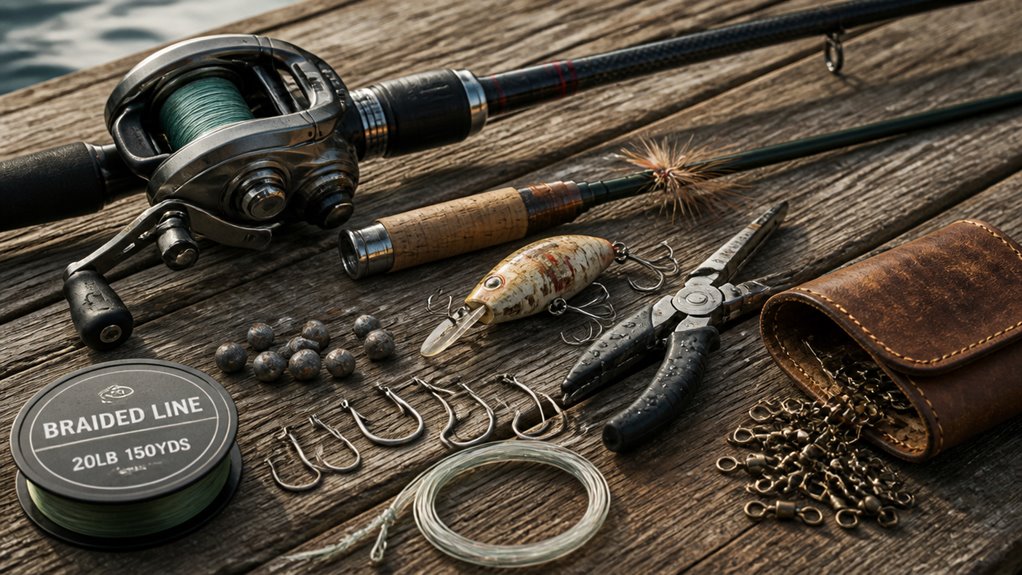
You’ll want pliers for hook removal and wire cutting, plus dedicated line cutters to keep knots strong by making clean cuts.
Swivels prevent line twists, while snap swivels let you change lures fast.
Hooks in various sizes match your target fish, and sinkers or weights help your bait reach the right depth.
Bobbers keep bait suspended, and multi-tools combine functions for convenience.
Organizing gear in a tacklebox speeds setups. More tips will sharpen your fishing skills.
Key Takeaways
- Pliers assist with hook removal, split ring opening, hook straightening, and wire cutting for efficient and safe fishing operations.
- Line cutters, including braid scissors and line nippers, provide clean cuts that preserve knot strength and prevent line fraying.
- Swivels prevent line twists and tangles by allowing independent rotation, improving casting, retrieval, and overall line integrity.
- Sinkers and weights control bait depth and stability, with types like bell, egg, pyramid, bullet, and split shot suited to various bottom conditions.
- Bobbers keep bait at targeted depths and detect bites, with different styles like slip, pencil, clip-on, and round ball serving specific fishing needs.
How To Set Up Your Fishing Rod, Reel, And Line?
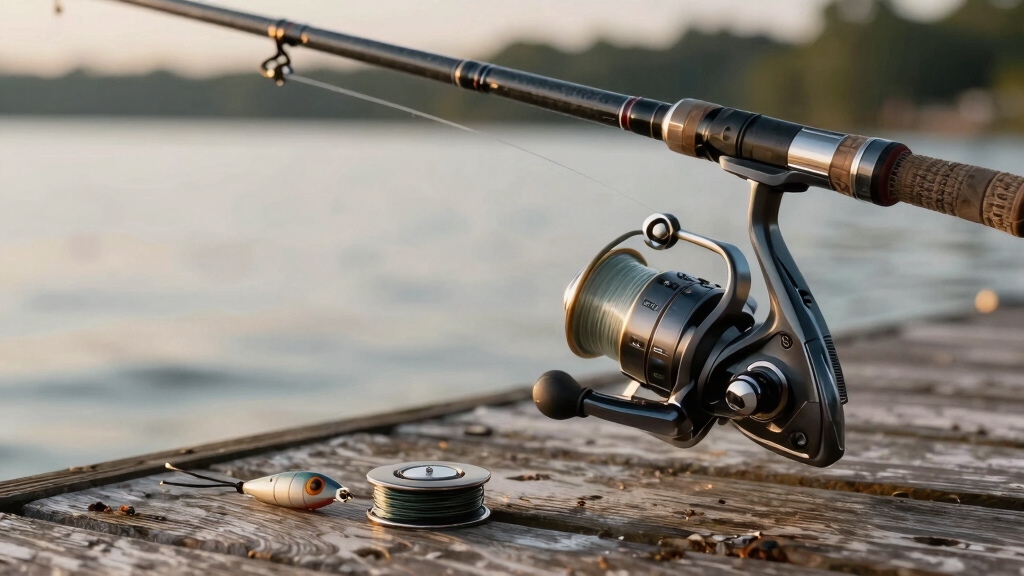
Begin by selecting the right rod, reel, and line combination for your fishing style.
If you’re a beginner, choose a spinning rod paired with a spinning reel. The reel hangs below the rod, making it easy to identify and use.
For boat fishing, opt for a rod about six to seven feet long. For shore fishing, a longer rod between eight to fourteen feet works best.
A seven-foot medium-heavy rod with a spinning reel and monofilament line is a reliable standard, especially for bass fishing.
Attach the reel securely to the rod’s reel seat. Thread the line through the rod’s guides starting from the tip and tie your knot firmly.
This setup balances casting distance, control, and versatility for most freshwater fishing scenarios. Choosing the appropriate reel size and line capacity based on your target species and fishing environment will greatly enhance your fishing experience.
Choosing The Right Hooks And Baits For Your Catch
Once your rod, reel, and line are properly set up, the next step is selecting the right hooks and baits to match the fish you want to catch.
Choose hook sizes based on your target species. Smaller hooks suit panfish, while larger ones work for bass or catfish.
Match the bait type to the fish’s natural diet. Live bait like worms or minnows often attract more strikes, but artificial baits can be effective too.
Keep spare hooks handy to replace damaged ones quickly. Attach bait securely to prevent it from slipping off during casting.
Proper hook and bait selection improves your chances of success and reduces frustration. By tailoring these choices to your catch, you’ll fish more efficiently and enjoyably.
Handling and storing live bait in aerated containers helps maintain bait vitality and increases your chances of a bigger catch.
How To Select Sinkers And Weights For Different Depths?
When you want your bait to reach specific depths, choosing the right sinkers and weights is essential. For deep water, bell weights work well to keep your bait down.
If you’re fishing rocky or pebbly bottoms, egg sinkers prevent snagging by sliding through obstacles smoothly. In muddy or sandy areas, pyramid sinkers hold the line steady, cutting into the substrate to avoid drift.
Bullet sinkers suit bass fishing in vegetation-heavy spots, letting your bait move naturally without getting caught. For precise weight adjustment, split shot sinkers let you quickly add or remove weight depending on current and depth.
Select sinkers based on depth and bottom type to maintain control and optimize bait presentation effectively. For finesse fishing in rocky or heavy-cover areas, pencil weights offer superior snag resistance and subtle presentation.
Using Bobbers To Control Your Hook’s Depth
Sure! Here’s a more conversational version of your text:
—
You know, there are all sorts of bobbers out there that can help keep your bait at just the right depth. When you set your bobber correctly, it really makes a difference! It ensures that your hook stays right in the strike zone, which is where the fish are usually the most active.
Plus, using bobbers gives you a clear signal when a fish bites. It’s like having a built-in indicator! This can really boost your chances of reeling in a successful catch. So, if you want to up your fishing game, definitely consider using bobbers! Using a slip bobber rig allows for even more precise depth control and helps keep your bait in the ideal zone longer.
Bobber Types And Functions
Several types of bobbers serve distinct purposes in controlling your hook’s depth, helping you present bait effectively to target fish.
Round, plastic ball bobbers are simple and float well, ideal for beginners fishing near the surface. Slip bobbers slide freely along your line, letting you adjust depth quickly without retying. They’re perfect for fishing at varying depths.
Pencil bobbers are slender and sensitive, detecting subtle bites, great when fish feed cautiously. You’ll also find clip-on bobbers that attach directly to the line, providing stable floatation in faster currents.
Each type helps you maintain your hook at the desired depth, improving bait visibility and strike detection. Choosing the right bobber depends on your fishing environment, target species, and how precisely you want to control your presentation. Using lightweight split shots above the hook in combination with bobbers helps create a natural bait movement that attracts more fish.
Setting Bobber Depth Correctly
Mastering the correct bobber depth guarantees your bait stays in the strike zone where fish are most likely to bite. To set it right, first estimate the depth where fish feed, often just above the bottom or near submerged structures.
Slide the bobber stop or knot on your line to that depth, ensuring your hook suspends precisely in that zone. Test by casting and observing if the bobber floats upright without dragging or sinking.
Adjust the depth incrementally until your bait remains steady, maximizing visibility and natural movement. Using the right bobber type helps control depth accurately.
Properly setting bobber depth prevents your bait from resting on the bottom or floating too shallow, increasing your chances of hooking fish effectively and improving your overall fishing success. Additionally, storing live bait in oxygen-rich water can enhance bait vitality and improve fishing results.
Benefits Of Using Bobbers
Bobbers frequently serve as indispensable tools for controlling your hook’s depth, allowing you to present bait exactly where fish are feeding.
By adjusting the bobber’s position on your line, you can suspend bait at precise depths, targeting fish that stay off the bottom or near midwater. This control increases your chances of a bite, especially in waters with varying depths or structures.
Additionally, bobbers act as visual strike indicators, alerting you immediately when fish take the bait. They also keep your bait from snagging on the bottom or drifting away with currents, maintaining an effective presentation.
Using bobbers, you gain versatility in fishing technique, enabling you to adapt quickly to different species and conditions without changing your rig extensively. For those interested in enhancing their fishing setup, incorporating fly tying kits can provide customized flies that match local bait and improve success rates.
How Swivels Prevent Line Twists And Tangles?
Swivels play a crucial role in keeping your fishing line free from twists and tangles, which can quickly ruin a fishing experience.
By allowing parts of the line to rotate independently, swivels prevent the line from twisting during casting and retrieval.
When a lure or bait spins in the water, the swivel absorbs that rotation, so the main line stays untwisted and strong.
Using snap swivels also makes changing lures quick and hassle-free, without retying knots.
This prevents weak spots caused by repeated knotting and reduces the risk of line breakage.
You’ll find that incorporating swivels into your rigging not only maintains line integrity but also saves you time and frustration on the water, enhancing your overall fishing efficiency.
Selecting the correct swivel size to match your line strength is essential to prevent failure and improve fishing success.
Essential Fishing Pliers For Hook Removal And More
Just as swivels keep your line from twisting and tangling, having the right pliers on hand can save you time and protect your hands when dealing with hooks.
Essential fishing pliers, typically made from rust-resistant aluminum or stainless steel, help you remove hooks safely, cut wires, open split rings, and straighten bent hooks.
Needle-nosed models offer precise grip on small components, while integrated line cutters and wire-forming notches enhance functionality.
Choosing durable, multi-functional pliers ensures efficiency and safety during your fishing trips.
Many models feature replaceable tungsten-carbide cutters to maintain sharpness and extend tool life.
| Feature | Benefit |
|---|---|
| Rust-resistant material | Lasts in saltwater environments |
| Needle-nosed design | Grips small wires and hooks |
| Integrated cutters | Cuts wires and lines easily |
| Multi-functionality | Combines several tools in one |
Why Dedicated Line Cutters Improve Your Fishing Setup?
When you’re out fishing, having dedicated line cutters on hand can make a significant difference in maintaining your gear’s performance and longevity.
These tools are specifically designed to cleanly cut fishing lines, especially braided ones, without causing fraying or weakening knots.
Using regular scissors or pliers often results in jagged cuts that compromise line strength and increase the risk of breakage.
Line cutters, like braid scissors or line nippers, provide precise, clean cuts that preserve knot integrity and guarantee reliable rigging.
Their compact size makes them easy to carry and quickly accessible during fishing.
Investing in dedicated line cutters not only protects your line but also saves time and frustration.
This helps you stay focused on catching fish rather than dealing with gear failures.
For example, properly trimming the tag ends close to the knot reduces the chances of ends catching on objects, ensuring a secure and streamlined setup with trimmed tag ends.
Multi-Tools That Combine Pliers, Cutters, And Hook Management
When you’re out fishing, it’s essential to have a multi-tool that brings together pliers, cutters, and hook management. This combo makes handling various tasks a breeze. Trust me, it can really streamline your fishing experience!
Make sure to choose one made from corrosion-resistant materials like aluminum or stainless steel. This is especially important if you often fish in saltwater. You want your gear to last, right?
Also, look for tools that come with integrated cutters and wire-forming features. These little additions can be lifesavers for quick adjustments and safely removing hooks. They really make your time on the water much more enjoyable!
Essential Features of Multi-Tools
Mastering your fishing experience requires reliable multi-tools that seamlessly combine pliers, cutters, and hook management features. When selecting one, prioritize corrosion-resistant materials like stainless steel or aluminum to withstand saltwater exposure.
Look for needle-nose pliers to grip small wires and tackle components precisely. Integrated line cutters should offer clean cuts without fraying braided lines. Efficient hook management features, such as split-ring openers and hook straighteners, save time and protect your hands during unhooking.
Compactness and ergonomic design guarantee comfort and ease of use throughout your fishing trip. Additionally, tools with wire-forming indentations increase versatility, allowing you to handle various rigging tasks. By choosing a multi-tool with these essential features, you streamline your fishing gear, making adjustments and repairs quicker and more effective on the water.
Benefits of Integrated Cutters
Enhance your fishing efficiency by choosing multi-tools with integrated cutters that combine pliers, cutting blades, and hook management features into one compact device.
These tools streamline your tackle setup and boost your performance on the water. Here’s why you should rely on them:
- Versatility: Handle tasks like cutting line, gripping hooks, and opening split rings without switching tools.
- Durability: Made from corrosion-resistant materials, they withstand saltwater exposure.
- Convenience: Reduce clutter by carrying one tool that fits easily in your tackle box or pocket.
- Safety: Integrated cutters and hook management reduce hand injuries while unhooking fish or trimming line.
Choosing these multi-tools guarantees you’re equipped for multiple fishing scenarios with precision and ease.
Matching Rod Length And Reel Type To Your Fishing Style
When choosing the right rod length and reel type, consider the fishing environment and target species to optimize your casting and control.
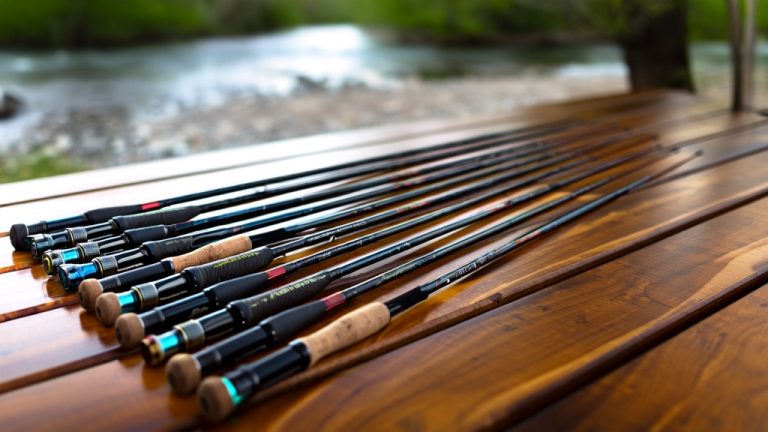
Shorter rods (6-7 feet) work best for boat fishing, offering maneuverability in tight spaces. Longer rods (8-14 feet) suit shore fishing, allowing longer casts.
Spinning reels hang below the rod and offer ease for beginners, while baitcasting reels provide precision for experienced anglers targeting specific species.
| Rod Length (ft) | Reel Type | Best Use |
|---|---|---|
| 6-7 | Spinning | Boat fishing |
| 7 | Spinning | Bass fishing |
| 8-10 | Baitcasting | Shore fishing |
| 10-14 | Baitcasting | Long casts, big fish |
| Any | Spinning/Baitcasting | Personal preference |
Match rod and reel to your style for efficient fishing.
Organizing Your Fishing Gear With A Tacklebox
Keeping your fishing gear neatly packed and easy to access can save you time and frustration on the water.
A tacklebox is essential for organizing hooks, lures, bobbers, sinkers, and spare line efficiently.
To maximize its usefulness:
- Categorize your gear by type. Keep hooks separate from sinkers and swivels to avoid tangles.
- Use adjustable compartments to tailor storage space based on the size and quantity of items.
- Store frequently used tools like pliers and line cutters in easily accessible sections.
- Label compartments or use clear lids for quick identification without rummaging.
Frequently Asked Questions
How Do Weather Conditions Affect Fishing Tool Performance?
Weather conditions impact your fishing tools in several ways.
Windy days can cause line twisting and tangles, so you’ll want swivels to reduce this.
Rain and saltwater increase rust risk on pliers and reels, making corrosion-resistant materials essential.
Cold weather stiffens lines, reducing casting distance, while heat can weaken monofilament.
Adjust your sinkers and bobbers depending on water movement caused by weather to keep your bait at the right depth effectively.
What Maintenance Is Needed for Fishing Reels After Saltwater Use?
After saltwater use, you need to rinse your fishing reel thoroughly with fresh water to remove salt and debris.
Avoid high-pressure sprays that can force salt inside.
Dry it completely, then apply reel oil and grease to moving parts to prevent corrosion and guarantee smooth operation.
Regularly check the drag system and clean internal components if necessary.
Proper maintenance extends your reel’s lifespan and keeps it performing reliably in harsh saltwater conditions.
How to Safely Transport Fishing Rods and Reels?
Think of your fishing rod and reel like a fragile glass sculpture. One wrong move and it’s shattered. To safely transport them, always loosen the drag to prevent spring damage.
Use rod sleeves or tubes to protect the rod. Keep reels in padded cases. Secure everything in a sturdy rod tube or tackle box to avoid tangling or snapping during travel.
This careful packing keeps your gear ready for the next catch.
Are There Eco-Friendly Fishing Tools Available?
Yes, you can find eco-friendly fishing tools that reduce environmental impact.
Look for biodegradable fishing lines and lead-free sinkers to prevent pollution and harm to wildlife.
Bamboo rods offer a sustainable alternative to fiberglass or carbon fiber.
Reels made from recycled materials and non-toxic lures also support eco-conscious fishing.
Choosing these options helps protect aquatic ecosystems while you enjoy your time on the water responsibly.
What Are the Best Practices for Storing Fishing Lines Long-Term?
Think of your fishing line as a garden vine. If left tangled or exposed, it weakens and wilts.
To store it long-term, keep it dry, cool, and out of direct sunlight to prevent damage. Wind it neatly on a spool or line holder to avoid kinks.
Store in a sealed container or tackle box to protect from dust and moisture. This way, your line stays strong and ready for your next catch.
The Right Fishing Gear Turns Good Trips into Great Ones
Mastering these 10 fishing tools isn’t just helpful; it’s absolutely game-changing. Without the right setup, you might as well be fishing with a stick and string.
By choosing proper hooks, weights, and swivels, and organizing your gear smartly, you’ll catch more fish with less hassle. Trust me, the right tools turn your fishing trip from a frustrating guessing game into a smooth, successful adventure every single time. Don’t just fish; fish like a pro.