How to Deep Trout: Tips for Perfect Results
To deep trout effectively, focus on underwater structures with depth shifts and use sonar to locate fish near the bottom.
Select weights based on depth, typically 0.5 to 2 oz, to keep bait suspended about 1.5 feet above the substrate using a three-way swivel rig.
Maintain precise depth control through counted line-out and steady line tension.
Fish spoons and spinners slowly with subtle rod-tip action to provoke strikes.
Mastering these tactics sets the foundation for consistently targeting deep trout in lakes and rivers.
Key Takeaways
- Target underwater structures with depth shifts and converging currents where trout feed and hold near the bottom.
- Use sonar and depth tools to locate fish arches and maintain precise bait depth matching trout position.
- Choose weight based on depth, placing it about 1.5 feet above the hook to suspend bait just off the bottom.
- Present bait with slow sink rate, consistent line tension, and sensitive rod-tip to detect subtle deep bites.
- Employ heavy spoons or rigs with slow, steady retrieves and occasional pauses to mimic prey and avoid snags.
Where to Find Deep Trout in Lakes and Rivers?
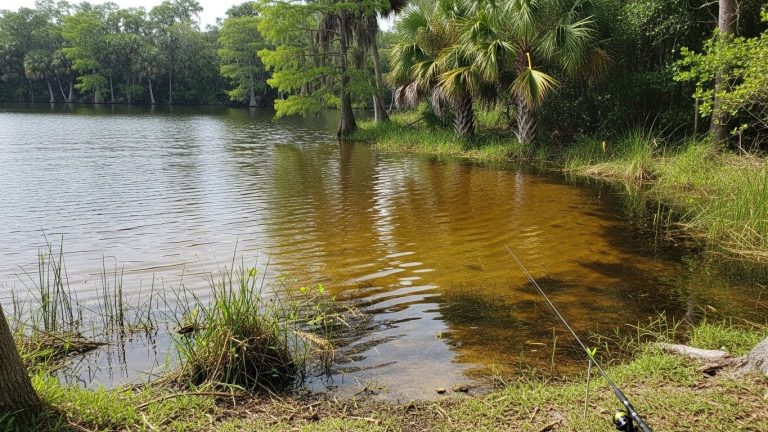
When targeting deep trout, focus your search on underwater structures where depth changes and currents converge, such as drop-offs, points, flats, intakes, and outtakes.
Target deep trout by focusing on underwater structures with depth shifts and converging currents.
These areas create feeding lanes where trout aggregate, using depth shifts and current breaks to ambush prey.
Shoreline features often extend underwater, so mapping these contours helps predict trout locations.
You’ll find deep trout holding near or just above the bottom, emphasizing precise depth control during presentation.
Avoid broad casts; instead, concentrate on these structural transitions where fish conserve energy and feed efficiently.
Understanding these habitat preferences enables you to narrow your search and position bait or lures effectively, increasing your odds of encountering trout suspended in deeper water layers within lakes and rivers.
For extended comfort and better positioning during long fishing sessions, consider using floats with ergonomic backrests designed to keep you stable and relaxed on the water.
How to Use Sonar and Depth Tools to Locate Trout?
To zero in on deep trout, you need to rely on sonar and depth tools that provide real-time data on fish location and underwater contours.
These devices reveal drop-offs, points, flats, and current-related features where trout concentrate.
By interpreting sonar returns, you can identify fish arches near the bottom or suspended just above it, pinpointing feeding zones.
Depth contours mapped by sonar help you target underwater extensions of shoreline structures, guiding precise bait placement.
Combine this data with measured line-out and reel counts to maintain exact depth control during retrieval or drift.
Continually adjust your presentation based on sonar feedback to keep bait or lures within the strike zone, optimizing your chances for success in deep water trout fishing.
Using a castable fish finder with advanced sonar and mobile app connectivity enhances your ability to monitor underwater structures effectively.
How to Choose the Right Weight for Deep Trout?
Sonar and depth tools provide the precise location of trout and underwater structures. Selecting the appropriate weight guarantees your bait or lure reaches and maintains contact at those depths.
To target trout in 10–15 feet, use about ½ oz weights. For 15–30 feet, increase to 1 oz or more. In deeper waters, 1–2 oz weights help maintain bottom contact.
1 oz is effective to roughly 40 feet, while 2 oz works to about 65 feet. Over-weighting helps your rig descend quickly and resist current. Choose sinkers, split shot, or jig heads based on water depth and current strength.
Separating weight and lure with a three-way swivel lets your bait hover slightly off the bottom. This optimizes presentation within the strike zone where deep trout hold.
Using a fast-sinking line with a high-density lead core can further improve bait delivery and depth control in deep trout fishing.
Setting Up a Rig to Keep Bait Near the Bottom
To get started, you’ll want to pick a weight that’s heavy enough to touch the bottom in your target depth. This usually falls somewhere between half an ounce to two ounces, depending on the conditions you’re facing.
Next, think about how you set up your rig. You should place the weight about 1.5 feet above your hook. This way, your bait can float just above the bottom, which is where trout like to feed.
When selecting bait, consider how portion control affects feeding behavior to avoid overfeeding and maintain water quality.
Choosing Proper Weight
Selecting the proper weight is critical for keeping your bait near the bottom where deep trout typically feed. You’ll need to adjust sinker size based on water depth to make certain your bait reaches and stays in the strike zone efficiently.
Underweighting causes slow descent and drift off bottom; overweighting risks snagging and unnatural presentation. Use a three-way swivel rig to separate weight from bait, allowing precise depth control.
| Water Depth (ft) | Recommended Weight (oz) |
|---|---|
| 10–15 | 0.5 |
| 15–30 | 1.0 |
| 30–40 | 1.0 |
| 40–65 | 2.0 |
| Over 65 | >2.0 (adjust as needed) |
Choose weights within these ranges to optimize bait placement near the bottom for deep trout. Combining proper weight selection with bait presentation tailored to trout preferences increases your chances of a successful catch.
Rig Placement Techniques
When setting up a rig to keep bait near the bottom, positioning the weight relative to the hook is essential for maintaining the bait in the trout’s strike zone. You need to fine-tune this distance to guarantee the bait hovers just off the substrate, avoiding snags while remaining accessible to the fish.
Consider these rig placement techniques:
- Place the weight about 1.5 feet above the hook to suspend bait slightly above the bottom, optimizing visibility and strike potential.
- Use a three-way swivel rig to separate weight and bait, allowing the sinker to rest on the bottom while the bait drifts naturally.
- Adjust weight size according to depth. Heavier weights for deeper water maintain rig stability and minimize drift from currents.
These adjustments maximize your presentation’s precision, increasing your chances of enticing deep trout. Additionally, using adequate weight helps counteract currents and keeps the rig stable near the bottom.
How to Present Bait Near the Bottom for Deep Trout
When you’re fishing for deep trout, one key tip is to position your weight about 1.5 feet above the hook. This way, you can suspend the bait just off the bottom, which really helps with visibility and accessibility for those elusive trout.
You’ll want to use a slow sink and maintain precise control. This approach keeps your bait in the strike zone longer and reduces the chances of snagging on the bottom.
Also, don’t forget to keep an eye on your line tension and the movement of your rod tip. Those subtle bites at these depths can be easy to miss, so staying alert is crucial!
Using braided mainline with fluorocarbon leaders can improve strength and abrasion resistance when fishing near rocky or rough bottom structures.
Weight Placement Techniques
Positioning your weight correctly is essential for presenting bait effectively near the bottom where deep trout feed. You need to balance weight size and placement to keep bait in the strike zone without spooking fish or snagging. Use these techniques:
- Select weight size based on depth: 1/2 oz for 10–15 feet and 1–2 oz for deeper water. This guarantees fast descent and bottom contact.
- Attach weight about 1.5 feet above the hook with a three-way swivel or split shot rig. This lets bait hover just off the bottom, increasing visibility to trout.
- Maintain bottom contact by adjusting rod tip and line tension. This prevents the weight from dragging or bouncing excessively, which can alert wary trout.
Applying these precise weight placements keeps your bait effectively positioned for deep trout feeding zones. Using a reel with smooth drag systems can help manage line tension effectively during trolling and fighting fish in deeper water.
Bait Suspension Strategies
After placing your weight about 1.5 feet above the hook to keep bait near the bottom, focus on how to suspend that bait effectively within the strike zone.
Positioning the bait just off the bottom maximizes visibility and accessibility for deep trout.
Use a three-way swivel rig or split shot to separate the weight from the bait, allowing subtle movements without dragging.
Maintain tension to prevent slack but avoid lifting the bait off the strike zone.
Adjust line length and weight size based on depth and current to hold the bait steady, compensating for water movement.
A slow sink followed by minimal rod-tip lifts keeps the bait in the feeding window longer, enhancing strike probability.
Precise depth control guarantees your bait remains in the prime zone where deep trout actively feed.
Ensuring your gear is in good condition, including properly repaired boots using marine-grade epoxies, helps maintain effective fishing performance.
Detecting Subtle Bites
When fishing deep trout near the bottom, detecting subtle bites demands heightened sensitivity and precise rod handling. Deep trout rarely strike aggressively; instead, they nibble or tap your bait, requiring acute attention to rod tip movement and line tension.
To enhance bite detection:
- Use a sensitive rod tip and maintain light but consistent line tension to feel minute movements.
- Position your weight about 1 1/2 feet above the hook, allowing bait to hover close to the bottom where trout feed.
- Employ slow, deliberate rod-tip lifts and pauses to interpret subtle changes in resistance, distinguishing bites from snags.
Mastering these techniques lets you present bait effectively near the bottom and react promptly to subtle strikes, increasing your catch rate in deep-water trout fishing. Utilizing weighted designs can help achieve the precise sink rate needed for effective deep presentations.
How to Fish Spoons and Spinners for Deep Trout?
For targeting deep trout, fishing spoons and spinners effectively requires controlling both sink rate and retrieve speed to keep the lure within the strike zone near the bottom.
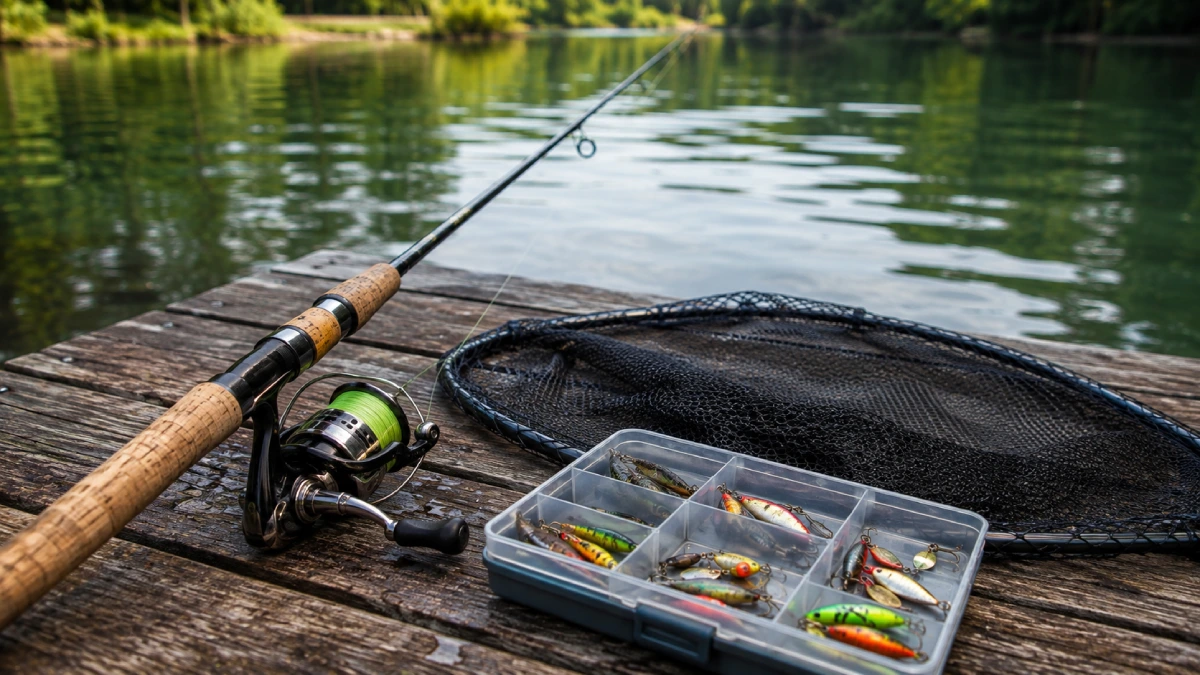
Begin by letting your lure sink fully to depth. Then employ a slow, steady retrieve with occasional pauses and small rod-tip lifts to mimic injured prey.
Use heavier spoons (1–2 oz) to maintain bottom contact without snagging. Adjust retrieve speed precisely to match fish activity, ensuring the lure remains in the strike zone.
| Water Depth (ft) | Suggested Weight (oz) |
|---|---|
| 10–15 | 0.5 |
| 15–30 | 1.0 |
| 30–40 | 1.0 |
| 40–65 | 2.0 |
| Over 65 | Use specialized rigs |
Fine depth control and subtle retrieval actions maximize strike probability.
How to Troll and Drift for Deep Trout
Though trolling and drifting demand careful adjustment, these methods let you efficiently cover deep water while maintaining precise depth control.
Trolling and drifting require fine-tuning but enable effective coverage of deep water with precise depth control.
Trolling with spoons, plugs, or bait rigs allows you to explore various depths systematically. However, you must keep speeds slow to avoid losing bottom contact.
Drifting with weighted rigs enables subtle presentations that keep your bait near the bottom where deep trout feed. To optimize success:
- Use sonar or fish finders to identify depth and fish location before setting your rig.
- Adjust line length gradually while drifting to maintain bait proximity to the bottom without snagging.
- Employ heavier weights (1–2 oz) to guarantee your lure or bait sinks quickly and stays in the strike zone.
Mastering these tactics improves your ability to present offerings precisely where deep trout hold.
Adjusting Retrieve Speed and Rod Action for Strikes
Fine-tuning your retrieve speed and rod action can markedly increase your chances of triggering strikes from deep trout.
Begin by using the slowest retrieve that maintains lure motion without snagging bottom. Deep trout often respond to subtle movements.
Vary your retrieve with controlled pauses and slight rod-tip lifts to simulate wounded prey and provoke reaction strikes.
Small, precise rod bounces add lifelike action, keeping the lure within the strike zone near the bottom.
Monitor fish finder data and adjust retrieve speed incrementally to match trout activity.
If strikes don’t occur, increase rod-tip action while maintaining the lure’s position in front of fish.
This analytical approach enables you to identify the best combination of speed and rod movement that triggers deep trout aggression efficiently.
Fine-Tuning Depth Control and Preventing Snags
Adjusting your retrieve speed and rod action sets the stage for effective depth control, which is equally pivotal when targeting deep trout. To maintain lure or bait at the ideal depth, you need to fine-tune line length and rod position meticulously.
Preventing snags requires constant attention to bottom contact without losing proximity to the fish.
Consider these three technical strategies:
- Use counted line-out or sonar readings to match bait depth precisely to trout position, minimizing guesswork.
- When your weight contacts bottom, lift the rod or reel slightly to avoid snags while keeping the bait near the strike zone.
- Vary retrieve speed and rod-tip action. Small pauses or lifts can reactivate fish interest without dragging the lure into debris.
Mastering these tactics secures sustained presentations in the feeding zone and reduces lost tackle.
Frequently Asked Questions
What Time of Day Is Best for Deep Trout Fishing?
You’ll find the best time for deep trout fishing is often during low-light periods: early morning, late evening, or overcast days.
Trout tend to feed more actively near the bottom when light intensity decreases, reducing their vulnerability.
Midday can work if water temperature and oxygen levels are favorable, but generally, you should target dawn and dusk to maximize strikes.
Adjust your tactics to these times for peak deep trout engagement.
Which Water Temperatures Do Deep Trout Prefer?
Think of deep trout as seekers of a perfect climate, much like you’d seek shade on a hot day. They prefer water temperatures between 50°F and 60°F, where oxygen levels remain ideal and metabolism balances.
Outside this range, they descend deeper or slow down. You’ll find them holding steady in these cooler, stable layers. Target those precise thermal zones by using temperature data and depth control to increase your catch success.
How Does Weather Affect Deep Trout Behavior?
Weather influences deep trout behavior by altering water temperature, oxygen levels, and current patterns.
You’ll notice trout move deeper during hot weather to cooler, oxygen-rich layers.
Storms or heavy winds can increase water turbidity and stimulate feeding.
Barometric pressure drops often trigger more active feeding, so adjusting your bait depth and presentation speed accordingly improves success.
Monitoring weather shifts helps you anticipate trout positioning and tailor your tactics precisely.
What Are the Best Artificial Lure Colors for Deep Trout?
You’ll find that bright colors like chartreuse, orange, and fluorescent yellow work best for deep trout. They maintain visibility in low-light or murky conditions.
Metallic finishes, like silver or gold, reflect limited light effectively, mimicking baitfish flash.
Dark colors like black or blue can silhouette well against dim backgrounds.
Experiment with color contrasts to trigger strikes, considering water clarity and depth.
Adjust based on sonar feedback and fish response patterns.
Can Deep Trout Fishing Be Done From Shore Effectively?
Yes, you can effectively fish for deep trout from shore by targeting underwater structures like drop-offs, points, and submerged flats that extend from the shoreline.
Use heavier weights to reach depths, and employ sonar or depth maps to locate fish.
Present your bait or lures near the bottom, controlling depth precisely.
Adjust retrieve speed and use slow, subtle movements to keep your offering in the strike zone where deep trout hold close to the lakebed.
Deep Trout Fishing: Find and Catch Trout Near the Bottom
Mastering deep trout fishing means combining precise depth control, the right rig, and an adaptive retrieve to outsmart these elusive fish.
Use sonar to pinpoint their exact location, then adjust your weight and presentation to keep your bait perfectly positioned near the bottom.
With calculated trolling and drifting, you’ll trigger strikes that feel like lightning in a bottle.
Nail these techniques, and you’ll fish deep trout like a pro, landing catches almost too big to believe.