
Best Way to Transport Fishing Rods Safely and Easily
The best way to transport fishing rods is to choose a hard-shell tube or padded case that fits your rod’s longest section with extra room for cushioning.
Use tip caps, rod socks, and foam padding inside to protect delicate guides and prevent movement.
Secure rods individually to avoid damage during transit.
Hard tubes offer superior impact protection, while padded cases are lighter and more flexible.
For thorough packing tips and travel-ready setups, keep exploring the key techniques for safe transport.
Key Takeaways
- Use hard-shell rod tubes with end padding to protect multi-piece rods and fragile tips from impacts and rough handling during travel.
- Line tubes or cases with foam, pool noodles, or rod socks to prevent guide contact, tangling, and internal rod movement.
- Remove reels and secure hooks with tape or covers to avoid damage and injury during transport.
- Choose padded cases for lighter, flexible transport with extra pockets and straps for convenience and organization.
- Label each case with rod details and secure rods firmly to prevent shifting during vehicle transport or airline trips.
Choosing the Best Fishing Rod Case for Travel
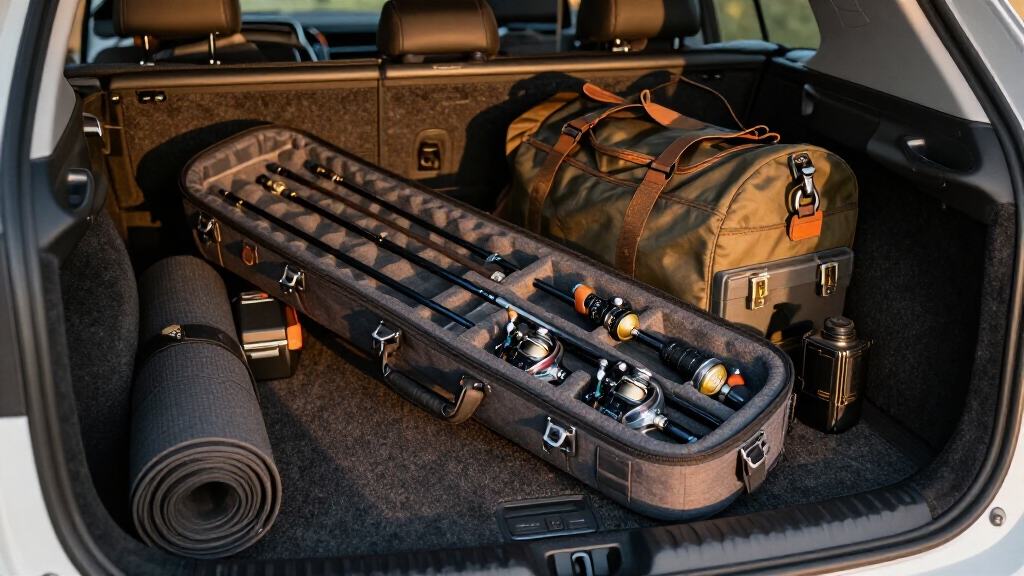
When you need to transport your fishing rods safely, choosing the right case is essential to prevent damage during travel.
Selecting the proper case is key to protecting your fishing rods during transport.
Hard-shell rod tubes offer the best protection, especially if you’re carrying multi-piece rods or fragile tips. Make sure the tube length matches your longest rod section, allowing room for end padding to absorb shocks.
Padded travel cases work well for airline trips and checked baggage, providing cushioning against rough handling. Look for cases with sturdy construction to reduce impact and side pressure.
You’ll want a case that keeps rods separated inside to avoid contact between guides or lines. Always check that the case securely holds rods in place to prevent shifting during transit.
Picking the right case makes a big difference in keeping your gear safe and ready to fish. Using cases with reinforced joints and secure locking mechanisms also helps protect rods from damage during transit.
Hard Tubes vs. Padded Cases for Rod Protection
When it comes to protecting your fishing rods, hard tubes really shine in terms of impact resistance. They’re especially great for those fragile tips and multi-piece rods that need that extra layer of security.
You definitely don’t want a broken rod messing up your fishing trip, right?
On the flip side, we’ve padded cases. These are much lighter and more flexible, making them a breeze to carry around.
If you’re planning to travel by plane, you might find these more convenient since they’re easier to stow away.
Many padded cases also include adjustable shoulder straps for comfortable and hands-free transport.
Protection Level Comparison
Although both hard tubes and padded cases offer protection for fishing rods, hard tubes provide a higher level of defense against impacts and pressure during travel.
You’ll find that hard tubes, made from rigid materials, shield rods from crushing forces and rough handling. This is especially true for multi-piece rods and fragile tips.
Padded cases cushion against bumps but can’t prevent deformation from heavy pressure or drops.
When using hard tubes, make sure the length fits your longest rod section with extra padding at the ends to absorb shocks.
Padded cases work well for moderate protection and are lighter. However, if you want maximum security, especially on long trips or airline travel, hard tubes are more reliable.
Choosing between them depends on your need for rigid protection versus lightweight cushioning.
For best results, ensure you line the packaging with cushioning materials like foam or packing peanuts to absorb impacts within the hard tube.
Travel Convenience Differences
Hard tubes and padded cases not only differ in protection level but also in how they handle convenience during travel.
Hard tubes offer rigid protection but tend to be bulkier and heavier, which can make them less convenient for quick trips or crowded airports. You’ll need to take into account their size when fitting them into vehicles or storage spaces.
Padded cases, on the other hand, are lighter and more flexible, making them easier to carry and store. They often include extra pockets for reels and accessories, enhancing organizational convenience.
However, their softer construction means you’ll need to be more cautious about handling. Ultimately, if you prioritize ease of transport and compactness, padded cases might suit you better.
Hard tubes are ideal when maximum protection outweighs travel convenience.
Many travel rods, like the HANDING M1, come with specialized protective travel features such as padded cases or tubes to minimize damage during transport.
Protecting Fragile Rod Tips and Guides on the Go
To keep those fragile rod tips safe while you’re on the move, start by using tip caps or soft sleeves. These little accessories are great for shielding your rod tips from any accidental bumps or impacts.
Next up, let’s think about those guides. You can use foam or even pool noodle inserts to keep them separated. This way, you’ll avoid any tangling or damage during transport—definitely a win!
And don’t forget about padding! It’s super important to position it carefully inside your case or tube. This will help cushion those delicate areas without adding too much bulk. Keeping everything snug and secure is key!
For longer trips or more sensitive rods, consider using multi-piece designs with protective tubes to enhance portability and safeguard your gear.
Tip Protection Methods
When packing your fishing rods, don’t overlook the importance of protecting the fragile tips and guides from damage during transport. Use tip covers or rod socks to shield delicate ends from impacts and abrasion.
For added security, wrap the tips in soft padding or foam before placing rods in hard cases or tubes. Avoid loose placement, which can cause bending or guide damage.
It is also helpful to inspect guides regularly to ensure they remain in good condition and avoid damage during transit.
| Protection Method | Key Benefit |
|---|---|
| Tip Covers | Prevents scratches and chips |
| Rod Socks | Cushions entire rod length |
| Foam Padding | Absorbs shocks and vibration |
| Hard Cases/Tubes | Provides rigid external protection |
Implement these methods to keep your rods in prime condition while traveling.
Guide Separation Techniques
Protecting your rod tips with covers or padding is a great start.
Keeping the guides separated during transport prevents tangling and damage that can be costly to repair.
Use individual rod sleeves or cloth socks to create a barrier between guides.
If you’re packing multiple rods in a single tube or case, insert foam or pool noodle strips between each rod section to maintain separation.
This method minimizes contact points, reducing the risk of bent or broken guides.
When securing rods in carriers or inside your vehicle, position them so guides don’t overlap.
Fasten with straps to prevent shifting.
By maintaining proper guide separation, you safeguard your rods and keep them straight and functional.
This saves you time and expense on repairs after every trip.
Additionally, regular inspection of your guides for cracks, chips, and misalignment before and after transport can help catch damage early and maintain rod performance.
Padding Materials and Placement
Although separating guides prevents tangling, adding adequate padding is essential to shield fragile rod tips and guides from impact and abrasion during transport.
You want to use soft, cushioning materials that absorb shocks and prevent scratches. Position padding strategically around vulnerable sections, especially the rod tips, guides, and reel seats.
Use materials that fit snugly without compressing the rod too tightly, allowing for some movement without damage. Consider layering padding for extra protection in hard cases or tubes.
- Use foam inserts or pipe insulation around delicate areas.
- Wrap rod tips with cloth sleeves or rod socks.
- Place soft towels or bubble wrap inside travel tubes.
- Add end caps with padding to prevent sliding inside tubes.
- Use pool noodles or foam strips to separate rods in multi-rod cases.
These steps guarantee your rods stay intact and ready for your next fishing trip. Removing studs from wading boots before transport can also prevent damage during storage and protect your gear.
Packing Fishing Rods for Airline and Long Trips
Since airline size restrictions vary, you’ll want to choose your fishing rod carefully for long trips. Favor multi-piece or telescoping rods that pack more compactly than long one-piece models.
Disassemble multi-piece rods and place each section in a hard-shell or padded travel case sized to fit with extra room for end padding. Remove reels and pack them separately to avoid damage.
Wrap hooks securely to prevent scratches or injury if checked. Use foam or rod socks inside your tube to prevent sections from shifting during transit.
Make certain the rod tips have protective caps or sleeves to guard against impact. Before closing, do a shake test to confirm rods don’t move inside.
This careful packing approach minimizes damage risk and helps your rods arrive ready to fish. For extended trips in varying weather, consider also protecting yourself with waterproof gear to stay dry and comfortable.
Labeling and Organizing Fishing Rod Tubes
When you’re preparing fishing rod tubes for transport or storage, clearly labeling and organizing them saves time and prevents mix-ups.
Start by marking each tube with the rod type, length, and intended fishing use. Use waterproof labels or permanent markers to guarantee durability.
Organize tubes by size or fishing location for easy access. Grouping rods by season or target species lets you quickly grab the right gear.
Keep a master list to cross-reference your tubes and rods.
Label each tube with rod details and your contact info.
Use color-coded tags for quick visual sorting.
Keep rods of similar length together to avoid confusion.
Store labels inside a clear sleeve for protection.
Note any special care instructions on the label to avoid damage during handling.
For added protection during transport, consider using durable storage solutions that keep rods secure and prevent moisture buildup.
How to Transport Fishing Rods Inside Your Vehicle?
For short trips or occasional outings, transporting fishing rods inside your vehicle offers a convenient option that keeps your gear close at hand.
Group your rods together and secure them with straps or bungee cords to prevent shifting during transit.
Use tip covers, rod socks, or soft padding to protect fragile tips from scratches or breakage.
If your vehicle allows, place longer rods diagonally across the cabin to maximize space without forcing them into tight spots.
Avoid leaving rods loose, as they can bend, tangle, or break if they move around.
Always check that rods are stable before driving to minimize damage caused by sudden stops or bumps.
This method works well for quick trips but requires careful securing for safety and rod protection.
Securing Fishing Rods on Roof Racks and Carriers
Mounted securely on a roof rack or specialized vehicle carrier, fishing rods stay protected during transit. This is especially important if you travel frequently or cover long distances.
You’ll want to guarantee rods don’t shift, bounce, or rub against each other, which can cause damage to guides and tips. Using a carrier designed for fishing rods helps keep everything stable and safe at highway speeds.
Choose a carrier with individual rod separators to prevent tangling and scratches.
Use positive locks or straps to keep rods firmly in place.
Opt for reel supports to minimize bouncing against hard surfaces.
Check that the roof rack system fits your vehicle and rod lengths correctly.
Inspect vibration control features to reduce wear on delicate rod components.
Proper securing on roof racks extends your gear’s life and guarantees worry-free travel.
DIY Packing Solutions for Fishing Rod Transport
Although professional rod cases offer excellent protection, you can create effective DIY packing solutions using affordable materials like PVC pipes or heavy-duty cardboard tubes.
Professional rod cases protect well, but DIY solutions with PVC pipes or sturdy cardboard tubes are budget-friendly and effective.
Start by selecting a tube length that matches your longest rod section, leaving extra space for padding. Line the interior with foam, towels, or rod socks to cushion your rods.
Use pool noodles or foam separators inside the tube to prevent rods from touching and scratching each other. Secure the ends with caps and strong tape to keep rods from sliding during transit.
Before travel, perform a shake test to verify your rods don’t move inside. These simple steps help safeguard your rods economically while minimizing damage risk.
Making DIY packing a practical option for careful anglers is easy.
Frequently Asked Questions
How Do Temperature Changes Affect Fishing Rod Materials During Transport?
Temperature changes can cause your fishing rod materials to expand or contract, which might weaken glue joints or cause warping, especially in composite or wooden rods.
Extreme cold can make fiberglass brittle, while heat may soften epoxy coatings or adhesives, risking damage during transport.
To protect your rods, avoid leaving them in unregulated environments like hot cars or freezing trunks.
Using padded, insulated cases helps maintain a stable temperature and safeguard your gear.
Can Fishing Rods Be Insured During Shipping or Travel?
Yes, you can insure fishing rods during shipping or travel. Most shipping carriers offer insurance options to cover loss or damage, so be sure to declare the rod’s value accurately.
For airline travel, check if your travel insurance or credit card covers your gear. Always keep receipts and document your rods’ condition before transport.
Proper packaging helps minimize risk and supports any insurance claim if damage occurs during transit.
What Are the Best Practices for Transporting Fly Fishing Rods Specifically?
You should disassemble your fly fishing rods to reduce stress on joints during transport.
Use a hard-shell rod tube with padded inserts to protect delicate tips and guides.
Secure the reel separately to prevent impact damage.
Wrap hooks and sharp components securely to avoid snags.
Label your case clearly, and consider using rod socks or foam sleeves inside the tube to prevent rubbing.
These steps keep your fly rods safe and ready to fish.
How to Clean Rods After Long-Distance Travel to Prevent Damage?
Think of your rod as a delicate dancer coming off a long journey. Give it a gentle, loving routine.
Wipe down the blank and guides with a damp cloth to remove dust and grit that can scratch. Use mild soap if needed, then dry thoroughly to prevent corrosion.
Check reels and lubricate moving parts. Finally, inspect for damage or loose wraps so your rod’s ready to perform flawlessly next time you cast.
Are There Recommended Brands for Professional Rod Transport Cases?
You’ll want to check out brands like Pelican, Temple Fork Outfitters, and Orvis for professional rod transport cases.
Pelican offers rugged, waterproof hard cases with customizable foam inserts.
Temple Fork Outfitters provides padded, durable travel tubes designed for airline use.
Orvis cases combine sturdy exterior shells with soft interiors for multi-piece rods.
These brands focus on protection, durability, and convenience, making them reliable choices for serious anglers transporting valuable gear.
Final Thoughts on Transporting Fishing Rods Safely
When it comes to transporting your fishing rods, remember that “an ounce of prevention is worth a pound of cure.”
Choosing the right case, protecting fragile tips, and organizing your gear carefully will save you time and hassle.
Whether packing for a flight or securing rods in your vehicle, taking these practical steps guarantees your equipment stays safe and ready for your next trip.
With the right approach, you’ll keep your rods in top shape every time you travel.