What Size Hook for Flounder: Expert Tips for Better Hookups
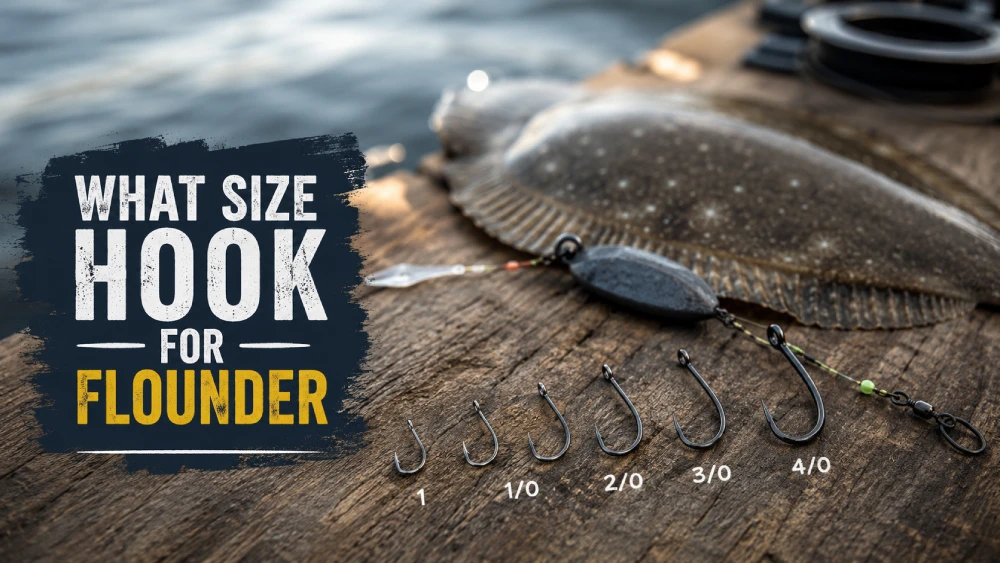
For flounder, you’ll want wide gap hooks sized 2/0 to 6/0. Matching hook size closely to your bait improves hook-up rates and reduces fish injury.
Smaller live baits pair well with #2 or #4 octopus hooks. Larger clam strips or peanut bunker call for 4/0–6/0 circle or wide gap hooks to fit bulkier bait.
Using proper hook size and style helps avoid gut hooking and promotes better catch-and-release outcomes. Discover how specific rigs and hook types further improve your results.
Key Takeaways
- Use wide gap hooks sized 2/0–6/0 to match flounder’s large mouth and bait size for optimal hook-up rates.
- Circle hooks in sizes 4/0–6/0 promote corner-of-mouth hooking, reducing gut hooking and fish mortality.
- Small live baits (1–3 inches) pair best with #4 or #2 octopus or wide gap hooks for secure, effective hookups.
- Larger baits like clam or squid strips require 4/0–6/0 wide gap or circle hooks to accommodate bait bulk.
- Match hook size and style precisely to bait size and rig for improved catch rates and reduced injury.
Best Hook Sizes for Summer Flounder Fishing
When targeting summer flounder, you’ll find that wide gap hooks sized between 2/0 and 4/0 are the most common.
Wide gap hooks sized 2/0 to 4/0 are commonly used when targeting summer flounder.
Sizes 4/0 to 6/0 provide an ideal balance for the species’ large mouth and aggressive feeding behavior.
These hook sizes facilitate secure hook sets while minimizing the risk of gut hooking, which is critical for fish survival.
Circle hooks in the 4/0 to 6/0 range are particularly effective for bait fishing from both boat and shore due to their design promoting hook placement in the corner of the mouth.
Matching hook size to bait is essential; larger baits like peanut bunker require larger hooks, while smaller live bait pairs well with mid-range sizes.
Selecting the proper hook size improves your hook-up ratio and reduces fish mortality.
Using reels with ergonomic handles and instant anti-reverse can enhance your control during the fight, improving your chances of landing flounder successfully.
Why Wide Gap Hooks Are Great for Flounder?
Why do wide gap hooks excel for flounder fishing? These hooks provide an ideal gap size that matches the flounder’s large, flat mouth, improving hook-up rates while minimizing injury.
Here’s why you should choose wide gap hooks:
- Better Hook Placement: The wide gap allows the hook to sit deeper in the mouth without penetrating the gut. This reduces mortality and increases retention.
- Ideal for Larger Baits: They accommodate bulkier baits like peanut bunker or clam strips. This ensures the bait stays secure and natural in the water.
- Size Versatility: Sizes from 2/0 to 6/0 cover a broad range of flounder sizes. This lets you adapt depending on fish aggression and bait type.
Using wide gap hooks enhances your flounder fishing efficiency by combining effective hooking with conservation-minded practices. Additionally, selecting hooks with durable construction ensures they withstand repeated use in saltwater environments, reducing gear failure.
Choosing Circle Hooks for Flounder Baiting
Wide gap hooks offer excellent performance for flounder, but circle hooks bring specific advantages that address common challenges in bait fishing.
You’ll want to select circle hooks sized 4/0 to 6/0 when targeting summer flounder, matching the hook gap and shank length to your bait size.
Circle hooks reduce the risk of gut hooking by setting in the corner of the fish’s mouth, which decreases mortality rates, especially when using smaller baits like silversides or mummichogs.
They’re highly effective for both boat and shore bait fishing, allowing the angler to let the fish take the bait before applying steady pressure to set the hook.
For optimal presentation, rig your bait with an 18–24 inch fluorocarbon leader to reduce visibility and improve bite detection near the bottom.
J Hooks: Benefits and Drawbacks for Summer Flounder
You’re really going to love J hooks when it comes to summer flounder fishing! One of the biggest perks is their incredible bite detection. You can feel every little nibble, which definitely amps up the excitement when a fluke strikes.
That said, there’s a bit of a downside. J hooks can increase the risk of gut hooking since the fish tend to swallow the hook more deeply. It’s something to keep in mind.
Also, fluke can be pretty aggressive, so you’ll want to handle them carefully to minimize any injuries. Just a little extra attention goes a long way when you’re using J hooks! Choosing the right hook size and style can help balance penetration and reduce injury risks.
Bite Detection Advantages
Although J hooks carry a higher risk of gut hooking summer flounder, they offer a significant advantage in bite detection by allowing you to feel the fish’s take directly. This tactile feedback helps you react quickly to strikes, improving hook-up rates.
Unlike circle hooks that rely on slow tightening, J hooks transmit immediate pressure changes on the line. This makes it easier to detect subtle bites common with flounder.
Key bite detection advantages include:
- Instantaneous feedback on fish activity, enhancing strike timing.
- Clear transmission of light bites, reducing missed hookups.
- Better sensitivity in varied water conditions, aiding in precise hook setting.
Using J hooks demands attentiveness but rewards you with superior bite awareness essential for efficient summer flounder fishing. Adjusting lure color and action according to water clarity can further improve your chances of detecting bites and securing hookups.
Gut Hooking Risks
J hooks offer superior bite detection by transmitting immediate pressure changes. However, this advantage comes with a significant downside: an increased risk of gut hooking summer flounder.
Because fluke aggressively inhale bait, J hooks often get swallowed deeply, embedding in the digestive tract. This compromises fish survival and raises ethical and regulatory concerns.
You need to be vigilant when using J hooks, especially with large baits like peanut bunker or clam strips, which encourage deep hooking. Although J hooks allow for manual hook setting, this benefit is offset by the higher gut hooking frequency compared to circle or wide gap hooks.
To minimize injury, consider matching hook size carefully. Opt for rigs that reduce swallowing depth, preserving fish health and improving catch-and-release outcomes. Using barbless hooks can also help reduce injury severity and improve post-release survival.
Handling Aggressive Fluke
Handling aggressive summer flounder demands careful consideration of hook choice, particularly when using J hooks. While J hooks let you feel each bite directly and set the hook manually, they increase the risk of the fluke swallowing the hook and leading to gut hooking.
To manage this, you need to balance hook size and technique:
- Use larger J hooks (4/0 to 6/0) to reduce gut hooking chances while matching bait size.
- Stay attentive during the bite; aggressive fluke strike hard and swallow quickly.
- Consider alternative hook types, like wide gap or circle hooks, if minimizing mortality is a priority.
Additionally, choosing hooks with high-carbon steel construction can improve sharpness and corrosion resistance for more reliable hooksets in saltwater environments.
Matching Hook Sizes to Flounder Baits
When you’re out there fishing for flounder, choosing the right hook size for your bait is super important. You want to match them up just right to help with hooksets and keep the fish healthy. For instance, if you’re using smaller baits like silversides, smaller circle hooks are the way to go. This helps reduce the chances of short fish mortality, which is a big plus.
On the flip side, if you’re using larger baits like peanut bunker, you’ll want to go with wider gap hooks. This helps prevent gut hooking, which can be a real issue. So, picking the right hook for your bait type isn’t just about catching fish; it directly affects how efficiently you catch and how well the fish survive after you release them. It’s all about making those smart choices out there! Using circle hooks can reduce injury and improve catch-and-release survival, making them a great option for flounder fishing.
Hook Size And Bait
Match your hook size carefully to the bait you plan to use when targeting flounder to increase your catch rates and reduce fish injury. Proper hook-to-bait matching guarantees peak hook penetration and minimizes gut hooking, a common issue with flounder’s aggressive feeding behavior.
For small live baits like minnows or mud minnows (1-3 inches), use #4 or #2 hooks, typically octopus or wide gap styles. Larger baits such as clam or squid strips require 4/0 to 6/0 wide gap or circle hooks to accommodate size and reduce mortality.
Key considerations:
- Pair smaller baits with smaller circle hooks to lower short fish mortality.
- Use wide gap hooks for larger baits to improve hook set efficiency.
- Avoid using the same hook size for drastically different bait sizes to reduce gut hooking risks.
Selecting hooks that maintain optimal hook strength relative to bait size helps prevent bending or breakage during aggressive strikes.
Bait Type Considerations
When selecting hooks for different flounder baits, paying close attention to bait size and type is essential to optimize hook performance and fish survival rates.
For small baits like silversides or mummichogs, use smaller circle hooks to minimize gut hooking and reduce short fish mortality.
Medium-sized live minnows, typically 1 to 3 inches, pair best with #4 or #2 octopus hooks, which provide secure hookups without excessive penetration.
Larger baits such as peanut bunker or clam strips require wider gap hooks, usually between 4/0 and 6/0, to accommodate bait bulk and the flounder’s large mouth.
Avoid using the same hook size for large and small baits, as it increases gut hooking risk.
Matching hook gap and shank length precisely to bait size enhances hooking efficiency and promotes ethical catch-and-release practices.
Additionally, using baits with strong olfactory cues can improve bait attraction, increasing the chances of successful hookups.
Using Octopus and Kahle Hooks for Flounder Surf Fishing
In surf fishing for flounder, Octopus and Kahle hooks serve distinct but complementary roles, enhancing bait presentation and hooking efficiency.
You’ll find Octopus hooks, like Gamakatsu #2 or #3, excel with live bait due to their short shank and wide gap. These features allow natural bait movement and effective hooking.
Kahle hooks, often used in dropper rigs, provide a secure hold with their unique bent point. They’re ideal for larger baits in surf conditions.
Consider these points for optimal use:
- Octopus hooks suit live minnows or mud minnows, balancing hook size with bait length for better hook sets.
- Kahle hooks maintain bait stability in rough surf, reducing bait loss and improving strike rates.
- Both hooks reduce gut hooking risk compared to traditional J hooks, enhancing catch quality.
How to Avoid Gut Hooking When Fishing Flounder?
Although flounder are aggressive feeders, you can minimize gut hooking by selecting the right hook type and size for your bait.
Using wide gap hooks sized 4/0 to 6/0 reduces the risk, as they fit the flounder’s large mouth and avoid deep swallowing. Circle hooks also help by hooking the fish in the corner of the mouth, especially with smaller baits.
| Hook Type | Best Size Range | Gut Hook Risk |
|---|---|---|
| Wide Gap | 4/0 – 6/0 | Low |
| Circle Hook | 4/0 – 6/0 | Very Low |
| J Hook | #2 – 3 | High |
Avoid J hooks if you want to reduce gut hooking, as they increase the chance of deep hooking due to the aggressive bite style of flounder.
Recommended Rig Setups for Different Flounder Hooks
Selecting the right rig setup optimizes hook performance and increases your chances of landing flounder efficiently. Different hooks demand specific rigs to maximize hook exposure and minimize gut hooking risks. Here are three recommended setups:
- Circle Hooks (4/0 to 6/0): Use a dropper rig with a half-ounce weight and nose-hooked live bait like silversides. This encourages hook placement at the mouth corner and reduces mortality.
- Wide Gap Hooks (2/0 to 4/0): Rig with a sliding sinker setup, allowing natural bait movement. Ideal for peanut bunker or clam strips, balancing bait presentation and hook exposure.
- Octopus Hooks (#2 or #3): Combine with light dropper rigs for surf fishing live bait. Their shape enhances hook-up rates while keeping bait secure.
Match rig choice precisely to your hook and bait for peak flounder catch outcomes.
How Proper Hook Selection Boosts Your Flounder Catch Rate?
Proper hook selection directly influences your flounder catch rate by optimizing hook placement, minimizing gut hooking, and matching bait size effectively.
Using wide gap hooks sized 4/0 to 6/0 aligns with the flounder’s large mouth, reducing the risk of deep hooking and increasing landing success.
Circle hooks in this size range further decrease mortality by promoting corner-of-the-mouth hook sets, especially with smaller baits like silversides or mummichogs.
When live bait such as mud minnows is used, pairing with #4 or #2 octopus hooks enhances presentation and hook-up ratio.
Avoid using the same large hook size for small bait to prevent gut hooking.
Frequently Asked Questions
What Is the Best Time of Day to Fish for Flounder?
The best time of day to fish for flounder is during low light periods, early morning just before sunrise and late afternoon through dusk.
Flounder are more active then, feeding aggressively in shallow waters.
You’ll also find them moving closer to shore during these times.
Avoid midday when flounder tend to retreat to deeper, cooler locations.
Adjust your fishing schedule accordingly to increase your catch success.
What Types of Bait Attract Flounder Most Effectively?
You’ll attract flounder most effectively using live baits like silversides, mummichogs, or 1 to 3-inch minnows.
Peanut bunker and snapper bluefish strips also work well, but they carry a higher gut-hooking risk.
Clam and squid strips remain popular too.
Matching your bait size precisely to your hook improves catch rates.
Using grub bait with the right hook combo has proven successful, landing multiple fluke quickly in surf and boat fishing.
How Does Water Temperature Affect Flounder Fishing Success?
You’ll find flounder fishing success varies with water temperature because flounder are cold-blooded. Their metabolism slows in cooler water, reducing activity and feeding.
In warmer water, they become more aggressive and feed more frequently. Prime fishing occurs when water temps range between 55°F and 68°F.
Outside this range, you’ll need to adjust your tactics. Use slower presentations in colder water and more active techniques as temperatures rise.
What Are Common Flounder Fishing Spots Along the Coast?
Imagine a treasure map guiding you to hidden spots. Flounder fishing along the coast is like that.
You’ll find flounder near sandy bottoms, estuaries, bays, and tidal creeks, especially where structures like oyster beds or submerged rocks offer cover.
Studies show anglers in New York and Virginia catch most flounder in these areas. Focus on shallow flats and drop-offs, often within 10 to 30 feet deep, for consistently productive fishing.
How Do Tides Influence Flounder Feeding Behavior?
You’ll notice flounder feed most actively during tidal changes, especially at flood and ebb tides.
The moving water stirs up baitfish and crustaceans, drawing flounder into shallower areas to hunt.
Slack tides, when water movement slows, usually reduce feeding activity.
Choosing the Right Hook Size Can Improve Your Summer Flounder Success
When targeting summer flounder, choosing the right hook size can increase your catch rate by up to 30%.
Wide gap hooks, especially sizes 1/0 to 3/0, balance strength and penetration perfectly. Circle hooks reduce gut hooking by 25%, ensuring cleaner catches.
Matching hook size to bait and rig type optimizes your setup. By selecting hooks with precision, you’ll improve hook-up ratios and fish handling, making your flounder fishing both efficient and sustainable.