
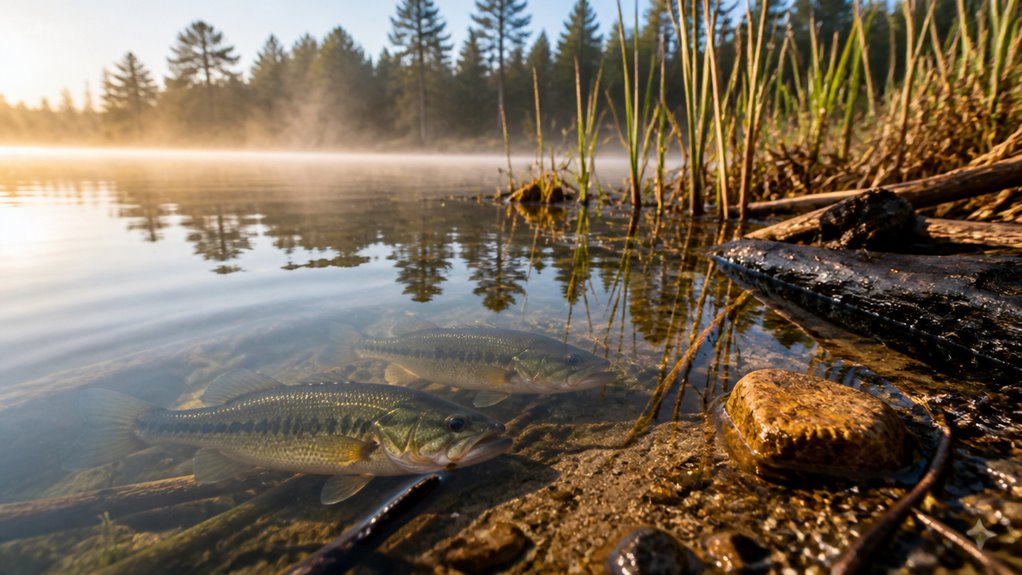
When Do Bass Spawn in Wisconsin: Water Temps & Timing
You’ll find bass spawning in Wisconsin starting in late April in southern areas, with peak activity from late April through early July statewide.
Water temperatures between 60°F and 75°F trigger nesting and egg laying. Spawning lasts about 37 days in the south and up to 55 days in the cooler north.
Hatch dates lag roughly two weeks northward, around early to mid-June. Explore how temperature, location, and behavior influence the bass spawning cycle.
Key Takeaways
- Bass spawning in Wisconsin begins in late April, starting earlier in southern regions.
- Peak spawning spans late April through early July statewide, with most inland waters finishing by early July.
- Water temperatures between 60°F and 75°F trigger full spawning activity and nest building.
- Northern Wisconsin bass spawn about two weeks later than southern bass, with median hatch dates near June 10.
- Southern lakes have shorter spawning periods (~37 days) compared to longer (~55 days) northern lake spawning ranges.
Bass Spawning Start Times Across Wisconsin
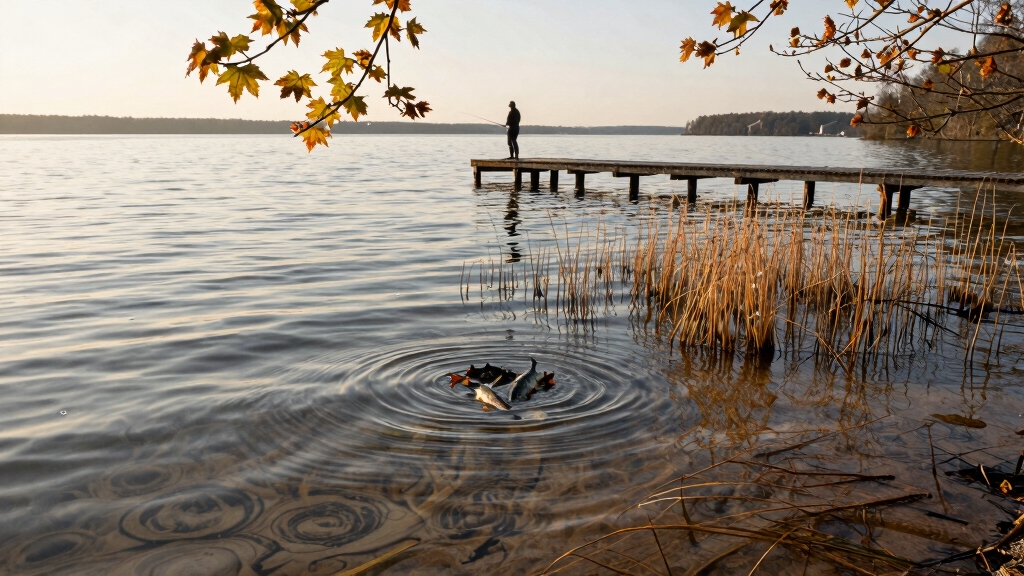
While bass spawning times vary across Wisconsin, you can expect the process to begin in late April in southern regions. Northern areas experience about a two-week delay.
Bass spawning starts in late April in southern Wisconsin, with northern areas lagging by about two weeks.
The peak spawning window extends from late April through early July statewide. Median hatch dates for age-0 bass fall around June 6 when considering mixed regions, reflecting this latitudinal variation.
Spawning typically concludes by early July in most inland water bodies. Southern lakes exhibit shorter spawning ranges, approximately 37 days, compared to northern lakes, where spawning spans roughly 55 days.
This delay and extended duration in northern zones correspond to regional climatic differences, impacting the overall reproductive timeline. Understanding these temporal patterns helps you anticipate bass activity and plan accordingly. Similar to bass, some warmwater species like peacock bass also show increased spawning activity during specific months, such as the May–June spawn observed in Florida’s Aerojet Canal.
How Water Temperature Influences Bass Spawning?
Because water temperature directly triggers bass spawning behaviors, understanding its role is essential for predicting reproductive timing.
You’ll notice that nest site selection begins when water temperatures reach approximately 60°F. Egg laying typically occurs within a narrower 62°F to 65°F range, ensuring ideal embryonic development.
Full spawning activity spans from 60°F up to 75°F, but temperatures below 60°F generally inhibit successful nest construction.
Before spawning, bass initiate pre-spawn behaviors around 55°F, increasing site selection and territoriality.
Monitoring these temperature thresholds allows you to anticipate when bass will begin reproductive activities. Since bass rely on specific thermal cues, fluctuating water temperatures can greatly influence the onset and duration of spawning periods in Wisconsin’s lakes and rivers.
Wind conditions can also impact bass behavior during spawning, as wind oxygenates water, increasing fish comfort and activity levels.
Bass Hatch Dates: Northern vs. Southern Wisconsin
You might find it interesting that bass hatch dates differ quite a bit between northern and southern Wisconsin. In the southern lakes, hatching usually happens around June 3. But if you head up north, you’ll see that the median hatch date is more like June 10. Understanding seasonal restrictions can help anglers plan their fishing trips responsibly during spawning periods.
Hatch Date Differences
Although bass across Wisconsin follow a general spawning timeline, hatch dates vary markedly between northern and southern regions. You’ll notice that water temperature and latitude strongly influence these differences, affecting bass development rates.
Southern lakes typically see median hatch dates around June 3. Northern lakes experience a delay, with median hatch dates near June 10. The northern spawning range spans about 55 days, longer than the 37 days in southern areas.
Ice-out timing and cooler temperatures in northern waters postpone spawning and hatching. Understanding these hatch date differences helps you predict bass availability and adjust fishing strategies accordingly.
Regional environmental factors directly impact the timing of bass emergence across Wisconsin. Using fishing lines with appropriate stretch and sensitivity can improve your chances during these varying hatch periods.
Regional Spawning Timelines
Understanding how hatch dates differ between northern and southern Wisconsin sets the stage for examining the broader regional spawning timelines.
In southern Wisconsin, bass spawning begins in late April, with median hatch dates around June 3. Northern lakes experience a roughly two-week delay, with median hatch dates near June 10.
This difference reflects regional temperature variations influencing spawning initiation and egg development rates. Spawning in northern zones spans approximately 55 days, extending longer than the 37-day duration typical in southern lakes.
Despite these differences, spawning activity statewide generally concludes by early July. Recognizing these timelines helps you optimize fishing strategies and understand bass reproductive cycles across Wisconsin’s diverse aquatic habitats.
This regional variation underscores the importance of localized environmental conditions in bass spawning dynamics. Additionally, factors such as water temperature and dissolved oxygen levels significantly impact bass metabolism and spawning success during these periods.
Latitude Impact on Hatching
Because water temperature directly influences bass development, hatch dates vary noticeably between northern and southern Wisconsin. Northern lakes experience cooler conditions longer, delaying spawning and hatching compared to southern regions. These temperature gradients create distinct timelines for bass reproduction across the state.
Consider these key latitude impacts on hatching:
Southern Wisconsin bass hatch around June 3, roughly one week earlier than northern counterparts.
Northern lake spawning windows extend approximately 55 days, allowing for prolonged development.
Southern lake spawning spans about 37 days, reflecting warmer, more stable conditions.
Ice-out timing in northern rivers delays migration and nest initiation by up to two weeks.
Additionally, understanding the influence of tidal cycles on water temperature and oxygen levels can further enhance predictions of bass spawning activity in connected waterways.
Understanding these differences helps you predict hatch timing and optimize fishing strategies based on regional conditions.
Where Bass Build Their Nests and What They Use?
You know, male bass really have a knack for picking the perfect spot when it comes to building their nests. They tend to favor sandy or gravelly bottoms since those surfaces offer the stability they need for laying their eggs.
It’s all about ensuring those eggs are safe!
And get this—they don’t just leave the nests bare. They often gather twigs, snail shells, and bits of debris to help protect their nests.
This extra layer of materials acts like a shield against predators and other disturbances in the environment. Pretty smart, right? Understanding these little details gives us a better idea of how bass work to ensure their reproductive success during spawning. Using weighted bodies in fishing lures can help anglers effectively reach bass in these nesting areas.
Preferred Nesting Substrates
Selecting suitable substrates is essential for bass during nest construction. Males typically choose sand or gravel bottoms that provide stability and protection for eggs.
These firm substrates prevent nest collapse and allow males to efficiently fan water over the eggs for oxygenation. You’ll also find bass nests on softer bottoms, but only when hard objects like roots or compact debris are present to maintain nest integrity.
Preferred nesting substrates include:
- Fine sand offering a stable base resistant to currents
- Rounded gravel that supports nest shape and egg adhesion
- Mixed sand and gravel providing balanced firmness and aeration
- Hard-packed mud with embedded organic material for structure
Understanding these preferences helps you identify prime spawning sites. This knowledge improves your ability to observe bass reproductive behavior in Wisconsin waters. Male bass also tend to select nesting sites based on water temperature, which influences spawning success and timing.
Nest Protection Materials
Frequently, bass incorporate natural materials like twigs, snail shells, and small debris into their nests to enhance protection and camouflage.
These components help conceal the eggs from predators and provide structural reinforcement.
You’ll find bass selecting nest sites on sand or gravel bottoms, often integrating surrounding organic matter to blend nests seamlessly into the environment.
This strategic use of materials reduces egg predation risk by disrupting visual patterns for predators.
Male bass actively arrange these materials during nest construction, ensuring eggs remain aerated and secure.
Understanding their preference for such protective elements can help you identify spawning sites more effectively.
Bass tend to build nests in areas where water temperature and light conditions promote optimal oxygen levels, contributing to increased egg survival rates.
Bass Behavior Before and After Spawning Season
Although bass exhibit distinct behaviors tied to spawning, understanding their actions before and after this period can improve your fishing strategy.
Knowing bass behavior before and after spawning enhances your fishing success.
Before spawning, bass inhabit shallow waters and display increased aggression, especially from late May to early June. After spawning, they retreat to deeper structures but maintain heavy feeding activity through late June and July.
Recognizing these patterns helps you target bass effectively.
Key behavioral traits include:
- Pre-spawn bass frequenting shallow, nearshore areas as water temperatures approach 60°F
- Elevated aggression during nest site selection and guarding phases
- Post-spawn movement to deeper, cooler habitats for recovery
- Sustained high feeding rates immediately following spawning completion
Using appropriate fishing techniques and rigs can help capitalize on these behavioral changes for more successful bass fishing.
Best Times and Spots to Fish Bass During Spawning
Understanding bass behavior before and after spawning sets the stage for identifying prime fishing opportunities during the spawn itself.
You should target bass when water temperatures range between 60°F and 75°F, as this is when males actively build nests and guard eggs.
Focus on shallow areas with sand or gravel bottoms near cover such as twigs or roots, since males select these sites for nest construction.
Fishing during early May through late June maximizes your chances, especially in the southern lakes where spawning starts earlier.
Concentrate efforts during dawn and dusk when bass exhibit increased aggression and activity around nests.
Avoid midday, as bass tend to retreat to deeper structures.
How Bass Spawning Cycles Shape Fishing Year-Round?
By tracking bass spawning cycles, you can strategically plan your fishing throughout the year to align with their behavioral shifts. Understanding these cycles helps you anticipate bass locations, feeding habits, and aggression levels, maximizing your catch potential.
During pre-spawn, bass gather in shallow waters, increasing aggression and making them more responsive to lures.
Post-spawn, they retreat to deeper structures but remain actively feeding.
Key insights to guide your fishing year-round include:
- Spawn initiation at 60°F water temperature signals nest-building activity.
- Peak aggression and topwater action occur from late May through early July.
- Post-spawn bass shift deeper but maintain strong feeding behavior.
- Fall feeding intensifies from early September to mid-October, offering a secondary fishing prime time.
Aligning your tactics with these cycles optimizes success.
Frequently Asked Questions
How Does Bass Spawning Affect Local Aquatic Ecosystems?
Bass spawning affects local aquatic ecosystems by increasing nutrient cycling and altering predator-prey dynamics.
When you observe spawning, males build nests, disturbing sediment and promoting habitat complexity. This activity boosts invertebrate populations, which feed on eggs and larvae, supporting food webs.
You’ll also notice heightened aggression and territorial behaviors, influencing fish distribution. Overall, spawning creates temporal ecological shifts, impacting species interactions and energy flow within the aquatic environment.
What Predators Threaten Bass Eggs During Spawning?
You might be surprised to learn that over 50% of bass eggs never hatch due to predation.
Predators like bluegill, northern pike, and crayfish pose significant threats during spawning.
These animals can detect nests on sand or gravel bottoms and consume eggs rapidly.
Male bass guard nests fiercely, but despite their efforts, many eggs fall prey to these opportunistic feeders.
This predation impacts bass population dynamics in aquatic ecosystems.
Are There Legal Restrictions on Bass Fishing During Spawning?
Yes, you’ll find legal restrictions on bass fishing during spawning to protect populations.
Wisconsin enforces closed seasons starting the first Saturday in May in some regions, limiting harvest during peak spawning.
You must follow size and bag limits designed to safeguard nesting males and eggs.
Be sure to check local regulations before fishing, as restrictions vary by zone and help maintain sustainable bass numbers statewide.
How Do Weather Changes Impact Bass Spawning Success?
You’ll find that sudden weather changes, especially drops in temperature or heavy rain, can disrupt bass spawning success by delaying nest building and egg laying.
If water temperatures fall below 60°F, males won’t construct nests properly, reducing reproductive success.
Additionally, strong storms can wash away eggs or nests.
Prolonged stable warm conditions between 60°F and 75°F promote peak spawning activity and higher hatch rates.
Can Bass Spawn Multiple Times in One Season?
When it comes to bass, you can’t put all your eggs in one basket. They do have the ability to spawn multiple times in a single season.
After the initial spawn, if conditions like water temperature and food availability stay favorable, bass may repeat spawning events. This reproductive strategy maximizes their chances of offspring survival.
Especially in environments where conditions fluctuate or predation is high, it ensures greater population resilience.
Know When Bass Spawn to Improve Your Catch
When bass spawn in Wisconsin depends largely on water temperature, typically starting in southern regions by mid-April and later in northern areas by early May.
Imagine fishing Lake Mendota in late April, where bass begin building nests in shallow waters around 60°F.
Understanding these patterns helps you target bass effectively during their most active periods. This enhances your success year-round by aligning your efforts with their natural spawning cycles.



2 Comments