
When Do Bream Go on Bed: Best Fishing Tips & Timing
You’ll find bream begin bedding when water temperatures rise to about 65°F, typically mid to late April in southern regions and as late as May in cooler northern waters.
Bedding often persists through September in the south but is shorter up north. These temperature thresholds trigger hormonal changes essential for spawning.
Bedding intensity also aligns with lunar phases, especially near full moons. Understanding these patterns helps anticipate bream activity and optimize your strategy.
Key Takeaways
- Bream go on bed when water temperatures reach about 65°F, typically from mid to late April in southern regions and May in northern areas.
- Bedding activity peaks around full and new moon phases, with heightened spawning four days before and after these lunar events.
- Southern bream bedding can start in late April and continue through September, while northern bedding usually begins in May and ends by early winter.
- Multiple spawning cycles occur during the bedding season, with up to three cycles triggered by stable warm temperatures and environmental cues.
- Bream prefer shallow waters (4–5 feet) with sandy or gravel substrates and aquatic vegetation for successful bed construction and spawning.
When Do Bream Start Bedding in Different Regions?
Typically, bream start bedding earlier in southern regions due to warmer water temperatures reaching the critical 65°F threshold by mid to late April. In these areas, such as Texas and southern Louisiana, initial bed formation and spawning activity peak by late April and extend through summer.
Conversely, northern lakes experience delayed bedding, often commencing in May, as cooler temperatures postpone the 65°F mark. This geographic variation affects the onset and duration of bream bedding periods.
In southern states, bedding can persist as late as September, while northern populations usually conclude earlier. Understanding these regional differences allows you to anticipate bedding times more accurately, optimizing your observation or fishing efforts based on local temperature trends and latitudinal influences. Additionally, incorporating a diet rich in omega-3 fatty acids can support the cognitive function and overall health crucial for active fishing seasons.
How Does Water Temperature Trigger Bream Bedding?
Understanding water temperature’s role in triggering bream bedding is crucial for predicting spawning behavior.
When water reaches approximately 65°F, it stimulates physiological changes in bream, initiating bed formation and spawning readiness.
This temperature threshold activates hormonal responses, prompting females to prepare eggs and males to establish nests.
You’ll notice that regions warming earlier in spring, like southern waters, see earlier bedding activity compared to cooler northern areas.
Consistent temperatures above this threshold sustain spawning activity through late spring and summer.
Additionally, stable thermal conditions promote successful bed construction on preferred substrates such as sand and gravel.
If temperatures fluctuate below 65°F, bedding delays or interruptions occur, highlighting water temperature’s critical regulatory role in the timing and duration of bream spawning cycles.
Water quality factors such as corrosion resistance in aquatic environments can also influence the longevity and health of fish habitats, indirectly affecting bedding success.
How Do Moon Phases Affect Bream Bedding Activity?
Because moon phases influence light levels and tidal cues, they play a critical role in synchronizing bream bedding activity.
Moon phases shape light and tides, crucially timing bream bedding behavior.
You’ll notice peak spawning occurs around the full moon, especially in May, with heightened activity four days before and after.
The increased nocturnal illumination during full moons likely triggers hormonal responses, enhancing reproductive behaviors.
Conversely, new moon phases also prompt bream to bed, often in shallow water, possibly due to reduced light creating safer spawning conditions.
Activity fluctuates between these lunar cycles throughout summer, signaling that bream respond dynamically to changing environmental cues.
Understanding these lunar influences helps you predict prime bedding times and select fishing periods with higher success.
Moon phase-driven behaviors underscore the complex interplay between celestial cycles and aquatic reproductive ecology.
Additionally, the spring tides generated during full moons can alter habitat accessibility and concentrate prey, further influencing bream bedding behavior.
Why Do Bedding Times Vary Between Northern and Southern States?
You’ll notice that in southern states, bream start bedding a bit earlier. This happens because the water temperatures warm up and hit that crucial 65°F mark sooner, usually by mid-April. Pretty neat, right?
Now, if you head up north, things are a bit different. Those regions experience delayed warming, which means spawning activity often doesn’t kick off until May or later. So, it’s really all about those temperature-driven patterns that vary by region.
This directly impacts when and how long the bedding seasons last across different states. Additionally, tidal cycles influence fish behavior by affecting water temperature and habitat accessibility, which can further modify bedding timing in coastal areas due to tidal temperature fluctuations.
Temperature Differences
Although bream spawn across a broad geographic range, their bedding times shift markedly due to regional temperature variations.
You’ll find that water temperature is the primary driver, with 65°F being the critical threshold for initial bed formation.
In southern states, warmer spring waters reach this point by mid to late April, prompting earlier bedding.
Conversely, northern lakes warm more slowly, delaying spawning until May or later.
This temperature gradient explains why bedding starts earlier in the South and extends well into summer, sometimes as late as September.
As you monitor water temperatures, you’ll notice that even slight differences impact the onset and duration of bedding.
Understanding these thermal dynamics helps you predict when and where bream will bed, optimizing your fishing strategy across diverse regions.
Reusing old fishing gear, such as waders, not only supports eco-friendly practices but can also provide durable protection during varying weather conditions encountered while monitoring bream bedding times, highlighting the benefits of sustainable outdoor gear use.
Regional Spawning Patterns
When examining regional spawning patterns, it’s clear that temperature gradients between northern and southern states play a pivotal role in determining bedding times.
In southern states, warmer water reaching 65°F by late April triggers earlier bed formation. In contrast, northern states experience delayed spawning due to cooler spring temperatures, often beginning in May.
You’ll notice that southern bream may continue bedding into September, while northern populations end earlier, reflecting climatic constraints. Key factors influencing these variations include:
- Water temperature thresholds essential for initiating spawning
- Length of warm season affecting repeated spawning cycles
- Local habitat conditions that interact with regional climate
Understanding these parameters helps you predict bedding activity across different regions. This knowledge optimizes your timing for successful observation or fishing. Additionally, recognizing how warm water activity influences fish behavior can further improve your approach during spawning seasons.
How Often Do Bream Spawn During Bedding Season?
Bream are quite interesting when it comes to their spawning habits! You’ll notice that they actually spawn several times during the bedding season. In fact, they can go through these cycles up to three times from spring all the way through early fall.
Now, the timing of this activity can really depend on where you’re and the environmental conditions. So, you might see different spawning frequencies based on those factors.
Oh, and here’s a fun fact: the peak spawning times often align with the full and new moon phases. It’s during these times that you can expect heightened activity, especially in the early morning and evening hours. So, if you’re planning to catch some bream, those are great times to head out!
Multiple Spawning Cycles
Because bream have the capacity to spawn multiple times during the bedding season, you can expect several distinct spawning events from spring through early fall.
Typically, bream undergo up to three spawning cycles, each triggered by favorable water temperatures and environmental cues.
These repeated cycles allow for sustained population replenishment and adaptation to variable conditions.
Key factors influencing multiple spawning cycles include:
- Water temperature stability above 65°F, maintaining ideal conditions for successive spawning events.
- Lunar phases, particularly full and new moons, which synchronize peak spawning activity.
- Availability of suitable nesting substrates, enabling repeated bed construction and egg deposition.
Understanding these cycles helps you anticipate bream behavior and enhances your ability to predict peak fishing opportunities during the extended bedding season.
Bream spawn most actively when water temperatures reach between 70–75°F, favoring submerged-structure areas for nesting and protection.
Seasonal Spawning Duration
Building on the understanding of multiple spawning cycles, it’s important to examine how frequently bream spawn throughout the bedding season.
Typically, bream spawn up to three times between spring and early fall, depending on water temperature and geographic location.
In southern regions, you’ll observe earlier and more extended spawning periods, sometimes lasting from late April through September.
Colder northern areas see shorter bedding seasons, often ending by early winter.
Each spawning cycle can last several weeks, with bream repeatedly returning to beds during prime environmental conditions.
This repeated spawning maximizes reproductive success, allowing you to expect multiple active bedding phases throughout the season.
Understanding this temporal pattern helps refine your approach to locating and targeting bream during their protracted reproductive period.
For effective fishing during these times, focusing on soft substrates can increase your chances, as these areas are favored by many species during feeding and spawning phases.
Peak Activity Times
Frequently, bream spawn multiple times during the bedding season, with peak activity aligning closely to environmental cues such as water temperature and lunar phases.
You’ll notice that their most intense spawning occurs when water reaches about 65°F and around full moon phases, typically in late spring through summer. This cyclical pattern means you can expect several spawning events, often up to three, throughout the season.
Timing your observations or fishing efforts around these factors increases your chances of encountering active beds.
Key factors influencing peak bream activity include:
- Water temperature consistently above 65°F triggers initial and repeated spawning cycles.
- Full and new moon phases concentrate peak bedding behavior within ±4 days.
- Morning and evening hours yield the most aggressive bedding activity in shallow waters.
Understanding the balance of sensitivity and strength in fishing gear can enhance your ability to detect and respond to bream activity during these peak times.
Where Are the Best Depths and Locations for Bream Beds?
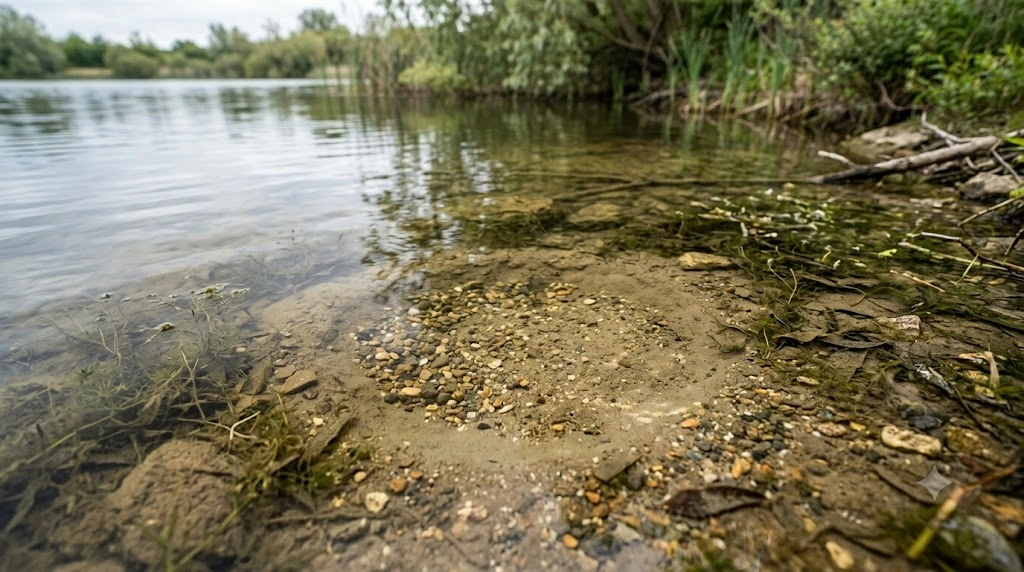
When locating bream beds, you’ll find that most nests form in shallow waters ranging from 4 to 5 feet deep. These depths favor successful spawning.
However, in mid-summer, nests may extend to depths of 15 to 17 feet offshore. Old, abandoned boat ramps and areas with sandy or gravel bottoms often host productive beds.
Depth definitions vary by location; for example, “shallow” in some lakes means 10 to 12 feet.
| Location Type | Typical Depth (ft) | Bottom Composition |
|---|---|---|
| Shoreline sandy areas | 4–5 | Sand and gravel |
| Mid-summer offshore beds | 15–17 | Mixed sand and silt |
| Abandoned boat ramps | 4–12 | Hard compacted bottom |
For anglers targeting bream beds, using lightweight, portable gear can improve efficiency when accessing and fishing in these specific water depths and locations.
Which Water Conditions Create the Best Bream Beds?
Identifying ideal water conditions is essential for locating productive bream beds.
You’ll want to focus on water clarity, substrate type, and aquatic vegetation, as these factors directly influence bream spawning success.
Clear water allows sunlight penetration, stimulating spawning behavior and supporting aquatic plants that provide cover.
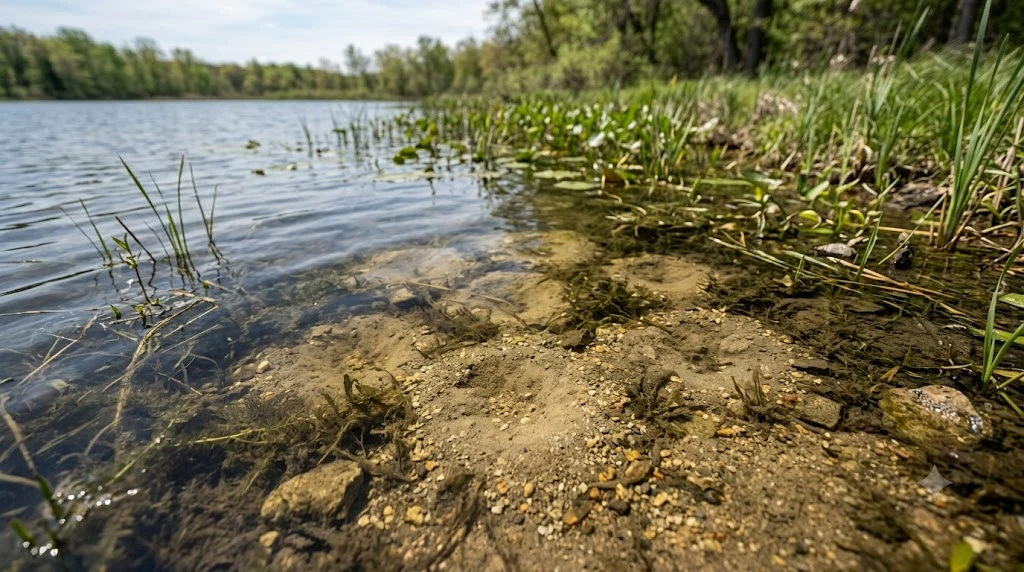
Bream prefer clean, hard bottoms composed mainly of sand and gravel for nest construction, ensuring stability and oxygen flow to eggs.
Additionally, the presence of lily pads or pencil reeds often signals a favorable environment for bedding.
- Water clarity exceeding moderate turbidity, promoting sunlight penetration
- Substrate with sand and gravel, offering firm nesting grounds
- Aquatic vegetation such as lily pads and pencil reeds for shelter and protection
Monitoring these conditions boosts your chances of finding active bream beds efficiently.
How Do Seasonal Changes Impact Bream Bedding Duration?
Understanding the water conditions that foster bream bedding lays the foundation for examining how seasonal changes influence the duration of this activity.
As temperatures rise in spring, typically reaching 65°F, you’ll notice bream initiating bed formation, especially in southern waters by late April.
This bedding activity extends through summer, with repeated spawning cycles as water remains warm.
However, in northern regions, cooler spring temperatures delay bedding until May.
You’ll also observe that as summer shifts to fall, bream continue bedding in southern areas up to September, while northern populations cease earlier.
Seasonal temperature gradients directly affect both onset and cessation of bedding, dictating the length of spawning periods.
Consequently, you must consider geographic location and seasonal temperature shifts to accurately anticipate bream bedding duration.
When Are the Best Times to Fish on Bream Beds?
Although bream spawn throughout much of the warm season, your success fishing their beds hinges on timing specific environmental and lunar cues.
Peak activity aligns with water temperatures reaching around 65°F and is strongly influenced by moon phases, especially near the full and new moons.
You’ll find the best fishing opportunities within a window spanning four days before and after the full moon, when bream exhibit heightened bedding behavior.
Morning and evening periods also yield increased aggression on shallow nests.
Consider these key factors when planning your fishing trip:
- Target shallow waters (4–5 feet) during full or new moon phases.
- Focus on mornings and evenings for aggressive bites.
- Prioritize clear, hard-bottomed sites with vegetation like lily pads.
Mastering these patterns sharpens your timing and boosts catch rates.
Frequently Asked Questions
What Types of Bait Work Best for Catching Bream on Beds?
You’ll catch bream on beds most effectively using live or natural baits like crickets, mealworms, and small worms. These mimic their natural diet and attract bites aggressively.
You can also use small artificial jigs or soft plastics resembling insects or larvae. Present your bait slowly near shallow nests in clear water, as bream are sensitive to disturbances.
Always match bait size to bed depth and fish size for prime results.
How Can Anglers Identify Active Bream Beds Visually?
You might think bream beds glow like neon signs underwater, but identifying active beds requires sharper observation.
Look for clean, hard bottoms with sand or gravel, often near lily pads or pencil reeds.
Notice shallow depressions about 2–3 feet deep in clear water. Oak-lined shores often hint at sandy areas.
Active beds exhibit slight sand disturbances and clustered fish activity.
These subtle signs reveal spawning sites more reliably than flashy illusions.
What Are Common Predators of Bream During Bedding Season?
You’ll find common predators of bream during bedding season include largemouth bass, catfish, and herons. They all target vulnerable spawning fish and nests.
Bass aggressively patrol shallow beds, while catfish exploit disturbed sediments. Wading birds like herons capitalize on exposed nests in shallow water.
Understanding these predator behaviors helps you anticipate pressure on bream during spawning. This allows you to adjust your fishing strategy accordingly to improve your catch success.
How Does Fishing Pressure Affect Bream Bedding Behavior?
You’ll find that increased fishing pressure disrupts bream bedding behavior by causing stress and reducing spawning activity.
Bream tend to avoid heavily fished shallow beds, relocating to less disturbed areas or deeper water. This behavioral shift decreases nest success and can delay spawning cycles.
To protect beds, you should minimize disturbance during peak bedding periods, especially around full and new moons. This ensures healthier reproduction and sustainable populations.
Are There Legal Restrictions on Fishing Bream During Bedding Season?
Yes, you’ll find legal restrictions on fishing bream during bedding season in many regions to protect spawning populations.
These rules often include closed seasons, size limits, and daily catch limits specifically timed around peak spawning periods.
Regulations vary by state, so you must check local fish and wildlife guidelines before fishing.
Adhering to these restrictions helps maintain sustainable bream populations and enhances long-term fishing success.
Turn Bream Spawning Knowledge Into More Catches
You might think bream bedding is unpredictable, but understanding regional timing, water temperature, and lunar phases gives you a clear advantage.
Bedding varies with location and season. By targeting ideal depths and conditions, you can reliably find active beds.
This scientific approach guarantees you’re fishing when and where bream are spawning, maximizing your success.
Don’t rely on guesswork; use these precise cues to improve your catch every time.



One Comment