Types of Floats for Fishing: Complete Angler’s Guide
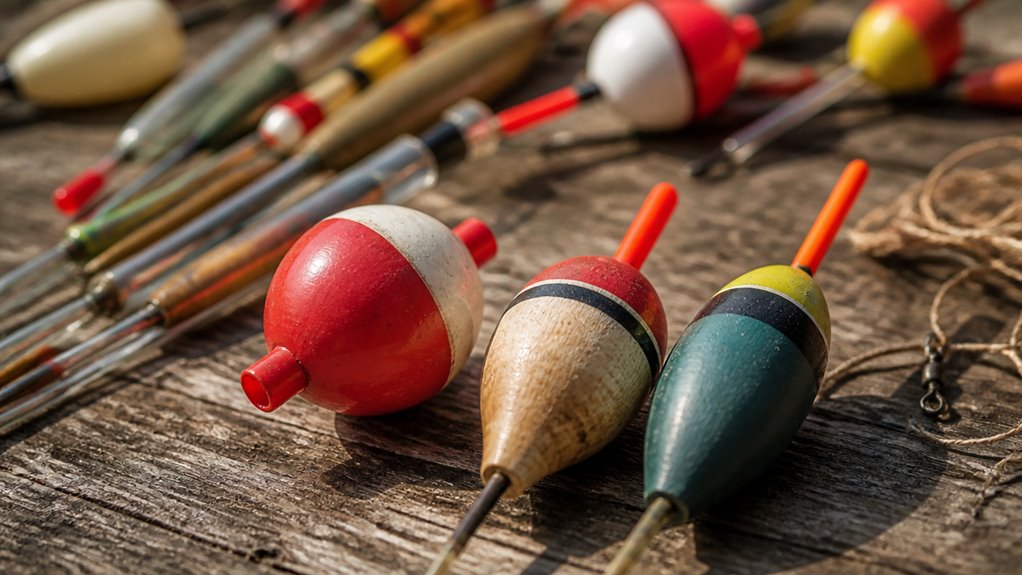
You’ll find fishing floats come mainly as fixed, slip, waggler, and self-cocking types, each designed for specific conditions.
Fixed floats stay put, ideal for shallow water under 7 feet. Slip floats slide, letting you adjust bait depth beyond 7 feet.
Waggler floats suit still waters, offering high sensitivity. Self-cocking floats maintain upright stability without extra weight.
Materials and shapes affect buoyancy, casting accuracy, and bite detection, essential for matching bait and environment.
Exploring these details can elevate your float fishing strategy.
Key Takeaways
- Straight waggler floats are sensitive and ideal for still waters, offering precise bite detection.
- Stick floats with dual attachments provide stability and excel in fast-flowing rivers.
- Avon floats feature buoyant tops and dual attachments to maintain stability in currents.
- Popping corks create noise and vibrations, attracting predators, especially in saltwater fishing.
- Self-cocking floats stand upright without added weight, simplifying setup for varied depths.
How To Choose The Right Fishing Float?
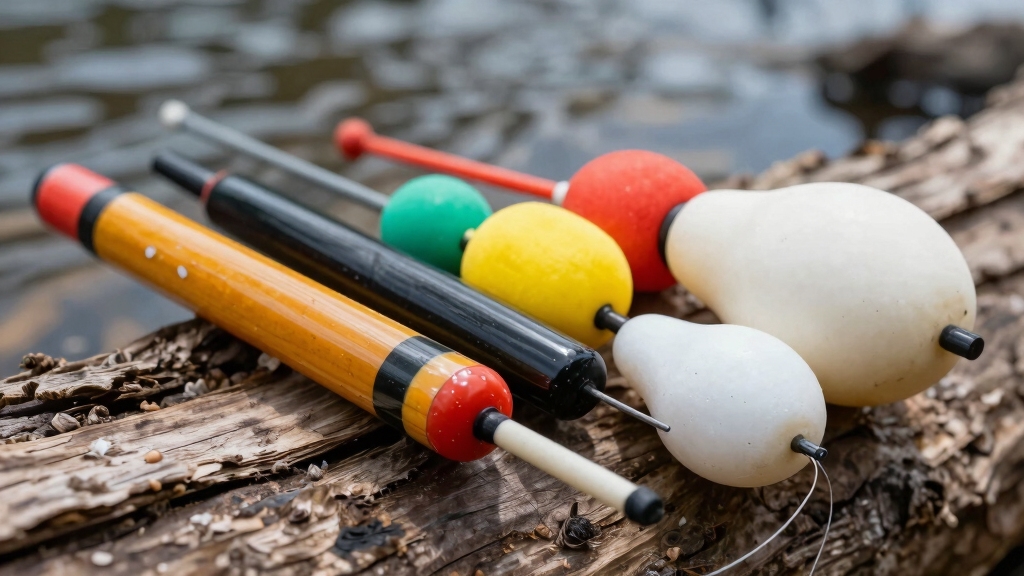
When selecting the right fishing float, you need to take into account the water depth and environment where you’ll be fishing. This directly influences the float type and attachment method.
For shallow waters under 7 feet, fixed floats offer stability by anchoring at a single point on your line. This enhances control.
If you’re targeting deeper waters exceeding 7 feet, consider floats that accommodate adjustable depth settings to optimize bait presentation.
Additionally, match the float’s buoyancy and body size to the bait weight. This ensures proper submersion and sensitivity.
The float’s shape and material also impact performance. Rounded bodies provide greater lift, while slim profiles suit lighter baits.
Materials like balsa wood or plastic balance durability and buoyancy. This is vital for adapting to specific fishing conditions effectively.
Selecting floats with adjustable depth features allows for rapid changes in bait presentation without retying your line.
Fishing Float Types By Attachment
When you’re out fishing, you’ll come across two main types of float attachments: fixed and slip. Fixed floats are pretty straightforward; they attach firmly at one spot on your line. This gives you the stability you need, especially in shallow waters.
Now, if you’re looking to fish deeper, slip floats are the way to go. They slide freely between your bait and a bobber stop, which means you can easily adjust the depth. This flexibility is super handy when you’re trying to find where the fish are hanging out. So, whether you prefer the stability of a fixed float or the versatility of a slip float, there’s something for every fishing situation! Proper bobber setup ensures your bait stays in the strike zone and improves bite detection.
Fixed Float Characteristics
Fixed floats anchor firmly at a single point on your fishing line, ensuring they remain stationary throughout the cast and retrieval.
You attach them directly, typically by threading or clipping onto the line, which restricts their movement. This setup offers precise bite detection in shallow waters, generally less than 7 feet deep, where maintaining a constant float position is critical.
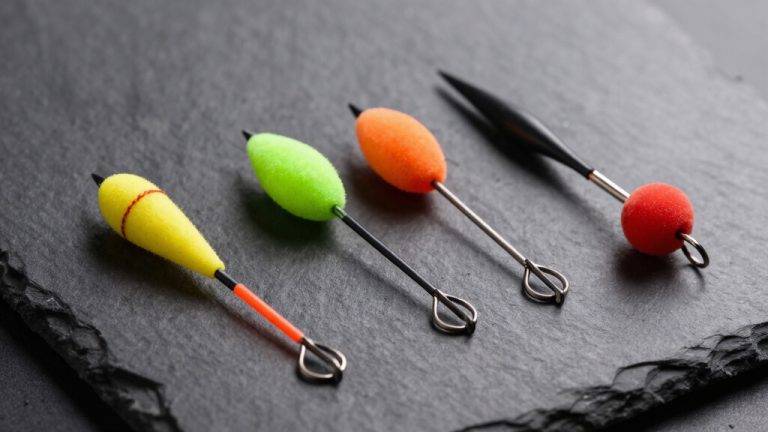
Fixed floats come in various profiles: straight wagglers, insert wagglers, or loaded types, each designed to optimize sensitivity, casting distance, or stability depending on your conditions and bait weight.
They provide consistent buoyancy and are easier to set up compared to slip floats. However, because they don’t adjust depth dynamically, you’ll need to carefully choose your fishing spot and depth before casting to maximize effectiveness.
Proper maintenance of your fishing line and gear is important to ensure optimal performance and longevity.
Slip Float Mechanics
Although slip floats differ from fixed floats by allowing free movement along the line, they rely on a bobber stop to set the fishing depth accurately.
You slide the float onto your mainline above the hook and secure a bobber stop at the desired depth to prevent further upward movement.
This setup lets the float travel freely during casting, enabling precise bait placement in deeper water.
When the bait sinks, the float slides down to the stop and suspends at the set depth, signaling bites clearly.
Slip floats excel beyond 7 feet depth, offering versatility for varied underwater terrains.
Their mechanics require careful adjustment of the bobber stop to match target fish depth, ensuring effective presentation and improved catch rates.
Using rig protection like beads or stops can prevent line abrasion and enhance the durability of your slip float setup.
Popular Fishing Float Shapes And Their Best Uses
When selecting a fishing float, understanding the distinct shapes and their specific applications can markedly improve your catch rate. For instance, straight wagglers offer sensitivity for still waters, while acorn floats provide stability for controlled drift fishing. Loaded wagglers enhance casting accuracy in varied conditions. Loafer floats excel in deep, fast currents.
| Float Shape | Best Use |
|---|---|
| Straight Waggler | Still waters, sensitive bites |
| Acorn Float | Controlled drift, stability |
| Loafer/Plunger | Deep, fast-flowing water |
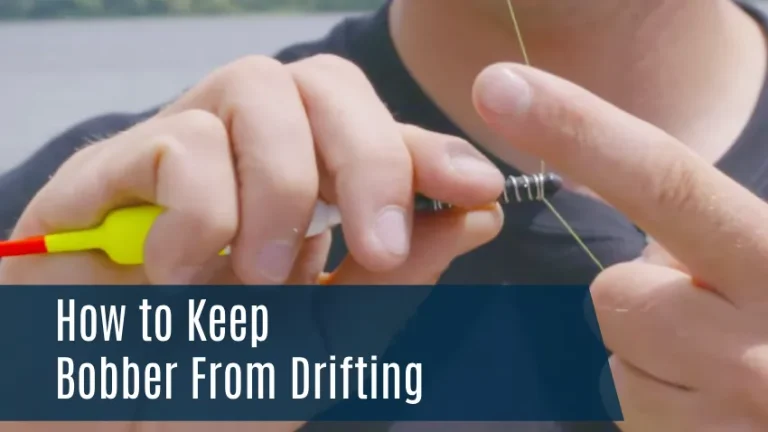
Match the float shape to your fishing environment and target species for peak performance. This precision guarantees better bite detection and effective bait presentation. Using the right float in combination with strategic positioning can significantly reduce drift and improve bait control.
How Fishing Float Materials Impact Performance?
The material of your fishing float plays a big role in how well it performs. For instance, it directly impacts its durability and buoyancy, which can really affect how sensitive you’re to fish bites.
Take balsa wood, for example. It’s fantastic for buoyancy and responsiveness, making it a favorite among many anglers. However, it doesn’t hold up as well as plastic or styrofoam. So, it’s all about understanding those trade-offs.
When you know the pros and cons of each material, you can choose the right float for your specific fishing conditions and the species you’re targeting. It makes a difference!
Choosing the appropriate gear, including floats, is essential for improving fishing technique and success rates.
Material Durability Comparison
Because fishing floats endure constant exposure to water and environmental elements, the choice of material directly affects their durability and overall performance.
Plastic floats offer excellent resistance to moisture, UV rays, and physical impacts, making them durable in various conditions.
Balsa wood provides natural buoyancy but tends to absorb water over time, which can reduce lifespan unless properly sealed.
Styrofoam floats are lightweight and resist water absorption, yet they can be prone to cracking under stress.
Cork, while traditional, may degrade faster in harsh environments but remains resilient when maintained.
When selecting floats, consider both environmental exposure and handling demands.
Durable materials like plastic guarantee longevity and consistent function, whereas natural materials require more care to maintain effectiveness over repeated use.
Similarly, selecting the right rod blank material, such as graphite or carbon steel, is crucial for balancing sensitivity, strength, and durability in fishing gear.
Buoyancy And Sensitivity
Although selecting the right float material might seem straightforward, it directly influences both buoyancy and sensitivity. These are critical for detecting subtle bites and maintaining proper bait presentation.
You want a material that balances lift and responsiveness. This ensures your float reacts instantly to fish activity without compromising stability.
Consider these material impacts:
Balsa wood offers natural buoyancy and excellent sensitivity, ideal for light bites.
Styrofoam provides high volume buoyancy but less sensitivity, suitable for heavier baits.
Plastic floats deliver durability with moderate buoyancy and sensitivity.
Cork combines moderate buoyancy with good sensitivity for traditional float designs.
Selecting the right material tailors the float’s performance to your fishing conditions and target species. This improves your bite detection and overall success. Additionally, using materials with corrosion-resistant properties can enhance float longevity in harsh environments.
Matching Fishing Floats To Water Environments
When fishing in varying water conditions, selecting the appropriate float type guarantees peak performance and presentation.
You’ll want stick floats for rivers with currents, as their buoyancy and dual attachment provide stability. For still waters like lakes, waggler floats work best, attaching at the bottom for minimal drag.
In saltwater or fast-flowing water, popping corks or Avon floats help attract fish and maintain control.
| Water Environment | Recommended Float Type | Key Feature |
|---|---|---|
| Fast-flowing rivers | Stick, Avon | Stability, current resistance |
| Still lakes | Waggler | Bottom attachment, sensitivity |
| Saltwater | Popping cork | Noise generation, attractors |
Match your float to conditions for peak sensitivity and control. Understanding the differences in visual attraction and vibration levels between fishing devices can also enhance your float selection strategy.
Understanding Fishing Float Buoyancy And Body Size
Understanding the buoyancy and body size of fishing floats plays a crucial role in guaranteeing your bait remains properly suspended in water. The float’s buoyancy must balance the bait’s weight for peak presentation.
Proper buoyancy and float size ensure your bait stays perfectly suspended for optimal fishing results.
Larger, rounded bodies provide greater buoyancy, supporting heavier baits and resisting submersion. Slim, elongated floats offer less buoyancy, ideal for delicate bites with light bait. Matching float size to bait weight avoids false bites or missed strikes.
Key factors to take into account include:
- Float body shape directly affects buoyancy and sensitivity.
- Material density influences float lift and durability.
- Proper matching prevents over- or under-submersion of bait.
- High-density floats suit deep-water; low-density preferred for general use.
Mastering these principles guarantees accurate depth control and improved fishing efficiency. Additionally, understanding the role of lure weight helps optimize bait presentation and float performance.
Specialized Fishing Floats For Different Conditions
Several specialized fishing floats cater to distinct water conditions and target species, enhancing your angling effectiveness.
For fast-flowing rivers, Avon floats with their buoyant tops and dual attachments maintain stability against currents.
In deep, fast waters, loafer or plunger floats excel due to their elongated, slender design, allowing controlled drift and sensitivity.
When fishing in still lakes, wagglers attached only at the base offer precise bite indication.
Self-cocking floats simplify setup by standing upright without added weight, ideal for varied depths.
Popping corks attract saltwater predators by creating surface vibrations.
Bubble floats enable line control near heavy surface vegetation.
Selecting these specialized floats lets you adapt to environmental challenges, optimizing bait presentation and strike detection for each unique fishing scenario.
Selecting Floats For Different Bait Types
Because different bait types vary in size, weight, and presentation needs, choosing the right float is critical to maintaining proper buoyancy and sensitivity.
You want a float that balances the bait’s weight without overpowering it, enabling natural movement and accurate bite detection.
For example, heavier baits require floats with greater buoyancy, while delicate baits need slim, sensitive designs.
Consider these guidelines:
Use loaded wagglers for dense baits to improve casting and stability.
Opt for insert wagglers with slender tips when using small or shy baits.
Choose pellet wagglers for short, fat hookbaits like pellets, ensuring minimal resistance.
Select slim, long floats for lightweight baits to maintain high sensitivity and subtle bite indication.
Matching float design to bait optimizes fishing effectiveness and increases your catch rate.
Tips For Casting Weighted Vs. Lightweight Floats
When you’re casting weighted floats, it’s all about having a firm and controlled motion. This helps you get the distance and accuracy you need without spooking the fish. You want to make sure your cast is strong enough to send that weight out there, but not so forceful that it scares everything away.
On the flip side, lightweight floats require a different approach. Here, you’ll want to use a gentler, more precise cast. This helps prevent line slack and makes sure your float is positioned just right. It’s really about finding that sweet spot.
Understanding how the weight of your float affects your casting technique is key. It can really make a difference in how effectively you present your bait in various water conditions. So, keep these tips in mind, and you’ll be casting like a pro in no time!
Casting Techniques Comparison
Mastering the casting techniques for weighted and lightweight floats requires understanding their distinct behaviors in flight and water entry.
Weighted floats, due to their mass, offer longer casts but demand controlled arm movement to avoid tangles or line twist. Lightweight floats, meanwhile, require a gentler, more precise cast to prevent overshooting or line slack.
Consider these key tips to optimize your casting:
For weighted floats, use a firm, smooth backswing to build momentum without jerking.
Lightweight floats benefit from a slower forward cast, minimizing line sag and ensuring accuracy.
Adjust your rod angle; a higher angle helps weighted floats cut through wind better.
Use appropriate line tension on lightweight floats to maintain sensitivity and control.
Tailoring your technique to float weight improves casting efficiency and bite detection.
Float Weight Impact
Although float weight might seem like a minor detail, it critically influences your casting technique and overall fishing performance.
Weighted floats improve casting distance and accuracy, especially in windy conditions or when targeting deeper waters. Lightweight floats offer heightened sensitivity, ideal for detecting subtle bites but require a gentler casting approach to prevent damage or line tangles.
| Float Weight | Casting Impact | Best Use |
|---|---|---|
| Heavy (Loaded) | Enables long, precise casts | Deep water, strong currents |
| Medium | Balanced control and distance | Versatile, general fishing |
| Light | Sensitive, short casts | Shallow water, light bites |
| Very Light | Delicate presentation | Clear water, wary fish |
Choose float weight based on conditions and target species for effective casting and bite detection.
Bite Detection With Sensitive And Self-Cocking Floats
How can you improve bite detection in your fishing setup? Using sensitive and self-cocking floats enhances responsiveness to subtle bites, increasing your catch rate.
Sensitive floats feature slender tips or lightweight materials that allow immediate movement with minimal fish interaction. Self-cocking floats maintain an upright position without external weights, offering precise visibility and reducing setup complexity.
Key advantages include:
Immediate visual feedback on shy bites
Reduced need for additional shot weights
Enhanced stability in varying water conditions
Improved casting accuracy due to balanced design
Incorporating these floats lets you detect even the faintest nibble, optimizing your fishing efficiency. Choose based on water depth and bait weight to ensure proper buoyancy and maximize bite sensitivity.
Frequently Asked Questions
How Do Environmental Factors Affect Float Visibility During Fishing?
You’ll notice environmental factors like water clarity, light conditions, and surface movement directly influence float visibility.
Murky or turbulent water reduces contrast, making brightly colored or high-contrast floats easier to spot.
Low light or glare demands fluorescent or reflective finishes on floats to maintain visibility.
Wind and current create waves that can submerge or obscure floats, so you’ll need to adjust float size, color, and buoyancy accordingly for best detection.
Can Fishing Floats Be Customized for Specific Fish Species?
Fishing floats are like a tailor-made suit. They can definitely be customized for specific fish species.
You can adjust size, shape, buoyancy, and material to match the fish’s feeding habits and water conditions. For example, use slim, sensitive floats for cautious species or weighted, durable ones for bigger fish.
Customizing guarantees better bite detection and improved catch rates. This gives you precision control to target your desired species effectively.
What Maintenance Is Required to Prolong Float Lifespan?
To prolong your float’s lifespan, rinse it with fresh water after each use to remove salt, dirt, or debris.
Store floats in a dry, cool place away from direct sunlight to prevent material degradation.
Inspect for cracks or damage regularly, especially on delicate parts like quills or inserts.
Avoid excessive pressure or impacts during transport.
Applying a light coating of protective oil on wooden or cork floats can also help maintain buoyancy and durability.
How Does Float Color Influence Fish Attraction?
You might think float color can hypnotize fish into biting, and to some extent, it does.
Bright colors like red or chartreuse sharply contrast water, helping you monitor bites in low light or murky conditions.
Conversely, muted or natural tones reduce spooking wary fish in clear water.
Choosing the right float color depends on water clarity, light, and target species’ vision sensitivity.
Precision here can markedly improve your catch rate.
Are There Eco-Friendly Alternatives to Traditional Fishing Floats?
Yes, you can choose eco-friendly fishing floats made from biodegradable materials like cork, balsa wood, or natural fibers instead of plastic or Styrofoam.
These materials reduce environmental impact by decomposing naturally if lost in water.
You should also consider floats with minimal synthetic coatings and avoid heavy metals.
Using such floats helps maintain aquatic ecosystems while providing reliable buoyancy and sensitivity for your fishing needs.
Match Your Fishing Float to Your Technique
Choosing the right fishing float coincidentally aligns with understanding your fishing environment, bait, and casting needs.
You’ll find that the attachment type, shape, and material all play vital roles in performance, bite detection, and ease of use.
By matching floats precisely to conditions, whether weighted or lightweight, sensitive or self-cocking, you’ll not only improve your technique but also increase your catch rate.
In fishing, the right float isn’t just gear; it’s a technical advantage.