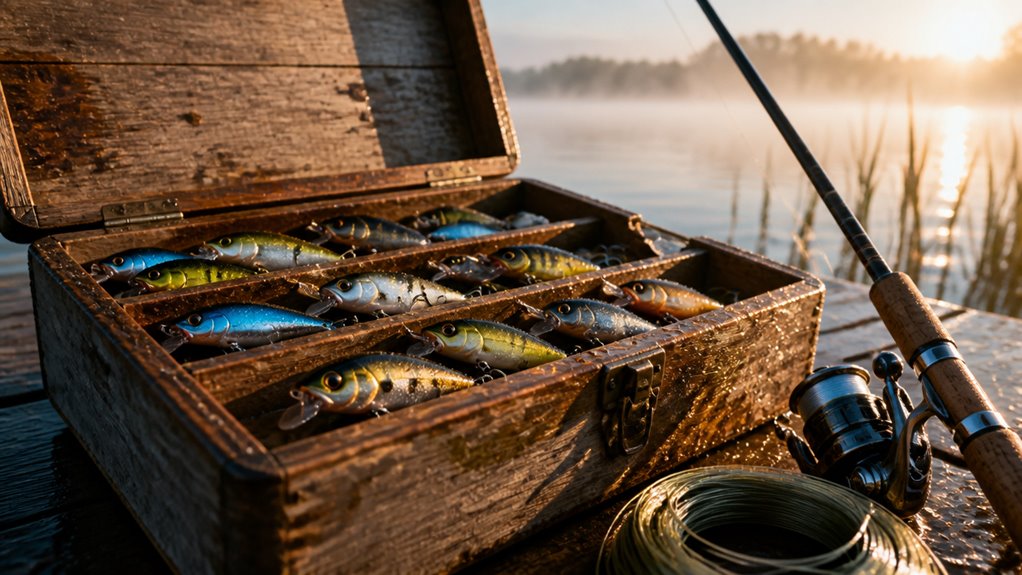
What Are Crankbaits Used for: Best Techniques Explained
You use crankbaits to imitate baitfish or prey like crawfish, triggering instinctive, aggressive strikes from bass across various depths and conditions.
Their design, including lip size, body wobble, and buoyancy, controls diving depth and action.
Colors match local forage to improve attraction.
Crankbaits excel at covering water rapidly and provoking strikes through vibration, deflections, and erratic retrieves.
Understanding their types, retrieval techniques, and ideal gear will help you fine-tune your approach for consistent bass success.
Key Takeaways
- Crankbaits imitate small baitfish or prey to provoke predatory and reaction strikes from bass.
- They cover different water depths based on lip design, targeting shallow to deep bass habitats.
- Crankbaits generate vibration and erratic movements to attract and trigger strikes from bass.
- They allow anglers to quickly locate active fish by covering large water areas efficiently.
- Crankbaits are used with varied retrieval techniques to mimic injured or fleeing prey and provoke bass attacks.
Key Features That Make Crankbaits Effective for Bass
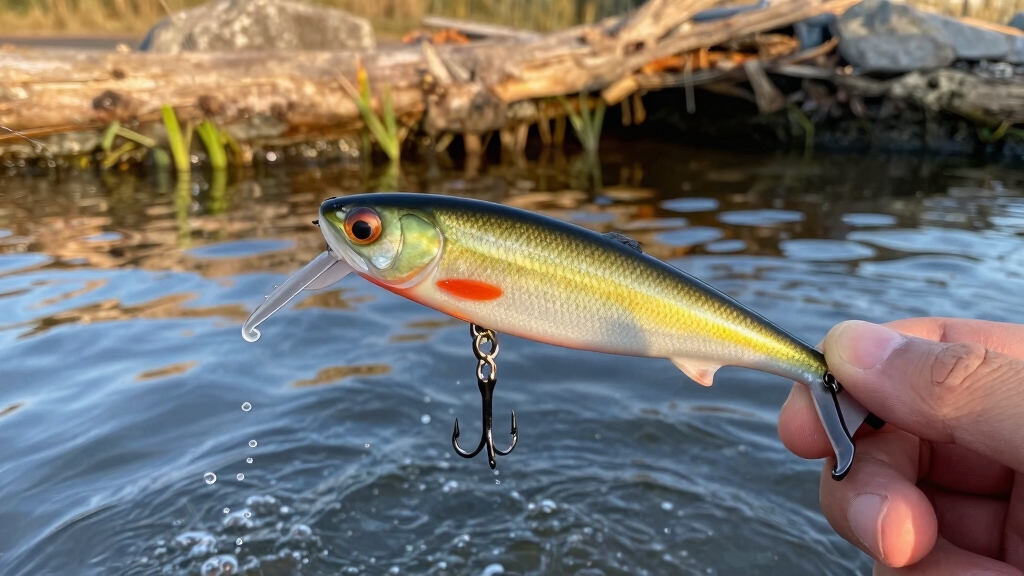
Although crankbaits come in various shapes and sizes, their effectiveness for bass fishing hinges on key features like their ability to imitate natural prey, dive to specific depths, and trigger reaction strikes.
Crankbaits excel by mimicking prey, diving precisely, and provoking instinctive bass strikes.
You’ll rely on carefully designed lip shapes to control diving depth: square bills for shallow 0-5 feet, medium bills reaching 10 feet, and large bills diving as deep as 30 feet.
Their body shape, size, and color patterns mimic bass forage such as crawfish, shad, or bluegill, enhancing strike probability.
Additionally, their durable construction lets you bounce them off underwater cover like rocks and timber without damage.
When you match these features to bass behavior and water conditions, crankbaits become indispensable tools for locating and enticing bass in diverse environments.
Selecting crankbaits with the appropriate lure weight ensures optimal casting distance and depth control, maximizing fishing success.
Triggering Reaction Strikes With Crankbaits
When you work a crankbait through a strike zone, its erratic movement and realistic profile provoke reaction strikes from bass that aren’t actively feeding. This tactic leverages sudden, instinctive responses rather than opportunistic feeding behavior.
You can trigger these strikes by varying your retrieve and causing the bait to deflect unpredictably off cover. Key elements to focus on include:
Erratic retrieves: pauses, twitches, and speed changes create hesitation in bass, provoking strikes.
Deflection: bouncing the crankbait off rocks, timber, or stumps mimics injured prey, triggering aggressive strikes.
Realistic profiles and colors: matching local forage enhances the illusion, increasing reaction potential.
Mastering these techniques helps you target elusive bass that won’t respond to conventional presentations. Using crankbaits with internal rattles can add sonic and vibration cues that further entice strikes.
Types of Crankbaits and Their Best Bass Uses
Because different bass habitats and conditions demand specific presentations, choosing the right type of crankbait is crucial for success.
Square bill crankbaits excel in shallow cover, bouncing off timber and rocks to provoke reaction strikes in 1-4 feet.
Medium diving crankbaits, with bills around 1 inch, allow you to target bass holding between 5 to 10 feet, offering versatile depth coverage.
For deeper bass, crankbaits with larger lips reach 12 to 30 feet, ideal for heavy cover or steep drop-offs.
Lipless crankbaits, which sink and yo-yo, work well in varied depths, especially in windy or murky conditions.
Each type imitates prey differently, so matching the crankbait to the bass’s location and cover maximizes your chances of triggering strikes efficiently and consistently.
Adjusting the lure color and vibration based on water clarity can further enhance the effectiveness of your crankbait presentation.
Choosing Crankbaits by Diving Depth for Bass Fishing
When you’re picking crankbaits for bass fishing, it’s super important to match the lure’s depth range with where you think the fish are hanging out.
For shallower waters, square bill crankbaits are a great choice. They work really well in the 0-5 feet range, especially when you let them bounce off cover—this can really provoke those strikes!
Now, if you’re targeting deeper spots, say up to 30 feet, you’ll want to go for larger-billed crankbaits. These are specifically designed to dive down efficiently and can handle heavier gear.
This way, you can reach those deeper bass without any hassle! Using lures that mimic injured prey behavior can increase your chances of triggering predatory strikes.
Shallow Diving Options
Selecting the right shallow diving crankbait lets you cover water efficiently while targeting bass in the top 0 to 5 feet of the water column. Square bill crankbaits are ideal here, thanks to their ability to deflect off cover and trigger reaction strikes. You’ll want to match your bait to local forage and structure for maximum effectiveness.
Focus on these key factors when choosing shallow diving crankbaits:
Bill size and shape: Short, square bills maintain shallow depth and bounce off timber, rocks, and stumps.
Action and retrieval: Steady crank retrieves facilitate bottom contact, while erratic deflections provoke strikes.
Color patterns: Use crawfish imitations in browns and reds near rocky cover. Shad patterns in white or silver work well over timber edges.
Choosing lures with corrosion-resistant materials is essential to maintain durability and performance in freshwater environments.
These elements guarantee you fish shallow zones effectively and provoke aggressive bass responses.
Deep Diving Choices
Although deep diving crankbaits require sturdier gear due to their larger size and resistance, they excel at reaching bass holding in 12 to 30 feet of water.
You’ll need beefed-up rods and reels to handle the pull and maintain control near structure. Choose crankbaits with large lips, like the 6th Sense Crush or Strike King 8XD, to reach these depths efficiently.
| Feature | Benefit |
|---|---|
| Large Bill Size | Enables deep diving reach |
| Robust Build | Withstands heavy cover |
| Realistic Action | Triggers reaction strikes |
Use steady retrieves to bounce off bottom cover such as stumps and rocks. This imitates prey like crawfish or baitfish.
This approach excels year-round, especially in prespawn and colder water when bass hold deeper.
Selecting gear with appropriate load handling capacity ensures better control and performance in heavy cover and deep water.
Using Square Bill Crankbaits to Deflect Off Shallow Cover
When you’re using square bill crankbaits, one of the best strategies is to deflect them off shallow cover like rocks, timber, and stumps. This technique can really trigger those reaction strikes from bass.
You’ll find it works best in water that’s about 1 to 4 feet deep. The wide, blunt bill of the lure creates those erratic bounces that mimic injured prey, making it super enticing for the fish.
Just a heads up, it’s important to make sure the conditions are right for clear path control. You don’t want to get snagged up while you’re trying to fish.
Using a line in the 15-20 lb range is a good idea; it helps you handle those cover nicks without too much hassle. Happy fishing!
For added effectiveness, consider the use of precise jigging techniques to mimic natural prey movements when near cover.
Deflecting Techniques Explained
Because shallow cover like timber, rocks, and stumps can hide active bass, you want to use square bill crankbaits to deflect off these structures effectively. Their blunt, wide lips cause the bait to ricochet unpredictably, triggering reaction strikes from bass holding tight to cover.
To master deflecting techniques, focus on:
- Casting parallel to the structure, allowing controlled contact without snagging.
- Using a steady retrieve that lets the bait bounce and change directions naturally.
- Employing 15-20 lb test line to withstand cover abrasion and maintain hooksets.
This approach exploits the square bill’s erratic deflections, mimicking fleeing prey. It also helps you locate bass positioned in tight, shallow spots where other lures struggle.
Precise control and consistent contact with cover maximize strike opportunities while minimizing snags. Using lures with durable materials and corrosion-resistant hooks ensures longevity when fishing in these challenging environments.
Ideal Conditions For Use
To maximize the effectiveness of square bill crankbaits deflecting off shallow cover, you want to fish during conditions that enhance bass activity and visibility.
Target water depths of 1 to 4 feet where these baits excel at bouncing off timber, rocks, and stumps.
Use them in sunny or slightly murky conditions to maintain lure visibility and provoke reaction strikes.
Optimal water temperatures fall within the active bass range, usually mid-50s to mid-70s Fahrenheit.
Employ 15-20 lb line to resist abrasion and control lure deflection without snagging deep cover.
Retrieve at a steady cadence to guarantee consistent contact with structure, triggering strikes from bass aggressively patrolling their territory.
Avoid cold, suspended conditions where bass reduce movement and reaction feeding.
This precise approach maximizes your chances for productive shallow cover fishing.
Additionally, choosing lures with durable materials ensures they withstand frequent strikes and harsh cover encounters.
Using Lipless Crankbaits in Cloudy or Windy Bass Waters
Cast lipless crankbaits in cloudy or windy bass waters to exploit their tight wobble and loud vibration. This helps cut through low visibility and turbulent conditions.
These baits let you cover water quickly while triggering reaction strikes from bass that aren’t actively feeding. Their sinking, bill-less design enables effective yo-yo retrieves, bouncing off submerged cover and imitating fleeing prey.
To maximize success, use ½ oz sizes for peak vibration without excessive splash. Retrieve steadily or with rhythmic pauses to maintain consistent lure action.
Target wind-blown banks and shallow flats where bass seek shelter. Lipless crankbaits excel in these conditions by combining sensory disruption with aggressive movement, forcing bass to strike despite murky water or rough surface conditions.
For anglers looking to improve their setup, using adjustable clip tension systems can help tailor lure presentation to different conditions and bait sizes.
How Jerkbaits Imitate Dying Baitfish in Cold Water
Lipless crankbaits excel in murky, windy conditions by triggering reaction strikes. However, when water temperatures drop, jerkbaits become more effective at enticing lethargic bass.
You’ll use a twitch-pause retrieve to mimic dying baitfish, which sink and flutter unpredictably in cold water. This erratic action triggers bass that conserve energy and won’t chase fast prey.
| Jerkbait Action | Cold-Water Effect |
|---|---|
| Twitch | Sudden dart mimics escape |
| Pause | Suspended baitfish sinking |
| Flutter | Erratic movement draws attention |
| Glide | Slow, natural fall |
Matching Crankbait Colors to Local Bass Prey and Seasons
When it comes to choosing crankbait colors, it’s all about matching them to what bass are actually feeding on in your local waters throughout the year. In the spring, you’ll want to lean toward browns and reds. These colors are great for mimicking crawfish, which are a big part of the bass diet this time of year.
As the months warm up, you can switch things up a bit. Whites and silvers become your go-to choices for imitating shad and other baitfish. This adjustment really pays off since it aligns your lure with what’s readily available in the water.
Seasonal Color Patterns
When matching crankbait colors to local bass prey throughout the seasons, understanding the natural forage is essential.
Seasonal shifts affect forage species’ availability and appearance, so you need to adjust your crankbait colors accordingly to maximize strikes.
Early spring calls for earthy tones like browns and reds that mimic crawfish.
During warmer months, brighter patterns matching baitfish like shad or bluegill work best.
In fall and winter, subdued colors reflecting dying forage help trigger reaction bites.
Consider these seasonal color guidelines:
- Spring: Browns, tans, and reds to imitate crawfish and early forage
- Summer: Whites, silvers, and pearls matching shad and baitfish
- Fall/Winter: Muted grays and blues reflecting lethargic prey and lower light
Align your crankbait color precisely with seasonal forage cues to enhance bass response.
Matching Local Forage
Several key factors influence how you match crankbait colors to local forage, including the prevalent prey species and their seasonal variations.
To effectively imitate bass prey, select browns, tans, and reds when targeting crawfish in spring. This replicates their size and coloration on local rocky bottoms.
For baitfish like shad, shiners, or alewives, use whites, silvers, and pearlescent hues that reflect light similarly.
Adjust color choices based on forage availability and water clarity. In windy or timbered banks, shad-imitating patterns excel, while crawfish colors dominate rocky or muddy cover.
You should observe local forage species carefully and switch crankbaits accordingly to trigger reaction strikes.
Matching colors precisely enhances lure credibility and increases bass response across seasons, optimizing your fishing success.
Retrieval Techniques for Bottom Bouncing and Cover Fishing
In bottom bouncing and cover fishing, steady crank retrieves are essential for effectively deflecting crankbaits off rocks, timber, and stumps to trigger reaction strikes.
You want to maintain a consistent speed that allows the bait to contact structure without snagging, provoking bass hiding in ambush. Adjust your retrieve to the cover density and depth for ideal deflections.
Focus on these retrieval tactics:
Use a medium-speed crank to bounce off hard surfaces, causing erratic movement that entices strikes.
Pause briefly after contact to mimic prey hesitation, increasing strike probability.
Employ a tight line to feel subtle hits and maintain control through heavy cover.
Mastering these techniques ensures you exploit bass behavior around bottom structures efficiently for productive fishing sessions.
Choosing the Right Gear and Line for Bass Crankbait Fishing
Mastering retrieval techniques is only part of the equation; selecting the right gear and line guarantees your crankbait performs ideally under varying conditions.
For bass crankbait fishing, use medium to heavy rods with fast action to handle aggressive strikes and control deflections off cover like timber or rocks. Pair your rod with a reel offering smooth, high-speed retrieves to manage different crankbait speeds efficiently.
Choose a 15-20 lb braided line or fluorocarbon leader to prevent deep diving over weeds and resist abrasion from structure. For deep-diving crankbaits, beef up your tackle with heavier gear to manage increased lure size and drag.
Matching gear strength to bait size and water conditions assures peak hook sets and reduces line breakage, maximizing your bass-catching potential across diverse environments.
Frequently Asked Questions
How Do Crankbaits Perform in Saltwater Fishing Conditions?
You’ll find crankbaits perform well in saltwater by targeting species like drum, jack crevalle, tuna, and stripers.
Use silver and blue hues to mimic local baitfish. Their robust design handles strong pulls and rough conditions, especially with beefed-up gear for thorough explorations.
Lipless crankbaits work great in windy, murky shallows. Steady retrieves and deflecting off structure trigger strikes.
Adjust size and color to match local forage for best results.
Can Crankbaits Be Effective for Species Other Than Bass?
You might think crankbaits only work for bass, but they’re great for many species. You can target saltwater fish like drum, jack crevalle, tuna, and stripers, or anadromous species such as trout, salmon, and steelhead when they move into freshwater.
Even perch, bluegill, and river trout respond well. Their versatility comes from mimicking prey and adaptable retrievals, making crankbaits effective for any aggressive predator feeding on baitfish or crawfish.
What Maintenance Do Crankbaits Require After Use?
After use, you should thoroughly rinse your crankbaits with fresh water to remove dirt, debris, and salt, especially after saltwater fishing.
Check hooks for rust or dullness and sharpen or replace them as needed. Inspect split rings and treble hooks for damage.
Dry the lure completely to prevent corrosion. Store crankbaits in a tackle box with compartments to avoid tangling.
Occasionally apply a light oil to metal parts for added protection.
Are Wood Crankbaits Better Than Plastic Ones?
Wood crankbaits offer a natural, erratic action that mimics prey better than most plastics, especially when deflecting off cover.
You’ll find them more durable against structure but heavier, requiring beefed-up gear.
Plastic crankbaits provide consistent, precise swimming actions and are more versatile in size and color options.
Choose wood for natural, lifelike movement in specific conditions; pick plastic for reliability, variety, and easier maintenance during long sessions.
How Long Do Crankbaits Typically Last Before Needing Replacement?
Oh sure, crankbaits come with an expiration date—just kidding, they don’t self-destruct!
Typically, you’ll get several seasons of use before replacing one. Lifespan depends on how often you fish, water conditions, and how much abuse they take bouncing off rocks or getting chewed by bass.
Check for cracked lips, damaged hooks, or fading paint. When action or durability drops, it’s time to swap. Proper care can extend their life substantially.
The Right Crankbait Technique Turns Every Cast into Opportunity
When you cast a crankbait, imagine it darting through water like a startled baitfish, triggering instinctive strikes from bass lurking nearby.
By selecting the right type, color, and diving depth, you can mimic natural prey and provoke reaction bites even in tough conditions.
Mastering retrieval techniques and matching your gear guarantees your crankbait dances just right, turning cover and structure into feeding zones.
With precision and purpose, crankbaits become your key to releasing bass success.