
What Is a Freestone Stream? Definition, Features & Fishing Tips
A freestone stream flows primarily from precipitation and snowmelt, running over rocky, non-limestone beds like granite and quartzite.
You’ll find steep gradients and fast currents creating diverse habitats such as riffles and pools.
These streams have highly variable flow and temperature, responding quickly to seasonal weather shifts, unlike regulated or spring-fed waters.
Their dynamic physical features and cold, oxygen-rich conditions make them critical for trout survival and angling success.
Exploring their seasonal and ecological complexities reveals why they stand apart.
Key Takeaways
- A freestone stream is primarily fed by precipitation, snowmelt, and surface runoff rather than groundwater or springs.
- It features a rocky bed of loose stones, gravel, and rubble from non-limestone geology like granite or quartzite.
- These streams have steep gradients, fast currents, and dynamic flow creating riffles, runs, and cascades.
- Flow and temperature vary seasonally, driven by precipitation and snowmelt, causing fluctuating habitat conditions.
- Downstream progression leads to broader channels, reduced gradients, and increased habitat complexity.
What Is a Freestone Stream?
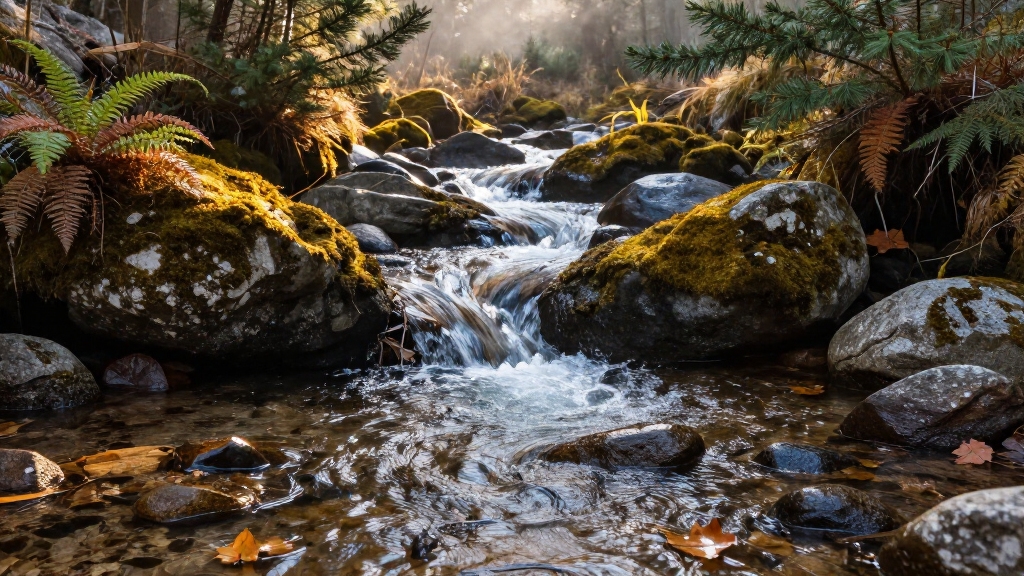
A freestone stream is a type of river or stream primarily fed by precipitation, including rain and snowmelt, rather than groundwater or dam regulation.
You’ll find its flow fluctuates seasonally, reflecting changes in weather and runoff patterns.
This stream’s rocky bed, comprised of loose stones, gravel, and rubble, originates from erosion of surrounding non-limestone geology like granite or quartzite.
You’ll notice steep gradients and fast currents in many sections, with features such as riffles, runs, and cascades shaping habitat complexity.
Because its water input depends on surface sources, you should expect variable depth, velocity, and temperature over time.
Unlike spring-fed or dam-controlled systems, freestone streams respond directly to precipitation events.
They exhibit more dynamic hydrology and channel morphology that influence ecological conditions and aquatic life.
Maintaining an organized workspace with modular storage solutions can help anglers efficiently manage gear for fishing in these variable environments.
Where Do Freestone Streams Begin and Flow?
Although freestone streams often originate in high-elevation mountain areas, their courses extend downstream as tributaries join and influence flow and channel characteristics.
You’ll find their headwaters characterized by steep gradients, fast currents, and rocky substrates like sandstone or granite.
As you move downstream, the gradient typically lessens, and the channel broadens, causing flow velocity to decrease and habitat complexity to increase.
Tributaries contribute additional runoff and sediment, altering hydraulic conditions and substrate composition.
This progression affects water temperature, flow variability, and channel morphology.
Understanding where freestone streams begin and how they evolve downstream helps you predict seasonal shifts in flow patterns and habitat structure.
This knowledge is essential for effective management and ecological assessment of these dynamic waterways.
Measuring water temperature accurately along these streams can provide valuable insights into fish behavior and habitat quality.
What Controls Freestone Stream Flow and Levels?
Stream flow and levels in freestone systems respond directly to variable inputs like precipitation, snowmelt, and surface runoff. This makes them highly sensitive to changing weather patterns.
During spring, snowmelt and increased rainfall sharply raise flow levels. In contrast, summer and fall bring reduced precipitation and diminished runoff, causing flows to drop.
Near-surface groundwater contributes but plays a minor role in sustaining base flow, so the stream’s volume fluctuates markedly. Rapid melt or heavy rain events can trigger swift, sometimes extreme flow increases and flooding.
Unlike regulated dam or spring-fed streams, freestone streams lack flow moderation. This results in pronounced seasonal and event-driven variability.
Understanding these controls helps you anticipate flow dynamics essential for ecological management and fishing conditions. Proper maintenance practices are key to preserving equipment used in these variable conditions.
How Do Physical Features Shape Freestone Streams?
Flow variability in freestone streams directly reflects their underlying physical characteristics, which govern water velocity, channel shape, and habitat diversity.
Steep gradients in headwaters increase flow speed, generating riffles and broken surface flows that oxygenate water and create complex habitats.
As you move downstream, channel slope decreases, widening the stream and slowing currents, which forms pools and runs that support different aquatic species.
The rocky substrate, composed of sandstone, quartzite, or granite, affects sediment transport and substrate stability, influencing spawning grounds and benthic communities.
Waterfalls and cascades interrupt flow, carving pools and enhancing habitat heterogeneity.
These physical features interact dynamically, shaping flow regimes, sediment distribution, and habitat complexity essential for the ecological function and biodiversity of freestone streams.
Understanding the importance of substrate stability in aquatic habitats helps manage sediment transport and supports species that rely on specific bottom conditions.
Why Do Freestone Streams Change With the Seasons?
Because freestone streams rely primarily on precipitation, their water levels and temperatures fluctuate markedly with seasonal weather patterns.
Freestone streams depend on precipitation, causing their water levels and temperatures to vary seasonally.
You’ll observe high flows during spring snowmelt and runoff, as increased precipitation and melting snow rapidly augment stream discharge.
Conversely, in summer and fall, diminished rainfall and waning snowmelt reduce flow volume, causing water levels to drop and temperatures to rise.
These fluctuations physically reshape the streambed by moving gravel and stones during high flows and exposing riffles and runs when levels fall.
Since freestone streams receive limited groundwater input, they lack consistent flow regulation, making them highly sensitive to variable weather conditions.
Understanding this seasonal variability is essential for predicting habitat changes and managing aquatic ecosystems dependent on these dynamic hydrological processes.
Water temperature changes in freestone streams can significantly influence fish behavior and habitat use, making water temperature measurement a key factor in stream ecology management.
How Do Freestone Streams Differ From Other Stream Types?
When comparing freestone streams to other types, you’ll find that their primary water sources and flow patterns set them apart markedly.
Unlike tailwaters, which rely on regulated dam releases, freestone streams depend mainly on precipitation, snowmelt, and runoff. This makes their flows highly variable and seasonally dynamic.
Spring creeks receive consistent groundwater input, yielding stable flow and temperature. In contrast, freestone streams exhibit pronounced fluctuations.
Additionally, limestone streams maintain cooler, steadier conditions with higher buffering capacity. This contrasts with freestone streams’ more variable temperatures and lower fertility.
Physically, freestone streams often feature steep gradients and rocky substrates. This results in fast currents and diverse habitat structures.
This variability in hydrology and geomorphology distinguishes freestone streams from other systems, influencing their ecological dynamics and physical characteristics.
These temperature fluctuations can significantly affect spawning behaviors and success rates for various aquatic species, especially as spawning typically initiates when water temperatures approach 60°F.
Why Are Freestone Streams Great for Trout and Fishing?
Freestone streams are pretty fantastic for trout and fishing! You know, they provide those perfect cold-water conditions that trout need to thrive, especially in their upper reaches and during runoff seasons. It’s like a cozy home for them.
What’s really cool about freestone streams is their dynamic flow. This creates all sorts of habitat structures—think riffles, pools, and runs. These varied environments support different fish behaviors and feeding strategies, which is great for anglers looking to catch trout.
Plus, the seasonal changes in water volume and temperature add even more complexity to these habitats. This makes freestone streams not just beautiful to look at, but also super productive fishing spots. So, if you’re looking for a great day on the water, these streams are definitely worth checking out!
During winter, trout in freestone streams tend to remain in deep pools and slow currents to conserve energy and take advantage of stable, oxygen-rich habitats.
Ideal Cold Water
The appeal of freestone streams for trout fishing lies in their dynamic cold-water environment. This supports ideal habitat conditions.
You’ll find that water temperature remains sufficiently low during spring runoff and in mountain headwaters. This fosters trout metabolic efficiency and oxygen saturation.
This thermal regime, though variable seasonally, rarely exceeds trout tolerance levels during critical growth periods.
| Parameter | Typical Range | Effect on Trout |
|---|---|---|
| Water Temperature | 5°C to 15°C (41°F-59°F) | Optimizes metabolism and feeding |
| Dissolved Oxygen | 8-12 mg/L | Secures respiratory efficiency |
| Flow Rate | Variable, 0.3-1.5 m/s | Creates diverse microhabitats |
| Seasonal Variation | High | Drives adaptive trout behavior |
Careful selection of weighted nymph patterns can enhance fishing success in these streams by matching the natural drift and insect activity.
These elements combine to create conditions where trout thrive. Fishers consistently find success.
Diverse Habitat Structures
Building on the ideal cold-water conditions that support trout metabolism and oxygen availability, freestone streams offer a complex mosaic of habitat structures that directly influence trout distribution and behavior.
The steep gradients produce riffles, runs, and pocket waters, creating variable flow velocities and depths. Pools formed by cascades and channel irregularities provide essential resting and feeding zones.
The rocky substrate composed of loose gravel and cobbles facilitates spawning by offering secure egg deposition sites and interstitial spaces for macroinvertebrates, which serve as primary trout forage.
This heterogeneity supports diverse microhabitats, allowing trout to optimize energy expenditure and predator avoidance.
As a result, you’ll find trout concentrated in specific structural niches that maximize feeding efficiency and shelter, making freestone streams exceptional environments for both trout survival and angling success.
Trout predation on frog tadpoles and juveniles in these habitats plays a significant role in shaping aquatic community dynamics.
Seasonal Flow Benefits
Experiencing seasonal flow fluctuations in freestone streams reveals why they’re excellent trout habitats and prime fishing locations.
During spring snowmelt and heavy rains, elevated flows increase oxygenation and redistribute substrate. This creates dynamic riffles and deep pools that support diverse aquatic insects and provide ideal trout feeding and shelter.
As flow recedes in summer and fall, water temperature rises, concentrating trout in cooler, deeper pools. This enhances angler targeting opportunities.
These seasonal variations force trout to adapt behaviorally and spatially, promoting healthy populations resilient to environmental changes.
Additionally, fluctuating flows maintain varied habitat complexity, essential for spawning and juvenile development.
Unlike spring-fed or dam-controlled systems, freestone streams’ natural flow variability sustains ecological processes critical to trout survival and fishing quality throughout the year.
Water temperature thresholds, such as the 65°F mark important for spawning initiation in many fish species, illustrate how temperature cues regulate aquatic life cycles in these streams, making temperature regulation a key factor in habitat suitability.
Frequently Asked Questions
How Do Human Activities Impact Freestone Stream Ecosystems?
You impact freestone stream ecosystems primarily through land use changes like deforestation, urbanization, and agriculture, which increase sedimentation and nutrient runoff.
You alter flow regimes by diverting water or building structures, disrupting natural seasonal variability.
Pollution from chemicals and waste degrades water quality and harms aquatic life.
Your activities can destabilize stream banks, reducing habitat complexity critical for trout and other species.
This ultimately threatens the ecological integrity and resilience of these dynamic systems.
What Conservation Efforts Protect Freestone Streams?
You protect freestone streams by implementing riparian buffer zones that filter runoff and stabilize banks.
You regulate land use to reduce sedimentation and pollution from agriculture and development.
Restoration projects often reestablish natural flow regimes and habitat complexity.
Monitoring water quality and flow variability helps detect ecological stress.
Additionally, enforcing sustainable water withdrawals maintains seasonal flow patterns critical for aquatic life.
These targeted conservation measures preserve freestone stream integrity and biodiversity.
Can Freestone Streams Be Used for Recreational Activities Other Than Fishing?
Imagine paddling a kayak through a freestone stream’s riffles and pools, like those found in Colorado’s Rocky Mountains.
You can definitely enjoy recreational activities beyond fishing, including kayaking, hiking along rugged banks, and wildlife photography.
The stream’s variable flows and rocky substrates create dynamic conditions ideal for whitewater sports and nature observation.
Just remember, seasonal flow changes affect safety and accessibility, so plan your activities accordingly for peak experience.
How Do Freestone Streams Affect Nearby Groundwater Quality?
You’ll find that freestone streams influence nearby groundwater quality by contributing variable runoff loaded with sediments, minerals, and organic matter.
During high flows, they can introduce nutrients and pollutants into the groundwater, potentially altering its chemistry.
Because their flow depends on precipitation and runoff, fluctuations in water volume affect infiltration rates, causing intermittent changes in groundwater composition.
This dynamic interaction makes groundwater quality near freestone streams more variable and sensitive to surface conditions.
What Wildlife Besides Trout Rely on Freestone Stream Habitats?
You’ll find various aquatic insects like mayflies, caddisflies, and stoneflies depending on freestone streams as key food sources.
Amphibians such as salamanders and frogs also rely on these habitats for breeding and feeding.
Additionally, riparian mammals like otters and mink use freestone streams for hunting fish and other prey.
Birds, including dippers and kingfishers, actively forage in these dynamic, cold-water environments.
This makes freestone streams essential for diverse wildlife communities.
Why Freestone Streams Matter for Trout and Fishing?
Now that you understand how freestone streams originate, flow, and shift with the seasons, you see why their unique physical and hydrological characteristics matter.
Their dynamic flow, influenced by precipitation and terrain, creates ideal habitats for trout.
So, why settle for surface-level knowledge when you can appreciate the intricate balance that makes freestone streams essential to both ecology and fishing?
This deeper insight enhances how you value and interact with these natural systems.