
Best Time for Perch Fishing: Plan Your Trip for Better Catches
You’ll have the best perch fishing from spring through fall, with autumn often giving the most consistent action.
Focus on stable weather, water temperatures between 50–65°F, and daily peaks at dawn and dusk when perch feed aggressively.
Avoid bright midday sun and abrupt temperature swings, which slow them down.
Keep an eye on spawning seasons and nearshore movements for targeted tactics.
Stick around, and you’ll discover how weather, water type, and timing all play into landing your next catch.
Key Takeaways
- Autumn, especially September to October, offers the most consistent perch fishing due to active feeding and stable water temperatures around 50–65°F.
- Dawn and dusk low-light periods increase perch activity and feeding, making these times ideal for fishing.
- Spring through fall is the prime fishing season, with perch moving nearshore in spring before spawning and schooling heavily in fall.
- Overcast skies, mild drizzle, and stable, cooler weather extend perch feeding windows for better catch opportunities.
- Water temperatures between 50–65°F optimize perch biting, while extreme temperatures above 65°F or below 50°F reduce activity.
When Is the Best Season for Perch Fishing?
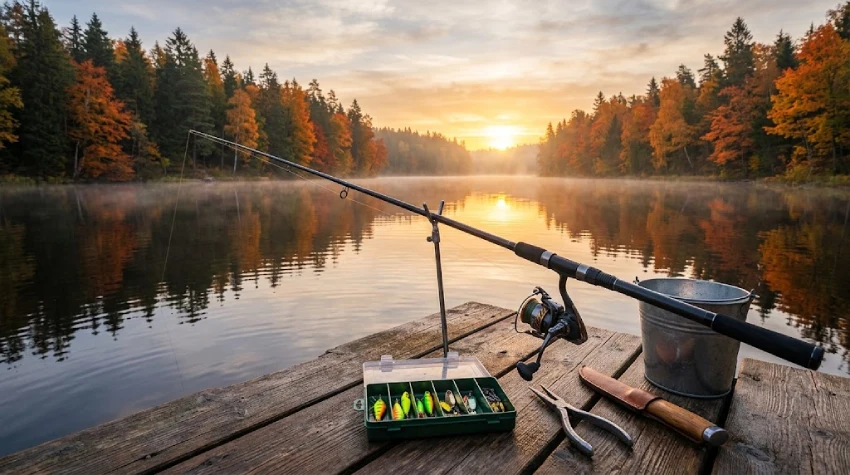
Although perch can be caught year-round, you’ll find the best seasonal fishing from spring through fall. Autumn often stands out as the most productive time.
From June through October, perch stay active and feed aggressively. Late summer into fall is your prime stretch for consistent catches.
Spring offers great opportunities too, especially as yellow perch move closer to shore before spawning. Water temperatures between 50 and 65°F tend to trigger solid bites during these months.
Winter perch fishing is possible but usually less steady unless you’re ice fishing or targeting midday warmth. To maximize your success, focus on late summer and fall when perch school up and feed heavily in preparation for colder months.
This seasonal pattern helps you plan your trips for the most dependable action. Additionally, targeting times around dusk and pre-dawn can increase your chances due to low-light feeding behavior.
How Spawning Season Affects Perch Fishing?
As you plan your perch fishing trips around the peak seasons, understanding how spawning affects their behavior can boost your catch rates. Perch typically spawn from early April through mid-May, depending on water temperature and weather.
Planning perch fishing trips around spawning seasons can significantly improve your catch rates.
During this time, perch move into shallow, nearshore areas to lay eggs, making them more accessible but often less aggressive. You’ll notice they may feed less actively, focusing on reproduction rather than eating.
To fish successfully, target the edges of spawning zones where perch start feeding again. Using lighter tackle and subtle presentations works best since perch can be easily spooked.
After spawning, their feeding activity generally picks up, leading to more consistent bites throughout late spring and summer. Timing your trips with this pattern helps you capitalize on perch behavior shifts. Water temperature stability above 60°F is crucial in triggering spawning behaviors and influences fish movement into shallow spawning zones.
Best Daily Time Windows for Perch Fishing
You’ll find that perch tend to feed most actively during low-light periods, making dawn and dusk prime times to cast your line.
Early morning often delivers a strong bite, especially in spring and summer, while late afternoon into evening also offers consistent action.
Mid-morning through mid-afternoon can work well in winter when water temperatures rise.
However, generally, low-light windows outperform bright midday sun.
Overcast skies may extend feeding periods beyond these typical times, so don’t hesitate to fish during cloudy conditions.
Keep in mind, perch can sometimes stay cooperative throughout the day, but your best shot at steady catches is during these key windows.
Planning your fishing trips around these times will boost your chances of success without relying on guesswork.
Additionally, targeting perch near weed edges and drop-offs during these times can significantly increase your catch rate.
How Water Temperature Influences Perch Activity?
You’ll find perch are most active when water temperatures hang around 50 to 65°F, especially during the spring and fall.
It’s interesting how seasonal shifts can impact these ranges, right?
During the cooler spring waters, perch tend to feed steadily, and you’ll notice them getting active again just before winter sets in.
Tidal cycles also influence perch feeding by altering water movement and habitat accessibility, which can expand their feeding grounds during rising tides.
Optimal Temperature Ranges
When water temperatures settle between 50 and 65°F, perch tend to feed most actively. This range is your sweet spot for steady bites.
Within this band, perch metabolism ramps up, boosting their appetite and movement. You’ll notice more consistent strikes.
If the water dips below 50°F or climbs above 65°F, perch tend to slow down, becoming less aggressive and harder to tempt.
Targeting waters in the mid-50s to low 60s often yields the best results, whether you’re fishing spring or fall.
Keep in mind that perch comfortably bite between 40 and 70°F, but the most reliable action happens in that 50–65°F window.
Focusing your efforts here maximizes your chances for success without chasing less productive conditions.
For perch anglers seeking optimal gear, selecting a rod with the right action and sensitivity can greatly enhance fishing performance in these temperature-driven activity windows.
Seasonal Temperature Effects
Although perch remain active across a broad temperature range, their feeding patterns shift noticeably with seasonal changes in water temperature.
You’ll find peak activity often occurs between 50°F and 65°F, especially in spring and fall. As water warms in summer, perch may feed later in the day. Cooler temps in winter push feeding toward midday.
Understanding these shifts helps you time your outings for the best bites.
| Season | Water Temp (°F) | Feeding Behavior |
|---|---|---|
| Spring | 50–60 | Nearshore, active feeders |
| Summer | 61–70 | Late afternoon bites |
| Fall/Winter | 40–55 | Midday feeding, schooling |
Adjust your tactics with the season’s temperature to stay ahead of perch habits and boost your catch. Similar to perch, crappie also show seasonal movement patterns, often seeking oxygen-rich deeper waters during colder months for shelter and feeding.
Why Dawn and Dusk Are Best for Perch Fishing?
You know, perch tend to be most active during those low-light periods at dawn and dusk.
It’s pretty fascinating how they feed aggressively when visibility is reduced.
During these times, they’re out and about, making it the perfect opportunity for anglers like us to catch them before they head back to deeper waters.
So, if you time your fishing trips around these hours, you could really boost your chances of success on the water.
It’s all about being in the right place at the right time!
Elevated dissolved oxygen levels during early morning enhance perch metabolism and feeding activity, making dawn an especially productive time to fish.
Low-Light Feeding Advantage
Tapping into low-light periods like dawn and dusk can dramatically boost your perch fishing success.
During these times, perch take advantage of reduced visibility to feed more aggressively, feeling safer from predators.
You’ll notice perch moving from deeper waters toward shallower feeding zones, increasing your chances of a catch.
The lower light levels also mean perch rely heavily on their lateral line and subtle vibrations.
Using lures that mimic natural prey movements is key.
Bright midday sun tends to make perch more cautious and less active.
Fishing during these quieter periods takes advantage of their natural behavior.
Using a net with a rubberized mesh can help safely land perch while minimizing injury and hook damage.
Peak Activity Periods
Building on the advantage low-light periods offer, understanding why dawn and dusk stand out as peak activity times can sharpen your perch fishing strategy.
Perch become more active during these times due to cooler temperatures, reduced light, and increased prey movement. This triggers feeding behavior that you can exploit for better catches.
Midday often sees less activity as perch retreat to cooler, deeper waters.
| Time of Day | Key Benefit |
|---|---|
| Dawn | Increased feeding |
| Early Morning | Cooler temperatures |
| Dusk | Heightened prey activity |
| Late Afternoon | Warmer water stimulates bite |
| Midday | Less active, cooler depths |
Target these windows consistently to optimize your perch fishing success. Additionally, reduced light levels during these periods encourage fish to forage more boldly, making them less cautious and easier to catch due to low-light conditions.
How Weather and Light Conditions Impact Perch Bites?
Although perch can bite throughout the day, their activity tends to spike under specific weather and light conditions that you can learn to recognize.
Overcast skies often boost perch feeding, extending their active periods beyond the usual dawn and dusk peaks.
You’ll find that low-light conditions, like cloudy mornings or evenings, encourage more bites than bright midday sun.
Light drizzle and mild temperatures also create favorable conditions, keeping perch comfortable and feeding steadily.
On the flip side, abrupt temperature swings or bright, harsh sunlight can slow them down.
When you plan your trip, aim for stable, cooler weather with cloud cover to maximize perch action.
Recognizing these patterns helps you fish smarter, hooking more perch during these prime windows.
Sustained wind patterns can also influence perch behavior by affecting surface water movement and concentrating their prey in specific areas.
Perch Fishing Behavior by Water Type
Understanding how perch behave in different water types can help you target them more effectively throughout the year.
In natural lakes, perch school up and feed heavily from late summer through fall, making this period prime for steady action.
During winter, ice fishing becomes productive as perch remain active in cold water, especially near structures.
Spring sees perch moving closer to shore to spawn, offering opportunities in shallower water.
Rivers and streams may show more variable perch behavior due to current and temperature changes, so adjust your tactics accordingly.
Key points to remember:
- Lakes: Late summer to fall is peak perch feeding time.
- Ice-covered waters: Target morning and late afternoon bites.
- Spring: Look for perch nearshore during spawning.
- Rivers: Watch for temperature shifts affecting perch activity.
Why Autumn Offers the Most Consistent Perch Action?
When you fish for perch in autumn, you tap into a period of consistent feeding as the fish prepare for winter.
Cooler water temperatures between 50–65°F keep perch active. They school up to bulk up on food.
Low-light conditions and overcast skies extend their feeding times, making your bite opportunities more reliable than in summer or spring.
Autumn’s stable weather reduces abrupt temperature swings, helping perch maintain steady activity levels.
| Factor | Why It Matters | Ideal Autumn Condition |
|---|---|---|
| Water Temperature | Keeps perch active | 50–65°F |
| Light Conditions | Extends feeding window | Overcast, low-light periods |
| Weather Stability | Promotes consistent behavior | Cool, stable with mild drizzle |
You’ll find autumn the most dependable season for perch fishing.
Frequently Asked Questions
What Types of Bait Work Best for Perch Fishing?
You’ll have the most success using live bait like minnows, worms, and small crayfish when perch fishing.
Perch love natural movement, so these baits work great.
You can also try soft plastics or small jigs tipped with live bait for added attraction.
Bright colors like chartreuse or orange often catch their attention.
Don’t hesitate to experiment with different sizes and presentations until you find what triggers bites in your spot.
How Does Water Depth Affect Perch Fishing Success?
Water depth plays a huge role in your perch fishing success.
Perch often hang around moderate depths, typically 10 to 20 feet, where they find food and feel safe.
In warmer months, they might move deeper as temperatures rise.
In spring and fall, they stay shallower near structures or weed beds.
Adjust your tackle and bait depth accordingly.
Don’t hesitate to try different depths until you find where they’re actively feeding.
What Fishing Gear Is Ideal for Perch Fishing?
You’ll want a light to ultralight spinning rod paired with a sensitive reel to feel subtle perch bites.
Use 2-6 lb test line for better lure action and stealth.
Small jigs, live bait like minnows or worms, and soft plastics work great.
A slip bobber setup helps present bait at varying depths.
Don’t forget sharp, small hooks; size 6 to 10 is ideal.
Keep your gear simple and responsive for the best perch action.
Can Perch Be Caught Using Artificial Lures Effectively?
Absolutely, you can catch perch confidently using artificial lures!
Small, shiny spoons, soft plastics, and jigs mimic prey perfectly, provoking perch to strike.
Choose lures that flash or wiggle to trigger their natural instincts.
Vary your retrieval speed and depth to match perch behavior.
With patience and practice, artificial lures become powerful tools.
They allow you to fish flexibly and effectively, whether you’re casting or jigging near structure or open water.
How Do Perch Feeding Habits Change After a Storm?
After a storm, you’ll notice perch feeding habits become more active but sometimes unpredictable.
The water often cools and stirs up, which can trigger a feeding frenzy as perch take advantage of disturbed prey.
You should focus on low-light periods like dawn or dusk, and target areas where debris or runoff settles.
Adjust your tactics to slower, more natural presentations since perch can be cautious when water clarity changes abruptly.
When Is the Best Time to Go Perch Fishing?
You might think perch fishing is all about luck, but now you know it’s really about timing: season, temperature, and even the light at dawn or dusk.
Ironically, the best perch bites happen when you’re least likely to expect them, like chilly autumn mornings or right before sunset.
So, next time you head out, don’t just hope for a catch; plan it. After all, perch aren’t going to wait around for you.