
Can You Wear Crocs on a Fishing Boat? What to Know
You can wear Crocs on a fishing boat for calm, short trips where the deck stays dry. They offer comfort and easy on-and-off convenience.
However, Crocs don’t provide strong traction or foot protection on wet, slippery, or rough decks. This raises your slip and injury risks.
Their open, lightweight design sacrifices safety for comfort. If you’re fishing in tougher conditions, it’s best to consider specialized fishing shoes that keep you safer and more stable.
Learn what factors should guide your best footwear choice.
Key Takeaways
- Crocs are suitable for calm, low-risk fishing trips due to comfort and easy on/off convenience.
- They offer moderate traction but may slip on wet, algae-covered, or fish-slimed decks.
- Crocs provide minimal foot protection, leaving toes exposed to hooks, debris, and impacts.
- Lightweight and quick-drying, Crocs are comfortable but lack ankle support and stability on rough decks.
- For safety on slippery or unstable boats, purpose-built non-slip fishing shoes are recommended over Crocs.
When Crocs Are a Suitable Choice for Fishing Boats?
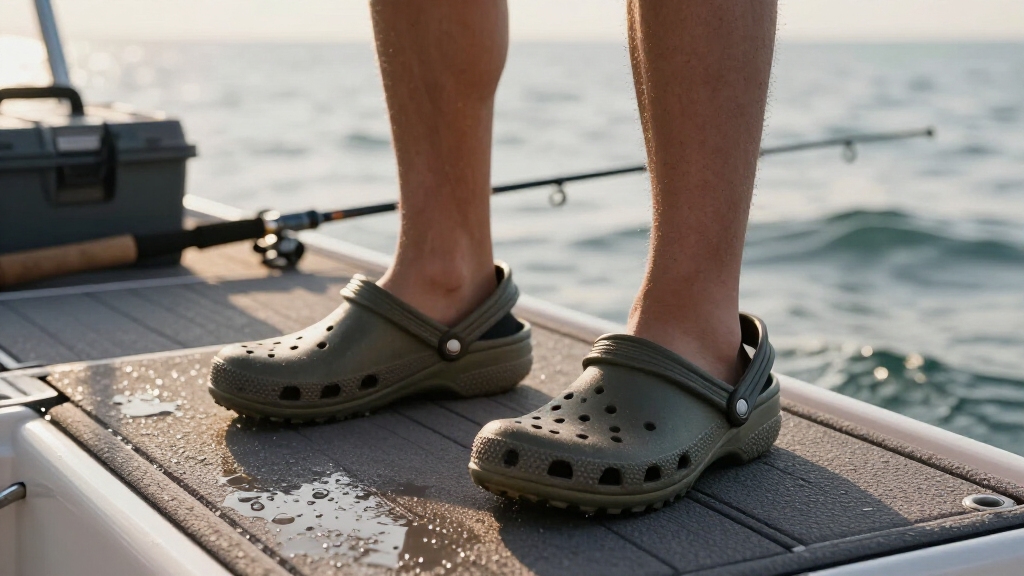
Crocs are often a suitable choice for fishing boats when conditions are calm and the deck stays dry.
You’ll appreciate their lightweight design and easy cleanup after handling fish or gear.
Enjoy their lightweight feel and effortless cleaning after a day of fishing or gear handling.
Their quick-drying material makes shifting between land and boat hassle-free.
If you’re on a short trip with minimal movement, Crocs offer decent comfort without the bulk of heavier shoes.
However, you should only rely on them when the deck surface is stable and there’s limited risk of slipping.
Their traction isn’t designed for slick or algae-covered areas, so avoid using them on boats with wet or uneven decks.
When you prioritize convenience over aggressive movement, Crocs can be a practical option for casual fishing outings.
Keep in mind that Crocs lack the specialized traction features necessary for secure footing in more challenging saltwater environments.
How Crocs Perform on Wet Fishing Boat Surfaces?
When you’re out on a wet fishing boat wearing Crocs, you might find their traction isn’t quite up to par compared to those specialized boat shoes. It’s a bit of a bummer, right? Wet decks, algae, and fish slime can turn the floor into a slip-and-slide, making it easy to lose your footing.
The thing is, Crocs don’t have those tread patterns that help channel water away, which can really limit their grip. So, if you want to stay safe while you’re fishing, it’s good to keep these slip risks in mind. Choosing footwear that really grips well in those slippery conditions can make all the difference. Unlike rubber soles, Crocs generally lack cushioned support and shock absorption, which can impact comfort and safety during long hours on the boat.
Traction Challenges on Deck
Although their lightweight design suits casual wear, Crocs often struggle to provide reliable traction on wet fishing boat decks.
The foam material and simple tread patterns can’t grip slick surfaces like wet wood or fiberglass effectively. You’ll notice they become slippery when exposed to water mixed with fish slime or algae, common on fishing boats.
Because Crocs lack specialized siping or water-channeling grooves found in dedicated fishing shoes, your footing can feel uncertain during quick movements or sudden boat shifts.
While Crocs dry fast and are easy to clean, their traction limitations mean you need to be extra cautious when stepping or moving around.
If you prioritize safety and stability, especially on wet decks, you’ll want footwear designed specifically for superior grip rather than relying on Crocs alone.
For improved safety, consider footwear with felt soles that provide better grip and stability on wet and slippery surfaces.
Slip Risk Factors
Understanding the factors that increase slip risk on wet fishing boat surfaces helps you stay safer while wearing Crocs. Crocs’ foam soles don’t offer the same grip as specialized non-slip boat shoes, especially when decks are slick with water, algae, or fish slime.
Their tread design isn’t optimized to channel water away, so you might feel unstable on wet ramps or smooth floors. Loose footwear or quick movements can increase your chance of slipping, so a secure fit is essential.
While Crocs dry quickly and are easy to clean, their traction limitations mean you should be cautious in rough or slippery conditions. If you expect active fishing or wet, moving decks, opting for shoes designed with better wet traction is a smarter, safer choice. Proper footwear that avoids overstretching and rough handling also helps prevent damage and maintains safety features.
Crocs Foot Protection on Fishing Boats
Wearing Crocs on a fishing boat? Just keep in mind that they provide only basic foot coverage. They might be comfy, but they don’t offer the same protection as sturdy fishing shoes.
Sure, you’ll love how lightweight and easy they are, but that foam construction can really compromise your stability, especially when you’re on deck. It’s all about finding that sweet spot between comfort and solid foot protection.
Staying safe on a boat is a must, so think about how secure your footing really is! For better safety and stability, consider footwear with good traction and ankle support designed for uneven and slippery surfaces.
Basic Coverage Limits
Foot protection on a fishing boat plays a crucial role in keeping you safe from common hazards like hooks, tackle, and dropped gear.
Crocs offer basic coverage but fall short in several key areas where protection matters most. You should consider these limits before relying on them:
Open ventilation leaves toes exposed to punctures and scrapes.
Foam material lacks rigidity to shield against heavy or sharp objects.
Loose fit can allow debris inside, increasing injury risk.
Minimal ankle support reduces stability on uneven or moving surfaces.
Smooth soles offer limited defense against slipping on slippery decks.
While Crocs provide comfort and quick drying, their basic coverage won’t fully protect your feet from typical fishing boat dangers.
Choosing footwear with proper traction is essential to prevent slips and falls on wet boat surfaces.
Choose footwear that balances coverage with safety for the best experience.
Protection Compared To Shoes
Safety on a fishing boat relies heavily on the protection your footwear provides. Crocs simply don’t measure up to dedicated fishing shoes in this regard.
While Crocs cover your feet, they lack the reinforced structure that guards against hooks, sharp tackle, or heavy gear drops. You won’t get the same level of impact resistance or toe protection that purpose-built shoes offer.
Their foam material absorbs little shock and won’t shield you from punctures or scrapes. On a boat where dropped tools and slippery surfaces are common hazards, relying on Crocs increases your risk of injury.
If you want genuine protection, opt for closed-toe fishing shoes with solid soles and reinforced uppers designed specifically to keep your feet safe during active boat use. Choosing footwear with superior traction and stability is also essential to prevent slips on wet and uneven boat surfaces.
Comfort Versus Stability
Although Crocs offer notable comfort thanks to their lightweight foam and cushioned design, they often fall short on stability. This is especially true in the dynamic environment of a fishing boat.
When you’re moving on slippery, wet decks, comfort alone won’t keep you safe. You need footwear that balances ease with reliable grip and support.
Consider these factors when weighing comfort versus stability:
Crocs cushion your feet but lack structured support for sudden shifts. Their foam soles don’t provide ideal traction on slick or algae-covered surfaces. The loose fit can cause your feet to slide inside, risking slips.
Crocs drain water quickly but leave feet exposed to sharp gear. Stability-focused boat shoes with purpose-built treads outperform Crocs in safety.
For better foot protection on wet surfaces, consider footwear with anti-slip rubber grips and reinforced soles for enhanced durability and traction.
Choose wisely to keep your footing secure without sacrificing comfort.
Practical Benefits of Crocs for Fishing
Frequently, anglers choose Crocs for their fishing trips because of how practical they’re in wet and messy environments.
You’ll appreciate their quick-drying material and easy-to-clean design, which handle saltwater, fish slime, and bait residue without hassle.
Crocs’ lightweight construction lets you move comfortably between land and boat, and their ventilation keeps your feet cool during long days.
The easy on-and-off feature is perfect for quick shifts, saving time when you need to step off the boat.
Plus, their foam soles won’t mark boat decks, helping maintain your gear’s condition.
While they don’t offer top-tier traction or protection, their convenience and comfort make them a sensible choice for calm, low-risk fishing outings where practicality matters most.
However, wearing moisture-wicking socks with Crocs can improve foot comfort and reduce the risk of blisters during extended fishing trips.
Risks of Wearing Crocs in Rough Fishing Conditions
While Crocs offer practical benefits for calm fishing trips, you should be aware of their limitations when conditions get rough.
Their lightweight foam soles and loose fit can become serious drawbacks on a rocking boat or slick deck. You risk slipping, losing balance, or injuring your feet if the waves pick up or the deck gets slippery.
Keep these risks in mind:
Foam soles provide less traction on wet, algae-covered surfaces.
Loose fit increases chances of footwear shifting or coming off.
Minimal foot protection leaves you vulnerable to hooks or dropped gear.
Open ventilation exposes feet to water, debris, and cold.
Lack of tread design means poor grip in choppy, unstable conditions.
For rough fishing, Crocs aren’t the safest choice despite their comfort and convenience.
Opting for footwear with cleated soles and reliable waterproofing can significantly improve safety and stability on fishing boats.
Crocs vs. Non-Slip Fishing Shoes: Which Is Safer?
When you’re choosing footwear for fishing, safety should come first. This means comparing Crocs to non-slip fishing shoes carefully.
Crocs offer convenience and comfort but lack the grip and protection needed on slippery, wet decks. Non-slip fishing shoes provide better traction, stability, and foot safety, especially in challenging conditions.
| Feature | Crocs | Non-Slip Fishing Shoes |
|---|---|---|
| Traction | Moderate, less reliable | High, designed for wet surfaces |
| Foot Protection | Basic coverage | Reinforced, protects from hooks and gear |
| Comfort | Lightweight, cushioned | Structured for support |
| Water Handling | Quick-drying, ventilated | Water-resistant, secure fit |
Choosing safety over ease helps you fish confidently without risking slips or injury.
Choosing the Best Footwear for Fishing Boat Safety
Because fishing boats expose you to wet, slippery surfaces and shifting conditions, choosing the right footwear is crucial for your safety and comfort.
You want shoes that provide grip, protection, and stability without sacrificing practicality. Consider these key factors when picking your fishing boat footwear:
Non-slip soles with specialized tread for wet traction.
Secure fit to prevent slipping or shifting during movement.
Closed toes to protect against hooks, gear, and debris.
Quick-drying and easy-to-clean materials for convenience.
Non-marking bottoms to preserve the boat’s deck surface.
While Crocs offer comfort and easy cleanup, they often lack the grip and protection essential for active fishing.
For safer, more stable footing, prioritize purpose-built fishing shoes designed to handle wet, slippery, and unpredictable boat decks.
Frequently Asked Questions
Can Crocs Damage Fishing Boat Decks?
No, Crocs generally won’t damage fishing boat decks because their soles are non-marking and soft.
You don’t need to worry about scratches or scuffs like you might with hard-soled shoes.
However, keep in mind that while they’re gentle on the deck, their traction isn’t always reliable on wet or slippery surfaces.
Are Crocs Waterproof for Fishing in Rain?
Yes, Crocs are waterproof enough for fishing in the rain since they’re made from water-resistant foam that won’t soak through.
They dry quickly and won’t hold water, which keeps your feet comfortable.
However, keep in mind their open design may let rainwater and debris in.
Wet surfaces can get slippery. For rainy, slippery conditions, you might want footwear with better grip and full coverage to stay safer and more stable.
How Do Crocs Handle Cold-Water Fishing?
You might think Crocs aren’t great for cold-water fishing, but they can work if you layer properly.
Crocs don’t insulate well, so your feet could get cold quickly. Wearing thick, moisture-wicking socks helps keep warmth in and moisture out.
Just remember, Crocs offer limited protection and traction in slippery, cold conditions. Don’t rely on them for long or rough trips.
For serious cold-water fishing, sturdier, insulated boots are smarter.
Can Crocs Be Worn While Handling Fishing Gear?
You can wear Crocs while handling fishing gear, but you should be cautious.
They offer basic foot protection and are easy to clean, which helps with fish slime and bait residue.
However, their grip isn’t as reliable on slippery decks or when dealing with heavy, sharp gear.
If you expect lots of movement or risk dropping hooks, it’s smarter to choose sturdier, non-slip shoes designed for fishing to keep your feet safer and more stable.
Do Crocs Cause Foot Odor After Fishing Trips?
Believe it or not, you won’t have to worry about foot odor like it’s the 18th century when wearing Crocs after fishing trips.
Their ventilation holes and quick-dry foam material help keep your feet cooler and reduce sweat buildup.
Still, if you wear them all day without rinsing off saltwater, fish slime, or bait residue, odors can develop.
Final Thoughts on Wearing Crocs for Fishing
You can wear Crocs on a fishing boat, but keep in mind they’re not made for all conditions.
Studies show that nearly 30% of boating accidents involve slips or falls, so non-slip footwear is essential.
Crocs offer comfort and quick drying, but they lack the grip and protection of specialized fishing shoes.
For safer, more confident fishing, consider Crocs only in calm waters or as a backup, not your main choice.