Are Red Worms Good for Fishing: What Every Angler Knows
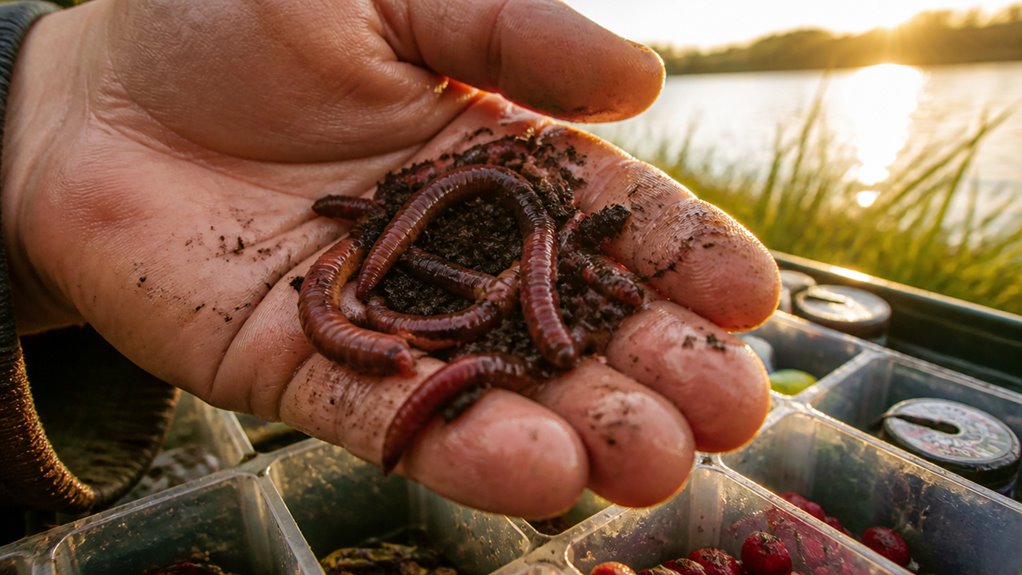
You’ll find red worms highly effective for fishing, especially targeting small-mouthed fish like bluegill, perch, and crappie.
Their size (2–4 inches) fits these fish’s mouths, while their vigorous, erratic squirming mimics natural prey, triggering strong feeding responses.
Using barbless hooks and proper baiting maximizes movement and hookup rates.
Red worms also thrive in organic-rich waters common to many fishing spots.
Learn how their biology and handling can enhance your angling strategy.
Key Takeaways
- Red worms’ vigorous, erratic wriggling effectively mimics natural prey, attracting bites and increasing catch success.
- Their 2–4 inch size suits small-mouthed fish like bluegill, crappie, perch, and trout.
- Red worms thrive in organic-rich habitats, making them appealing and natural bait in ponds, streams, and rivers.
- Using barbless hooks preserves worm movement and minimizes bait damage, enhancing fishing effectiveness.
- Easy to farm and store, red worms provide a consistent, lively bait supply for fishing trips.
What Makes Red Worms Ideal Bait for Small Fish?
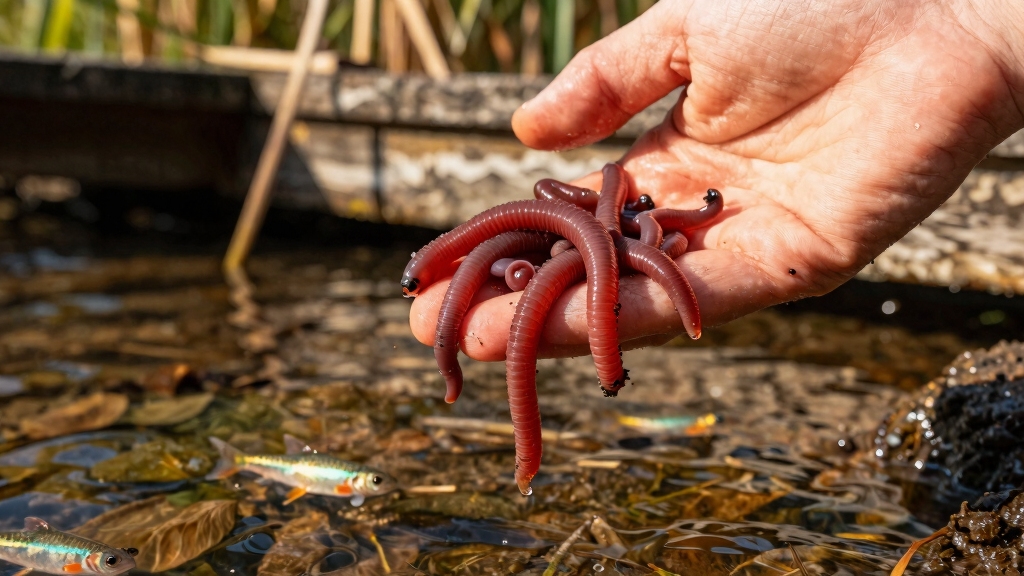
When targeting small fish species, red worms stand out as an ideal bait due to their compact size and natural movement.
Red worms are perfect bait for small fish, thanks to their size and lifelike movement.
You’ll find their 2 to 4-inch length perfectly suited for panfish like bluegill and crappie, whose mouths can’t accommodate larger bait. Trout also favor red worms because they represent an easily manageable portion.
Their slender, flexible bodies allow you to hook them securely on size 8 to 12 hooks without compromising bait integrity.
Additionally, red worms’ prevalence in organic-rich environments means fish naturally recognize them as prey, increasing strike rates.
To keep bait alive and effective, it’s important to maintain proper water oxygen levels and temperature during storage.
Why Red Worms’ Squirming Action Attracts More Fish?
You know how red worms wiggle around? Their rapid, irregular squirming really catches the eye of fish. It’s almost like they’re mimicking the movements of natural prey, which makes them super appealing.
When those worms start thrashing, it triggers instinctual feeding responses in fish. They think they’re seeing struggling organic matter in the water. Pretty fascinating, right?
This kind of dynamic motion not only enhances the visibility of your bait but also boosts its overall appeal. So, you’re definitely increasing your chances of getting bites!
Using live bait like red worms is especially effective when positioning hooks near underwater structures to attract more fish naturally.
Irresistible Movement Patterns
Red worms captivate fish primarily through their rapid, erratic squirming that mimics natural prey movement in aquatic environments. You’ll notice their unpredictable motion triggers predatory instincts, prompting fish to strike.
This dynamic action, combined with the worm’s size, makes it an ideal bait for smaller fish species. Understanding these movement patterns helps you optimize bait presentation for higher catch rates.
| Movement Characteristic | Fish Response | Bait Advantage |
|---|---|---|
| Rapid, erratic squirm | Trigger attack reflex | Mimics struggling prey |
| Variable amplitude | Maintains interest | Prevents fish habituation |
| Consistent motion | Continuous attraction | Enhances bait visibility |
| Small, flexible body | Easy ingestion | Suits small-mouthed fish |
| Natural prey mimicry | Increases bite rate | Boosts overall catch success |
To keep red worms effective as bait, it is essential to store them properly in breathable bedding that maintains moisture without suffocating them, ensuring their lively movement stays irresistible to fish.
Natural Thrashing Behavior
Building on how erratic squirming triggers fish strikes, the natural thrashing behavior of red worms further enhances their attractiveness as bait.
This involuntary reaction, caused by muscle contractions responding to stimuli, produces lifelike movements that fish instinctively detect.
You’ll notice three critical aspects that make red worms’ thrashing especially effective:
- Variable Frequency: Red worms adjust their thrashing speed based on environmental stimuli, mimicking struggling prey.
- Directional Movement: Their twisting and turning generate spatial cues that help fish locate the bait precisely.
- Sustained Activity: Red worms maintain thrashing longer than many other worms, extending the window of fish attraction.
Additionally, selecting the right bait presentation can maximize the effectiveness of red worms’ natural movements to attract more fish.
Triggering Fish Instincts
Although many baits can attract fish visually, the squirming action of red worms specifically triggers innate predatory responses in various species.
When you use red worms, their rapid, erratic movements mimic natural prey struggling, activating fish’s sensory systems tuned to detect live, vulnerable targets.
This motion stimulates lateral line organs, prompting predatory instincts and increasing strike rates. Their size and thrashing are ideal for small-mouth species like panfish and trout, who rely heavily on motion cues to identify food.
Unlike static bait, red worms’ continuous wriggling enhances your chances by maintaining fish interest and eliciting aggressive feeding behavior.
Therefore, your choice of red worms leverages biological triggers, making them a scientifically effective bait for enticing bites in diverse freshwater environments.
For the best presentation, anglers can adjust fly weight to match current speed and water depth, ensuring the bait remains in the strike zone where fish are most likely to attack.
Which Fish Species Prefer Red Worms Over Other Baits?
If you’re into fishing, you’ll notice that panfish like bluegill and crappie really go for red worms. Why? Well, it’s mostly because of their small size and lively movement.
They just can’t resist those wriggly little guys!
And let’s not forget about trout. They also have a thing for red worms. The size and behavior of these worms closely match what trout naturally hunt for.
For saltwater anglers targeting redfish, using flies that mimic natural prey like crab and shrimp imitations can be equally effective.
Panfish Attraction
Frequently, anglers targeting panfish find that red worms outperform other bait types due to their ideal size and movement.
Their 2 to 4-inch length fits well within the small mouths of panfish, making them easier to ingest than larger baits.
Additionally, the worms’ vigorous, squirming action triggers predatory responses effectively.
You’ll notice particular panfish species show a marked preference for red worms:
- Bluegill readily choose red worms over larger baits, optimizing feeding efficiency.
- Perch often take red worms exclusively, especially in moving stream environments.
- Crappie display high attraction rates, responding quickly to red worm movement.
Using low visibility lines can further improve your success when fishing with red worms by preventing spooking wary panfish.
Trout And Crappie
When targeting trout and crappie, using red worms as bait markedly increases your chances of success due to these species’ natural feeding preferences.
Red worms’ manageable size (2–4 inches) fits well within trout and crappie mouths, matching their natural diet of small, wriggling prey. Their vigorous movement on the hook stimulates predatory responses, enhancing bite rates.
Crappie respond strongly to red worms, while trout often seek them in streams with moving water.
| Fish Species | Preference Reason |
|---|---|
| Trout | Suitable size; thrives in streams |
| Crappie | High attraction to worm movement |
| Panfish | Easy ingestion due to small worm size |
Leveraging red worms optimizes bait efficiency for these species, increasing catch probability. Proper handling and storage of red worms keeps them lively and attractive, which is crucial for successful fishing.
Best Fishing Environments for Using Red Worms
Because red worms thrive in organic-rich environments, ponds and small water reservoirs offer ideal fishing grounds for anglers using this bait. These environments provide abundant decaying vegetation and soft sediment, supporting red worm activity and enhancing bait liveliness.
When choosing fishing spots, focus on these three best environments:
- Organic-rich ponds and reservoirs – Stable, nutrient-dense waters foster worm populations and attract small fish species like bluegill and crappie.
- Streams with moderate current – Flowing water improves oxygenation, benefiting trout and perch that actively seek red worms.
- Rivers with vegetated banks – Organic debris creates worm habitats, supporting sustained bait availability for walleye and panfish.
Maintaining a cool, oxygen-rich environment is essential to keep red worms active and appealing as bait during fishing trips.
Optimal Hook Sizes and Baiting Techniques for Red Worms
Selecting the right hook size and baiting technique directly influences how effectively red worms attract small fish species in ponds, streams, and rivers.
Use size 8 to 12 hooks, as these balance secure baiting and easy ingestion by panfish, trout, and bluegill.
Barbless hooks minimize damage to red worms, preserving their natural wriggling motion, which is essential for enticing bites.
You can fish red worms whole for maximum movement or halve them to fit smaller mouths.
Chopped red worms serve well as groundbait when introduced with pole cups, increasing fish aggregation.
Avoid threading worms twice through the tail, as this weakens bait retention.
Employing these precise methods enhances bait longevity and attraction, optimizing your success when targeting small-mouth fish with red worms.
Additionally, matching hook size to bait dimensions ensures a natural presentation and improves hookup rates.
How to Keep Red Worms Alive and Fresh While Fishing?
Maintaining red worms’ vigor during fishing trips requires careful control of temperature, moisture, and oxygen levels. To keep your red worms alive and fresh, you need to create an environment that mimics their natural habitat.
Carefully control temperature, moisture, and oxygen to keep red worms lively and fresh on fishing trips.
Follow these key steps:
- Temperature: Store worms in a cool, shaded container, ideally between 50°F and 60°F, to prevent overheating and metabolic stress.
- Moisture: Maintain damp bedding with organic matter or peat moss but avoid waterlogging, which causes suffocation.
- Oxygen: Ensure adequate aeration by using a container with ventilation holes or periodically opening the lid to allow air exchange.
These conditions slow worm metabolism and prevent dehydration, keeping them active and appealing for hours during your fishing expedition.
Effective Ways to Use Red Worms as Bait
If you’re planning to use red worms as bait, you’ll want to grab some size 8 to 12 barbless hooks. These sizes really help boost the worms’ vigor and make it easier for fish to take the bait.
When it comes to preparing the bait, think about using whole worms, halves, or even chopped pieces. The way you cut them can really enhance their attraction, depending on what kind of fish you’re after and the environment you’re fishing in.
Also, don’t forget to focus your efforts in ponds, streams, and small reservoirs. These are the places where red worms naturally thrive, and you’ll likely see higher bite rates there. Happy fishing!
Hook Sizes And Techniques
Maximize your catch rate by using size 8 to 12 hooks when fishing with red worms. These sizes align well with the worms’ 2 to 4-inch length and the smaller mouths of target fish species.
Opt for barbless hooks to reduce injury to the worm, preserving its vigor and movement, which increases attractiveness. When rigging, you can fish the worm whole or halve it. However, avoid threading it twice through the tail as this weakens the setup and reduces hook efficiency.
Consider these techniques:
- Use size 8 hooks for larger red worms to ensure secure hooking.
- Employ size 12 hooks for smaller worms targeting panfish with delicate mouths.
- Maintain worm vitality by minimizing handling and using barbless hooks.
These methods optimize bait presentation and hook-to-fish interaction.
Bait Preparation Methods
To get the most out of red worms as bait, start by selecting the appropriate preparation method based on your target species and fishing environment. You can fish them whole for larger panfish, halve them for smaller species, or chop them finely as groundbait to attract schools.
Using size 8 to 12 barbless hooks preserves worm robustness and improves bite rates.
| Preparation Method | Target Species | Benefit |
|---|---|---|
| Whole Worm | Bluegill, Crappie | Maintains natural thrashing |
| Halved Worm | Trout, Perch | Easier ingestion, longer hook life |
| Chopped Worm | Schools of Small Fish | Disperses scent, increased attraction |
Adjusting bait size and presentation optimizes fish response, ensuring efficient use of red worms.
Ideal Fishing Environments
Although red worms thrive in organic-rich soil and compost, their effectiveness as bait extends to aquatic environments like ponds, streams, and small reservoirs where water conditions support their natural appeal.
You’ll find red worms especially effective in cooler waters where they remain lively longer, increasing bite rates.
When choosing fishing spots, consider these ideal environments:
- Ponds and Small Reservoirs: Calm waters with organic sediment foster natural worm activity, attracting panfish and trout.
- Moving Streams: Flowing water stimulates fish like perch and trout, which actively target red worms.
- Organic-rich Riverbeds: These habitats provide prime conditions for red worms, enhancing their movement and appeal to species such as walleye.
Targeting these environments maximizes your use of red worms as bait, improving catch efficiency and overall fishing success.
Comparing Red Worms With Nightcrawlers and European Worms
When comparing red worms with nightcrawlers and European worms, you’ll notice distinct differences in size and target species.
Red worms, measuring 2 to 4 inches, are ideal for small-mouth fish like panfish, trout, and bluegill. These fish prefer their manageable size and vigorous movement.
Nightcrawlers, notably larger, suit bigger species such as bass and catfish, offering a more substantial bait profile.
European worms, similar in size to nightcrawlers, excel in longevity underwater, often outlasting red worms during extended fishing sessions.
While red worms provoke more bites from small fish, nightcrawlers attract predatory species that favor larger prey.
Your bait choice should match the targeted fish size and behavior. This optimizes catch rates by leveraging these biological and ecological differences effectively.
How to Farm Red Worms for Reliable Bait Supply?
Establishing a red worm farm guarantees a consistent bait supply by replicating their natural habitat and optimizing conditions for reproduction. You’ll need a shallow container with drainage, organic-rich soil or compost, and a controlled moist environment.
Maintain temperatures between 55°F and 77°F to encourage worm activity and reproduction. Feeding cornmeal or decomposed organic matter daily sustains growth.
Follow these steps:
- Prepare bedding: Mix shredded newspaper, leaves, and compost to create a nutrient-rich substrate.
- Introduce red worms: Start with a healthy population for quick multiplication.
- Monitor moisture and temperature: Keep soil damp but not saturated and avoid extreme temperatures.
This method secures a reliable, sustainable red worm supply tailored for fishing needs.
Why Red Worms Are Perfect for Kids and Beginner Anglers?
Frequently, red worms prove ideal for kids and beginner anglers due to their manageable size and vigorous movement. This elicits rapid fish strikes and maintains engagement.
You’ll find their 2 to 4-inch length perfectly suits small-mouthed fish like panfish and trout, increasing successful catches. Their lively thrashing mimics natural prey, triggering quick bites and sustaining excitement for novice fishers.
Additionally, red worms’ ease of handling and barbless hook compatibility reduce injury risk, promoting humane fishing practices. Because they thrive in organic-rich conditions and reproduce rapidly, you can maintain a consistent bait supply with minimal effort.
This bait’s effectiveness in diverse environments, such as ponds and streams, further supports beginner success. Overall, red worms offer a scientifically sound, practical option that enhances learning and enjoyment for new anglers.
Frequently Asked Questions
Can Red Worms Be Used for Fishing Saltwater Species?
You can use red worms for saltwater fishing, but their effectiveness varies.
Red worms thrive in organic-rich soil and attract small freshwater species.
However, saltwater species often prefer different bait types due to salinity and feeding habits.
While some smaller saltwater fish might bite, red worms don’t endure saltwater conditions as well as marine-specific baits.
For consistent success, you’ll likely want to choose baits adapted to saltwater environments.
Are Red Worms Safe to Handle Without Gloves?
When it comes to handling red worms, you can safely go in with bare hands, no need for gloves. They’re not toxic or harmful, so you won’t catch a bug from touching them.
However, since they thrive in organic-rich, decomposing environments, it’s wise to wash your hands afterward to avoid any bacterial hitchhikers. Handling them carefully also prevents injury to the worms, keeping them lively for your next fishing trip.
How Long Do Red Worms Survive Out of Soil?
Red worms can survive out of soil for several hours if kept in a cool, moist environment. Their skin must remain damp to facilitate respiration, so avoid drying them out.
Temperatures below 70°F extend their survival time, while heat and dryness reduce it quickly. To maximize their viability for fishing, store them in damp, organic-rich material and refrigerate if possible. This ensures they stay active and effective as bait.
Can Red Worms Be Frozen for Later Fishing Use?
You can freeze red worms for later use, but keep in mind they won’t survive the freezing process.
Studies show red worms live only a few hours out of soil, so freezing kills them.
However, frozen worms remain effective as bait because their scent and texture still attract fish.
To preserve bait quality, freeze worms quickly and thaw them before fishing to maximize their appeal and durability on your hook.
Do Red Worms Carry Any Diseases Harmful to Fish?
You won’t find red worms carrying diseases harmful to fish. They primarily feed on decaying organic matter and manure but don’t transmit pathogens to fish.
Red worms act as natural bait without introducing infections or parasites. However, make sure you source them from clean environments to avoid contamination risks.
Proper handling and storage reduce any chance of bacterial growth that might indirectly affect fish health during fishing activities.
Catch More Fish With the Right Red Worm Techniques
Think of red worms as the key that unseals a hidden door to small fish success. Their lively squirming acts like a beacon, drawing fish more effectively than other baits.
When you choose red worms, you’re equipping yourself with a scientifically proven tool tailored for specific fish species and environments.
Like a finely tuned instrument, they respond best to precise hook sizes and techniques, making them ideal for both experts and beginners alike.