What Size Rooster Tail for Trout: Best Lure Sizes Explained
You’ll want smaller rooster tails like 1/24 or 1/16 oz for tiny trout in shallow, calm water to keep a subtle, lifelike action. For average trout, a versatile 1/8 oz with a #6 hook works well year-round, balancing spin and flash.
Target bigger trout or deeper pools with 1/6 to 1/4 oz sizes for stronger action and longer casts. Proper gear and rigging help keep your lure in the strike zone and maximize hookups. These details can sharpen your trout fishing strategy.
Key Takeaways
- Use 1/24 oz rooster tails for panfish and tiny trout in shallow, calm water for a finesse presentation.
- Choose 1/16 oz for small trout in shallow tailouts and streams, maximizing flash with silver-plated blades.
- Opt for 1/8 oz as a versatile, year-round size suitable for trout from 8 inches to 8 pounds.
- Select 1/6 to 1/4 oz sizes for larger, aggressive trout in deeper pools, tailwaters, and faster currents.
- Use 3/8 oz rooster tails when maximum casting distance is needed, especially in deeper or fast-moving water.
Rooster Tail Sizes for Different Trout Species
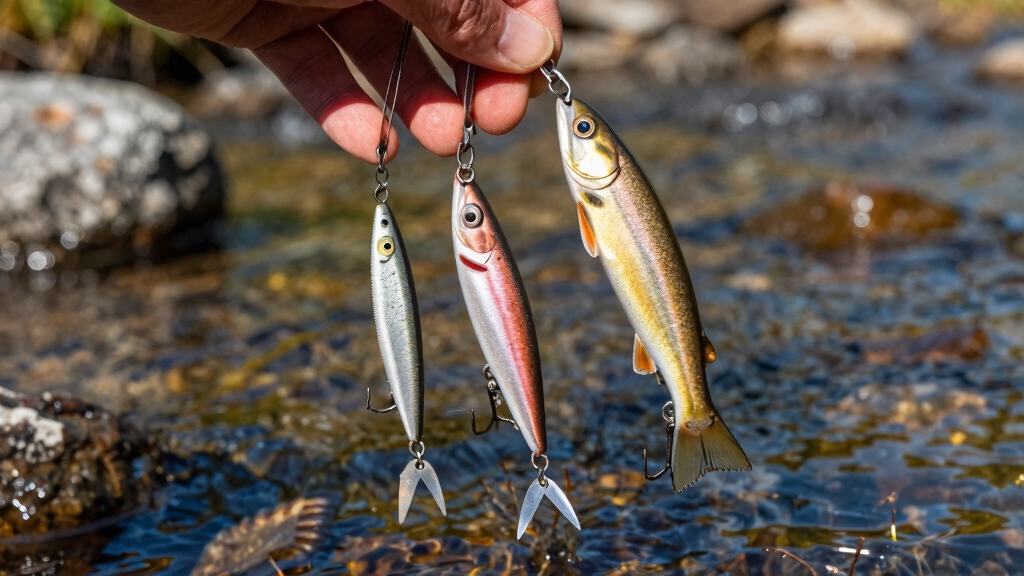
Although trout species vary in size and habitat, selecting the right Rooster Tail size can markedly improve your catch rate.
Choosing the right Rooster Tail size significantly boosts your success across diverse trout species and habitats.
For small trout and panfish, you’ll want to use lighter lures, like 1/24 oz. and 1/16 oz. These sizes are ideal for shallow water and tight casting spots.
If you’re targeting average-sized trout, the versatile 1/8 oz. Rooster Tail works great year-round, covering trout from 8 inches to 8 pounds.
For larger trout or deeper water, step up to 1/6 oz. or even 1/4 oz., which cast farther and handle stronger currents.
Matching your Rooster Tail size to the trout species and water conditions assures the lure’s spinning action and pulsating hackle tail mimic natural prey effectively.
This improves your chances of a solid catch.
When fishing in cold or slightly colored water, using 1/16 to 1/6 oz spinners with silver-plated blades can maximize flash and attract more trout.
Blade Size and Hook Number Effects on Rooster Tails
When choosing a Rooster Tail, the blade size and hook number directly affect its action and suitability for different trout sizes.
Smaller blades paired with #8 hooks, like on the 1/16 oz models, create a subtle spin ideal for small trout and panfish.
Larger blades with #6 hooks, found on 1/8 oz Rooster Tails, produce more vibration and flash, attracting bigger trout.
The blade size influences the lure’s spinning speed and water disturbance, while the hook number guarantees proper hook-up rates without overwhelming the fish.
Using a blade too large for the hook can reduce action and make casting awkward.
Matching blade size and hook number maintains balance, maximizing the lure’s natural pulsating spin that triggers strikes efficiently, especially in varying water conditions.
Additionally, selecting a lure weight within the rod’s specified lure weight range ensures optimal casting performance and prevents equipment strain.
Matching Rooster Tail Size to Trout Size and Feeding Behavior
Since trout vary widely in size and feeding habits, selecting the right Rooster Tail size can markedly improve your catch rate.
Choosing the right Rooster Tail size boosts your chances by matching trout size and feeding habits.
For smaller trout and panfish, go with 1/24 oz. or 1/16 oz. sizes. These mimic their typical prey and work well in shallow waters.
If you’re targeting average-sized trout, a 1/8 oz. lure is versatile and effective year-round, matching trout from 8 inches up to 8 pounds.
For larger, more aggressive trout, consider 1/6 oz. or even 1/4 oz. sizes. These provide stronger spinning action and better casting distance.
Match your lure size to the trout’s feeding behavior. Smaller, cautious trout prefer lighter, subtler blades, while bigger, active feeders respond to heavier, flashier Rooster Tails.
Adjusting size this way helps you present a natural, enticing target to the fish.
Using lures with vibration and flashing blades can further attract trout by mimicking injured prey and increasing strike rates.
Water Depth Effects on Rooster Tail Weight
When you’re out fishing in shallow water, it’s a good idea to go with lighter rooster tails, like 1/16 oz. or 1/8 oz. This way, you can keep your lure in the strike zone without spooking those trout.
You want to make sure they’re not scared off, right?
Now, if you’re fishing in deeper water, you’ll want to switch it up and use heavier weights, somewhere between 1/6 oz. and 1/4 oz. This helps you cast farther and really reach those fish effectively.
Choosing the right lure weight also affects the fall rate, influencing how naturally the lure moves through the water.
Shallow Water Weight Choices
Selecting the right rooster tail weight is essential for fishing in shallow water, where subtle presentation and control matter most. You’ll want to use lighter weights like 1/24 oz. or 1/16 oz. These allow your lure to move naturally without spooking trout.
These sizes are perfect for small trout and panfish in tailouts and head-in areas, where shallow depths demand finesse. The 1/8 oz. weight also works well year-round in rivers and streams, providing versatility without sinking too fast.
Avoid heavier weights here, as they can cause your lure to hit the bottom too quickly, reducing effectiveness. Pair these light rooster tails with a fast-tip rod and 4–8 lb line to maintain sensitivity and control. This ensures your lure’s action stays lifelike in shallow water conditions. Additionally, using lures with corrosion-resistant hooks can improve durability during extended fishing sessions in freshwater environments.
Deep Water Casting Needs
While lighter rooster tails excel in shallow water for finesse and subtlety, deeper water demands heavier weights to reach the strike zone effectively.
You’ll want to use 1/6 oz. or even 1/4 oz. rooster tails when fishing deeper pools or strong currents. These weights help your lure sink faster and cast farther, ensuring it gets down to where bigger trout often lurk.
Using lighter options like 1/16 oz. or 1/8 oz. might leave your lure suspended too close to the surface, missing strikes below.
Keep in mind that increased weight also allows you to maintain better control in deeper water, especially when paired with a fast tip rod and appropriate line strength.
This approach boosts your chances of targeting larger trout holding in deeper zones.
Trout tend to remain stationary in deep pools during winter to conserve energy, making the ability to reach these depths with heavier lures critical for successful fishing.
Adjusting Weight for Depth
Because water depth directly influences how quickly your rooster tail sinks, you’ll need to adjust its weight accordingly to guarantee the strike zone effectively.
In shallow water, opt for lighter weights like 1/24 or 1/16 oz to keep your lure near the surface where small trout feed.
For moderate depths, 1/8 oz offers versatile sinking speed and casting distance, perfect for most trout sizes.
When fishing deeper pools or faster currents, increase to 1/6 or even 1/4 oz to guarantee your rooster tail reaches the bottom quickly and stays in the strike zone longer.
You can also add split shots or pencil lead above your swivel to fine-tune depth without changing your lure size.
Matching weight to depth maximizes your chances of hooking trout efficiently.
Using pencil weights for drift fishing can provide precise control and reduce snags when adjusting lure depth in variable water conditions.
Why 1/16 Oz. and 1/24 Oz. Rooster Tails Catch Small Trout
Two small sizes, 1/16 oz. and 1/24 oz. rooster tails excel at catching small trout. Their light weight and compact design mimic the natural prey that smaller fish target.
These lures move naturally in shallow water, making them irresistible to panfish and tiny trout. Their smaller hooks and blades won’t spook wary fish, and their size fits perfectly with the trout’s limited gape.
| Weight (oz.) | Target Species | Ideal Conditions |
|---|---|---|
| 1/24 | Panfish, tiny trout | Shallow, calm water |
| 1/16 | Small trout | Shallow tailouts |
| 1/16 | Palm-sized trout | Streams and rivers |
| 1/24 & 1/16 | Small trout & panfish | Mimics natural prey |
Use these sizes when fishing small trout in shallow, clear waters for best results. Selecting flies with high-quality hooks ensures reliable hooksets even on small trout.
Using 1/8 Oz. Rooster Tails Year-Round for Trout
You’re going to love how versatile the 1/8 oz. Rooster Tail is for catching trout!
Whether you’re after those little 8-inchers or going for something much bigger, like an 8-pounder, this lure has got you covered.
It really shines in all sorts of river and stream conditions.
You’ll find that it strikes just the right balance of weight and action, making it a go-to choice.
Plus, using this size year-round keeps your tackle box simple while still maximizing your chances of reeling in a big catch.
Happy fishing!
Remember, adjusting your retrieval speed to mimic small minnows and leeches can significantly increase success when using this lure, especially in varied water conditions like those found in river and stream fishing.
Versatility Across Trout Sizes
Although trout vary widely in size, the 1/8 oz. rooster tail proves remarkably versatile for anglers targeting them year-round.
You can confidently use this size to catch trout ranging from 8 inches up to 8 pounds, covering a broad spectrum of sizes without switching lures.
Its 2-1/4 inch length with a #6 hook offers a balanced spinning action that attracts both smaller and larger trout.
This weight also casts well in various water conditions, allowing you to adapt your approach without changing gear.
Plus, it’s light enough to fish in tighter spaces but heavy enough to reach deeper spots when rigged properly.
Selecting the right fishing line color, such as clear lines, can enhance stealth and increase trout catch rates in transparent water where rooster tails are often used.
Optimal River And Stream Use
When fishing rivers and streams, the 1/8 oz. rooster tail stands out as a reliable choice year-round for trout. Its versatile size handles trout ranging from 8 inches to 8 pounds effectively.
You’ll find it casts effortlessly with a fast tip rod and 10-pound braided line. This setup lets you reach both shallow tailouts and deeper runs.
Rig it with a #10 black barrel swivel and a 10-pound fluorocarbon leader to balance strength and subtlety. Adding a small split shot above the swivel helps you get the lure down quickly without spooking fish.
This weight also maintains a natural spinning action, mimicking prey in various current speeds. Whether you’re working tight edges or open water, the 1/8 oz. rooster tail suits most river and stream conditions for consistent trout success.
Rooster Tail Sizes for Larger Trout (1/6 Oz. & 1/4 Oz.)
Target larger trout effectively by choosing rooster tails in the 1/6 oz. and 1/4 oz. range. These sizes deliver the right balance of weight and action for deeper water and longer casts.
They help you reach trout holding near the bottom or in faster currents where lighter lures can’t. The 1/6 oz. offers enough weight to maintain a steady retrieve with a pulsating tail that attracts bigger fish.
The 1/4 oz. increases casting distance, ideal for covering more water. Both sizes maintain the classic spinning action essential for enticing larger trout.
When fishing deeper pools or tailwaters, these heavier rooster tails give you practical versatility without sacrificing lure appeal. Use them confidently to target trout beyond the reach of smaller, lighter options.
Adjusting Rooster Tail Rigging for Casting and Depth
To maximize your casting distance and control lure depth, you’ll want to adjust your rooster tail rigging with the right components.
Maximize casting distance and control lure depth by fine-tuning your rooster tail rigging components.
Start by selecting the appropriate weight: 1/16 oz. or 1/8 oz. for shallow water and 1/6 oz. or 1/4 oz. for deeper spots.
Add a small split shot above a #10 black barrel swivel to fine-tune sinking speed and maintain natural action.
Using a 10# fluorocarbon leader helps you handle trout from 8 inches to 8 pounds while keeping your lure’s presentation lifelike.
Sliding a 1/2-inch pencil lead along the line increases casting distance without sacrificing control.
These rigging tweaks let you adapt quickly to varying water depths and current speeds, making your rooster tail more effective in targeting trout wherever they hold.
Gear Pairings to Optimize Rooster Tail Performance
Although selecting the right rooster tail is essential, pairing it with suitable gear guarantees you get the most out of every cast.
To optimize performance, focus on rod, reel, and line combinations that enhance casting distance, control, and lure action. Fast tip rods help you generate speed, while medium-light power suits a range of trout sizes.
Consider these gear essentials:
- 7-8 foot rods rated for 4-10 lb line for balance and sensitivity
- 1000-size spinning reels spooled with 10# braided line for smooth retrieves
- 8 lb fluorocarbon leader or Nanofil top shot for invisibility and abrasion resistance
- Quality rod guides to reduce line friction and improve casting distance
- Lightweight swivels and split shots to fine-tune depth without hindering lure action
Use gear that complements your rooster tail, and every cast will count.
Selecting Rooster Tail Sizes for Water Conditions
When fishing different water conditions, you’ll want to match your rooster tail size to where you’re casting. For shallow tailouts and head-in spots, smaller weights like 1/24 oz. or 1/16 oz. work best. They’re light, easy to cast, and mimic small prey.
In rivers and streams, a 1/8 oz. rooster tail is versatile year-round. It handles trout from 8 inches to 8 pounds. For deeper water or longer casts, bump up to 1/6 oz. or 1/4 oz. These sizes get down fast and cover more water.
If you need distance, consider a 3/8 oz. size. Always adjust your lure size based on water depth and trout size to stay effective and natural in your presentation.
Frequently Asked Questions
How Do Color Patterns Affect Rooster Tail Effectiveness for Trout?
Color patterns play a key role in your rooster tail’s effectiveness for trout.
You’ll want to match or contrast lure colors with water clarity and light conditions.
Bright, flashy colors work well in murky water to attract attention, while natural, subtle tones mimic prey in clear water.
Changing colors based on trout behavior and environment helps you trigger strikes more consistently.
Always carry a few options to adapt quickly.
What Is the Best Time of Day to Use Different Rooster Tail Sizes?
Think of your rooster tail sizes like different keys on a piano, each fitting the mood of the day.
Early morning and late evening, when trout are more active in shallow waters, use smaller sizes like 1/16 oz.
Midday, when fish retreat deeper, switch to 1/6 oz. or 1/4 oz. for longer casts and depth.
Adjust your lure size with light conditions and trout behavior to hit the right note every time.
Can Rooster Tails Be Used Effectively in Saltwater Fishing?
Yes, you can use rooster tails effectively in saltwater fishing. Their spinning action and flashy blades attract species like redfish, snook, and sea trout.
Just choose corrosion-resistant models and heavier sizes, around 1/4 oz. or more, to handle stronger currents and bigger fish.
Pair them with sturdy gear and fluorocarbon leaders to prevent break-offs. Adjust your retrieval speed to mimic local baitfish to increase your chances of success.
How Do Water Temperature Changes Influence Rooster Tail Size Choice?
When water temperature drops, trout become sluggish.
You’ll want a smaller, lighter rooster tail like 1/16 oz. or 1/24 oz. to create subtle vibrations without spooking them.
In warmer water, trout are more active.
You can use larger sizes like 1/8 oz. or 1/6 oz. for stronger action and longer casts.
Adjust your lure size to match trout activity influenced by temperature shifts for better results.
What Maintenance Tips Keep Rooster Tails Durable and Functional?
You don’t want your rooster tail to last forever, right? Well, if you do, rinse it with fresh water after every use to remove dirt and salt.
Dry it thoroughly to prevent rust on hooks and blades.
Sharpen hooks regularly and replace split rings when they show wear.
Store your lures separately to avoid tangling and blade damage.
These simple steps keep your rooster tails durable and casting smoothly.
Choose the Perfect Rooster Tail for Every Trout Fishing Trip
When choosing a rooster tail for trout, remember that matching size to trout behavior and water conditions is key.
Smaller blades and lighter weights like 1/24 or 1/16 oz. work great for picky, smaller trout. Larger sizes tackle bigger fish and deeper water.
Like the saying goes, “Don’t put all your eggs in one basket.” Carry a variety of sizes and weights so you can quickly adapt and reel in success no matter the conditions.