Tenkara vs Fly Fishing: Which Method Is Better for You?
If you want a lightweight, minimalist setup for tight, fast-flowing streams, tenkara’s telescoping rod and short line give you precise, delicate casts with direct rod control.
But if you need versatility across large rivers or lakes, with longer casts and reel control to handle strong fish runs, fly fishing’s complex gear and casting techniques are better.
Knowing when and where each style shines can really boost your success and enjoyment on the water.
Key Takeaways
- Tenkara uses a long telescoping rod with a fixed short line, while fly fishing employs a reel and longer, adjustable line for versatile casting.
- Tenkara casting relies on rod tip motion for short, precise casts; fly fishing uses false casting for longer, controlled presentations.
- Tenkara excels in small mountain streams with minimal gear; fly fishing adapts well to diverse waters including large rivers and lakes.
- Tenkara offers lightweight, quick setup ideal for hiking and tight spots, whereas fly fishing suits anglers needing versatility and longer casts.
- Fish control in tenkara depends on rod flex and hand tension, while fly fishing uses a reel with drag for managing runs and retrieval.
Tenkara vs Fly Fishing: Complete Side-by-Side Comparison
| Feature | Tenkara | Fly Fishing |
|---|---|---|
| Fishing Style | Minimalist fixed-line method | Traditional reel-based method |
| Rod Design | Long telescoping rod | Fly rod with reel |
| Reel | No | Yes |
| Line Type | Fixed-length line | Adjustable fly line with backing |
| Gear Complexity | Very simple | More complex |
| Casting Distance | Short to medium | Short to long |
| Casting Technique | Rod-tip casting with tight line | False casting with reel control |
| Best Fishing Environment | Small mountain streams | Rivers, lakes, ponds, and streams |
| Portability | Excellent | Good |
| Setup Time | Very fast | Longer |
| Fish Control | Rod flex and hand tension | Reel drag and rod control |
| Large Fish Handling | Limited | Excellent |
| Precision | Excellent in tight spaces | Excellent across varied conditions |
| Versatility | Best for small-stream fishing | Suitable for almost all freshwater environments |
| Learning Curve | Easier for beginners | Moderate to advanced |
| Maintenance | Low | Moderate |
| Best For | Hikers, backpackers, minimalist anglers | Anglers seeking maximum versatility |
| Main Advantage | Lightweight, simple, and highly portable | Longer casts and greater adaptability |
| Main Drawback | Limited casting range and fish-fighting capability | More gear, higher cost, and steeper learning curve |
Tenkara Vs Fly Fishing Gear: What’s the Difference?
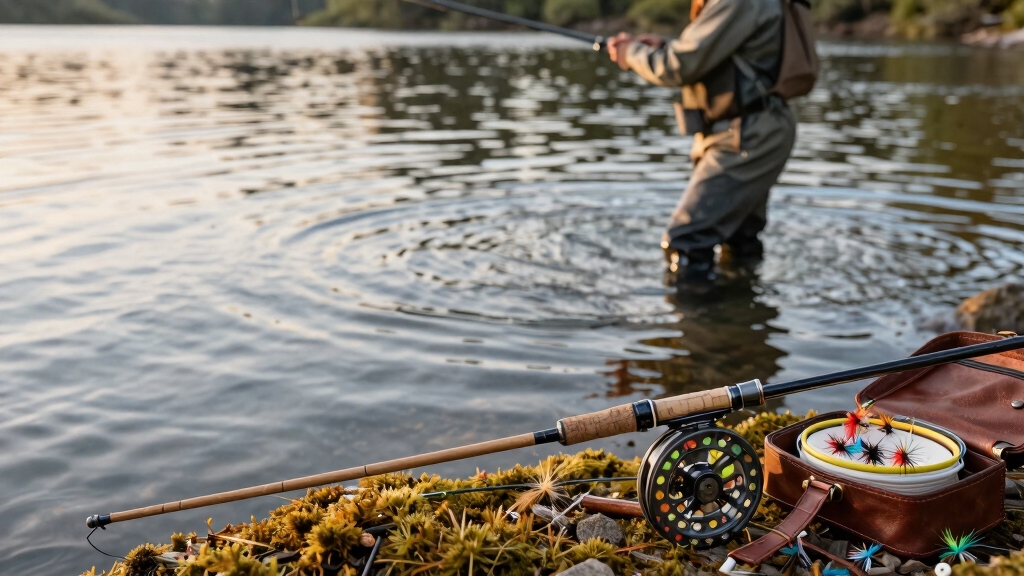
When comparing tenkara and fly fishing gear, you’ll immediately notice how tenkara strips your setup down to the essentials. No reel, just a long telescoping rod and a short line tied directly to the tip.
Tenkara fishing simplifies your gear—no reel, just a long rod and a short line tied directly to the tip.
You’ll find the rod typically 12 feet or longer, made from bamboo, composite, or fiberglass. This design offers lightweight portability without extra bulk.
The line is simple—short, light, and without backing, perfect for tight, precise presentations on small streams.
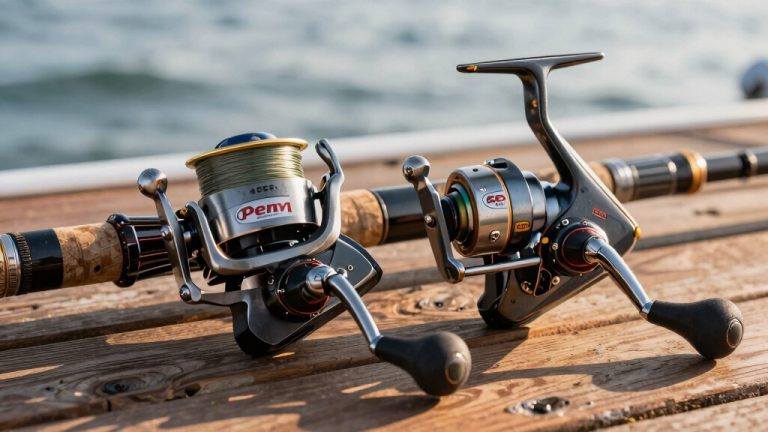
In contrast, fly fishing gear includes a rod paired with a reel, backing, leader, and tippet. This setup allows you to cast at longer distances and manage fish more easily.
Fly fishing setups are more complex but versatile, while tenkara sticks to simplicity, focusing on minimalism and efficiency in mountain stream environments.
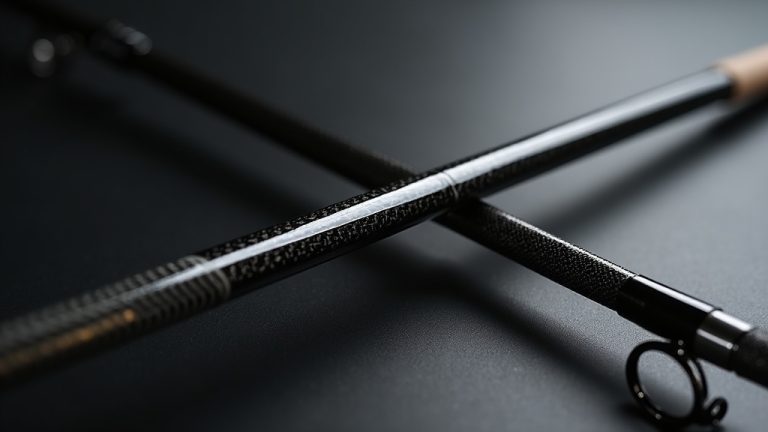
Tenkara rods often feature a carbon fiber telescoping design that collapses to about 20 inches for easy transport and storage.
Casting Techniques in Tenkara and Fly Fishing Compared
Mastering casting techniques in tenkara and fly fishing requires understanding how each style leverages its unique gear.
In tenkara, you rely on the rod’s flex and precise wrist movements to deliver short, delicate casts without a reel.
Fly fishing demands a more dynamic approach, using the reel and line weight to cast longer distances with varied presentations.
Key casting differences include:
Tenkara uses a tightline technique, keeping the line straight from rod tip to fly for accuracy and subtle drift.
Fly fishing employs false casting to build line momentum before a precise cast.
You control tenkara casts mainly with rod tip motion; fly fishing requires coordinated rod and line handling.
Fly fishing’s reel lets you adjust line length mid-cast, unlike tenkara’s fixed line.
Each method suits different fishing conditions and styles.
Tenkara rods, typically made from lightweight materials like carbon fiber, contribute to the technique’s emphasis on precision and ease of use, as seen with carbon fiber rods.
Why Fly Fishing Works in More Places?
Casting techniques highlight the strengths of both tenkara and fly fishing, but fly fishing’s adaptability across diverse environments often gives it an edge.
When you fish larger rivers, lakes, or varied depths, fly fishing’s reel and line system lets you cast farther and handle different water conditions with ease. You can also switch flies quickly, matching insect hatches or targeting various fish species.
Travel fly rods, often made from lightweight materials like IM6 graphite, enhance portability without sacrificing performance, making them ideal for anglers on the go.
| Environment | Tenkara Suitability | Fly Fishing Suitability |
|---|---|---|
| Small Mountain Streams | Excellent | Good |
| Large Rivers | Limited | Excellent |
| Lakes & Ponds | Poor | Excellent |
Fly fishing’s flexibility lets you fish more water types effectively. It’s the go-to choice if you want versatility on your outings.
When Should You Pick Tenkara?
In small, fast-flowing mountain streams, tenkara shines brightest, offering unmatched simplicity and control.
You should pick tenkara when you want a lightweight setup that’s easy to carry and quick to deploy. It’s perfect for tight spots where precise fly placement is essential.
Tenkara’s no-reel design lets you feel every subtle tug and adjust your drift on the fly.
Consider tenkara if:
- You’re fishing narrow, shallow streams with lots of current.
- Portability and minimal gear matter for long hikes.
- You want to focus on tightline fishing with simple, durable flies.
- You prefer a direct connection to your rod for immediate feedback.
Choosing tenkara here maximizes your efficiency and enjoyment in these specific conditions. Many tenkara rods feature carbon fiber construction, which enhances sensitivity and durability for challenging environments.
Landing and Controlling Fish in Tenkara and Fly Fishing
Once you’ve hooked a fish, the way you land and control it differs markedly between tenkara and fly fishing.
In tenkara, without a reel, you rely entirely on the rod’s flex and your hand to manage line tension. You’ll use smooth rod movements to tire the fish, carefully pulling it in while avoiding sudden jerks.
Since the line is short and tied directly to the rod tip, you have precise control but limited line length to absorb strong runs.
In fly fishing, the reel becomes your ally, letting you let out line when the fish makes a run, then reel it back in steadily. You balance rod pressure with reel drag, giving you more versatility and less risk of break-offs in bigger waters.
Each method suits different fishing environments and fish behavior.
Choosing the right rod action and power significantly enhances your ability to control the fish effectively in each technique.
Frequently Asked Questions
How Do Tenkara Flies Differ From Traditional Fly Fishing Flies?
Tenkara flies differ from traditional fly fishing flies mainly in design and function.
You’ll notice tenkara flies, like kebari, have a simple reverse hackle. This helps them move naturally in currents without extra weight.
They’re tied for precise, tightline presentation in small streams, so you won’t need complex patterns.
Traditional flies mimic specific insects closely, requiring more detail for varied water conditions and longer casts.
Tenkara flies keep it minimal and effective.
Can Beginners Learn Tenkara Faster Than Fly Fishing?
Yes, you can learn tenkara faster because it’s simpler. With no reel or complex line management, you focus on casting and fly presentation right away.
The lightweight, telescoping rod and short line reduce setup time and frustration. You’ll quickly master precise casts in small streams.
Fly fishing demands more gear, varied casting techniques, and line handling skills. It generally takes longer to get comfortable and confident.
Is Tenkara Suitable for Saltwater Fishing?
Tenkara isn’t ideal for saltwater fishing due to its simple setup and shorter line length.
You’ll struggle with strong currents, bigger fish, and the corrosive salt environment.
The lack of a reel makes fighting saltwater species tough. However, if you’re targeting smaller inshore species in calm conditions, you could adapt it with durable materials.
For most saltwater scenarios, traditional fly fishing gear suits you better.
What Maintenance Is Needed for Tenkara Rods?
Think of your tenkara rod like a delicate brushstroke on water.
Keep it clean and smooth.
After each outing, rinse it gently with fresh water to remove dirt and debris.
Dry it thoroughly before collapsing to prevent mold or corrosion.
Check the line attachment at the tip for wear, and occasionally inspect rod sections for cracks.
Store your rod in a cool, dry place away from direct sunlight to maintain its flexibility and strength.
Are Tenkara Lines Replaceable or Customizable?
Yes, you can replace and customize tenkara lines easily.
Since the line ties directly to the rod tip, you’re free to swap out lines of different lengths, weights, or materials to match conditions or preferences.
Many anglers prefer lightweight furled lines or level fluorocarbon lines, tailoring their setup for specific water types or fly sizes.
This flexibility lets you optimize performance without complicated rigs or reels.
Tenkara vs. Traditional Fly Fishing: Key Differences Explained
Choosing between tenkara and fly fishing is like picking between a sleek kayak and a versatile motorboat.
Tenkara’s simplicity lets you glide quietly through mountain streams, perfect when you want to connect deeply with nature.
Fly fishing, with its gear and range, is your go-to for exploring diverse waters.
Knowing when to pick each lets you navigate your fishing journey with skill and ease, making every cast count no matter where you are.