How to Hold a Carp? Correct Hand Placement Explained
When holding a carp, wet your hands first to protect its slime layer, then cradle it horizontally with one hand just behind the pectoral fin and the other supporting the tail.
Avoid placing fingers under the gills or stomach to prevent injury.
Keep the carp low and close to your body to reduce stress and support its body evenly, preventing strain on its internal organs.
Handle quickly and gently for the fish’s safety. There’s more to know about gear and care techniques to guarantee carp welfare.
Key Takeaways
- Cradle the carp horizontally with both hands, supporting under the pectoral fins and tail to avoid spinal injury.
- Slide one hand gently from mouth toward gills, gripping near the front pectoral fin recess (“carp armpit”).
- Use the other hand to support the tail by holding gently on either side of the anal fin.
- Keep the carp low to the ground or over a padded mat to prevent injury if it struggles.
- Wet your hands before handling to protect the carp’s slime coating and minimize stress.
Proper Hand Placement for Supporting a Carp
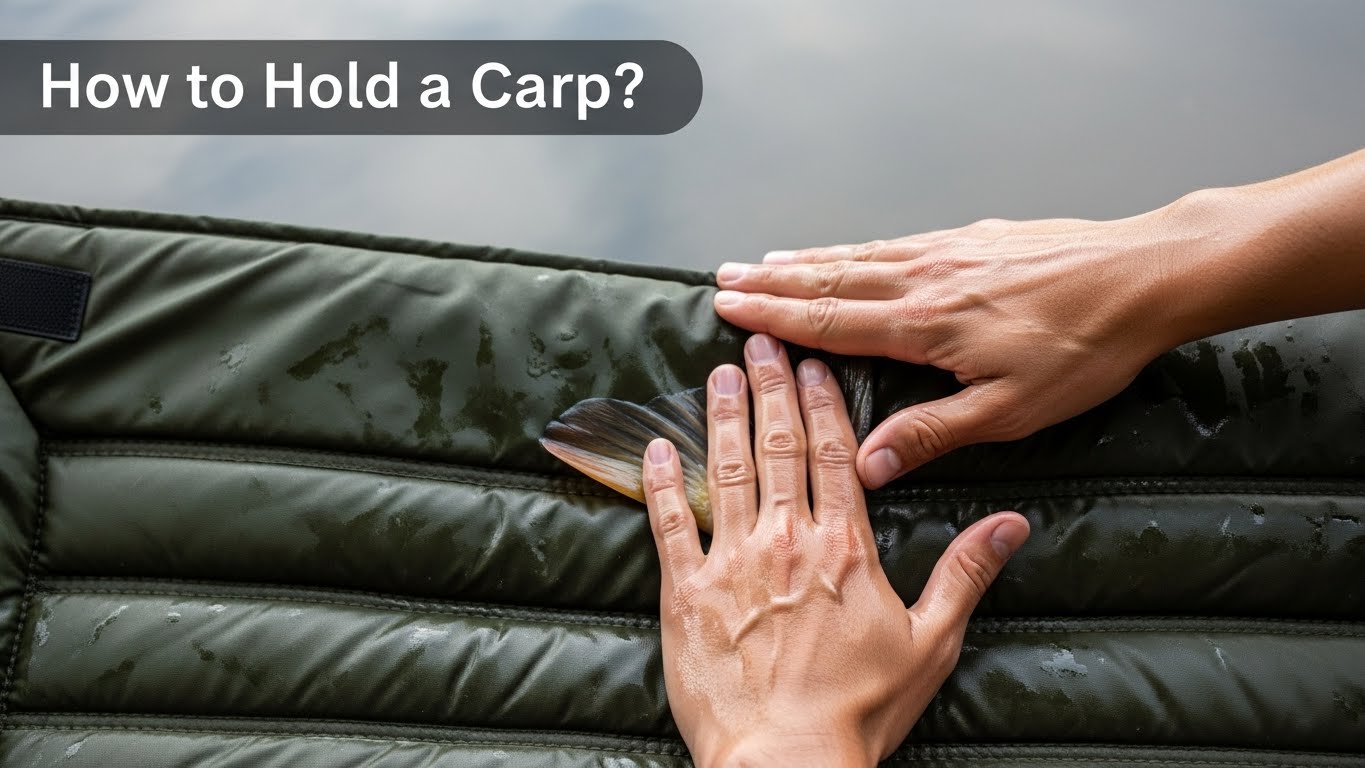
Slide your hand nearest the carp’s head sideways from the mouth toward the gills, carefully avoiding the eye on the underside.
Grip around the front pectoral fin near the head by placing your middle finger in the recess where the fin meets the body, known as the “carp armpit.”
With your other hand, slide it under the tail and gently grip either side of the anal fin, avoiding catching scales.
Position your hands to support the carp’s body evenly at front and back, ensuring stable lifting. It is important to avoid lifting until your hands are correctly positioned beneath the carp. Minimizing handling stress during this process improves the fish’s chance of survival.
Avoid placing hands beneath the stomach area, as it causes discomfort and increases injury risk.
Holding the carp balanced and slightly upright prevents flipping, while keeping fins flat minimizes stress.
This hand placement respects the carp’s anatomy and promotes safe, secure handling.
Techniques to Avoid Stress and Injury During Handling
To keep the carp healthy, it’s super important to support its body evenly and keep it horizontal. This helps prevent any internal damage, which is really crucial. Using reinforced waterproof sections from old waders can help create protective gear that supports handling.
Plus, try to minimize the time the fish is out of the water. This way, you can reduce stress and avoid any risk of suffocation. Always have your unhooking mat ready to protect the carp when out of water.
When it comes to removing hooks, just remember to handle the mouth gently. Using the right tools can make a big difference and helps prevent injury.
It’s all about being careful and respectful to ensure the carp stays safe and healthy!
Proper Body Support
Ensuring proper body support means positioning your hands carefully to prevent stress and injury to the carp.
Slide one hand from the mouth toward the gills, avoiding the eye beneath. Grasp near the pectoral fins for stability and place your other hand under the anal fin to support the fish’s bottom quarter.
Never hold by the stomach or gill plates to avoid harm. Keep the carp close to your body, resting your elbows on knees to reduce wrist strain and maintain control.
Proper handling with wet hands helps preserve the fish’s protective slime coating, reducing stress and injury during support.
| Hand Position | Support Area | Purpose |
|---|---|---|
| Near gills | Upper front side | Stable grip without harm |
| Under anal fin | Lower rear | Balanced bottom support |
| Close to body | Whole carp | Reduced fish and angler strain |
| Elbows on knees | Angler support | Wrist fatigue reduction |
Minimize Air Exposure
Supporting the carp’s body properly helps reduce physical stress, but keeping the fish out of water too long can quickly undo those efforts. You should limit air exposure to under 60 seconds, ideally around 10 seconds, to minimize stress and avoid internal damage.
Air exposure after landing causes gill lamellae collapse, reducing gas transfer and increasing blood CO2.
Prepare all your equipment beforehand, so you don’t waste time searching while the carp’s out of water. Always handle the fish on wet, padded surfaces with wet hands to protect its slime coat. Using waterproof gloves can further safeguard the fish’s delicate slime layer during handling.
Perform hook removal in the net, submerged if possible, using barbless hooks and de-hooking tools for speed. Keep the carp low to the ground to prevent injury and avoid touching sensitive areas like gills and eyes.
Gentle Hook Removal
Mastering gentle hook removal is essential for reducing stress and injury when handling carp. Use needle-nose pliers closed while inserting from the bottom or side to avoid damaging gills or tissue. Using the pliers, slide them carefully through the gills to reach the hook without causing harm.
Grip the base of the hook firmly and gently to control removal without tearing flesh. It is also important to consider tools and techniques that minimize damage during handling.
For deep hooks, apply the retrograde method: roll the hook backward to minimize injury. If necessary, push the hook through and clip the barb, or use a quick string yank for shallow hooks. Support the fish’s body gently to prevent thrashing and never insert tools too deeply into gills.
Clean all tools beforehand to prevent infection, rinse wounds if possible, and monitor fish welfare after release. If removal risks fatal injury, cut the line close to the hook. This technique ensures the fish is ready to be returned safely and with minimal stress.
Recommended Equipment for Safe Carp Handling
When it comes to handling carp safely, there are a few essential pieces of equipment you’ll want to have on hand. First off, using a soft landing net is crucial. This type of net helps protect the carp’s delicate slime coat and fins, which is super important for their overall health.
Additionally, ensuring proper storage and transport of your gear in durable packaging can prevent damage and maintain equipment quality.
Now, when you’re ready to unhook your catch, having an unhooking mat is a game-changer. It provides a secure and cushioned surface for the fish, which not only keeps them safe but also allows you to work quickly and carefully. Plus, it’s just a nice way to treat the fish with respect while you’re handling them.
Don’t forget about weigh slings, either! These are fantastic for supporting the fish’s weight evenly during weighing. They help reduce stress on the carp and keep them comfortable, which is what we all want when we’re out there fishing.
Also, it’s important to select your equipment based on the venue assessment to ensure you have the right tackle for your fishing environment. So, gear up with these tools, and you’ll be set for a safe and humane carp handling experience!
Soft Landing Nets
Soft landing nets play a crucial role in minimizing stress and injury to carp during catch-and-release fishing. You should choose nets with soft, rubber-coated or knotless mesh to protect the carp’s delicate skin and gills while allowing water flow. Selecting gear with proper traction and stability features can help maintain safety and control when handling fish near slippery water edges.
Lightweight frames made from aluminum or carbon fiber offer strength without burden. Look for nets with oval shapes and flat bottoms to support the carp horizontally and reduce stress. Buoyancy features like net floats keep your catch safe in water. Many landing nets also feature carbon composite handles that provide durability and lightweight convenience.
| Feature | Benefit |
|---|---|
| Soft mesh | Protects scales and slime layer |
| Lightweight frame | Easy handling and corrosion resistance |
| Oval shape | Supports carp horizontally |
| Buoyancy aids | Prevent net sinking |
| Comfortable grip | Secure handling during landing |
Unhooking Mats Usage
You’ll often find that using an unhooking mat is essential for safely handling carp after landing them.
These mats provide a cushioned, fish-friendly surface that protects the carp’s delicate skin, scales, and slime coating, markedly reducing injury and stress.
To maximize protection, place the mat on flat, soft ground, keep it damp, and avoid dragging the fish across hard surfaces before use. Proper storage in a cool, dry place helps maintain the mat’s material integrity over time.
Quality mats feature thick foam padding, raised edges to contain the fish, and non-abrasive materials that support catch-and-release survival. Many mats, such as the walled and sling mats, are designed with features like dual density foam and fully zipped folding designs for enhanced protection and convenience.
Portable designs with foldable frames or air cells make transport easy.
Regular cleaning prevents bacterial growth, maintaining mat durability.
Consistently using an unhooking mat helps guarantee the carp’s health and welfare during unhooking and photography, respecting both fish and angler alike.
Weigh Slings Benefits
Weigh slings offer essential benefits for safe carp handling by combining ergonomic design with fish-friendly materials.
Made from soft, premium mesh, they prevent skin damage and allow water flow, keeping carp submerged and reducing stress during weighing.
Their drainage holes guarantee quick water release, delivering accurate weight measurements without water adding to the scale.
Lightweight foam panels support the fish evenly, minimizing strain on internal organs.
Zip sides secure the carp, preventing slips and escapes, while the mesh lets you monitor the fish’s condition.
Using weigh slings also speeds up handling, enabling quick weighing and release, essential for the fish’s well-being.
Additionally, using fish-friendly netting materials similar to those found in quality landing nets can further protect the carp’s delicate skin during handling.
Step-by-Step Guide to Hook Removal
When removing a hook, it’s essential to choose the right technique based on the hook’s type and how deeply it’s embedded.
Selecting the appropriate hook removal method depends on the hook type and embedding depth.
For barbless hooks or those not past the barb, use the retrograde method: stabilize the area, grasp the shank with pliers, and gently back the hook out along its entry path. Barbless hooks typically back out along entry path with minimal damage, making this method less traumatic for the tissue.
If the hook is deeply embedded with a barb, try the advance and cut technique by pushing the hook forward until the barb emerges, cutting it off, then backing it out.
For minimal tissue damage, the needle cover technique slides a needle over the barb to shield tissue during removal.
The string-yank method, tying a strong line to the bend and applying a firm yank, works well on buried hooks.
Always clean wounds thoroughly afterward. [Clean wound thoroughly immediately after removal
Best Practices for Handling Carp During Catch and Release
When you’re out there catching carp and planning to release them, it’s super important to handle them the right way.
First off, make sure you support the fish properly. Hold it horizontally with both hands. This way, you reduce stress and the chance of injury. Minimizing handling stress helps the carp maintain its immune strength and recover faster.
Also, try to keep the time the carp spends out of the water to a minimum. The quicker you can get that hook out, the better! Using a rubberized net can help keep the carp in the water while you work to reduce stress and protect its slime coat.
Use gentle and quick techniques for removing the hook to protect the fish’s wellbeing.
Proper Carp Support
Cradle the carp horizontally with wet hands to provide firm, even support and prevent spinal injury, especially for larger specimens.
Always use padded unhooking mats or cradles and large rubberized landing nets with soft mesh to protect the carp’s scales and slime layer when handling it out of water.
Avoid holding the carp vertically by the jaw unless it’s under five pounds, and never suspend it by the mouth alone.
Employ weigh slings to support the carp safely during weighing, preventing spine bending.
Keep the carp low to the ground or over padded surfaces to reduce injury if it struggles.
Have barbless hooks and dehooking tools ready to minimize handling time and reduce harm. Using barbless hooks or pinch barbs helps ensure quicker hook removal and less damage.
Minimizing Carp Stress
Minimizing stress on carp during catch and release is essential for their survival and well-being. To protect the fish’s health, follow these best practices:
- Prepare your environment by wetting unhooking mats and slings beforehand. Keep landing nets in the water to reduce exhaustion during capture.
- Limit handling time out of water to under 30 seconds whenever possible. Ensure quick weighing, photographing, and release to prevent oxygen deprivation and physical stress.
- Support the carp horizontally with both hands and keep fins flat. Avoid gripping sensitive areas like gill covers or eyes, maintaining the fish’s natural posture to reduce injury and distress.
Safe Hook Removal
Although hook removal can be challenging, using the right tools and techniques guarantees the carp experiences minimal injury and stress.
Use narrow-tipped needle-nose pliers or specialized hook removers to grip hooks securely without damaging delicate tissues.
For barbed hooks, gently push them out opposite the entry before pulling backward smoothly to reduce tearing.
If the hook is deeply embedded or in the gills, slide pliers carefully through openings and roll the hook backward for safe extraction.
Avoid probing aggressively or using fingers alone, which risks injury. About 70% of fishing-related injuries involve hooks, so taking care is essential.
For deeply swallowed or treble hooks, consider cutting the line rather than forcing removal to prevent fatal damage.
Always keep the carp wet, supported, and minimize air exposure during removal.
Revive it gently before release to guarantee survival.
Adjusting Handling Methods for Different Carp Sizes
Adjust your handling techniques based on the size of the carp to guarantee their safety and reduce stress. Small carp require gentle support under the belly and tail with light line tension to avoid injury.
Medium-sized carp benefit from horizontal support using a cradle or padded mat, preventing strain on internal organs. Large carp demand two-person lifts and specialist cradles to maintain horizontal positioning and protect soft tissues. It is also important to use rigs with big-fish pedigree to ensure proper capture and handling of larger specimens.
For small carp, use fine mesh nets and avoid squeezing; handle over soft, wet surfaces. Medium carp need even weight distribution and minimal air exposure, with careful net selection.
For large and extra-large carp, employ heavy-duty cradles, two-person lifts, and reduce handling time to prevent exhaustion.
Adjusting methods by size guarantees carp remain healthy and stress-free during capture.
Protecting the Carp’s Slime Layer and Skin
Preserving the carp’s slime layer is crucial to maintaining its health and resilience. This protein-based mucous protects against infections and parasites while retaining essential electrolytes. The slime coat serves as the first line of defense by containing enzymes and antibodies that repel bacterial and fungal infections.
The carp’s slime layer is vital for health, shielding against infections and balancing essential electrolytes.
To safeguard this barrier, always wet your hands thoroughly before touching the fish, avoiding dry or rough skin that can strip away slime. Never place the carp on abrasive or dirty surfaces, as these damage its protective coating.
Minimize handling time out of water to reduce stress and slime loss. Use only soft, rubber-coated nets and pre-wetted mats to prevent abrasion.
In colder months, the slime thickens, so pre-soaking your hands in cold water can help preserve it during handling. By respecting these practices, you help guarantee the carp quickly recovers its defenses, promoting its long-term health and survival.
Using Landing Nets and Unhooking Mats Effectively
Mastering the use of landing nets and unhooking mats is essential for handling carp safely and minimizing their stress.
When landing a carp, lower your net ahead of the fish, letting it swim in rather than chasing it. It is important to choose a net with an optimal net arm size commonly between 42–50 inches to safely accommodate the fish.
Use a rubber-coated net with a deep mesh and long handle (around 6ft) to fully support the carp’s body.
To use unhooking mats effectively:
- Place the mat on moist ground or wet it to keep the carp’s skin moist.
- Choose a padded, waterproof mat with raised edges to prevent the fish from rolling off.
- Make certain the mat is large enough to accommodate the carp comfortably during unhooking.
These steps protect the carp’s delicate slime layer and reduce injury risk during handling.
Reviving and Releasing Carp Safely Back Into Water
When reviving and releasing carp safely back into the water, you need to carefully assess the fish’s condition before proceeding.
Look for signs of exhaustion like irregular gill movement and check for injuries.
Observe irregular gill movement and inspect for injuries to assess carp exhaustion before release.
Keep air exposure under 30 seconds and handle the carp with wet hands or nets to protect its slime coat.
To revive, gently hold the carp upright in water facing upstream, supporting its belly and head.
Slowly move it back and forth to encourage water flow over the gills without vigorous motions.
Monitor gill rhythm and release only when the carp swims strongly and maintains buoyancy.
Position the rod eye behind a bite alarm or use a peg to secure the rod when resting to avoid sudden fish runs in challenging conditions drag strategies.
Place the carp gently into calm water and allow it to swim away on its own.
Minimizing handling time and stress remains key to a safe release.
Ethical and Environmental Considerations for Carp Anglers
Beyond the technical skills of catching carp, ethical and environmental considerations play a crucial role in responsible angling practices.
As a carp angler, you can help protect ecosystems and support sustainability by following key guidelines:
- Handle fish gently to minimize injury and avoid damaging delicate habitats, reducing stress on carp and native species.
- Respect local regulations aimed at controlling invasive carp, preventing ecological imbalance and economic losses caused by overpopulation. Studies have shown that carp-driven sediment disturbance reduces sediment quality and degrades habitat, which highlights the importance of effective management of carp populations.
- Practice catch-and-release with care, ensuring carp are revived properly to maintain healthy populations and water quality.
Frequently Asked Questions
Can I Hold a Carp by Its Gills Safely?
You shouldn’t hold a carp by its gills because they’re delicate and easily damaged, which can cause bleeding and breathing problems.
Gripping the gills stresses the fish and raises its risk of infections and delayed death.
Instead, support the carp horizontally with both hands, one behind the pectoral fins and one under the tail.
Use wet hands or slings to protect the slime coat and handle the fish gently to keep it healthy and safe.
How Long Can a Carp Be Held Out of Water?
Oh sure, hold a carp out of water until it writes you a thank-you note. Just kidding!
You should keep it out no longer than 2 to 3 minutes tops. Carp need quick handling to avoid stress, slime damage, and oxygen deprivation.
Always work efficiently, keep them moist, and return them swiftly to their watery home. The shorter the air time, the better their chances of swimming off strong and healthy.
Is It Harmful to Hold a Carp Vertically by the Tail?
Yes, holding a carp vertically by the tail is harmful.
When you do this, you cause internal organs to shift unnaturally, increasing stress and risking serious damage.
It also puts strain on delicate fins and scales, making injury more likely.
Instead, support the carp horizontally with one hand under its belly and the other near the tail or anal fin to keep the fish safe, calm, and reduce the chance of injury.
What Is the Best Way to Carry Multiple Carp at Once?
The best way to carry multiple carp at once is to use separate large, padded cradles or nets for each fish.
Support them horizontally with two hands, one under the belly near the pectoral fins and the other near the tail.
Keep their slime coats wet by moistening your hands and equipment.
Avoid overcrowding and minimize air exposure.
Transport them close to water, working quickly yet gently to reduce stress and prevent injury.
Should I Use Gloves When Handling a Carp?
Yes, you should use gloves when handling a carp.
Gloves protect your hands from cuts, punctures, and infections caused by sharp fins and hooks.
They improve your grip on slippery fish, reducing the risk of dropping them and injuring both you and the carp.
Wearing gloves also shields your skin from bacteria, chemicals, and environmental hazards while preserving the fish’s protective slime coat for its health and safety.
Take Your Skills Further With Confident Carp Handling
By handling carp carefully and respecting their delicate nature, you’re not just protecting the fish. You’re ensuring future catches too.
Remember, it’s all about keeping the carp safe and sound, from proper hand placement to gentle hook removal.
Use the right equipment, protect their slime layer, and always revive them before release. After all, you can’t make an omelet without breaking a few eggs. With carp, a gentle touch keeps everyone winning.