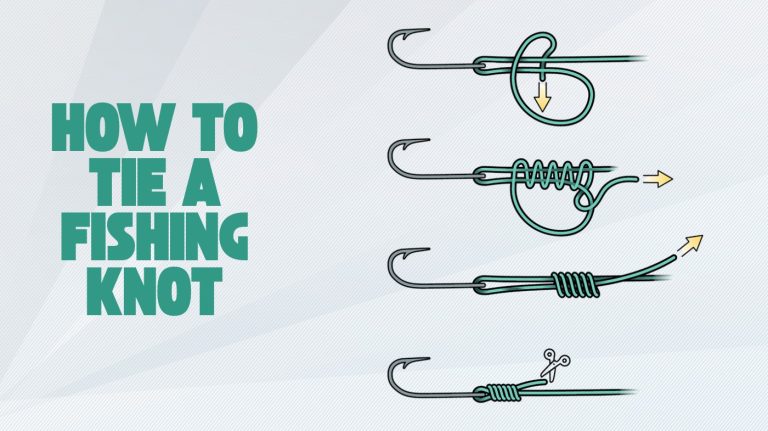

Davy Knot vs Clinch Knot: Strength, Uses & Key Differences
You’ll find the Davy Knot faster and more compact for quick fly changes, requiring fewer wraps and about half the tying time of the Clinch Knot.
The Clinch Knot, especially in its improved form, offers traditional reliability and slightly higher holding strength across various lines. However, it takes longer and is more complex to tie.
Your choice depends on whether speed or proven, consistent performance matters most. Explore further to understand their strengths across different lines and conditions.
Key Takeaways
- The Davy Knot is faster and more compact, ideal for quick tying and repeated fly changes under pressure.
- The Clinch Knot is traditional, widely recognized, and favored for its reliable holding power across various line types.
- Davy uses fewer wraps (2-3) and ties in about half the time compared to Clinch’s 5-6 wraps with additional complexity.
- Strength-wise, Davy retains around 85%-100% line strength, often outperforming basic Clinch, while Improved Clinch narrows this gap.
- Choose Davy for speed and sleekness in fly fishing; choose Improved Clinch for proven strength and broad line compatibility.
Davy Knot vs Clinch Knot: Quick Side-by-Side Breakdown
| Feature | Davy Knot | Clinch Knot |
|---|---|---|
| Primary Advantage | Speed and compactness | Reliability and proven holding power |
| Tying Speed | About half the time of Clinch | Takes longer |
| Number of Wraps | Usually 2–3 | Typically 5–6 |
| Tying Complexity | Simple and streamlined | More steps, especially Improved Clinch |
| Size/Profile | Very compact and sleek | Larger than Davy |
| Line Strength Retention | Generally 85–100% | Basic: 65–85%; Improved: about 77–95% |
| Average Strength | Around 90% | Varies by version and line |
| Fly Changes | Excellent for rapid changes | Slower for repeated changes |
| Fly Fishing | Particularly suited to quick fly changes | Broadly used across fishing styles |
| Mono Line | Around 90% strength retention | Generally reliable; improved version performs strongly |
| Fluorocarbon | Around 88% in the article | Improved version can provide strong retention |
| Braided Line | Requires firm wraps and tight cinching | Requires tighter wraps for security |
| Compactness | Minimizes bulk and snagging | Less compact |
| Fly Action | Compact profile helps maintain fly action | Reliable attachment with more wraps |
| Small Flies | Well suited to dry flies and emergers | Handles a broader range |
| Heavy Lures | Can work with technique adjustments | Well suited, especially Improved Clinch |
| Saltwater Use | Effective when quick, compact ties are needed | Broadly recognized for varied conditions |
| Learning/Familiarity | Shorter, less traditional sequence | Widely recognized and commonly taught |
| Main Strength | Speed, simplicity, compact design | Traditional reliability and versatility |
| Main Limitation | Performance can depend on line and conditions | More time-consuming to tie |
| Best Choice For | Rapid fly changes and efficiency | Proven holding power and broad compatibility |
Quick Overview: Davy Knot vs Clinch Knot in Fly Fishing
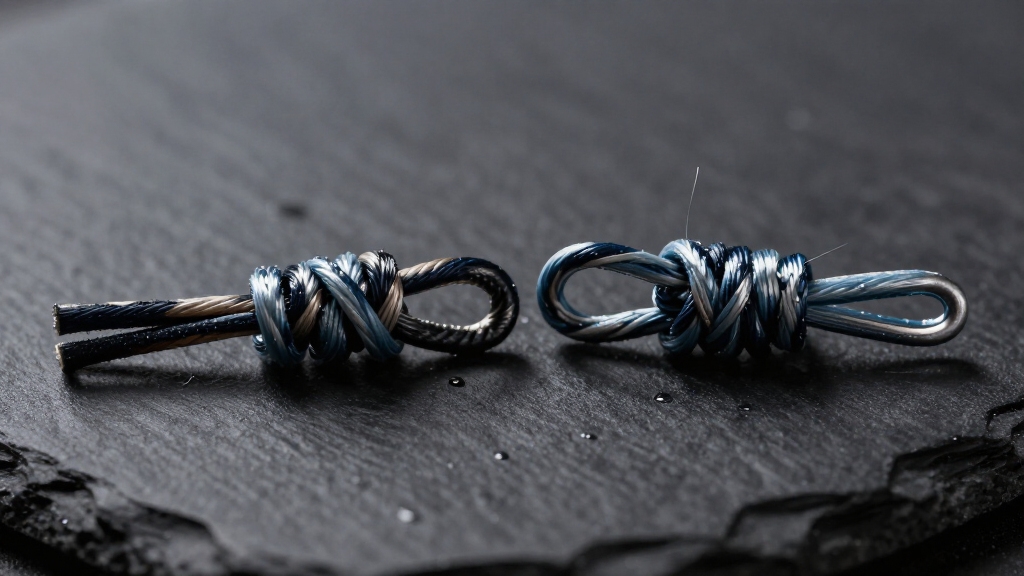
When choosing between the Davy Knot and the Clinch Knot for fly fishing, you’ll find that the Davy Knot offers a faster, more compact tying process ideal for quick fly changes.
The Davy Knot provides a quicker, more streamlined tying method perfect for swift fly changes.
The Clinch Knot stands out for its traditional reliability and widespread recognition among anglers.
The Davy Knot demands fewer wraps and a shorter tying sequence, reducing setup time at the fly eye.
In contrast, the Clinch Knot requires more wraps and steps, especially in its improved form.
Strength tests vary, but the Davy Knot generally maintains 85% to 100% of line strength.
It often outperforms the basic Clinch Knot, which typically ranges from 65% to 85%.
This makes the Davy Knot particularly advantageous when speed and a sleek profile are priorities in fly fishing scenarios.
For securing lines effectively, it is crucial to maintain tension during the knot-tying process to ensure a strong and reliable connection.
Why the Clinch Knot Remains a Classic Favorite?
The Clinch Knot is still a go-to for many anglers, and it’s easy to see why. It’s got this timeless charm and is widely accepted in the fishing community.
One of the best things about the Clinch Knot is its reliable strength, especially with the improved version. This knot ensures that your terminal connections hold strong, no matter what type of line you’re using.
Additionally, the knot should be moistened before tightening to enhance its holding strength and prevent line damage.
Timeless Fishing Tradition
Holding a trusted place in angling history, the Clinch Knot has earned its reputation through consistent reliability and widespread recognition among anglers.
You’ll find that its design, with multiple wraps and a final tuck in the improved version, guarantees secure line-to-hook attachment under variable tension and line types.
While tying takes a bit longer than some modern knots, its proven durability and adaptability make it a dependable choice across diverse fishing conditions.
Even as newer knots like the Davy Knot offer speed and compactness, the Clinch Knot’s enduring presence reflects its balance of strength and ease of inspection.
When you rely on a knot refined over decades, you benefit from a technique validated by experience and rigorous field use, solidifying its status as a timeless fishing tradition.
Its reliable structure, much like the strength and durability found in well-established knots, ensures confidence in various angling situations.
Broad Recognition And Use
Frequently chosen by anglers worldwide, the Clinch Knot stands out due to its broad recognition and versatility across fishing styles. You’ll find it favored not only for its simplicity but also for its reliable functionality in various fishing scenarios.
Its widespread use has established it as a fundamental skill for every angler. Recognized universally across freshwater and saltwater fishing, it’s compatible with multiple line types including mono and fluorocarbon.
The Clinch Knot serves as a foundational knot for beginners and experts alike. It’s adaptable through versions like the Improved Clinch Knot for enhanced performance and is supported by decades of practical application and instructional materials.
When you opt for the Clinch Knot, you tap into a tried-and-tested knot that balances tradition with dependable utility, making it a classic favorite in your fishing toolkit.
Additionally, proper tying techniques and moisture application can improve knot strength, ensuring better performance on the water.
Reliable Strength Performance
Alongside its widespread recognition, the Clinch Knot delivers dependable strength that has earned its place in anglers’ repertoires.
While the basic Clinch Knot typically retains 65% to 85% of line strength, it’s the Improved Clinch Knot with its final tuck that elevates performance, often reaching 85% to 95% strength depending on line type.
This consistency makes it a reliable choice, especially when compared to the Davy Knot, which generally ranges from 85% to 100% strength but varies more with line and testing method.
The Improved Clinch Knot’s proven holding power under load guarantees durability and security in diverse conditions.
Choosing the right knot is especially important for fluorocarbon lines due to their unique knot strength and stiffness characteristics.
Why Use the Davy Knot for Faster Fly Changes?
Choose the Davy Knot when you need to switch flies quickly and efficiently during your fishing session. Its streamlined tying process reduces time spent at the fly eye, letting you adapt faster to changing conditions.
The knot’s compact structure minimizes bulk, preventing snagging and maintaining fly action.
Requires fewer wraps than the Clinch Knot. Tying sequence is simpler and more intuitive.
Takes approximately half the time to tie. Maintains strong holding power despite speed.
Ideal for repeated fly changes under pressure.
Using knots that maintain strong holding power is essential for effective fly fishing rigs.
Comparing Tying Speed: Davy Knot vs Clinch Knot
You know, tying knots can be a bit of a hassle sometimes, right? Well, when it comes to the Davy Knot, you’ll find it takes roughly half the time to tie compared to the Clinch Knot.
Why? It’s all about those fewer wraps and a simpler sequence. Plus, its compact structure really streamlines the whole process, making it a go-to for quick fly changes.
On the other hand, the Clinch Knot can be a bit more of a chore. It requires more wraps and steps, especially in its improved version.
This definitely ramps up the tying complexity and time. So, if you’re in a hurry, the Davy Knot might just be your best bet! The compact size of knots like the Davy Knot allows for easy passage through guides, improving casting efficiency.
Tying Time Comparison
Frequently, the speed at which you can tie a knot plays a crucial role in fly fishing, especially during rapid fly changes.
The Davy Knot generally takes about half the time to tie compared to the Clinch Knot, thanks to its fewer wraps and streamlined sequence.
This compact tying process reduces setup time at the fly eye, letting you switch flies quickly.
In contrast, the Clinch Knot, especially its improved version, requires more wraps and steps, slowing your workflow.
Key points worth keeping in mind:
Davy Knot uses fewer wraps, speeding tying.
Clinch Knot involves more steps, increasing tying time.
Davy Knot’s compact structure aids quick fly changes.
Clinch Knot favored for familiarity, not speed.
Speed advantage makes Davy Knot ideal for fast-paced fishing.
Fluorocarbon tippets often require extra wraps for secure knots, which can impact tying speed and complexity.
Complexity And Wraps
The complexity of tying a knot directly impacts how quickly and efficiently you can secure your fly. The Davy Knot is simpler, involving fewer wraps, usually just two or three, and a shorter tying sequence, which substantially speeds up the process.
In contrast, the Clinch Knot requires more wraps, typically five or six, and additional steps, especially in its improved version where a final tuck is added to enhance strength. This increases tying time and complexity.
When speed is vital, like during rapid fly changes, the Davy Knot’s streamlined structure offers a clear advantage. However, the Clinch Knot’s extra wraps contribute to its traditional reliability, making it a solid choice when you prioritize knot security over speed.
Understanding these differences helps you select the knot best suited to your fishing context. Additionally, applying proper wrap adjustment can further enhance knot strength and reliability in various fishing situations.
Strength Comparison: Davy Knot vs Basic Clinch Knot
Compare the strength of the Davy Knot and the basic Clinch Knot reveals notable differences that impact their reliability in fishing applications. The Davy Knot typically retains around 85% to 100% of the line’s original strength.
In contrast, the basic Clinch Knot often falls between 65% and 85%, depending on line type and test conditions. This disparity influences knot choice when strength is critical.
Davy Knot averages about 90% line strength retention. The basic Clinch Knot strength varies, sometimes as low as 52%.
Strength results depend heavily on line material and tying precision. The Davy Knot’s simpler structure may reduce failure points under tension.
The basic Clinch Knot is less consistent, especially without the improved tuck. You’ll want to take into account these differences carefully for dependable terminal knot performance.
It is also important to consider the type of fishing line used, as braided line characteristics can significantly affect knot performance and durability.
How the Improved Clinch Knot Boosts Strength?
While the basic Clinch Knot shows variable strength and inconsistency, the improved version addresses these weaknesses by adding a critical final tuck through the loop.
This additional tuck markedly enhances the knot’s holding power by increasing friction and preventing slippage under load.
By threading the tag end back through the loop, the Improved Clinch Knot distributes stress more evenly across the wraps, reducing line deformation and weak points.
Testing consistently demonstrates that this modification boosts knot strength from roughly 52% in the basic version to approximately 77%-95% of the line’s breaking strength, depending on line type.
For anglers, this means a more reliable, robust terminal knot that competes closely with the Davy Knot’s performance while maintaining the Clinch Knot’s traditional structure.
Knot Performance on Mono, Fluoro, and Braided Lines
Frequently, anglers find that knot performance varies markedly depending on whether they use monofilament, fluorocarbon, or braided lines. The Davy Knot generally maintains about 90% of line strength on mono and slightly less on fluoro, around 88%.
The basic Clinch Knot often falls between 65% to 85% strength, depending on line type and wrap count, while the Improved Clinch Knot narrows this gap noticeably. Braided lines, with their slick surface and high tensile strength, challenge both knots but often favor the Davy for retention.
Keep these points in mind:
Mono lines provide consistent knot holding but can fray under stress. Fluorocarbon’s stiffness affects knot tightening and slip resistance. Braided lines require tighter wraps for security.
Davy Knot ties faster with fewer wraps on all line types. Improved Clinch Knot offers superior strength on mono and fluoro.
Choosing the Right Knot for Your Fishing Style and Conditions
Selecting the right knot hinges on understanding your specific fishing style and environmental conditions. If you prioritize speed and compactness, common in fly fishing and frequent fly changes, the Davy Knot offers a quicker tying process with fewer wraps, saving valuable time at the fly eye.
Conversely, if you value a traditional, widely recognized terminal knot with proven holding power, especially on varied line types, the Improved Clinch Knot may better suit your needs. Its enhanced strength and reliable performance make it a strong choice.
Consider also the line material: the Davy Knot performs consistently across mono and fluorocarbon. In contrast, the Clinch Knot’s effectiveness varies more with line type and tying quality. Ultimately, match your knot choice to your fishing scenario to optimize both efficiency and knot integrity.
Why Many Anglers Still Trust the Clinch Knot Today?
Many anglers continue to rely on the Clinch Knot because of its proven reliability, ease of learning, and broad compatibility with various line types and fishing techniques.
You’ll find it holds well across monofilament, fluorocarbon, and braided lines, especially in its improved form. Its universal acceptance means you can trust it in a wide range of fishing scenarios without second-guessing.
Established track record in strength and durability.
Works efficiently with multiple line materials.
Easy to tie under varying conditions.
Versatile for different terminal tackle setups.
Supported by extensive angler experience and literature.
Frequently Asked Questions
Can the Davy Knot Be Used Effectively for Saltwater Fishing?
Yes, you can use the Davy Knot effectively for saltwater fishing, especially when you need quick, compact ties.
It maintains around 85% to 100% of line strength, which is generally sufficient for many saltwater species.
However, consider your line type and conditions; heavier saltwater lines or abrasive environments might benefit from knots with proven higher holding power.
Always test your knot’s performance with your specific gear before relying on it in challenging saltwater situations.
How Does Water Exposure Affect Knot Durability Over Time?
Water exposure can reduce knot durability by weakening line fibers and causing slippage, especially in monofilament and fluorocarbon lines.
Studies show knots often retain around 85-90% strength when dry but can drop below 80% after prolonged wetting.
To maintain performance, you should retie knots regularly, rinse gear with fresh water after salt exposure, and choose knots with compact, secure structures that resist loosening under wet conditions.
Are There Specific Flies or Lures Best Suited for Each Knot?
You’ll find the Davy Knot excels with small, lightweight flies where quick changes matter, like dry flies and emergers.
Its compact profile allows for fast tying.
The Clinch Knot handles a broader range, including heavier lures and wet flies.
It benefits from a stronger hold when improved.
If you’re targeting versatility and strength for various fly types, the improved Clinch’s more secure grip suits larger or more aggressive lures better.
What Common Mistakes Should Anglers Avoid When Tying These Knots?
You’ll want to avoid “creative interpretations” when tying these knots. For the Davy Knot, skipping tight wraps or neglecting the final tuck compromises strength and compactness.
With the Clinch Knot, insufficient wraps or forgetting the improved tuck reduces holding power. Always moisten lines before tightening to prevent friction damage.
Ensuring consistent tension and neat coils guarantees knot integrity. Take a moment to confirm each step; your catch depends on it.
Can the Davy Knot Be Tied With Very Heavy or Braided Lines?
Yes, you can tie the Davy Knot with heavy or braided lines, but you’ll need to adjust your technique slightly.
Braided lines are slippery, so make sure you make firm wraps and cinch the knot tightly to prevent slippage.
With heavy lines, the knot’s compact structure still holds well, but you might want to add an extra wrap for security.
Always test your knot’s strength before fishing to confirm reliable performance.
Which Fishing Knot Fits Your Style: Clinch or Davy?
Whether you opt for the timeless Clinch Knot or the quicker-to-tie Davy Knot, your choice hinges on your fishing style and line type.
The Clinch Knot, much like a trusty rotary phone, remains reliable and strong, especially when improved.
The Davy Knot, on the other hand, offers speed without sacrificing much strength, ideal for rapid fly changes.
Understanding their strengths guarantees you tie the perfect knot every time, maximizing your fishing efficiency.