How to Clean Aluminum on a Boat? Essential Maintenance Tips
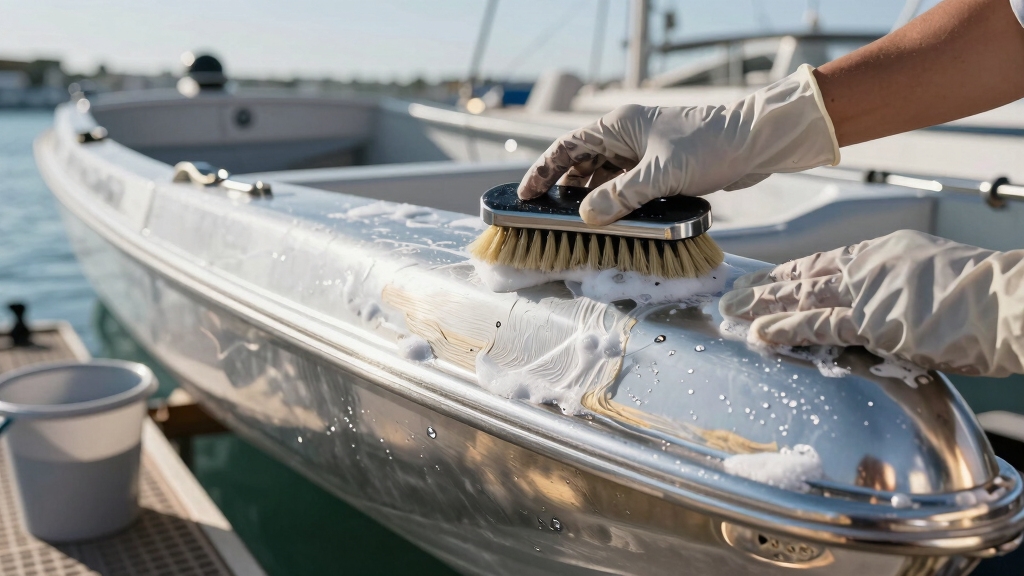
To clean aluminum on your boat, start by rinsing off dust and loose debris. Then choose a cleaner suited for bare or anodized aluminum.
Spray it on, let it sit briefly, and gently scrub with a non-scratch pad to remove oxidation. Thoroughly rinse and dry with a microfiber cloth to avoid spots.
Finish by applying a quality sealant or marine wax for protection. Proper cleaning and care keep your aluminum durable and looking sharp. Explore further to master each step.
Key Takeaways
- Rinse aluminum surfaces to remove dust and debris before applying cleaners designed for bare or anodized aluminum.
- Use dedicated aluminum brighteners or mild cleaners depending on oxidation severity; avoid harsh scrubbing to prevent scratches.
- Work in shaded areas and keep the surface wet during cleaning to avoid cleaner drying and streaking.
- Rinse thoroughly with water after cleaning and pat dry with a microfiber cloth to prevent water spots.
- Apply marine-grade polymer sealants or waxes on clean, dry aluminum to protect against UV, salt, and oxidation.
Why and How to Clean Your Boat’s Aluminum Surfaces?
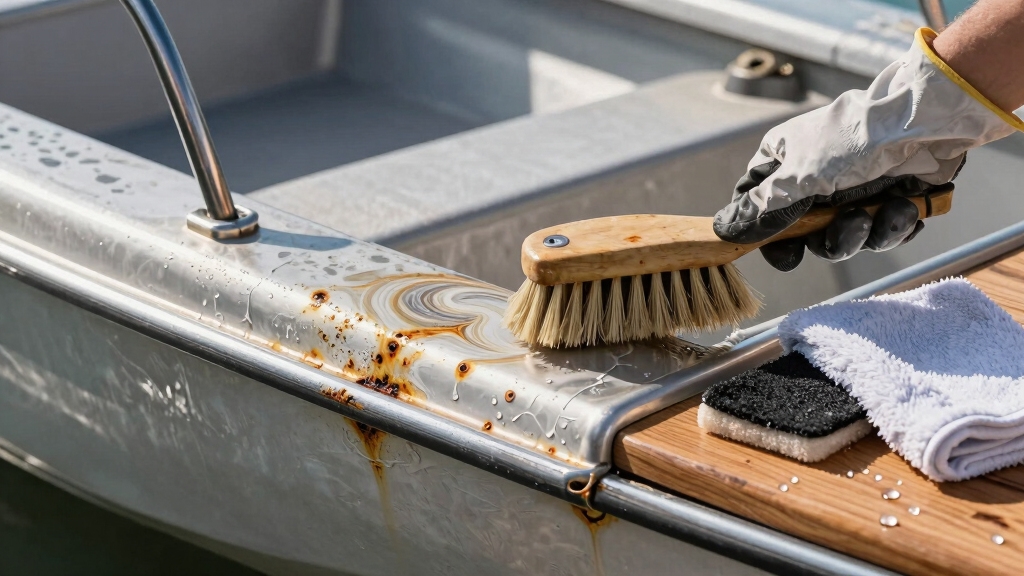
Although aluminum is corrosion-resistant, you need to clean your boat’s aluminum surfaces regularly to remove oxidation, stains, and debris that degrade its appearance and performance.
Start by clearing dust, grease, and loose particles with a hose or soft brush to ensure effective cleaner application.
Work in shaded areas to prevent cleaners from drying too quickly and cover hot surfaces to avoid damage.
Use dedicated aluminum cleaners that penetrate oxidation without harming the metal.
Apply products evenly, allowing proper dwell time before rinsing thoroughly with water or a pressure washer.
Dry surfaces with a chamois or soft cloth to prevent water spots.
Regular cleaning maintains aluminum’s protective oxide layer, prevents corrosion, and preserves your boat’s structural integrity and aesthetic, guaranteeing long-term durability and performance.
This natural oxide layer enables aluminum to resist rust effectively, providing superior corrosion resistance especially in harsh marine environments.
Choose the Right Aluminum Cleaner for Your Boat
When it comes to aluminum cleaners for your boat, you’ll find a range of products out there, each designed for specific tasks. Some are great for brightening up oxidized surfaces, while others are perfect for tackling light stains. So, it’s really important to choose a cleaner based on the condition of your boat.
Is it heavily oxidized or just a bit dirty? That’ll make a difference in what you pick.
Also, don’t forget to consider the type of aluminum your boat is made of. Matching the cleaner to your specific aluminum type is key to getting the best results. And of course, always remember to follow the manufacturer’s guidelines for the product you choose.
That way, you can ensure you’re doing it right and keeping your boat looking its best. Additionally, regular inspection and proper maintenance can help prevent material degradation and extend the life of your aluminum surfaces.
Types Of Aluminum Cleaners
When selecting an aluminum cleaner for your boat, consider the type and extent of oxidation or staining you need to address.
For heavy oxidation, use dedicated brighteners like Purple Power Aluminum Brightener or Star Brite Aluminum Cleaner and Restorer, which penetrate and lift tough stains.
For light dirt or minor oxidation, products like Better Boat Instant Hull Cleaner or Bar Keepers Friend MORE Spray + Foam work effectively without aggressive scrubbing.
If you need both cleaning and polishing, opt for BoatLIFE Aluminum Cleaner, which brightens oxidized coatings and restores shine.
Choose cleaners formulated specifically for aluminum to avoid damage, especially on bare or painted surfaces.
Always match your cleaner to the surface condition to make certain efficient oxidation removal and maintain your boat’s aluminum integrity.
Using marine-grade epoxies can help protect aluminum surfaces from further damage after cleaning.
Cleaner Selection Tips
Selecting the right aluminum cleaner hinges on understanding your boat’s surface condition and the severity of oxidation or staining.
For light soil or minor discoloration, opt for mild cleaners like Bar Keepers Friend MORE Spray + Foam. If oxidation is moderate, choose specialized brighteners such as Purple Power Aluminum Brightener or BoatLIFE Aluminum Cleaner.
Bare, heavily oxidized aluminum requires stronger solutions like Star Brite Aluminum Cleaner and Restorer. Avoid using cleaners designed for painted surfaces on bare aluminum to prevent damage.
Always match the cleaner to the surface finish—painted, anodized, or bare aluminum—and consider the product’s dwell time and application method.
Prioritize cleaners that allow easy rinsing and minimize scrubbing. Proper selection guarantees effective oxidation removal without harming your boat’s aluminum finish.
For best results, always follow proper cleaning and maintenance techniques to preserve the material’s integrity and extend its lifespan.
How to Apply and Scrub Aluminum Cleaners for Tough Stains?
To tackle tough stains on aluminum, start by thoroughly spraying the appropriate cleaner, like a brightener or hull cleaner, directly onto the affected areas.
Begin by spraying a suitable brightener or hull cleaner onto tough aluminum stains.
Allow the product to dwell for 30 seconds to 2 minutes, depending on the cleaner’s instructions. Next, use a non-scratch scrub pad or microfiber towel to gently agitate the surface, focusing on stubborn spots without damaging the aluminum.
Avoid aggressive scrubbing that can scratch or wear down the metal. For oxidized areas, multiple applications and light scrubbing may be necessary to fully lift the buildup.
Work methodically in sections to guarantee even treatment. Always keep the surface wet during scrubbing to prevent residue buildup and facilitate cleaner penetration.
Rinse and Dry Boat Aluminum to Prevent Spots and Residue
After you’ve scrubbed and treated the aluminum, rinse off all cleaning agents thoroughly to prevent residue buildup and spotting. Use a hose or pressure washer to remove loosened dirt and cleaner completely, working from top to bottom.
Avoid letting any cleaning solution dry on the surface, as this can cause streaks or water spots. Once rinsed, pat dry the aluminum with a soft, absorbent chamois or microfiber cloth.
This step is vital to prevent mineral deposits and watermarks that dull the finish. Drying also reveals any missed spots for additional attention.
Finish with a gentle, streak-free wipe to achieve a polished surface. Proper rinsing and drying guarantee your aluminum remains clean, bright, and free of unsightly residue after each wash.
For best results, ensure you dry in a well-ventilated area to avoid moisture buildup that can cause corrosion.
How to Protect Your Aluminum With Sealants and Wax?
To protect your aluminum, it’s a great idea to apply a quality sealant. This creates a durable barrier against oxidation and UV damage. Plus, when you add wax, you’re giving it an extra layer of defense that really enhances the shine. Just keep in mind that proper application is key to ensuring even coverage.
Following the right steps for sealing and waxing is super important. It’s not just about making your aluminum look good; it’ll actually extend its lifespan and make future maintenance a breeze! So, let’s dive into those precise steps to get the best results for your boat’s aluminum. Using coatings with UV stabilizers can help maintain protection against sun damage over time.
Sealant Benefits Explained
While cleaning removes dirt and oxidation, applying sealants and waxes protects your aluminum surfaces from environmental damage and extends their lifespan.
Sealants form a durable, water-repellent barrier that shields aluminum from UV rays, salt, and oxidation, which are primary causes of corrosion and dulling.
Unlike waxes alone, polymer-based sealants offer longer-lasting protection, resisting wash-off and environmental contaminants.
Using sealants also simplifies maintenance by reducing surface etching and water spots, so you won’t need frequent deep cleanings.
Additionally, sealants help preserve the aluminum’s finish, whether bare or coated, by preventing direct exposure to harsh elements.
To maximize these benefits, apply sealants on a thoroughly cleaned, dry surface, ensuring even coverage.
This proactive step saves you time and effort while maintaining your boat’s aluminum in peak condition.
For enhanced durability, consider sealants designed to complement the hard-anodized finishes commonly used on aluminum surfaces.
Wax Application Tips
Protecting your aluminum surfaces doesn’t end with sealants; applying wax adds an extra layer of defense against UV rays, salt, and oxidation.
To apply wax effectively, start with a clean, dry surface free of residues and moisture.
Use a high-quality marine wax formulated for aluminum, like Quickie Sauce, which offers 3-4 months of UV protection.
Apply wax in thin, even layers using a foam applicator pad, working in small sections.
Allow the wax to haze slightly before buffing it off with a soft microfiber cloth to achieve a streak-free shine.
Reapply wax regularly, especially after heavy exposure to saltwater or sun, to maintain protection.
Avoid wax on painted or powder-coated areas unless specified safe by the manufacturer.
Proper waxing extends aluminum’s lifespan and preserves its appearance.
For best results, consider the effects of environmental factors such as saltwater and UV exposure that can accelerate aluminum oxidation.
Maintain Aluminum With Regular Care and Quick Detailers
Regularly maintaining aluminum surfaces with quick detailers markedly extends their lifespan and preserves their appearance.
After cleaning and waxing, apply a polymer-based quick detailer like Hot Sauce to seal the wax and provide UV protection.
Seal your wax with a polymer-based quick detailer like Hot Sauce for lasting UV protection.
Mist the surface lightly and wipe with a microfiber cloth to remove dust, salt, and water spots before they etch the metal.
This simple routine prevents oxidation and reduces the frequency of heavy cleanings.
Avoid using detailers designed for bare aluminum on painted or powder-coated areas to prevent damage.
Incorporate quick detailing into your regular maintenance schedule, ideally after each use or weekly, depending on conditions.
This proactive care keeps aluminum bright, reduces corrosion risk, and maintains the protective wax layer, ensuring your boat’s aluminum stays in peak condition longer.
For best results, store your boat in a cool, dry environment with proper ventilation to further protect against corrosion and environmental factors.
Frequently Asked Questions
Can I Use Household Cleaners on My Boat’s Aluminum?
You shouldn’t use household cleaners on your boat’s aluminum. They often contain harsh chemicals or abrasives that can damage the metal’s protective oxide layer, causing corrosion or dullness.
Instead, use specialized aluminum cleaners designed for marine use, like Purple Power Aluminum Brightener or Star Brite Aluminum Cleaner. These products clean effectively without harming the surface.
Always rinse thoroughly and dry properly to maintain your aluminum’s finish and prevent oxidation.
How Often Should I Deep Clean Oxidized Aluminum?
You should deep clean oxidized aluminum at least twice a year, or more often if your boat is exposed to harsh conditions.
Regularly inspect for buildup and oxidation, then apply dedicated aluminum brighteners or cleaners as needed.
Neglected surfaces may require multiple treatments.
Maintain with quick mist-and-wipe detailers to prevent etching and prolong intervals between deep cleans.
Consistent care guarantees durability and appearance of your aluminum surfaces.
Is It Safe to Clean Aluminum in Direct Sunlight?
You shouldn’t clean aluminum in direct sunlight.
Imagine you’re scrubbing your boat’s hull on a hot, sunny afternoon. The cleaner can dry too fast, leaving streaks and spots.
To avoid this, cover hot surfaces with a tarp or towels and work in shaded areas. This prevents chemical reactions from accelerating and makes certain even cleaning.
Always rinse immediately after scrubbing to avoid residue buildup and protect the aluminum’s finish.
What Tools Should I Avoid When Cleaning Aluminum?
You should avoid abrasive tools like wire brushes, steel wool, or harsh scouring pads when cleaning aluminum, as they can scratch and damage the surface.
Stay away from harsh chemicals not designed for aluminum, which may cause corrosion.
Also, avoid cleaning under direct sunlight with hot aluminum surfaces to prevent streaks or damage.
Instead, use non-scratch scrub pads, microfiber towels, and gentle cleaning solutions made specifically for aluminum maintenance.
Can Aluminum Cleaners Damage Painted Boat Surfaces?
You’ll want to exercise caution because aluminum cleaners can be a bit zealous on painted boat surfaces.
Some formulas, especially those designed for bare aluminum, might strip or dull your paint’s finish.
To keep your paint intact, avoid using harsh aluminum-specific products on painted or powder-coated areas.
Instead, opt for cleaners tailored to painted surfaces or test a small area first.
This approach preserves your boat’s aesthetic while effectively managing cleanliness.
Protect Your Aluminum for Long-Lasting Shine
Now that you know the right cleaners, scrubbing methods, and protective coatings, it’s almost ironic how simple it is to keep your aluminum gleaming.
Considering how quickly it can dull without care, skipping these steps might save time today.
However, you’ll spend more fixing corrosion tomorrow. So, stick to regular cleaning and sealing routines.
Your boat’s aluminum will thank you with lasting shine and strength, proving that a little effort goes a long way.