
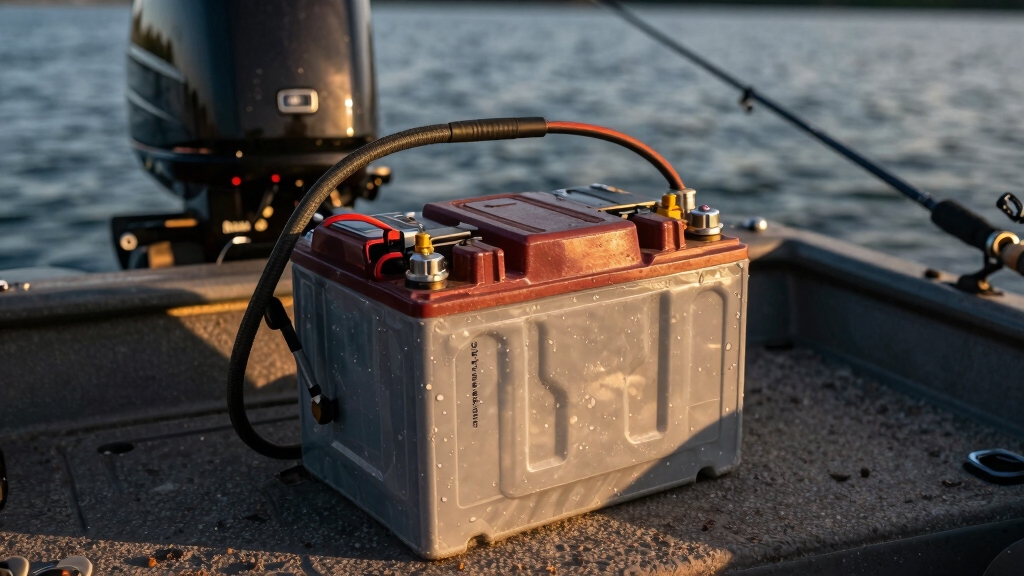
How Long Will a 12V Battery Run a Trolling Motor? Estimates
You can expect a 12V, 100Ah battery to run your trolling motor for about 2 to 5 hours, depending on motor load and speed. Higher speeds or strong currents increase amp draw, shortening runtime markedly.
Battery type also matters: lithium batteries deliver longer, more consistent power than lead-acid types. Using multiple batteries in parallel can extend time on the water.
Keep an eye on battery health and external conditions to optimize performance and know when to replace.
Key Takeaways
- Runtime depends on battery capacity (Ah) and motor current draw; runtime (hours) = battery Ah ÷ motor amps at given speed.
- A 12V, 100Ah battery powering a 40A trolling motor at full speed lasts about 2.5 hours under ideal conditions.
- Higher motor speeds and heavy loads sharply increase amp draw, drastically reducing battery runtime.
- Using multiple batteries in parallel increases total Ah, proportionally extending trolling motor runtime.
- Lithium batteries provide longer runtimes and more consistent voltage than lead-acid, improving overall motor performance.
Understanding Battery Capacity and Amp Hour Ratings
Understanding battery capacity and amp hour (Ah) ratings is essential when estimating how long your trolling motor will run.
Amp hour rating measures the charge a battery delivers over one hour. For instance, a 100Ah battery can supply 20 amps for about five hours under ideal conditions.
Typical trolling motor batteries range from 50Ah to over 110Ah. Proper maintenance and storage, such as keeping batteries in a cool, dry place, can help preserve their capacity and lifespan.
However, rated Ah is idealized; actual usable capacity depends on discharge rate and battery chemistry.
Lead-acid batteries usually provide 50%-80% of their rated Ah, while lithium-ion batteries deliver close to 100%.
Battery voltage, typically 12V for trolling motors, multiplied by Ah rating gives total energy in watt-hours (Wh).
Quiet, eco-friendly option trolling motors are ideal for anglers seeking slow, controlled maneuvering to avoid disturbing fish.
Calculating Runtime Using Battery and Motor Specifications
When you know your battery’s amp-hour rating and voltage along with your trolling motor’s power consumption or current draw, you can calculate an estimated runtime using straightforward formulas.
Knowing your battery’s amp-hour rating and voltage lets you estimate trolling motor runtime easily.
If you have motor power in watts, divide the product of battery capacity (Ah) and voltage (V) by motor power (W): Runtime = (Ah × V) / W. It is important to ensure that the battery voltage matches the motor’s voltage to get an accurate calculation.
For example, a 12V, 100Ah battery powering a 500W motor yields 2.4 hours under ideal conditions.
Alternatively, if you know the motor’s current draw in amps, divide battery capacity by current: Runtime = Ah / A.
A 100Ah battery with a 42A draw lasts about 2.38 hours.
Effects of Motor Speed on Battery Drain
Increasing your trolling motor’s speed sharply raises its current draw, which drains your battery much faster. At low speeds, a 12V motor typically draws around 15 amps, but pushing it to full speed can exceed 40 amps, roughly doubling power consumption. It is important to consider that frequent high current draw can accelerate battery wear and tear.
This exponential increase in current not only shortens runtime but also causes voltage sag due to internal resistance, impairing motor performance. Rapid speed changes induce current surges that accelerate battery wear, especially in lead-acid types.
Maintaining moderate speeds helps stabilize current draw, preserving battery capacity and extending overall life. Additionally, continuous high-speed operation raises battery temperature, reducing efficiency and longevity. It is also important to avoid repeated full discharges since maintaining charge above around 50% helps prolong battery life.
Comparing Battery Types for Trolling Motors
When you’re deciding between lead-acid and lithium batteries for your trolling motor, it’s really important to think about runtime and lifespan. Lead-acid batteries are generally more budget-friendly, but they do come with a catch – they usually have a shorter service life and their energy density isn’t as high. Environmental factors like temperature can also affect battery performance and should be considered to optimize battery endurance.
On the other hand, lithium batteries, particularly the LiFePO4 type, tend to shine in several areas. They offer longer runtimes and a higher cycle life, which means they’ll last you longer overall. Plus, they perform better in tough conditions, making them a solid choice for serious anglers. Sure, they’re pricier upfront, but many find that the benefits outweigh the initial investment. Additionally, LiFePO4 batteries provide enhanced safety with a low risk of thermal runaway or fire, which is critical for use in outdoor and marine environments.
Lead-Acid vs Lithium
Although lead-acid batteries have long been the standard choice for trolling motors due to their lower upfront cost, lithium batteries offer significant advantages in weight, maintenance, and performance that can enhance your boating experience. Proper storage in a cool, dry environment with loosened drag helps preserve battery longevity and performance.
Lithium batteries weigh two to four times less than lead-acid equivalents, improving your boat’s balance, handling, and ease of transport. They maintain stable voltage under load, ensuring consistent motor power, unlike lead-acid batteries whose voltage drops as they discharge. Lead-acid batteries are also known for their steady power supply, which is essential for trolling motors.
Additionally, lithium batteries come with built-in Battery Management Systems, requiring virtually no maintenance, while lead-acid types need regular electrolyte checks and terminal cleaning. Though lithium’s initial cost is higher, their lightweight design, stable output, and minimal upkeep make them a technically superior choice for efficient trolling motor operation, especially when combined with regular maintenance practices.
Runtime and Lifespan
Because runtime and lifespan critically impact your trolling motor’s performance and cost-effectiveness, understanding how different battery types compare is essential. Proper maintenance such as cleaning terminals and avoiding deep discharges can significantly improve battery life and performance.
Deep cycle AGM batteries offer 3-5 years of use with moderate runtime. Wet-cell lead acid batteries last 2-3 years but need more maintenance. Flooded lead-acid batteries require regular electrolyte level checks and benefit from periodic deep equalization charging to extend lifespan and performance maintenance practices.
Lithium Iron Phosphate (LiFePO4) batteries provide superior lifespans of 7-10 years and deliver steadier voltage, extending runtime especially under load. These batteries also feature long-lasting durability that withstands tough conditions and repeated cycling.
| Battery Type | Typical Lifespan | Estimated Runtime (100Ah) |
|---|---|---|
| AGM | 3-5 years | 3-5 hours |
| Wet-Cell | 2-3 years | 2-4 hours |
| LiFePO4 | 7-10 years | 4-6 hours |
Choose batteries matching your motor’s power to maximize efficiency and lifespan.
Impact of External Conditions on Battery Performance
Hey there! Have you ever noticed how strong water currents and wind can really impact your boat’s performance? When those conditions are tough, your motor has to work harder, which means it draws more power from the battery. As a result, you’ll see your battery draining faster than usual. Also, wearing appropriate gear like hip waders can improve your comfort during fishing trips, ensuring you stay dry and safe while managing your boat.
And let’s not forget about boat weight! When you add more weight, it increases the amp draw, which can really cut down on your overall runtime. So, it’s super important to keep an eye on these external factors if you want to get the most out of your 12V battery while you’re out on the water. Managing these elements can make a big difference in how long your battery lasts!
Choosing the right battery type, such as deep-cycle marine batteries, ensures better performance and longer runtime under these challenging conditions.
Water Current Effects
When water currents strengthen, your trolling motor faces greater resistance, causing it to draw substantially more current from the battery and reduce runtime. Proper packaging and preparation are essential when transporting fishing equipment to ensure it remains undamaged during transit, especially under shipping conditions.
Faster currents demand higher thrust, pushing the motor to consume more amperage, which shortens battery life and may cause deeper discharges.
In turbulent or choppy waters, fluctuating loads lead to unpredictable battery drain and potential voltage drops. It is important to remember that motor thrust level directly increases current draw, further impacting how long your battery will last under these conditions.
You should account for these factors when estimating runtime to avoid unexpected power loss.
| Water Current Strength | Motor Load Impact |
|---|---|
| Calm | Low amperage draw |
| Moderate | Increased current draw |
| Strong | High current draw |
| Turbulent | Variable, spiking draw |
Adjust your battery capacity accordingly to maintain reliable performance.
Wind Resistance Influence
After considering how water currents impact your trolling motor’s power draw, it’s important to recognize that wind resistance also plays a meaningful role in battery runtime.
Strong headwinds force the motor to draw significantly higher amperage to maintain speed, potentially reducing runtime by up to 40%. Side winds cause frequent steering adjustments, increasing current draw by 20–30% due to continuous course corrections.
Crosswinds at 19–25 mph require rapid throttle changes, further accelerating battery depletion. Conversely, calm or tailwind conditions lower power consumption, extending runtime. The battery capacity, typically measured in Amp-hour (Ah) rating, determines how much energy your battery can store to manage these varying loads.
Wind gusts create variable loads, making current draw inconsistent and less efficient. In practice, expect 15–40% shorter runtimes in typical windy conditions.
To mitigate these effects, consider higher capacity batteries or parallel setups, and employ pulse-throttle techniques to manage wind-induced extra drain efficiently.
Boat Weight Impact
Although external conditions vary, boat weight remains a critical factor affecting your trolling motor’s battery runtime. Heavier boats demand greater thrust to maintain speed, increasing current draw and accelerating battery depletion.
This higher power consumption reduces the effective runtime of a 12V battery, especially when combined with additional cargo or passengers. Excess weight forces your motor to run at elevated throttle levels, further draining the battery.
Additionally, heavier batteries like lead-acid can worsen this issue compared to lightweight options such as LiFePO4, which improve overall boat performance due to their lighter design. Conversely, reducing boat and battery weight improves power-to-weight ratio, enhancing motor efficiency and extending battery life. Matching motor thrust ratings to your boat’s weight is essential; oversizing adds weight and complexity, while undersizing strains the battery.
Efficient battery chemistry, like lithium, can mitigate weight effects but can’t eliminate the fundamental increase in amp draw caused by heavier loads. Environmental factors such as water type and conditions also impact battery performance, with saltwater fishing environments often demanding more robust equipment and power management strategies.
Signs of Battery Degradation and When to Replace
Since maintaining peak battery performance is crucial for your trolling motor’s reliability, recognizing signs of battery degradation early can save you from unexpected failures.
Monitor voltage: a fully charged 12V battery should read 12.7–13.2V; readings consistently below 12.4V after charging indicate capacity loss.
Under load, voltage must stay above 9.6V for 15–30 seconds; a drop signals internal damage or shorts. Performing a load test provides the most accurate health assessment of the battery.
Visually inspect for bulging, cracks, corrosion, or leakage. These physical signs require immediate replacement.
Performance-wise, expect steady motor speed; slowing or voltage fluctuations during load changes indicate weakening cells.
Also, if the battery struggles to hold charge or voltage rapidly drops post-charge, replace it. Proper maintenance practices can extend battery life and prevent premature failures.
Confirm wiring and connections are clean and secure before diagnosing battery failure.
Typically, replace batteries after 4 years or sooner if these signs manifest.
Tips for Extending Battery Life and Runtime
Regularly optimizing your motor usage can markedly extend your battery life and runtime. Run your trolling motor at lower speeds and avoid excessive thrust to reduce amp draw.
It is essential to consider the total power draw of your trolling motor along with any accessories to accurately estimate battery run-time. Using a battery with higher amp-hour capacity can significantly increase your overall runtime.
Employ pulsed navigation, alternating bursts of throttle with coasting, to save energy up to 32%. Maintain your battery by recharging before depletion, cleaning terminals, and storing it in moderate temperatures.
Minimize auxiliary electrical loads like lights and fish finders to conserve power.
| Tip | Benefit |
|---|---|
| Lower speed settings | Reduces current draw |
| Pulsed navigation | Saves up to 32% energy |
| Regular maintenance | Maintains battery capacity |
Using Multiple Batteries to Increase Runtime
Optimizing motor use can only extend your battery runtime so far before capacity limits take effect.
Optimizing motor efficiency helps, but battery capacity ultimately defines your maximum runtime.
To significantly increase runtime, connect multiple 12V batteries in parallel, which adds their amp-hour capacities while maintaining 12V output. This setup effectively doubles or triples your available energy without altering motor voltage.
When using multiple batteries, keep these points in mind:
- Use batteries of the same type, age, and capacity to prevent imbalance and premature failure.
- Make certain wiring, connectors, and fuses are appropriately rated for increased current demands.
- Monitor for even discharge and charging to avoid overworking any single battery.
Parallel connections extend runtime approximately linearly with total amp-hours. This makes them ideal for longer trolling sessions without upgrading your motor voltage system. However, real-world runtime will still be influenced by factors such as boat size, sea conditions, and tides, so expect some variability in actual performance runtime influences.
Monitoring and Maintaining Battery Health
Monitoring battery health is essential for ensuring reliable performance and extending the lifespan of your 12V battery system.
Use advanced monitoring systems like Minn Kota Battery Monitoring or smart BMS for real-time data on power, runtime, and state of charge.
Calibrate these systems with correct battery chemistry and capacity for accurate readings.
Regularly inspect terminals for corrosion and tightness, and clean them to maintain efficient power delivery.
Test voltage with a multimeter; a fully charged battery reads about 12.6 volts. Perform load tests to detect hidden capacity issues.
Check for parasitic loading if you notice unexpected battery drain, as this is a common cause of rapid depletion.
Avoid deep discharges below 20-50% state of charge, and use chargers compatible with your battery chemistry, especially lithium-specific chargers.
Disconnect batteries while charging to prevent parasitic drain.
Store batteries fully charged, and watch for signs of deterioration to guarantee consistent trolling motor runtime.
Frequently Asked Questions
Can I Use a Car Battery for My Trolling Motor?
You can use a car battery for your trolling motor in a pinch, but it’s not ideal.
Car batteries aren’t designed for deep discharges and will degrade quickly under trolling motor loads.
Expect shorter runtimes and risk of premature failure.
If you must use one, pick a well-maintained, high-capacity battery, avoid draining below 50%, and monitor voltage closely.
For consistent, reliable performance, a deep-cycle marine battery is a better choice.
How Does Water Temperature Affect Battery Performance?
Imagine trying to sprint through thick mud. Cold water does that to your trolling motor, increasing resistance and battery drain.
When water’s cold, your battery capacity drops, especially if it’s lead-acid, cutting runtime drastically. Warmer water lets batteries run efficiently, but extreme heat or cold still harms capacity.
You’ll want lithium-based batteries and insulated cases to keep performance steady and avoid sudden power loss in chilly conditions.
What Safety Precautions Should I Take With Trolling Motor Batteries?
You should always wear gloves and goggles when handling trolling motor batteries to protect against acid burns.
Secure batteries firmly to prevent movement, avoid sparks or flames nearby, and charge in well-ventilated areas to prevent hydrogen gas buildup.
Use proper circuit breakers, avoid direct terminal shorts, and match chargers to battery chemistry.
Inspect batteries regularly for damage and store within recommended temperatures.
Disconnect chargers promptly to avoid overcharging and potential battery damage.
Are Solar Panels Effective for Charging Trolling Motor Batteries?
Just like a knight once relied on his shining armor, you can depend on solar panels to effectively charge trolling motor batteries.
They offer sustainable, efficient charging when you choose high-wattage, monocrystalline panels and a compatible charge controller.
Proper installation, marine-grade wiring, and ideal sun exposure guarantee maximum power output.
Although solar charging is slower than alternators, it’s reliable, eco-friendly, and perfect for extended trips where shore power is unavailable.
How Do I Properly Dispose of Old Trolling Motor Batteries?
You should never toss old trolling motor batteries in regular trash.
Instead, take them to certified recycling centers or hazardous waste facilities.
Many auto parts and marine stores accept used batteries for free recycling.
Before transport, wear gloves and eye protection, tape terminals to prevent shorts, and store batteries upright in a cool, dry place.
For damaged lithium batteries, label them clearly.
Following local regulations guarantees safety and environmental compliance.
Smart Battery Choices That Extend Trolling Motor Run Time
Think of your 12v battery as the fuel tank of a boat piloting a vast lake. Its capacity and condition determine how far you’ll go before refueling.
By understanding amp hours, motor draw, and external factors like waves slowing your journey, you can better predict runtime and avoid unexpected stops.
Regular maintenance and using multiple batteries act like adding extra fuel tanks, extending your voyage efficiently and reliably on the water.