How to Rig a Spawn Sacs for Salmon: Proven Rigging Tips
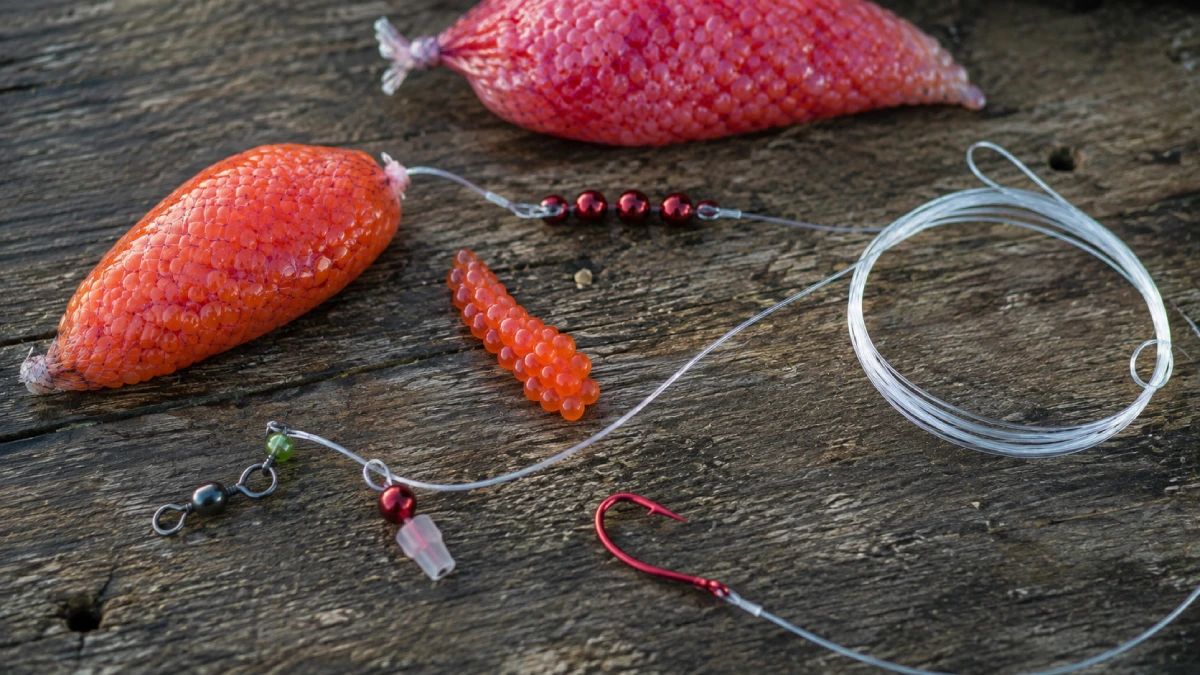
To rig a salmon spawn sac, start by choosing 4×4 mesh and fresh roe clusters sized for your water conditions. Center the roe gently in the mesh, shaping it into a round, compact sac without rupturing eggs.
Secure it tightly with 10–15 wraps of strong thread and a firm knot to prevent loss and maintain durability. Select a rigging method like hook-through for natural drift or egg loop for enhanced hook exposure based on water clarity.
Proper sizing, securing, and rigging optimize presentation and effectiveness. You’ll find detailed tips to refine your technique further.
Key Takeaways
- Use 4×4 mesh to form a compact, round sac with fresh salmon roe for durability and natural presentation.
- Secure sac neck tightly by wrapping thread 10–15 times and tying a strong knot to prevent egg loss.
- Choose rigging method: hook-through for natural drift or egg loop for better hook exposure and sac stability.
- Adjust sac size, mesh, and buoyancy (glow yarn, floatie beads) based on water clarity and current speed.
- Handle eggs gently and maintain cool, dry conditions to preserve freshness and scent effectiveness during fishing.
Choose the Right Mesh and Eggs for Salmon Spawn Sacs
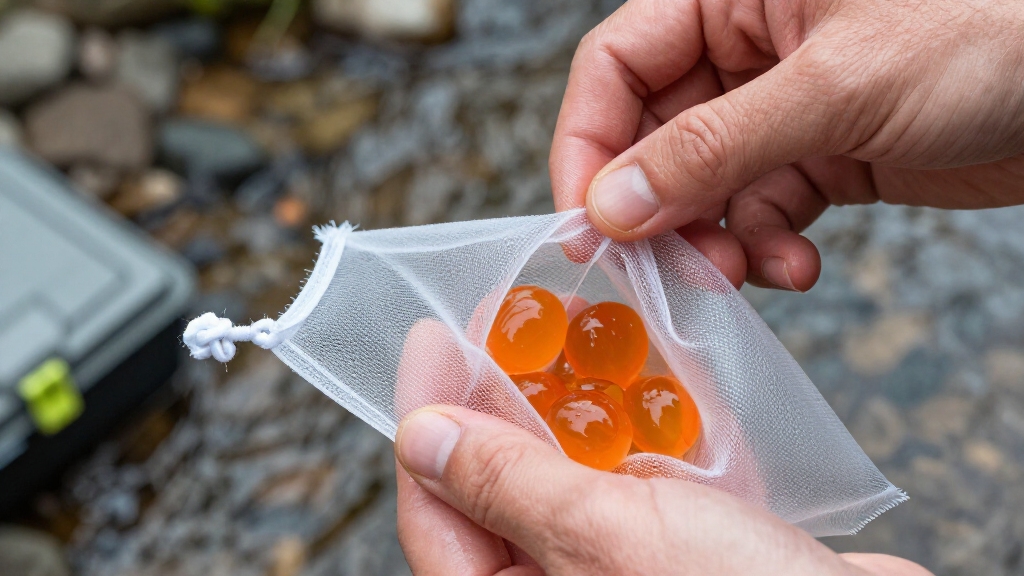
When rigging spawn sacs for salmon, start by selecting a 4×4 spawn netting mesh. Its size is ideal for holding salmon-sized roe clusters securely.
This mesh provides the right balance between containment and flexibility, preventing egg loss while allowing you to shape the sac effectively.
Choose fresh salmon eggs or roe clusters that fit well within the mesh’s dimensions to guarantee a natural presentation.
Use thread like Magic or Miracle Thread to cinch the sac tightly after placing the eggs in the mesh center. Scissors are essential to trim excess thread neatly after tying.
Optional additives such as glow yarn or scent can enhance visibility and attract fish but aren’t necessary at this stage.
Selecting appropriate mesh and eggs lays the groundwork for an effective spawn sac rig.
For best results, handle eggs gently and keep them cool and dry to maintain egg freshness during rigging.
How to Center and Shape the Eggs Into a Round Sac?
To get started, you’ll want to center the eggs right in the middle of your mesh. This step is super important because it ensures an even distribution.
Once you’ve got them in place, gently stretch the mesh a bit.
Next up, pinch those corners together and give them a little twist. This will help you form a nice, compact round sac.
Before you tie everything off, consider squaring off the bundle with your fingers. This little trick will help keep that uniform, spherical shape you’re aiming for. Happy crafting!
Using a rigging technique similar to those used for bait presentation can help maintain the sac’s shape and effectiveness in the water.
Centering Eggs Precisely
Although centering the eggs within the mesh requires careful attention, it’s essential for forming a compact, round spawn sac that performs well in water.
Begin by placing the roe cluster directly in the center of your 4×4 mesh square, guaranteeing an even distribution.
Avoid pushing the eggs too close to the edges, as this compromises structural integrity.
Use your fingers to gently nudge the eggs toward the middle, maintaining a slight mound shape.
This positioning allows the mesh to envelop the eggs uniformly when gathered.
Take care to keep the cluster intact and avoid rupturing individual eggs.
Precise centering guarantees the sac maintains a balanced weight and ideal shape once tied, enhancing durability and natural movement in the current.
Regular inspection and careful handling during the tying process can prevent material damage that might reduce the sac’s effectiveness.
Forming A Round Shape
Pinch all four corners of the mesh together, ensuring the eggs remain centered as you gently twist or rotate the bundle to form a compact, spherical shape.
Keep the mesh taut but avoid compressing the eggs, maintaining their integrity within the sac.
Use controlled, even pressure during twisting to distribute the mesh uniformly around the eggs, minimizing gaps or loose areas.
A well-formed round shape improves bait presentation and durability.
Avoid pulling excessively, which can distort the mesh or damage the roe.
If needed, adjust by slightly repositioning the eggs before final shaping.
This step sets the foundation for secure tying and consistent casting behavior.
Proper shaping also enhances scent dispersion and visibility in water, critical for attracting salmon effectively.
Using natural colors in bait presentation can further improve visibility and appeal when fishing for salmon.
Stretching And Squaring Mesh
After you’ve formed a compact bundle by gathering the corners, gently stretch the mesh to create an even tension around the eggs. This step centers the eggs and helps form a perfect round sac shape.
Use your fingers to square off the mesh, assuring uniform distribution and avoiding bulges or gaps. Proper tension prevents deformation and improves rigging control.
| Step | Purpose |
|---|---|
| Gather corners | Create initial compact bundle |
| Stretch mesh | Even tension, shape control |
| Square mesh | Uniform sac shape |
| Pinch tightly | Maintain form before tying |
| Inspect shape | Confirm round, compact sac |
Consistently stretching and squaring the mesh guarantees the spawn sac remains durable and presents naturally in water. Proper rigging techniques and bait presentation can significantly enhance the effectiveness of your spawn sac in attracting salmon.
How to Tie and Secure Your Spawn Sac?
When you’ve gathered the corners of the mesh to form your sac, securing it tightly with thread is essential to maintain its shape and keep the eggs contained.
Start by pinching the mesh bundle closed and wrap your chosen thread, such as Magic Thread, firmly around the neck about 10 to 15 times.
Begin by pinching the mesh closed and wrap thread tightly around the neck 10 to 15 times.
Pull the thread taut to cinch the sac tightly, ensuring no gaps allow eggs to escape. For added strength, consider reverse wrapping a few turns on the opposite side before tying a secure knot.
Once tied, trim the excess thread close to the knot, but avoid cutting the knot itself.
This tight, reinforced closure preserves the sac’s integrity during casting and water exposure, ensuring a consistent, durable presentation on the hook.
Using a reliable knot such as the improved clinch knot or uni knot will help keep your spawn sac securely attached during use.
Picking the Ideal Spawn Sac Size for Different River Conditions
Although it might be tempting to use one standard spawn sac size, selecting the ideal sac depends heavily on the river conditions you’ll encounter.
In off-color or turbulent water, larger sacs increase visibility and release more scent, helping salmon locate your bait amid reduced clarity.
Conversely, in clear, calm water, smaller sacs provide a subtle, natural presentation that minimizes spooking wary fish.
You should also consider current speed; faster flows favor larger sacs that hold shape and scent longer, while slow currents allow smaller sacs to drift naturally.
Adjust your mesh size accordingly—4×4 mesh suits larger sacs, while tighter mesh works for smaller offerings.
For best results, consider that sonar performs well in murky water conditions, which can inform your approach to selecting spawn sac size and presentation.
Add Visibility and Scent to Your Spawn Sac
Want to boost your spawn sac’s effectiveness? It’s all about adding some visibility and scent! Try incorporating glow yarn or floatie beads. These little additions work wonders in low-light or murky water, really catching the eye of salmon.
And let’s not forget about scent! Adding some directly to the sac or using scented additives can create a strong odor trail, making it easier for fish to find your bait. Just remember, it’s all about balance. You want your rig to look natural while also maximizing attraction. Happy fishing!
Using line color that blends with water conditions can further reduce spooking and increase strike rates.
Enhancing Visibility Techniques
Since visibility plays a vital role in attracting salmon, you can enhance your spawn sac’s effectiveness by incorporating additives like glow yarn, floatie beads, or scent.
Glow yarn increases sac visibility in low-light or murky water conditions by emitting subtle luminescence that salmon can detect.
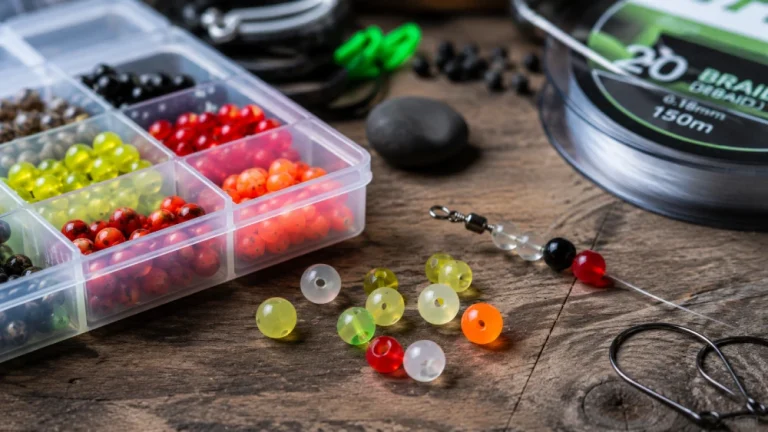
Floatie beads add buoyancy, preventing the sac from sinking too quickly and maintaining it within the strike zone longer.
When adding glow yarn, weave a small segment into the mesh before tying the sac to ensure secure attachment.
Floatie beads should be placed near the top of the sac to optimize flotation without disrupting the sac’s shape.
These visibility techniques improve your chances of attracting salmon by making your spawn sac more noticeable in varied water conditions.
Using a rubber-coated mesh for your spawn sac can further reduce tangles and protect the sac’s integrity during casting and retrieval.
Adding Scent Effectively
Incorporating scent into your spawn sac markedly boosts its attractiveness to salmon by mimicking natural cues in the water.
To add scent effectively, you want to guarantee the aroma disperses consistently without compromising the sac’s integrity.
Follow these steps:
- Apply scent additives during construction: Integrate scented yarn or drops directly into the mesh before tying the sac to embed the odor evenly.
- Use concentrated salmon attractants: Select commercially available oils or gels known for long-lasting potency that won’t degrade the mesh.
- Seal the sac tightly: Wrap the thread firmly to prevent scent loss and avoid oversaturating the mesh, which can cause premature bait breakdown.
This approach guarantees your spawn sac maintains an enticing scent trail, increasing strike rates while preserving bait durability. For best results, consider using fish-attracting additives such as garlic or amino-acid cues to enhance the lure’s appeal naturally.
Using Glow And Floaties
Frequently, adding glow yarn and floatie beads to your spawn sac enhances its visibility and buoyancy. This makes it more effective in attracting salmon.
Glow yarn emits subtle light, increasing sac detectability in low-light or murky water conditions. Floatie beads add lift, preventing the sac from sinking too quickly and maintaining a natural drift.
Both elements complement scent additives by drawing salmon visually and keeping the sac in the strike zone longer.
| Benefit | Effect on Salmon Fishing |
|---|---|
| Glow Yarn | Enhances visibility in murky water |
| Floatie Beads | Improves buoyancy and natural drift |
| Combined Use | Maximizes attraction and hook-up rate |
Incorporate these materials carefully for peak sac performance and consistent salmon attraction.
How to Keep Your Spawn Sac Durable on the Water?
Maintaining the durability of your spawn sac on the water requires careful attention to how tightly you wrap the thread and how well you form the sac’s shape.
Durability of your spawn sac depends on tight thread wrapping and precise shaping for lasting performance.
To maximize durability, focus on these key steps:
- Wrap the thread tightly around the bundle, aiming for 10 to 15 secure turns before cinching the knot. This ensures the sac stays closed during casting and current exposure.
- Form a compact, spherical sac by centering the eggs and evenly twisting the mesh. A well-shaped sac resists tearing and holds bait longer.
- Trim excess thread close to the knot without cutting it. This prevents unraveling while avoiding weakening the closure.
Applying these techniques will help your spawn sac maintain integrity, providing consistent presentation and extended bait life on the water.
Spawn Sac Rigging: Hook-Through vs. Egg Loop Methods
Once you’ve secured a durable, well-formed spawn sac, the next step is rigging it effectively on your hook.
You can choose between the hook-through and egg loop methods. With the hook-through technique, you thread the hook directly through a few mesh holes near the sac’s top, holding it lightly while maintaining a natural shape.
This method offers simplicity and keeps the sac secure during casting and drift. Alternatively, the egg loop method uses a loop of thread or thin wire tied around the hook shank to capture the entire sac.
This approach enhances hook exposure and keeps the sac high on the shank, improving hook-up rates. Both methods require a small hook for subtle presentation and should be matched to water conditions and fishing style.
Adjust Your Spawn Sac Rig for Clear and Off-Color Water
How do water clarity and color impact your spawn sac rig choices? In clear water, you want a subtle, smaller sac to avoid spooking salmon. Use finer mesh and a smaller hook for a natural presentation.
In clear water, opt for a subtle, smaller sac with finer mesh and a smaller hook to avoid spooking salmon.
Conversely, off-color or murky water calls for a larger, more visible sac to attract fish by scent and sight.
Adjust your rig by considering these factors:
- Use smaller sacs with finer mesh and less buoyancy in clear water for a low-profile approach.
- Increase sac size and add glow yarn or floatie beads in off-color water to enhance visibility and scent dispersion.
- Choose rigging methods that stabilize the sac position according to water conditions. Use hook-through for natural drift in clear water, and bait button for better control in turbulent off-color water.
These adjustments optimize your spawn sac’s effectiveness.
Frequently Asked Questions
Can I Reuse Spawn Sacs After a Fishing Trip?
You can reuse spawn sacs after a fishing trip, but their durability depends on handling and condition.
Inspect the sac for tears, loose eggs, or weakened mesh. Tight wrapping and proper knotting increase lifespan, but sacs often degrade after repeated casts or prolonged water exposure.
If the sac remains intact with minimal damage, you can reuse it. Otherwise, replacing it guarantees peak presentation, scent release, and hooking efficiency during your next outing.
What Is the Best Storage Method for Unused Spawn Sacs?
The best way to store unused spawn sacs is to keep them cool and moist.
Place them in a sealed container or zip-lock bag with a damp paper towel to maintain humidity.
Refrigerate at around 34-40°F (1-4°C) but avoid freezing, which damages eggs.
Check periodically to prevent mold or drying out.
Proper cold, moist storage preserves viability and scent, ensuring your spawn sacs stay effective for your next fishing trip.
How Long Do Spawn Sacs Remain Effective in Cold Water?
Spawn sacs typically remain effective in cold water for about 4 to 6 hours, depending on conditions like water temperature and current strength.
You’ll notice scent and visual appeal gradually diminish after this period.
To maximize effectiveness, keep sacs tightly wrapped and well-formed to resist wear.
If you fish in very cold water, sacs might last slightly longer.
However, plan to replace them regularly to maintain peak attraction and presentation.
Are Synthetic Eggs Effective Compared to Real Roe?
Synthetic eggs can be effective, consistent, and durable, but they don’t match real roe’s scent, texture, or natural appeal.
You’ll find synthetic eggs hold up better during casting and resist damage.
Real roe releases natural oils that trigger salmon’s feeding instincts.
You should consider water clarity, fishing pressure, and target species.
Synthetic eggs excel in longevity and presentation, but real roe often produces higher strike rates due to authentic chemical cues.
Can I Use Spawn Sacs for Species Other Than Salmon?
Yes, you can use spawn sacs for species other than salmon, such as trout or steelhead.
Adjust sac size and mesh accordingly; smaller sacs suit trout or clear water conditions.
Rigging methods stay similar but may require smaller hooks or subtler presentations.
Enhancing scent and visibility helps attract different species.
Master the Art of Rigging a Salmon Spawn Sac
Rigging your spawn sac is like crafting a key to release the river’s secrets. Each knot and placement symbolizes your connection to the salmon’s life cycle, blending precision with patience.
By choosing the right materials and methods, you guarantee your sac moves naturally, mimicking real eggs and inviting strikes.
Remember, a well-prepared rig not only improves your catch but honors the delicate balance beneath the water’s surface. Keep refining; it’s where skill meets nature’s rhythm.