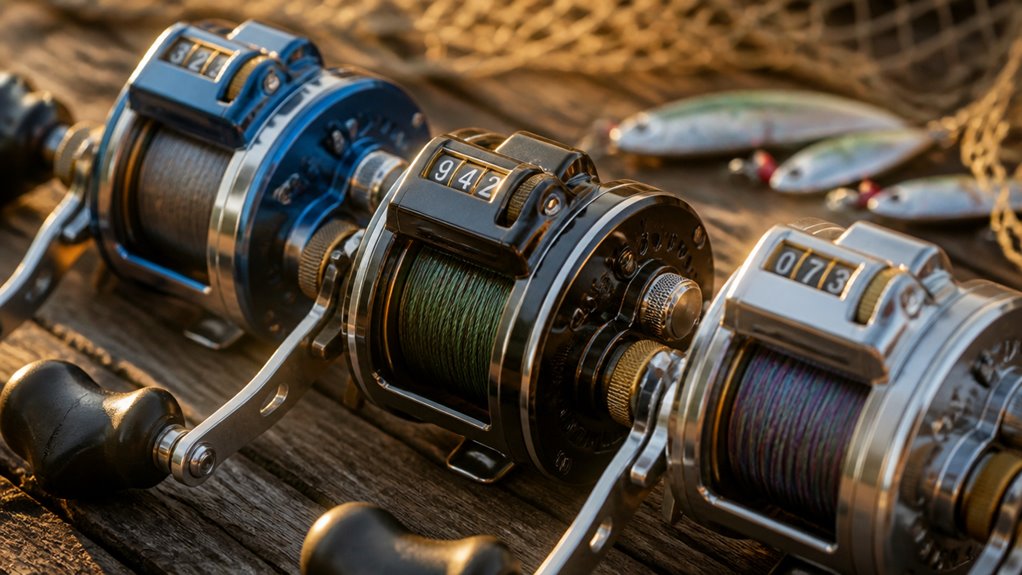
Line Counter Fishing Reels Reviews: Features, Performance & Value
When choosing a line counter fishing reel, you’ll want to balance your fishing style with your budget to get precise, durable, and smooth performance. Entry-level reels with one ball bearing suit basic trolling.
Professional models offer four to five bearings for enhanced accuracy, ideal for walleye fishing. Premium reels deliver rugged durability, higher drag pressure, and lighter low-profile designs.
Reliable calibration and corrosion resistance are key for freshwater or saltwater use. Exploring further will help you find the perfect reel match.
Key Takeaways
- Line counter reels with smooth ball bearing drives improve retrieval speed and precision in tracking line length.
- Premium reels offer advanced calibration options, ensuring accurate depth measurement with various line types and diameters.
- Durable corrosion-resistant materials and reliable drag systems enhance reel longevity for both freshwater and saltwater use.
- Entry-level reels with one ball bearing suit casual trolling, while professional models with four to five bearings support serious anglers.
- Ergonomic handles and left/right retrieve options increase comfort during long fishing sessions and improve reel usability.
Choosing the Right Line Counter Reel for Your Fishing Style and Budget
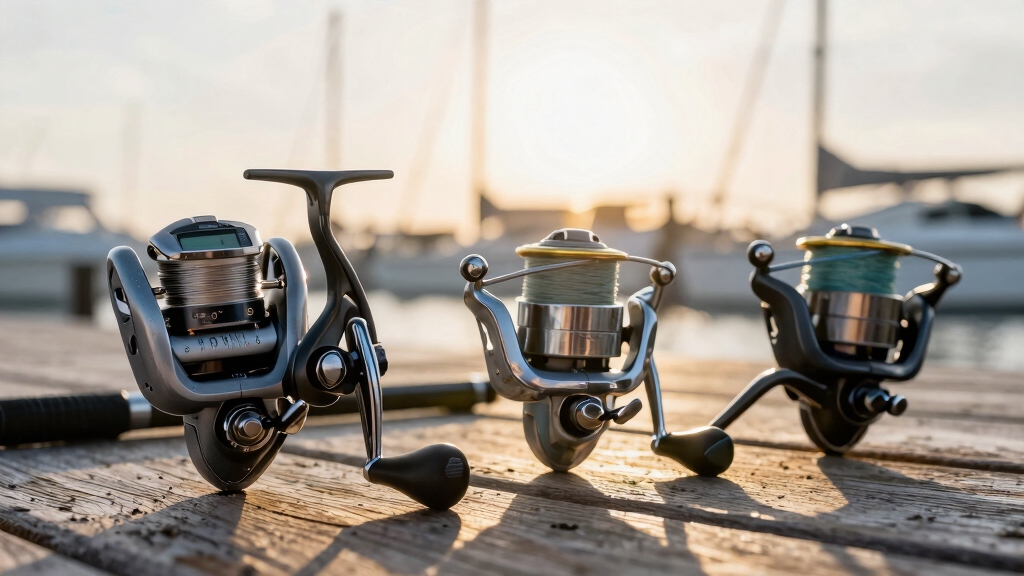
When selecting a line counter fishing reel, you’ll want to balance your fishing style with your budget to guarantee peak performance and value.
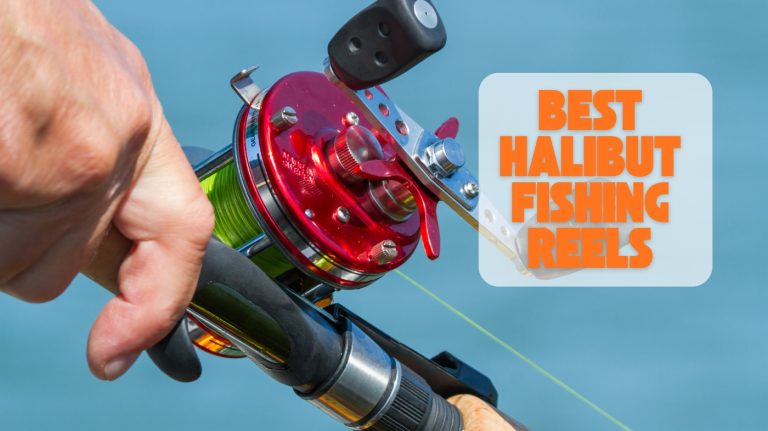
Entry-level reels with one ball bearing or bushings suit basic trolling and cost less. They offer various frame and handle designs to match your preferences.
Entry-level reels with single ball bearings or bushings are affordable and versatile for basic trolling needs.
If you target walleye or require smoother operation, professional-quality reels with four to five ball bearings provide enhanced precision and performance.
Premium reels, priced higher, bring rugged durability, more drag pressure, and lighter low-profile options ideal for deep diving or targeting larger species.
Consider your primary fishing conditions and species to decide between round or low-profile frames and left or right hand retrieves.
This approach makes certain you invest in a reel that complements your technique without overspending.
Additionally, reels with integrated line counters can significantly improve depth control and lure presentation during trolling.
Key Features That Impact Line Counter Reel Performance for Trolling
Because accurate trolling depends on consistent line measurement and smooth reel operation, understanding the key features that impact line counter reel performance is essential for every angler.
First, precision in the line counter mechanism itself is vital. It should calibrate accurately with your chosen line type and diameter to maintain consistent lead lengths.
Next, smooth ball bearing drives or bushings reduce resistance and enhance both retrieval speed and angler control.
You’ll want a reliable drag system, like Carbonite drag in premium models, that handles heavy loads without slipping.
The reel’s build quality also matters. Corrosion-resistant materials and durable gearing guarantee longevity in freshwater or saltwater conditions.
Finally, ergonomic handle designs and left/right retrieve options improve comfort and adaptability during long trolling sessions.
Additionally, adjustable tension systems similar to those used in spring-loaded flags on planer boards can enhance line control and sensitivity during trolling.
Comparing Low-Price, Professional, and Premium Line Counter Reels
Although all line counter reels serve the basic purpose of measuring trolling line length, you’ll find significant differences between low-price, professional, and premium models in terms of build quality, performance features, and intended applications.
Low-price reels typically include one ball bearing or bushings, offering basic functionality ideal for casual anglers.
Professional reels upgrade to four or five ball bearings, delivering smoother performance and power handles for walleye trolling.
Premium reels retail between $200 and $250, featuring rugged construction, increased drag pressure, and lighter low-profile designs suited for deep diving and targeting large species.
- Low-price reels focus on entry-level trolling with basic components.
- Professional reels enhance smoothness and power for serious anglers.
- Premium reels offer advanced drag systems and durability for specialized techniques.
Choosing depends on your fishing style and budget. Additionally, many premium reels incorporate 7 ball bearings plus 1 roller bearing to ensure smooth operation and long-lasting performance.
Best Line Counter Reels for Freshwater and Saltwater Fishing
Selecting the best line counter reel for both freshwater and saltwater fishing requires considering durability, corrosion resistance, and accurate depth tracking.
Choosing a line counter reel demands durability, corrosion resistance, and precise depth tracking for all fishing environments.
You’ll want reels like the Okuma Convector B Series, which feature corrosion-resistant frames, oversized brass gearing, and a Carbonite drag system to handle heavy loads in diverse environments.
For freshwater anglers targeting walleye, professional quality reels with silky smooth ball bearing drives and adjustable handles provide precise control.
If you fish saltwater or deep freshwater spots, premium reels offer rugged designs, higher drag pressure, and lighter low-profile models ideal for deep diving crankbaits.
Entry-level options work for basic trolling but may lack longevity in saltwater.
Ultimately, choose a reel that matches your fishing conditions and guarantees reliable line measurement to improve your catch success.
Additionally, considering reels with advanced drag systems ensures smooth and dependable performance when battling aggressive fish.
How to Calibrate Your Line Counter Reel for Accurate Trolling?
Calibrating your line counter reel accurately is vital for maintaining consistent trolling leads and improving your fishing precision.
To get a reliable reading, start by fully spooling your reel with the specific line type and diameter you plan to use.
Then, follow these steps:
- Pull out a measured length of line, usually 100 feet, and check the reel’s counter reading.
- Adjust the calibration setting if your reel allows it, ensuring the counter matches the actual length.
- Mark this calibration on your reel or in your notes for future reference, especially when switching line types.
Accurate calibration helps you maintain consistent lead distances, essential for targeting fish at precise depths during trolling.
This process applies equally to both round frame and low-profile models.
Choosing the correct reel size also plays a crucial role in line capacity and overall fishing success, especially when targeting larger salmon with long runs and strong fights, as detailed in the line capacity guidelines.
Frequently Asked Questions
How Do Line Counter Reels Affect Fish Fighting Techniques?
Line counter reels help you monitor how much line you’ve let out, which directly influences your fish fighting strategy.
By knowing your exact depth, you can adjust your drag and rod angle precisely to tire the fish effectively. This control prevents line breakage and improves hook sets.
You’ll also manage lead lengths better during trolling, maintaining consistent pressure and improving your chances of landing the catch without losing control.
Can I Use Line Counter Reels for Casting or Only Trolling?
You can technically use line counter reels for casting, but they’re primarily designed for trolling. Their heavier build and line counter mechanisms may affect casting distance and smoothness.
If you focus on trolling, they excel by tracking your line depth accurately. For casting, especially with lighter lures, a traditional reel might perform better.
What Maintenance Is Recommended to Extend Reel Lifespan?
To keep your reel running like a well-oiled machine, regularly clean it after each trip.
Rinse off saltwater or dirt with fresh water, then dry thoroughly.
Lubricate the bearings and gears with quality reel oil to prevent rust and wear.
Check drag washers and line counter mechanisms for smooth operation.
Store your reel in a dry place, avoiding extreme temperatures.
Proper maintenance extends lifespan and guarantees consistent, reliable performance on every cast or troll.
Are There Digital Line Counters Compatible With Traditional Reels?
Yes, you can find digital line counters compatible with traditional fishing reels. These devices typically attach externally, allowing you to retrofit your existing setup without replacing the reel.
They use sensors or optical systems to measure line payout accurately. When choosing one, make certain it matches your reel’s frame style and retrieve direction.
Digital counters offer precise depth tracking, enhancing trolling effectiveness, especially if your reel lacks built-in electronic counters.
How Do Environmental Conditions Impact Line Counter Reel Accuracy?
You should know that even a 10% change in water temperature can affect line counter accuracy.
Environmental conditions like temperature shifts, water salinity, and debris impact the reel’s calibration and line tension.
Cold water can contract your line, while saltwater may cause corrosion, altering spool rotation.
To maintain precision, regularly calibrate your reel for the specific conditions you’re fishing in. This ensures consistent lead lengths and reliable trolling depth.
Choose the Right Line Counter Reel for Smarter Fishing
Now that you’ve explored the key features and options, choosing the right line counter reel feels like tuning a vintage pocket watch. Precision matters.
Whether you’re trolling freshwater lakes or braving saltwater waves, your reel should match your style and budget for peak performance.
Don’t forget to calibrate it carefully to guarantee accurate line measurement.
With the right reel in hand, you’re set to fish smarter, not harder, every time you cast out.