
How to Fish for Stingray: Easy Step-by-Step Guide
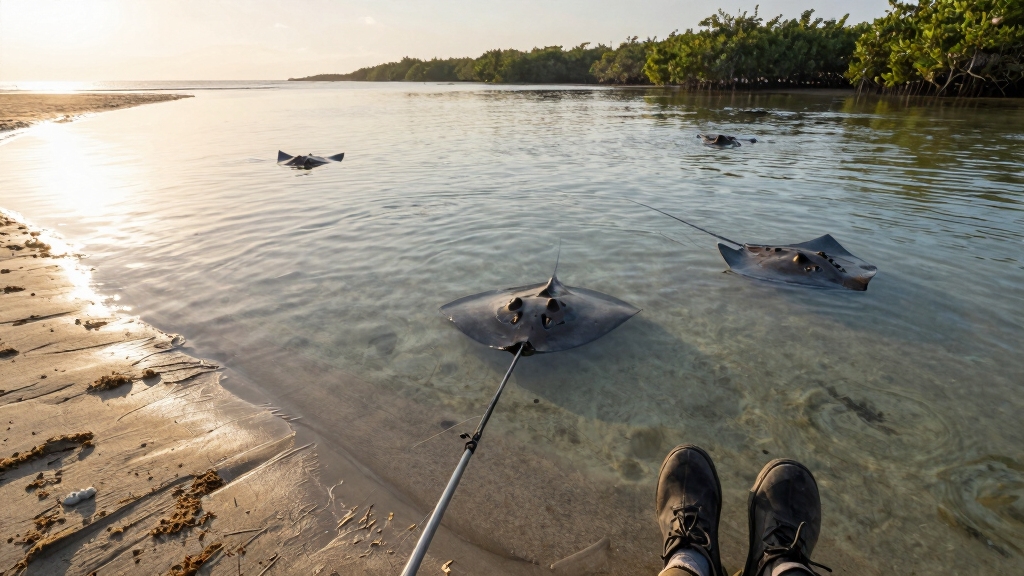
To fish for stingrays, focus on warm, shallow waters with sandy or muddy bottoms like bays or estuaries during low or outgoing tides.
Use strong, oily or crustacean baits such as sardines or shrimp to attract them. Present your bait on heavy-action rods with 30–50 lb braided line and abrasion-resistant leaders.
Employ sliding-lead rigs and gentle boat drifts to keep your bait naturally positioned.
Recognize their subtle bite patterns and handle cautiously to avoid venomous spines.
Discover advanced tips to maximize your stingray catch success.
Key Takeaways
- Target sandy or muddy flats in estuaries or shallow bays during low or outgoing tides for higher stingray activity.
- Use oily fish, squid, or crustacean baits that emit strong scents and maintain durability on soft substrates.
- Select heavy-action rods paired with 30–50 lb braided or nylon lines and abrasion-resistant leaders for strength and sensitivity.
- Employ sliding-lead or pulley rigs to present bait naturally while minimizing snags in soft-bottom environments.
- Detect bites by watching for initial tugs or slow line movement, then set the hook firmly and handle stingrays carefully.
Where to Find Stingrays?
Although stingrays inhabit diverse environments, you’ll typically find them in sandy beaches, bays, estuaries, or shorelines where surfcasting is effective. These areas provide soft substrates essential for stingrays’ camouflage and feeding.
Stingrays favor sandy beaches and estuaries with soft bottoms ideal for camouflage and feeding.
When fishing from a boat, focus on soft bottoms, such as mud or sand, where stingrays glide and forage. In freshwater systems like the Amazon River, stingrays prefer mud and sand bottoms as well.
They tend to move into shallower waters during settled, warm weather, especially in shallow, warm zones with smaller tides. Targeting stingrays during low water or the last two hours of an outgoing tide improves your chances.
Understanding these habitat preferences allows you to select prime locations for stingray fishing, enhancing efficiency and catch rates. Using depth sounders can help identify these soft bottom areas and improve your success.
Best Baits to Attract Stingrays
Selecting the right bait markedly increases your chances of attracting stingrays, as these bottom feeders rely heavily on scent and movement to locate prey.
You should use oily fish like sardines, mackerel, or herring, which emit strong scents that stingrays detect easily.
Cephalopods such as squid and cuttlefish are also effective due to their distinct smell and texture.
Crustaceans, including shrimp, peeler, fiddler, and soft crabs, provide natural movement and scent cues.
Additionally, marine worms like king ragworms and lugworms, often mashed to enhance their odor, can be highly attractive.
When using cunchi catfish, remove spines with pliers to avoid snagging.
Employing baits that combine scent and subtle motion increases your likelihood of provoking a stingray’s feeding response effectively.
Understanding the habitat preferences of stingrays can help you select the best fishing spots to use these baits.
Choosing Rods and Lines for Stingray Fishing
Choose a powerful rod paired with sturdy nylon or braided line to withstand the strength and abrasive environment of stingray fishing.
Select a robust rod with durable nylon or braided line to handle stingray strength and rough conditions.
Opt for rods with a heavy action rating, typically 15-30 pounds, to manage the powerful runs and sudden pulls characteristic of stingrays.
Braided lines offer superior abrasion resistance and sensitivity compared to monofilament. This is essential when fishing over sandy or rocky substrates where stingray tails can cause fraying.
Use a test strength of at least 30-50 pounds to prevent breakage during prolonged fights.
Incorporate a strong, abrasion-resistant leader to protect against the stingray’s rough skin and tail barbs.
Regularly inspect your line and leader for any damage after each catch. Unnoticed frays can compromise gear integrity and result in lost fish during critical moments.
For optimal performance, consider rods with fast action to ensure quick hook sets and enhanced sensitivity during aggressive strikes.
Setting Up Stingray Fishing Rigs
When you’re gearing up for stingray fishing, it’s essential to have the right tackle. You want a powerful rod that can handle their strength, along with a durable line—either nylon or braided—coupled with a robust leader. Trust me, you’ll need that toughness to deal with the stingrays’ abrasive tails!
Now, let’s talk about rig setups. Simple is often best, so think about using sliding-lead or short-stack configurations. These setups are effective because they keep your bait presented nicely while reducing the chances of snagging. Plus, sturdy hooks are a must to ensure you don’t lose your catch.
Another tip? Consider using pulley rigs or droppers. These can help you adjust your fishing depth easily, which can be really handy depending on the bottom conditions. This way, you can improve your hook-up rates and make the most of your fishing experience!
For line strength, opting for a 30–50 lb test braid is recommended to handle the abrasive environment and powerful runs when targeting stingrays.
Choosing Strong Tackle
Equip yourself with a powerful rod paired with sturdy nylon or braided line and a strong leader to withstand the stingray’s forceful runs and abrasive tail nodules.
The tackle must endure intense abrasion and sudden tension during a stingray’s fight. Choose materials with high tensile strength and abrasion resistance to prevent line failure.
Consider thicker diameter lines to resist cutting from nodules on the stingray’s tail.
Use a rod rated for heavy-duty saltwater fishing, capable of absorbing shocks.
Select braided or nylon lines with a minimum test strength of 30-50 pounds.
Attach a fluorocarbon or wire leader to withstand abrasion from the stingray’s tail.
Regularly inspect the line for frays and replace worn components immediately.
Strong tackle guarantees control and reduces lost catch risk.
For reliable drag performance during powerful runs, opt for reels with multi-disc carbon fiber drag systems that provide smooth and consistent stopping power.
Effective Rig Configurations
Building on the importance of strong tackle, setting up an effective rig tailored for stingray fishing enhances your control and bait presentation.
Use a simple sliding-lead rig or a short-stack rig, incorporating sturdy hooks sized for large mouths.
Attach a strong, abrasion-resistant leader to prevent damage from stingray tail nodules.
Consider pulley rigs or pulley droppers to vary bait depth and reduce snags on soft or uneven bottoms.
Position your bait, such as oily fish or crustaceans, securely on the hook to withstand aggressive strikes.
Make sure all knots are tight and inspect lines frequently for frays.
By optimizing rig configuration, you maintain bait integrity, improve hook-up rates, and manage stingray behavior effectively.
This increases your chances of a successful catch.
Selecting swivels with corrosion-resistant materials ensures durability and prevents gear failure in harsh saltwater conditions.
Shore Fishing Techniques for Stingrays
When fishing for stingrays from the shore, focus on timing your casts during the last two hours of the outgoing tide on shallow, sandy beaches where stingrays frequently feed.
This period optimizes bait exposure and increases your chances of attracting stingrays, which use their keen olfactory senses to detect pungent baits.
Use sturdy rods and strong leaders to manage powerful runs and potential snags on the bottom.
Scout beaches during balmy weather with smaller tides for ideal conditions.
Use oily fish or crustaceans as bait to mimic stingrays’ natural diet.
Cast beyond breaking waves but remain aware of underwater contours.
Maintain a high rod tip to absorb shocks and prevent line breakage.
Plan your fishing activity by understanding tidal cycles that influence feeding behavior and distribution during migrations.
Boat Fishing Techniques for Stingrays
When you’re out boat fishing for stingrays, it’s all about finding those soft-bottom areas. You know, places like sandy or muddy flats where these rays often glide around.
It’s kind of their favorite hangout!
Now, when it comes to your rig, think stability and sensitivity. Using setups like sliding-lead or pulley rigs can really help you keep your bait in position while also allowing you to feel those subtle bites.
It’s amazing how much difference the right rig can make!
So, remember—targeting the right substrates and using the right gear is key.
It definitely boosts your chances of reeling in a stingray! Happy fishing!
For bait, using durable, scented options like Fishbites E-Z Shrimp can improve attraction and retention in warm water conditions.
Targeting Soft Bottoms
To effectively target soft bottoms:
Focus on estuaries, bays, or shallow coastal flats with fine sand or mud.
Observe water clarity and temperature; stingrays prefer warmer, settled conditions.
Avoid rocky or heavily vegetated areas that stingrays seldom inhabit.
Position your boat to drift gently over identified soft-bottom patches, maximizing bait exposure.
Employing this approach increases your chances of encountering stingrays in their preferred habitats.
Sustained winds that create wind-driven currents can concentrate baitfish near soft bottoms, improving stingray feeding opportunities.
Rig Setup Strategies
Optimize your rig setup by selecting strong, corrosion-resistant components designed to withstand stingrays’ powerful movements and abrasive environments.
Use a sturdy rod paired with heavy-duty nylon or braided line to maintain tension during sudden runs and prolonged submergences.
Attach a robust leader, typically fluorocarbon or mono, to resist abrasion from sandy bottoms and stingray tail nodules.
Choose simple rigs like sliding-lead or short-stack configurations to minimize snags while allowing natural bait presentation.
Consider pulley rigs to adjust bait depth dynamically, improving strike rates in varying bottom profiles.
Use strong, sharp hooks sized appropriately to penetrate tough stingray mouths.
Regularly inspect your line and terminal tackle for damage caused by stingray encounters, replacing components as needed to guarantee reliability and effectiveness throughout your fishing session.
Selecting a rod with corrosion-resistant materials can enhance durability and performance in harsh marine environments.
Recognizing Stingray Bites and Taking the Hook
Although stingray bites can be subtle, you’ll notice a distinct pattern that sets them apart from other fish strikes.
Stingrays often give a short tug followed by a pause, as they sit with the bait in their mouths. You’ll then feel a slow, steady flow of line as the ray swims away, sometimes accompanied by a vertical whip or deep runs.
Key signs to recognize stingray bites include:
- Initial short tug followed by inactivity
- Slow, steady line movement indicating ray’s swim
- Vertical whipping motion on the rod tip
- Resistance varying with deep, up/down channel runs
When you detect these, tighten your line and prepare to set the hook firmly to secure the stingray.
Handling Stingrays Safely
Once you’ve secured the stingray on your line, your focus shifts to safe handling to prevent injury and minimize stress to the animal. Always avoid placing your hands, legs, or face near the tail, as the venomous barb can inflict serious wounds.
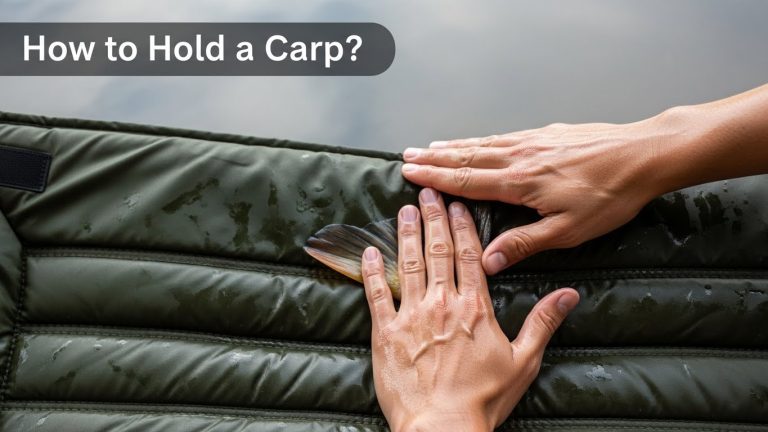
Use a bait towel or rag to firmly grasp the stingray’s disc, ensuring control without excessive pressure. Position the stingray on a flat surface and employ a tool, such as a hook remover or pliers, to carefully extract the hook.
Keep clear visual contact with the barb throughout to avoid accidental punctures. After hook removal, flip the stingray over gently to prepare for release or further processing.
Handle the stingray efficiently to reduce handling time, thereby limiting physiological stress and enhancing post-release survival.
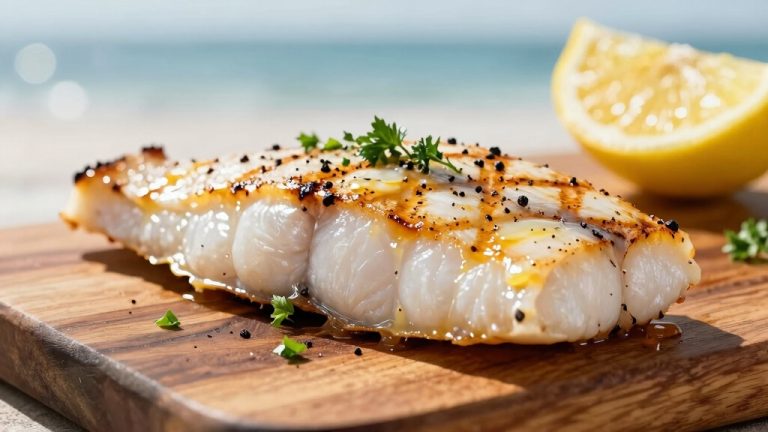
Releasing or Keeping Stingrays for Meat
When deciding whether to release or keep a stingray, you need to assess its condition and the legality of retention in your area.
Evaluate the stingray’s vitality. If it’s lethargic or injured severely, releasing may lower survival chances.
Confirm local regulations to avoid legal issues.
If keeping for meat, guarantee humane dispatch and proper handling to preserve quality.
Consider these factors:
- Legal size limits and seasonal restrictions
- Physical condition and injury severity
- Intended use: immediate consumption or storage
- Environmental impact and population sustainability
Frequently Asked Questions
What Time of Day Are Stingrays Most Active for Fishing?
You’ll find stingrays most active during the last two hours of the outgoing tide, especially in shallow waters.
They prefer settled, warm weather and move into shallower areas then, making low water periods ideal for fishing.
Target smaller tides on balmy days for better success.
Pay attention to tidal changes and water temperature, as these factors influence stingray activity and improve your chances of detecting their presence through subtle bites.
How Do Weather Changes Affect Stingray Fishing Success?
Weather changes influence stingray behavior considerably. You’ll find stingrays move into shallower waters during settled, warm weather, improving your fishing success.
Conversely, cold fronts or rough conditions often push them deeper or into hiding, reducing bites. Stable, warm conditions increase their activity and feeding.
Plan your trips accordingly. Monitoring weather patterns allows you to predict stingray movements and adjust your fishing tactics for better results.
Can Stingrays Be Caught Using Artificial Baits or Lures?
Lures lack lure: stingrays seldom strike synthetic baits, showing scant success with artificial lures.
Their sensory systems favor strong scents and natural textures, making live or oily fish, cephalopods, and crustaceans far more effective.
Because stingrays rely on olfactory cues to track prey, you’ll find that pungent, natural baits outperform artificial ones.
While incidental captures occur, scientific observation confirms artificial lures rarely provoke targeted strikes in stingrays.
What Are Common Mistakes Beginners Make When Fishing for Stingrays?
You often make mistakes like using ineffective lures instead of pungent natural baits,
underestimating the need for powerful tackle, or failing to scout shallow, warm waters during smaller tides.
Beginners misinterpret stingray bites, missing subtle tugs and vertical whips.
You might mishandle the stingray by ignoring tail safety precautions or lifting it improperly,
causing stress or injury.
Also, neglecting to check line frays after fights reduces your gear’s reliability.
How Long Does a Typical Stingray Fight Last on the Line?
When you’re in the thick of it, a typical stingray fight on the line lasts anywhere from several minutes up to 20 minutes. This depends on its size and stamina.
Stingrays use deep runs, vertical whips, and suction techniques, so you’ll need to keep your rod tip high to absorb shocks. Stay alert; the battle can shift quickly.
Careful line management is essential to avoid break-offs during this prolonged struggle.
Fish Smart, Handle Safer: The Stingray Advantage
Fishing for stingrays requires precise techniques and safety measures. Did you know stingrays can detect prey using electroreceptors, sensing electrical signals as low as 0.01 microvolts?
This highlights the importance of using appropriate baits and rigs to successfully attract them. By understanding their behavior, selecting proper gear, and handling them carefully, you’ll improve your catch rate.
Make certain both your safety and the stingray’s well-being during release or harvest.

One Comment