Stockingfoot Waders vs Bootfoot Waders: Which Is Better?
When choosing between stockingfoot and bootfoot waders, consider your priorities.
Stockingfoot waders provide flexible, sock-like neoprene booties. This lets you pick boots with specific traction, insulation, and support, enhancing mobility and customization.
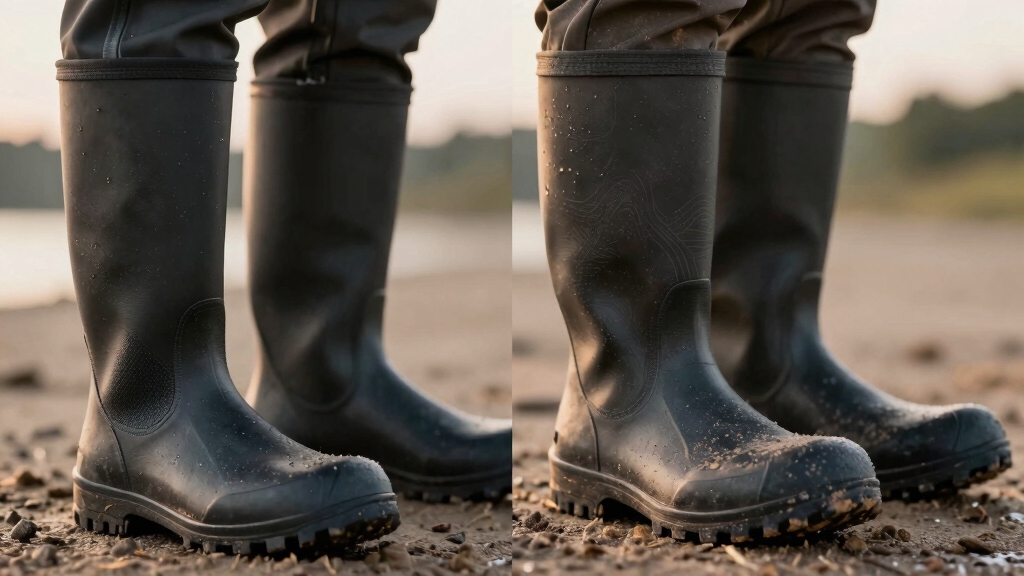
Bootfoot waders offer an integrated, insulated boot for streamlined convenience. They allow for faster prep and better warmth but limit shoe options and flexibility.
Stockingfoot excels in varied terrains and multi-season use. Bootfoot suits cold conditions and quick outings.
Exploring their differences helps you select the right setup for your needs.
Key Takeaways
- Stockingfoot waders use separate neoprene booties and boots, offering customizable footwear options and greater ankle flexibility.
- Bootfoot waders have integrated boots, providing better insulation, simpler use, and faster entry/exit but limited boot customization.
- Stockingfoot systems allow users to select boots tailored for terrain, insulation, and traction, enhancing comfort and performance.
- Bootfoot designs provide an all-in-one, durable solution ideal for cold weather and quick trips but tend to be bulkier.
- Stockingfoot waders enable inside-out cleaning and higher mobility, while bootfoot waders offer better heat retention and easier maintenance.
Stockingfoot and Bootfoot Waders Compared
| Feature | Stockingfoot Waders | Bootfoot Waders |
|---|---|---|
| Footwear Design | Separate neoprene booties + separate boots | Built-in integrated boots |
| Customization | Full choice of boots, tread, insulation | No boot customization |
| Mobility | Better ankle flexibility and movement | Slightly bulkier movement |
| Warmth | Depends on chosen boots | Better built-in insulation |
| Convenience | Requires extra boots and setup | Quick all-in-one use |
| Cleaning & Maintenance | Easier to dry and clean inside out | Harder to clean built-in boot area |
| Terrain Adaptability | Excellent for varied surfaces | Limited by fixed sole design |
| Best Season | Multi-season flexibility | Best for cold weather |
| Weight | Lighter overall feel | Heavier due to integrated boots |
| Best For | Anglers needing versatility | Quick trips and cold conditions |
Understanding Stockingfoot vs. Bootfoot Waders
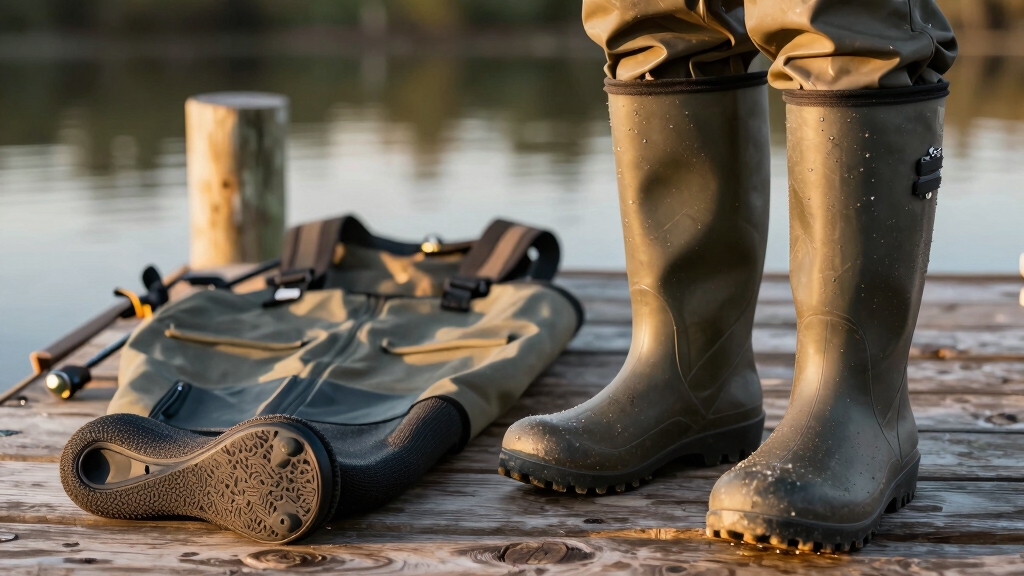
When choosing waders, understanding the difference between stockingfoot and bootfoot designs is crucial for matching your footwear needs and environmental conditions.
Stockingfoot waders have soft, sock-like neoprene booties that require you to wear separate boots. This gives you flexibility to choose boots with specific tread patterns or insulation levels.
Stockingfoot waders feature soft neoprene booties, allowing you to pair with boots tailored for traction and warmth.
In contrast, bootfoot waders integrate boots directly, creating a one-piece unit that simplifies use and enhances heat retention.
Stockingfoot designs offer better mobility and allow you to turn them inside out for cleaning. Bootfoot models provide faster entry and exit with less gear to manage.
Your choice depends on whether you prioritize customization and terrain adaptability or convenience and warmth in colder environments. Both types are designed to withstand environmental challenges faced during fishing and hunting, including harsh conditions like muddy marshes, storms, and ice sheets.
How Stockingfoot And Bootfoot Waders Differ In Materials And Build?
Although both stockingfoot and bootfoot waders serve similar purposes, they differ markedly in materials and construction, impacting their performance and maintenance.
Stockingfoot waders use neoprene or engineered fabric booties that you pair with separate boots. This design offers flexibility but requires extra gear.
Bootfoot waders integrate insulated boots directly into the design. They provide convenience and warmth but limit customization.
| Feature | Stockingfoot Waders | Bootfoot Waders |
|---|---|---|
| Footwear | Separate boots with neoprene sock | Built-in insulated boots |
| Material Flexibility | High, sock-like booties | One-piece, less flexible |
| Maintenance Ease | Can be turned inside out | Harder to clean inside boot |
Knowing these differences helps you choose based on terrain, temperature, and ease of use. Additionally, the use of neoprene with rubber in stockingfoot waders offers excellent insulation and durability, making them suitable for cold-weather use.
How Stockingfoot Waders Let You Customize Your Footwear?
When it comes to stockingfoot waders, one of the best parts is the freedom to choose your own boots. You can pick boots that really fit your specific needs, which means you can have better control over things like tread patterns and insulation. Pretty cool, right?
This kind of customization opens up a world of options. You can select features like ankle support or waterproofing that are perfect for the terrains and activities you enjoy. Whether you’re trekking through rocky riverbeds or standing in a chilly lake, having the right gear makes all the difference.
And let’s not forget about comfort! Wearing dedicated wading boots gives you a greater range of motion. This means you can move more easily and feel more stable on all kinds of surfaces. Overall, it’s about enhancing your experience out there, making every outing more enjoyable.
Plus, choosing boots with the right traction and stability can significantly reduce the risk of slipping on wet or uneven surfaces, keeping you safe throughout your fishing trips.
Separate Boot Selection
Stockingfoot waders let you pick boots that match your exact needs, giving you complete control over tread patterns, insulation levels, and fit. Since the neoprene booties attach separately, you can choose boots optimized for specific terrains.
Whether you need aggressive non-slip soles for slippery rocks or insulated boots for colder waters, this modular setup allows you to swap boots depending on conditions. This guarantees peak comfort and safety.
You’re not limited to a fixed boot style; you can select lightweight boots for mobility or heavy-duty boots for durability. Additionally, you can find boots designed with various closure systems and ankle support levels, enhancing overall fit and preventing fatigue.
This tailored approach guarantees your footwear matches your wading environment precisely without compromise. Adjusting gear based on target species and environment ensures optimal performance and safety during fishing.
Tailored Boot Features
Because you select your own boots, you can tailor features like traction, insulation, and ankle support to match your specific wading conditions.
You might choose boots with aggressive Vibram soles for slippery rocks or felt soles for better grip on muddy riverbeds.
Insulation levels vary, so you can opt for lightweight boots in warmer months or heavily insulated ones for cold water.
Ankle support is another customizable factor; you can pick boots with reinforced collars or flexible designs depending on terrain demands.
This flexibility extends to boot height and material, allowing you to balance protection, mobility, and durability.
Stockingfoot waders’ separate boot system lets you upgrade or replace boots independently, ensuring your footwear adapts precisely to your fishing environment and personal comfort preferences.
Ensuring your boots fit properly by measuring your shoe size is essential for comfort and preventing water seepage during long use.
Enhanced Movement Options
Choosing your own boots doesn’t just let you tailor features; it also releases enhanced movement options that fixed boot designs can’t match.
With stockingfoot waders, you attach flexible neoprene booties to your legs, then select boots optimized for your specific terrain and activity. This separation lets you pick lightweight, high-traction soles or stiffer soles for rugged surfaces, improving stability and reducing fatigue.
The independent boots provide better ankle articulation, allowing precise foot placement in uneven or slippery conditions. You can switch boots depending on water depth or weather, adapting on the fly.
In contrast, bootfoot waders limit you to integrated footwear with fixed sole types, restricting mobility and customization. Stockingfoot systems empower your movement by combining wader protection with tailored, performance-driven boots.
Additionally, selecting the right boots ensures a proper fit and sizing, which is crucial for comfort, stability, and preventing foot sliding during fishing trips.
Why Bootfoot Waders Offer All-In-One Convenience?
When you slip into bootfoot waders, you get a streamlined setup that eliminates the hassle of matching and carrying separate boots.
Bootfoot waders offer a hassle-free, all-in-one solution by combining boots and waders seamlessly.
This one-piece construction integrates insulated boots directly with the wader legs, simplifying preparation and reducing gear bulk.
You won’t need extra boot storage or worry about compatibility issues between boots and wader booties.
The seamless shift between wader and boot also minimizes snag risks on underwater obstacles.
Additionally, bootfoot waders speed up your entry and exit from water since you’re dealing with a single item.
Their built-in boots usually feature rubber or felt soles optimized for traction, though options are fixed.
This design reduces setup time and weight, making bootfoot waders especially practical for quick trips or swampy conditions where convenience is paramount.
However, rubber soles are generally preferred in bootfoot waders because of their durability and environmental safety, especially in areas with regulations against felt soles.
Stockingfoot vs. Bootfoot: Which Keeps You Warmer?
While bootfoot waders offer unmatched convenience with their integrated boots, it’s important to consider how each style impacts your warmth in cold water conditions.
Bootfoot waders provide superior insulation thanks to their one-piece construction, which minimizes heat loss by eliminating gaps between boots and waders.
The built-in boots often feature insulated soles, keeping your feet warmer during prolonged exposure.
In contrast, stockingfoot waders rely on separate boots, so your warmth depends heavily on the boots you choose.
Although stockingfoot booties are made from neoprene or similar materials, they don’t insulate as effectively when wet or in freezing temperatures.
If you frequently fish or hunt in cold environments, bootfoot waders generally keep you warmer.
Stockingfoot setups require carefully selected insulated boots to approach similar warmth levels.
Additionally, the construction material of bootfoot waders typically enhances durability and insulation, contributing further to warmth retention in cold water.
How Stockingfoot Waders Improve Mobility And Comfort?
Maximizing mobility and comfort hinges on the flexibility and customization that stockingfoot waders provide.
Since you wear separate boots with stockingfoot waders, you tailor your footwear to the terrain and activity, improving movement efficiency.
Wearing separate boots with stockingfoot waders lets you customize footwear to match terrain and activity for better movement.
The neoprene booties’ soft, sock-like design reduces bulk around your feet and ankles, enhancing flexibility.
This design allows your ankles to bend naturally, which means less fatigue during long treks.
Consider these benefits:
- Custom-fit boots optimize sole grip for slippery surfaces.
- Reduced ankle restriction lets you navigate uneven terrain confidently.
- Lightweight booties decrease overall leg fatigue.
- Ability to choose breathable or insulated boots based on conditions.
Additionally, pairing stockingfoot waders with moisture-wicking socks helps maintain foot comfort and prevents blisters during extended wear.
This combination delivers superior comfort and responsiveness compared to integrated bootfoot styles.
When Bootfoot Waders Make Getting Ready Faster And Easier?
When you opt for bootfoot waders, you really simplify your gear prep. No more searching for and packing separate boots—everything’s all in one! It makes getting ready a breeze.
Plus, the integrated boot design means you can just slip them on without fussing over mismatched footwear or tangled laces. It’s so quick and easy! This streamlined setup really cuts down on your prep time, so you can get into the water faster and with way less hassle.
Additionally, choosing the right equipment compatibility ensures your waders work seamlessly with your fishing setup for maximum efficiency.
Simplified Gear Preparation
Bootfoot waders streamline your preparation by eliminating the need to pair separate boots with your waders. This one-piece design reduces the steps required before hitting the water, making your gear setup faster and more straightforward.
You won’t have to worry about mismatched boots or securing boot laces beneath wader cuffs.
Here’s how bootfoot waders simplify your gear preparation:
- Slip on the integrated boots and pull up the waders in one motion.
- Avoid carrying and fitting additional boots, lightening your load.
- Minimize the risk of forgetting or misplacing boots in your gear stash.
- Save time by skipping boot adjustments and waterproof sealing procedures.
This streamlined process guarantees you’re ready to fish or hunt quicker with less hassle.
Quick Footwear Integration
With integrated boots seamlessly attached, you can slip into your waders quickly and confidently without juggling separate footwear.
Bootfoot waders eliminate the need to carry, select, or lace up separate boots, reducing prep time markedly.
The one-piece design guarantees the boot and wader interface is watertight and stable, preventing water intrusion and line snags common with stockingfoot systems.
This integration simplifies donning and doffing, especially in cold or wet conditions where dexterity is limited.
You won’t waste time matching boots or adjusting fit; everything’s built to work together.
However, this convenience comes with less flexibility in sole type and boot customization.
Still, if speed and ease of use matter most, bootfoot waders streamline your gear setup.
This lets you focus on your activity faster and more efficiently.
Best Use Cases And Conditions For Stockingfoot And Bootfoot Waders
Although both stockingfoot and bootfoot waders serve similar outdoor purposes, their specific designs make them better suited for distinct environments and activities. When choosing, consider these practical scenarios:
- Stockingfoot waders excel in late spring through early fall fishing. They let you pair with specialized boots for varied terrains.
- Bootfoot waders shine in cold-weather hunting. They offer integrated insulation to retain body heat effectively.
- If you need quick on-and-off convenience, especially in swampy or muddy areas, bootfoot’s one-piece design is ideal.
- For multi-terrain pursuits requiring flexibility and customized footwear, stockingfoot waders provide superior range of motion and comfort.
Disadvantages Of Stockingfoot And Bootfoot Waders Compared
Because you have to purchase and carry separate boots, stockingfoot waders add complexity to your gear setup and transport.
This means extra weight and space taken up by your footwear, which can be cumbersome in the field.
Additionally, stockingfoot designs generally retain less body heat since the booties are thinner and less insulated.
This makes them less ideal for cold water.
On the other hand, bootfoot waders, while simpler, limit your choices.
You’re confined to the integrated boots that often feature fixed felt or rubber soles, which may not suit all terrains or preferences.
Bootfoot models also tend to be bulkier and heavier, potentially reducing mobility.
Understanding these trade-offs helps you anticipate practical challenges specific to each wader type.
Choosing Between Stockingfoot And Bootfoot Waders: What You Need To Know
When you’re trying to decide between stockingfoot and bootfoot waders, think about how they fit and what kind of footwear you want to use. Stockingfoot waders give you the freedom to choose specialized boots that fit just right, which can really boost your comfort and mobility out there.
On the other hand, bootfoot waders come with built-in insulation and are super easy to put on, making them great for quick setups.
Fit And Footwear Options
Selecting between stockingfoot and bootfoot waders markedly impacts how your waders fit and what footwear options you’ll have.
With stockingfoot waders, you wear separate boots over neoprene booties, allowing precise customization of fit and tread type.
Bootfoot waders integrate boots directly, offering a one-piece fit but limiting your footwear choices to the built-in boot style.
Consider these points for fit and footwear:
- Stockingfoot lets you choose boots tailored for traction, ankle support, or insulation.
- Bootfoot provides consistent fit without the hassle of coordinating boots.
- Stockingfoot booties enhance flexibility and range of motion.
- Bootfoot’s integrated boots simplify setup but restrict boot replacement or upgrades.
Your decision hinges on whether you prioritize customizable footwear or streamlined, all-in-one convenience.
Convenience And Insulation Benefits
Understanding the convenience and insulation benefits of stockingfoot versus bootfoot waders can make a significant difference in your outdoor experience.
Bootfoot waders offer superior convenience since you don’t need extra boots, allowing quicker entry and exit from water.
Their one-piece design enhances body heat retention, with built-in insulated boots keeping your feet warmer in cold conditions.
Conversely, stockingfoot waders require separate boots, which means more prep time and gear to carry.
However, stockingfoot booties typically provide less insulation, making them less suitable for cold weather.
You gain flexibility in footwear choice, which is practical for varying terrains but sacrifices some warmth and speed.
If you prioritize warmth and easy use, bootfoot waders are ideal.
For versatility and custom footwear, stockingfoot waders serve better despite added complexity.
Frequently Asked Questions
How Do Stockingfoot and Bootfoot Waders Compare in Terms of Durability?
You’ll find both stockingfoot and bootfoot waders durable, but their longevity depends on use and materials.
Stockingfoot waders, with separate boots, allow you to replace worn footwear independently, extending overall gear life.
Bootfoot waders, being one-piece, risk quicker wear in the integrated boots, but their seamless design reduces stress points.
If you prioritize repairability and customization, stockingfoot waders hold an edge in durability over time.
Can Stockingfoot Waders Be Used Without Boots in Emergency Situations?
If you ever find yourself without boots, you can technically use stockingfoot waders alone, but it’s not ideal.
The neoprene booties provide some protection and insulation, but they lack sturdy soles. This increases the risk of injury from sharp objects or rough terrain.
In emergencies, they’ll keep your feet dry temporarily. However, you should move cautiously and prioritize finding proper boots to avoid discomfort or damage.
What Maintenance Tips Are Recommended for Extending Wader Lifespan?
You should always rinse your waders with fresh water after use to remove dirt and debris.
Hang them to dry inside out in a shaded, ventilated area to prevent mold and damage.
Store them flat or hanging to avoid creases.
Repair small tears promptly with patch kits.
Avoid prolonged exposure to heat or sunlight, which degrades materials.
Regularly check seams and booties for wear to extend your wader’s lifespan effectively.
Are Stockingfoot and Bootfoot Waders Compatible With Different Types of Wading Belts?
Yes, both stockingfoot and bootfoot waders are compatible with various wading belts.
You’ll want a belt designed to fit securely over neoprene or fabric materials, ensuring a snug fit around your waist.
Since stockingfoot waders have a softer neoprene bootie, your belt can help prevent water entry effectively.
Bootfoot waders’ integrated boots don’t affect belt compatibility, so you can use the same wading belt style for both types without issue.
How Do Stockingfoot and Bootfoot Waders Affect Balance on Slippery Surfaces?
Like walking a tightrope, your balance on slippery surfaces depends heavily on your footwear.
Stockingfoot waders let you choose boots with aggressive treads for maximum grip, enhancing stability on slick rocks.
Bootfoot waders have built-in boots, often with limited sole options, which may reduce traction variety.
For precise footing, stockingfoot’s customizable boot choice gives you better control.
Bootfoot offers convenience but less adaptability for tricky, slippery terrain.
The Best Wader Choice Depends on How You Fish
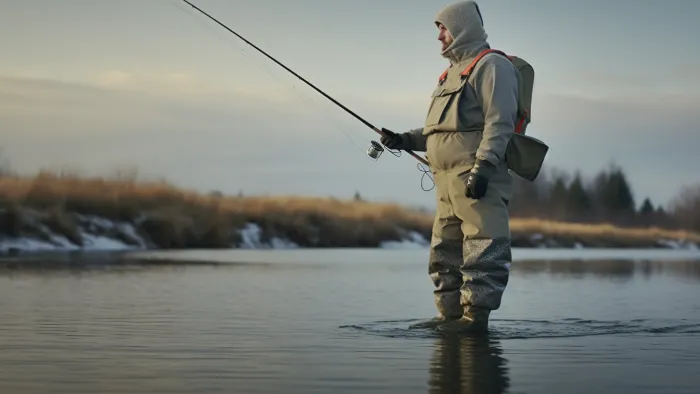
Picture yourself knee-deep in icy water, feeling the snug fit of stockingfoot waders as you lace up your favorite boots.
Or quickly slipping into bootfoot waders for hassle-free warmth. Both designs offer unique advantages. Stockingfoot waders give you customizable footwear options and superior fit.
Bootfoot waders provide all-in-one convenience and quicker prep. Understanding these technical differences helps you choose the right gear for your specific fishing or outdoor needs. This ensures comfort and performance every time.