Garmin Force vs Ultrex: Key Features Compared Side by Side
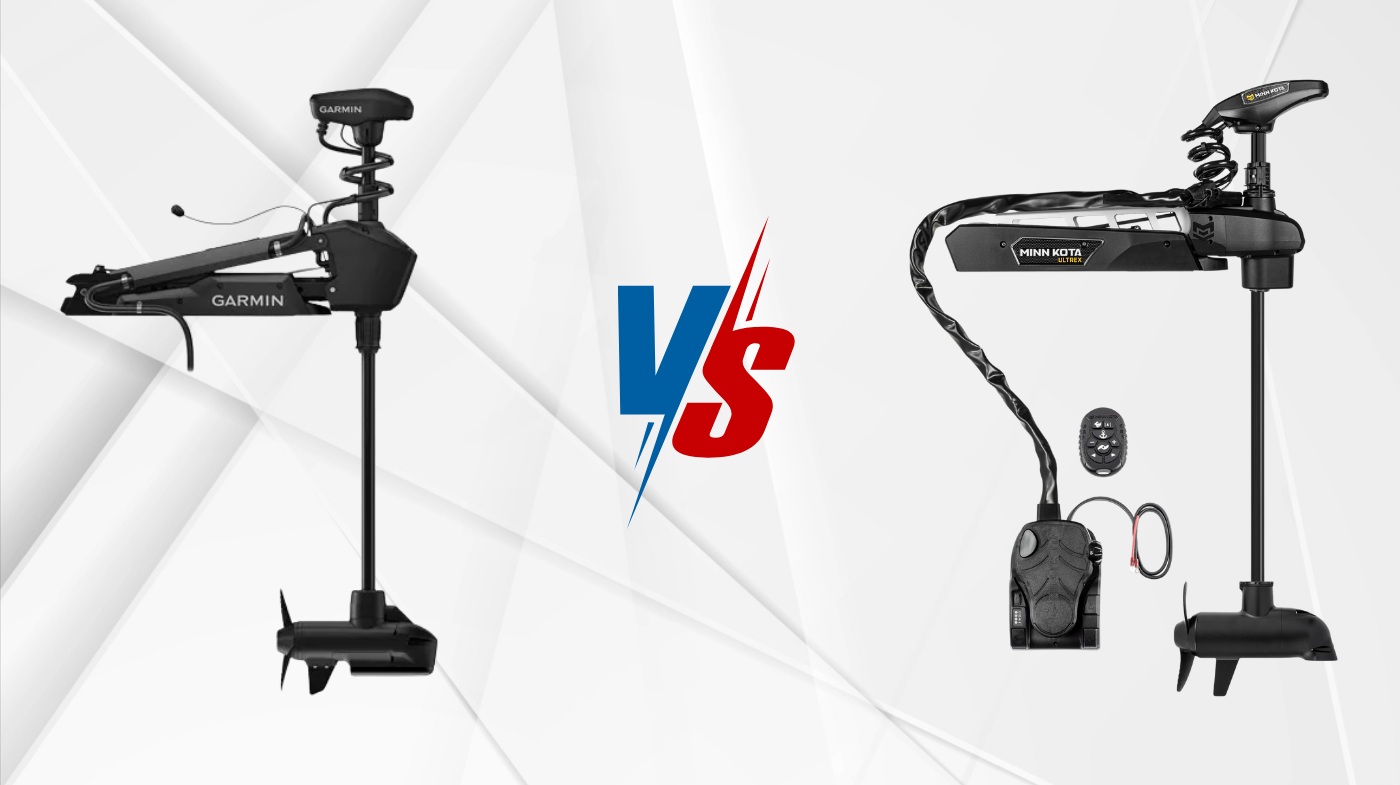
You’ll find Garmin Force excels with its efficient brushless motor, offering up to 52 hours of runtime and quieter, smoother operation.
Minn Kota Ultrex delivers stronger peak thrust and precise, tactile cable-driven pedal control.
Force’s gesture steering and seamless Garmin ecosystem integration contrast with Ultrex’s broad sonar compatibility and traditional wired controls.
Both offer advanced GPS anchors and durable builds, but your choice depends on preferred controls and electronics. Explore further to see which fits your fishing style best.
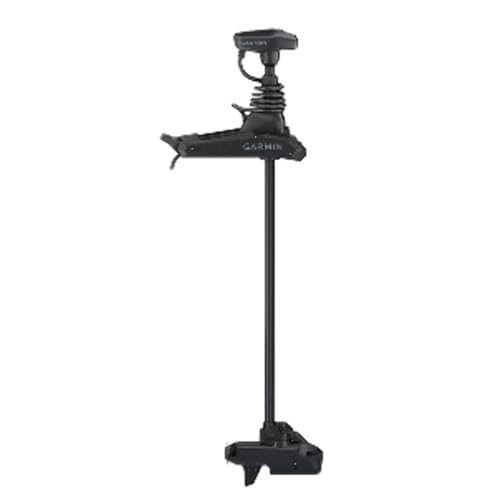
- Most powerful trolling motor on the market with 100 lbs of thrust.
- Anchor lock provides our most precise boat positioning, thanks to multi-band GPS and integrated AHRS…
- Wireless integration with your Garmin chartplotters allows you to create routes, patterns and tracks…

- Patented Lift-Assist Design: Reduces stow and deploy effort by half with stainless steel, nitrogen…
- Built-in Dual Spectrum Chirp Sonar: Visualize fish, structure, and bottom contours with enhanced…
- Advanced GPS Trolling System with Spot-Lock and Jog: Maintains precise position and allows you to…

Key Takeaways
- Garmin Force uses a brushless motor for better efficiency, quieter operation, and longer battery life compared to Ultrex’s traditional motor.
- Force offers wireless, gesture-enabled remote control, while Ultrex relies on a wired pedal with tactile, precise feedback.
- Both support GPS autopilot and Spot-Lock, but Force integrates tightly with Garmin devices and includes advanced waypoint navigation.
- Force features superior corrosion resistance and saltwater durability; Ultrex is better suited for freshwater environments.
- Garmin Force includes high-resolution Garmin-exclusive sonar, whereas Ultrex offers broad sonar compatibility, especially with Humminbird units.
Quick Comparison Table: Features & Specs
| Feature | Garmin Force | Minn Kota Ultrex |
|---|---|---|
| Motor Type | Brushless, quieter & efficient | Traditional brushed, higher peak thrust |
| Battery & Runtime | 24V/36V, up to 52 hours, energy-efficient | 24V/36V, slightly higher thrust, consumes more power |
| Pedal Control | Wireless, gesture-enabled, adjustable placement | Wired, tactile cable-electric hybrid, precise feedback |
| Autopilot & GPS | Integrated Garmin GPS, waypoint navigation, Spot-Lock | Compatible with Humminbird, advanced GPS modes, Spot-Lock |
| Sonar | High-resolution CHIRP, SideVü, ClearVü, Garmin-exclusive | Dual Spectrum CHIRP, universal sonar compatibility |
| Durability | Corrosion-resistant, suitable for saltwater | Reliable in freshwater, standard corrosion resistance |
| Remote & Interface | Waterproof, floating, sunlight-readable display, programmable keys | Basic micro remote; advanced LCD optional at extra cost |
| Unique Features | Gesture steering, full Garmin integration | Broad sonar compatibility, cable-electric tactile pedal |
| User Experience | Smooth, quiet, wireless convenience | Tactile, mechanical feedback, classic control feel |
Power and Efficiency Comparison
While both the Garmin Force and Minn Kota Ultrex deliver reliable power for bass fishing, the Force’s brushless motor gives it a clear edge in efficiency and battery longevity.
You’ll notice the Force’s motor reduces mechanical wear and conserves battery life better than the Ultrex’s traditional motor, which consumes more power for similar thrust.
Both run on 24V or 36V systems; the Ultrex offers slightly higher maximum thrust, up to 112 lbs at 36V compared to the Force’s 100 lbs, but this difference is minor in real use. The Force’s design also emphasizes durability and corrosion resistance, enhancing its suitability for varied water conditions.
The Force converts power to thrust more efficiently, allowing longer runtimes and quieter operation.
Meanwhile, the Ultrex’s older design is less efficient.
Plus, the Force’s corrosion-resistant build supports both freshwater and saltwater use, helping maintain power efficiency over time.
Additionally, the Force’s silent brushless motor contributes to reduced noise and smoother performance compared to the Ultrex’s brushed motor.
Control and Responsiveness Features
When you’re deciding between the Garmin Force and the Ultrex, one of the first things you’ll notice is that the Force offers wireless foot pedal control. This means you can enjoy variable-speed steering without being tethered. To keep your gear in top shape, it’s important to perform basic cleaning regularly after use.
On the other hand, the Ultrex uses a wired pedal and a cable-driven system, which many find provides a more natural feel when it comes to boat feedback. The Ultrex’s pedal also features adjustable cables to customize the feel to your preference.
Both motors come equipped with advanced autopilot features, which is great. However, if you’re using Garmin electronics, the Force really shines as it integrates seamlessly for waypoint navigation and gesture steering.
Wireless vs Wired Pedals
Because control and responsiveness are essential for effective trolling motor operation, choosing between wireless and wired pedals considerably impacts your experience.
The Garmin Force’s wireless pedal offers you the freedom to position it anywhere on your boat without cable constraints. It’s powered by batteries or hardwired for flexibility. It delivers precise, variable-speed control with responsive handling, though slight signal delays are rare. This level of control precision enhances ease of navigation and operation. Additionally, the wireless design helps reduce physical strain and fatigue by allowing more ergonomic positioning, contributing to longer, more comfortable fishing sessions.
In contrast, the Minn Kota Ultrex’s wired pedal connects physically via adjustable cables, providing a tactile, direct steering feel favored by those who value mechanical feedback. While Ultrex limits pedal placement and requires more setup, it offers consistent connection reliability without battery concerns. This reliability aligns with the need to prevent equipment strain and maintain optimal performance during extended use.
Autopilot and Steering
If you want precise and responsive control over your trolling motor, both the Garmin Force and Minn Kota Ultrex deliver advanced autopilot and steering features tailored to different preferences.
Garmin Force integrates seamlessly with Garmin electronics, offering autopilot with waypoint setting, wireless chart plotter sync, and exclusive gesture steering via remote. Its brushless motor provides quieter, more efficient power with adjustable foot pedal resistance for tailored steering feel. The brushless design also minimizes sonar interference, enhancing underwater visibility for anglers. Additionally, the Force’s design prioritizes handling and comfort, making it suitable for extended fishing sessions.
Ultrex autopilot works with Humminbird graphs and includes Circle, Drift, and Dodge modes, enhancing GPS boat control. Its cable-electric hybrid steering offers responsive handling but differs from Force’s traditional feel.
Ultrex’s micro remote lacks Force’s display and gesture options, limiting wireless control flexibility. Both systems maintain heading and anchor lock, but Force edges ahead in precision, power efficiency, and advanced remote steering capabilities.
Durability and Build Quality Assessment
Although both the Garmin Force and Minn Kota Ultrex deliver reliable performance, their durability and build quality reveal distinct approaches to motor technology and environmental resilience.
You’ll find the Force’s brushless motor design offers enhanced efficiency and longevity, especially in saltwater, thanks to corrosion-resistant materials. The Ultrex, reliable in freshwater, uses traditional motor technology without these modern protections. Reusing materials with eco-friendly initiatives can also inform sustainable design in motor manufacturing.
The Force’s remote control also features waterproof and floating capabilities, unlike the Ultrex’s basic waterproof remote.
Sonar and Electronics Integration
Beyond durability, the Garmin Force and Minn Kota Ultrex showcase significant differences in sonar and electronics integration that affect how you interact with your fishing environment.
The Force features a GT54 UHD integrated transducer offering CHIRP sonar, ClearVü, and SideVü imaging. The Ultrex provides a dual Spectrum CHIRP transducer limited to 2D sonar. Garmin’s brushless motor reduces sonar interference, enhancing clarity. In contrast, Ultrex’s setup generates more noise. Proper mounting and positioning of the transducer are essential for optimal sonar performance and clarity.
Garmin’s sonar exclusively pairs with its electronics, requiring dedicated units for full features. Additionally, the Force includes depth and temperature sensors integrated within its system for enhanced environmental awareness.
In contrast, Ultrex supports universal compatibility, working with Humminbird and other brands. This offers flexibility without the need for new gear.
Both systems incorporate built-in transducers, simplifying installation. However, your choice depends on your preferred electronics ecosystem and desired imaging capabilities.
User Experience and Interface Differences
When you start looking at foot pedal designs, you’ll notice some key differences. For instance, the Garmin Force has this awesome wireless feature that allows for variable-speed control, making those adjustments super smooth.
On the other hand, the Minn Kota Ultrex sticks with a wired pedal, giving you that classic cable-driven feel that some folks really appreciate.
Now, let’s talk about the remotes. Garmin’s remote is pretty impressive—it’s water-resistant, floats on water, and has a display that’s readable even in bright sunlight. Plus, you can program the keys to suit your needs!
Meanwhile, the Ultrex comes with a simpler micro remote. It gets the job done, but it doesn’t have those advanced functions that Garmin offers.
These differences really do impact how you control your boat and what your overall experience will be like on the water. It all comes down to what you prefer and what fits your boating style best!
Additionally, the choice between wireless and wired controls often reflects the balance between advanced technology and traditional reliability.
Foot Pedal Design
While both the Garmin Force and Minn Kota Ultrex foot pedals provide essential steering, speed, and prop control, their designs offer distinct user experiences that impact precision and interface interaction.
You’ll find the Force pedal wireless, allowing flexible placement anywhere on your boat, powered by AA batteries or a hardwired 12V connection. However, the Force pedal buttons are easily accidentally activated, causing unexpected mode shutdowns and demonstrating control issues. This wireless design prioritizes installation simplicity but may sacrifice some tactile feedback.
In contrast, the Ultrex pedal uses wired steering cables, offering a more tactile and precise feel, especially favored for tight, structure-heavy fishing. The Ultrex pedal’s hybrid cable-electric system delivers superior sensitivity and intuitive adjustments.
Meanwhile, the Force pedal relies on visual feedback like a green bar meter and illuminated icons, lacking physical knobs for directional cues.
Installation favors the Force’s simplicity, but if you prioritize refined control and tactile feedback, the Ultrex foot pedal remains the preferred choice.
Remote and Controls
Controlling your trolling motor goes beyond foot pedal design, extending into the remote and control interfaces that shape your overall user experience.
Garmin Force’s remote stands out with a sunlight-readable, transflective display, four programmable keys, and point-and-go gesture steering. Its highly durable materials contribute to long-lasting performance in harsh fishing conditions.
It offers a highly customizable, responsive interface with no lag. It’s also water-resistant and floats, reducing risks on the water.
In contrast, Minn Kota Ultrex’s basic remote is micro-sized without a screen, limiting control, though an advanced LCD remote is available at extra cost.
Ultrex compensates with versatile access via app, fish finder, and foot pedal, plus One Boat Network integration.
Both systems support autopilot and Spot-Lock from multiple devices, but Force’s seamless integration with Garmin electronics and smartwatch adds convenience and precision to your control experience.
The Garmin Force also features a built-in transducer that provides high-resolution underwater imaging through CHIRP, SideVu, and ClearVu scanning, enhancing the user’s fishing efficiency with detailed sonar data integrated sonar technology.
Price and Market Position Analysis
Although both Garmin Force and Minn Kota Ultrex Quest occupy the premium trolling motor market, their pricing remains closely matched. Prices generally range from around $3,550 to $4,100 depending on model and retailer. Their durability and design make them suitable for various fishing techniques, offering versatility across different environments with corrosion-resistant materials.
You’ll find the Force emphasizes high-tech GPS integration and exclusive Garmin sonar. Meanwhile, the Ultrex offers broader sonar compatibility and is known for reliability. Both motors feature a brushless design which decreases noise, increases power, and maintains battery efficiency.
Both target serious anglers seeking advanced features at a similar price point.
| Feature | Garmin Force | Minn Kota Ultrex Quest |
|---|---|---|
| Price Range | $3,550 – $4,100 | $3,700 – $4,100 |
| GPS & Sonar | Integrated, Garmin-only | Universal sonar compatible |
| Market Focus | Tech-driven, GPS experts | Reliability, broad compatibility |
Foot Pedal Design and Usability
Because foot pedal design directly impacts ease of use and control, comparing Garmin Force’s wireless system with Minn Kota Ultrex Quest’s wired, cable-electric hybrid reveals key differences.
The Force’s fully electric, wireless pedal offers freedom of movement without cable clutter and features adjustable pressure sensitivity. However, its steering feel is less refined. It includes a meter with illuminated icons, but feedback isn’t always visible during use. Additionally, some users have noted the pedal’s reaction time is slower than expected, which affects overall responsiveness pedal responsiveness.
In contrast, the Ultrex’s cable-electric hybrid pedal provides immediate tactile feedback through adjustable steering cables. This has been praised for its precise, “spot-on” sensitivity, especially when the motor is engaged.
While the Ultrex requires cable routing and motor power for full assist, its direct, physical connection enhances control. The Ultrex pedal’s customizable network button contrasts with Force’s anchor lock and heading hold, reflecting their differing usability focuses.
GPS and Autopilot Capabilities
When you rely on GPS and autopilot features, both the Garmin Force and Minn Kota Ultrex deliver robust capabilities tailored to their respective ecosystems.
Each uses a GPS anchor: Anchor-Lock for Garmin and Spot-Lock for Ultrex. Both are activatable via multiple devices, including foot pedals and remotes, with equal reliability.
Garmin’s autopilot integrates seamlessly with Garmin electronics for programmed routes.
Meanwhile, Ultrex pairs with Humminbird units, adding advanced modes like Circle, Drift, and Dodge not found on Garmin.
Both offer heading lock and cruise control, but Ultrex’s One-Boat-Network app extends multi-device control and specialized GPS functions.
Garmin’s remote boasts a sunlight-readable display and full GPS control, though its advanced remote is costly.
Battery Life and Energy Consumption
While both the Garmin Force and Minn Kota Ultrex run on 24V and 36V battery systems, the Force’s brushless motor delivers markedly better energy efficiency and longer run times compared to the Ultrex’s brushed motor.
You’ll find the Force runs up to 48-52 hours continuously on lithium batteries, thanks to its efficient brushless design that minimizes energy loss and heat generation.
The Ultrex, with its brushed motor, consumes more power but compensates with Digital Maximizer™ and Eco Mode features that extend battery life by moderating power output at lower speeds.
Although the Ultrex offers slightly higher thrust at 36V, the Force’s superior motor efficiency typically results in better overall battery usage.
Both support variable speeds and voltage options, but the Force’s inherent efficiency means you get longer, quieter operation with less frequent recharging. The Force is also noted as the market’s most powerful trolling motor option, delivering about 40% more thrust than Minn Kota models at release, enhancing overall performance without sacrificing battery life.
Unique Features and Innovations
You’ll definitely notice that the Garmin Force has some pretty cool features, like gesture steering. This means you can control the direction just by making simple movements with the remote—super intuitive, right?
On the other hand, the Ultrex shines with its broad sonar compatibility. It works seamlessly with a variety of fish finder brands, which really opens up your options for connectivity.
When you compare these two, it’s clear that each motor brings its own unique innovations to the table. It’s all about enhancing your fishing experience, and both have something special to offer!
Gesture Control Advantage
Because Garmin Force incorporates advanced gesture control, it delivers a unique steering experience that sets it apart from the traditional methods used by Minn Kota Ultrex.
You can steer the Force simply by pointing or waving its waterproof, floating remote, which acts as a motion pointer for hands-free, intuitive motor direction changes.
This contrasts with the Ultrex’s wired foot pedal and micro remote, which rely on tactile, button-based inputs without gesture functionality.
Additionally, Garmin’s gesture control integrates seamlessly with its GPS and autopilot systems, enhancing precision in navigation.
You also benefit from programmable remote keys and smartwatch compatibility, expanding control options.
While Ultrex excels in spot lock stability with proven conventional controls, Force’s gesture steering offers unmatched innovation and freedom for a modern boating experience.
Sonar and Connectivity
Although both the Garmin Force and Minn Kota Ultrex offer built-in sonar technologies, their approaches to sonar performance and connectivity differ markedly.
Garmin’s Force uses the GT54 UHF transducer, delivering ultra-high-definition CHIRP imaging with less disturbance thanks to its brushless motor. However, it’s compatible only with Garmin electronics.
In contrast, Ultrex’s dual Spectrum CHIRp transducer supports universal sonar connectivity, adapting to most fish finder brands.
Key distinctions include:
- Compatibility: Ultrex works universally; Force is Garmin-exclusive.
- Imaging: Force provides ultra-clear side and Clear View sonar; Ultrex offers versatile 2D sonar visualization.
- Connectivity: Both support One-Boat-Network and app control, yet Force integrates advanced GPS tightly with Garmin’s ecosystem, while Ultrex pairs sonar with i-Pilot navigation.
Frequently Asked Questions
How Easy Is It to Find Replacement Parts for Each Motor?
Finding replacement parts for your motor isn’t exactly a treasure hunt.
Unless you have the Ultrex, then it might feel like one.
For the Force, parts are widely available through authorized dealers and online retailers, making maintenance straightforward and convenient.
Ultrex parts, however, are less visible, often requiring direct Garmin support or specialized centers.
This can mean longer waits and higher costs.
Are There Specific Boat Sizes Recommended for Each Trolling Motor?
You’ll find that both Garmin Force and Minn Kota Ultrex recommend specific boat sizes based on shaft length and motor power.
Garmin Force typically suggests shorter shafts for boats under 16 feet, while longer shafts suit larger vessels.
Minn Kota Ultrex follows similar guidelines but often provides more detailed recommendations tailored to boat weight and hull type.
Comparing both, you should match the shaft length and thrust to your boat’s size for ideal performance.
How Do These Motors Perform in Saltwater Environments?
You’ll find the Garmin Force excels in saltwater, with its brushless motor maintaining power and efficiency.
It also features a waterproof remote built for marine use. It’s designed to resist corrosion, though rinsing after use is key.
The Ultrex, on the other hand, isn’t recommended for saltwater. Its brushed motor and controls can suffer damage, requiring more maintenance.
Is Professional Installation Recommended or Can Users Install Themselves?
Sure, you can certainly tackle the task yourself with tools like drills and hex bits, especially if you’re a seasoned angler.
Yet, professional installation proves prudent, preventing potential pitfalls. Garmin and Minnkota both recommend expert installers to ensure precise placement and secure wiring.
While DIY might save dollars, it risks voiding labor coverage. Ultimately, your choice balances confidence, convenience, and cautious consideration of coverage conditions.
Optimize Your Fishing Setup Today
Choosing between the Garmin Force and Ultrex is like steering two powerful currents, each flowing with distinct strengths.
The Force’s robust power and sleek responsiveness cut through waters with precision. The Ultrex offers seamless sonar integration and intuitive controls that guide you effortlessly.
Your choice shapes the voyage ahead: efficiency versus innovation, durability versus finesse. Ultimately, you command the helm, steering not just the waters but the technology that propels your journey forward.
No products found.
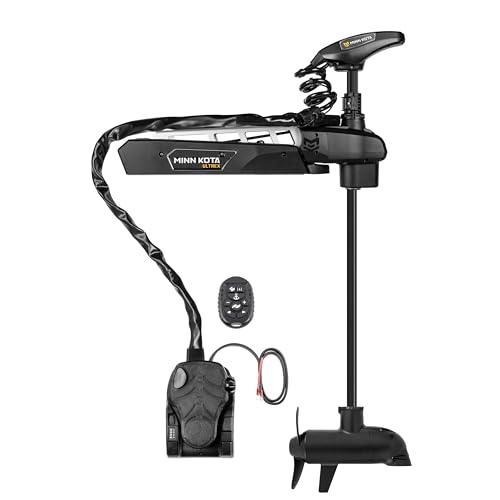
- Patented Lift-Assist Design: Reduces stow and deploy effort by half with stainless steel, nitrogen…
- Built-in Dual Spectrum Chirp Sonar: Visualize fish, structure, and bottom contours with enhanced…
- Advanced GPS Trolling System with Spot-Lock and Jog: Maintains precise position and allows you to…
Last update on 2026-10-21 / Affiliate links / Images from Amazon Product Advertising API