Snap Swivel Size Guide: Match Size to Line Strength
You’ll want a snap swivel size that matches your line strength and target species, avoiding oversizing that hampers lure action. For bass, sizes 2 to 4 offer 66–94 lbs strength, while trophy bass benefit from sizes 4 to 6 at 66–77 lbs.
Large game fish need size 1 or 1/0 with 100+ lbs capacity. Always pick swivels rated slightly above your leader’s test for reliability. Use corrosion-resistant materials to guarantee durability.
More details will help you refine your choice for different conditions and brands.
Key Takeaways
- Snap swivel sizes range from 12 (smallest) up to 12/0 (largest), with smaller numbers indicating stronger, larger swivels.
- Match swivel strength 10–20% above your leader’s test to ensure reliability without impairing lure action.
- For bass fishing, use sizes 2–4 (66–94 lbs strength); for larger game fish, sizes 1/0 and above rated over 100 lbs are recommended.
- Choose corrosion-resistant materials like stainless steel for durability and smooth swivel rotation, especially in saltwater environments.
- Avoid oversized swivels that reduce lure performance and ensure secure line wrapping techniques to maintain knot strength.
What Snap Swivel Sizes Really Mean?
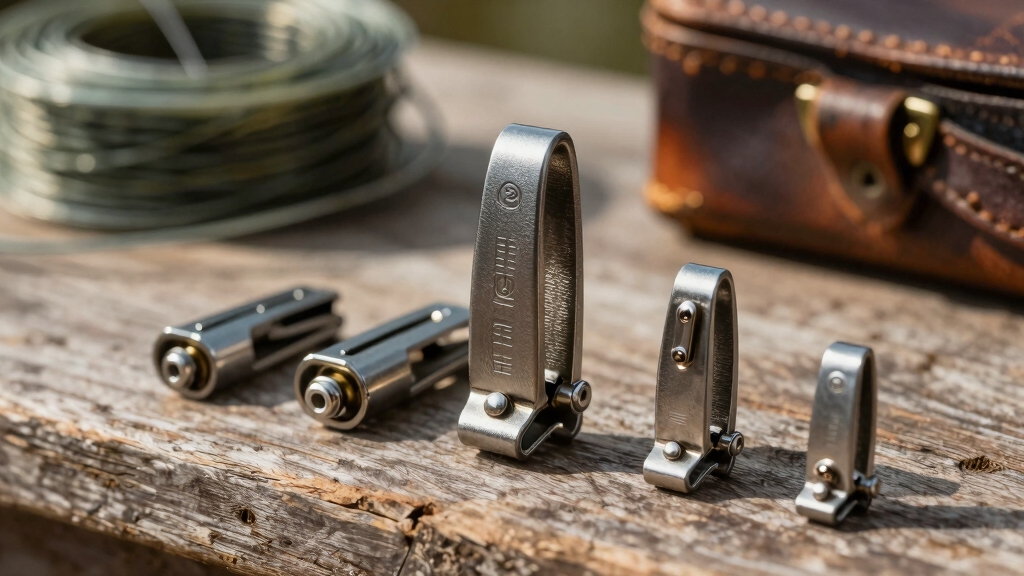
Although it might seem confusing at first, snap swivel sizes follow a clear numerical system. Smaller numbers actually mean larger and stronger swivels.
The scale runs from size 12 (smallest) up to size 1, then jumps to 1/0 through 12/0. Sizes 1/0 and higher indicate even bigger swivels.
For example, a size 1 swivel is larger and stronger than size 10. This system aligns with the swivel’s strength and line weight capacity, helping you pick the right size based on your fishing needs.
Understanding this scale lets you strategically match swivels to tackle without guessing. This ensures peak performance and durability.
Keep in mind that size reflects physical dimensions and breaking strength. This guides your selection precisely.
It is essential to ensure that the swivel’s breaking strength meets or exceeds the line’s test strength to prevent line breakage and maintain rig integrity.
Snap Swivel Strength Ratings and Line Weight Capacities
When selecting a snap swivel, you need to match its strength rating with your line weight to guarantee reliability and avoid failure during a catch.
For example, a size 1/0 swivel handles up to 132 lbs, suitable for heavy lines. A size 6 supports around 66 lbs, ideal for lighter setups.
Always pick a swivel rated slightly above your leader’s test strength to maintain durability under stress. Brands like Bluewing offer specific ratings; Size 03 supports 132 lbs and Size 04 up to 176 lbs, helping you align strength precisely.
Avoid undersized swivels that risk snapping and oversized ones that add unnecessary bulk. Use corrosion-resistant materials, especially for saltwater.
This data-driven matching safeguards your gear’s performance, preventing line breaks and lost fish by balancing strength and size effectively.
Selecting corrosion-resistant materials like stainless steel ensures swivel longevity and performance in harsh saltwater environments.
Choosing the Right Snap Swivel Size for Different Fish Species
Matching your snap swivel’s strength to your line weight guarantees reliable performance. Selecting the right size also depends on the fish species you target.
Ensuring your snap swivel strength matches your line and target species is key for dependable fishing performance.
For smaller species like trout or panfish, choose smaller swivels, sizes 6 to 10. These offer 30 to 80 lbs strength, which won’t overpower your light tackle.
For midsize species such as bass, sizes 2 to 4 are ideal. They provide 55 to 94 lbs strength to handle aggressive strikes without excess bulk.
Larger game fish demand heavier swivels, like size 1 or 1/0, rated above 100 lbs. These can withstand heavy runs and abrasion.
Always pick a snap swivel strength slightly above your leader’s test to avoid failure. This precise matching optimizes hookup rates and minimizes gear loss, improving your overall fishing efficiency.
Consider water conditions that may cause line wear when selecting your snap swivel to ensure abrasion resistance and durability.
Application-Based Snap Swivel Recommendations for Bass and Surf Fishing
To optimize your bass and surf fishing setup, select snap swivels that balance strength and size for your target species. For bass, sizes 2 to 4 handle most catches. Trophy bass call for sizes 4 to 6 paired with heavier tackle.
Surf fishing demands larger swivels, generally size 1 for smaller fish, escalating to 3/0 for species like bluefish and snook.
| Fishing Type | Recommended Sizes | Max Strength (lbs) |
|---|---|---|
| Bass (general) | 2 – 4 | 77 – 94 |
| Trophy Bass | 4 – 6 | 66 – 77 |
| Surf (small) | 1 | 103 |
| Surf (large) | 3/0 | 132+ |
Match your swivel strength slightly above your leader for optimum performance. In surf fishing, it is important to consider the abrasion resistance of your swivels and leaders to withstand the rough conditions and protect your tackle from damage.
Comparing Popular Snap Swivel Brands and Their Size Equivalents
Explore how popular snap swivel brands line up in size and strength to find the best fit for your fishing needs.
Discover how top snap swivel brands compare by size and strength for your perfect fishing match.
For example, Bluewing’s Size03 S matches a 132 lbs strength, aligning with the standard 1/0 size. VMC’s size 4 holds 55 lbs, similar to a standard size 4 swivel rated at 77 lbs. You may want to upsize for safety.
SPRO and Dr.Fish models generally follow the aught scale, with size 2 around 94 lbs and size 6 near 66 lbs. Always check specs for accuracy.
Bluewing offers heavier options like Size05 L at 242 lbs, exceeding typical sizes. Comparing these brands by strength ensures you select swivels that won’t underperform or overburden your setup.
This optimizes both durability and casting efficiency.
When joining braided lines to your swivels, using secure wrapping techniques can improve knot strength and reliability.
How to Match Snap Swivel Strength With Your Leader and Tackle?
When you’re out fishing, it’s important to match your snap swivel’s strength just a bit above your leader’s test. This way, you can count on reliable performance when you’re under load.
You’ll also want to think about the weight of your tackle and the species you’re targeting. It’s a balancing act—too strong of a snap swivel can overpower your lures, but you still need that durability.
And don’t forget about materials! Opt for corrosion-resistant options to help your gear last longer, especially in those tough environments. It really makes a difference when you’re out there.
Choosing the right snap swivel strength also depends on factors like line strength recommendations and fishing conditions to ensure optimal performance and avoid line breakage.
Leader Strength Alignment
When aligning your snap swivel strength with your leader and tackle, matching the swivel’s rated strength slightly above your leader’s test guarantees reliability without overburdening the setup. Use this strategic approach:
- Identify your leader’s test strength accurately (e.g., 30 lb).
- Select a snap swivel rated at least 10-20% higher than the leader strength to avoid failure under stress.
- Cross-check swivel size specs (e.g., size 4 for 77 lbs) to make certain it supports your leader’s load safely.
- Avoid oversized swivels that add unnecessary bulk, impacting lure action and sensitivity.
This alignment protects against breakage while maintaining peak performance.
For instance, a 30 lb leader pairs well with a size 4 swivel rated at 77 lbs, guaranteeing strength margin without excess weight or drag.
Additionally, using proper knots like the Uni or Palomar knot ensures maximum knot strength and reduces the risk of failure at connection points.
Tackle Weight Consideration
Match your snap swivel strength carefully with both your leader and tackle weight to optimize performance and prevent gear failure.
For example, if you’re using a 30 lb test leader, choose a swivel rated slightly above that, like a size 4 swivel with a 35 lb capacity.
When targeting heavier fish or using heavier tackle, say, 80 lb test lines, opt for larger swivels, such as size 6 or 8, which handle 80 to 120 lbs.
Avoid undersized swivels that can snap or oversized ones that hinder lure action.
For bass fishing with medium tackle, sizes 2 to 4 work well, balancing strength and flexibility.
Always align your swivel’s rated strength with your tackle’s pound test, ensuring the weakest link isn’t your snap swivel, but the leader or line.
Using corrosion-resistant materials for your swivels can also enhance durability and performance in various water conditions.
Corrosion Resistance Importance
Although selecting the correct snap swivel strength is crucial, overlooking corrosion resistance can compromise your entire setup.
Saltwater and freshwater environments expose swivels to elements that degrade metal integrity, reducing strength and risking failure.
To guarantee durability and consistent performance, consider these key factors:
- Choose stainless steel or coated swivels with proven corrosion resistance.
- Match swivel strength slightly above your leader’s test to offset any potential weakening.
- Inspect swivels regularly for rust or wear, replacing at the first sign of damage.
- Prioritize high-quality brands with documented corrosion-resistant materials, especially for wind-on leaders.
Additionally, selecting lubricants with corrosion inhibitors can help protect swivel components and extend their service life in harsh conditions.
Why Corrosion Resistance and Material Quality Matter for Snap Swivels?
When it comes to snap swivels, corrosion resistance is a big deal. You want them to hold up over time, especially if you’re fishing in saltwater. That’s where stainless steel comes in. It’s tough, durable, and keeps rust at bay, meaning your swivel can perform like a champ.
Plus, opting for high-quality materials isn’t just a smart move; it’s essential. It lowers the chances of failure and safeguards your tackle investment. So, when you’re choosing snap swivels, remember: durability and quality really matter! Using materials that resist corrosion and saltwater damage is key to maintaining performance and longevity, just like in saltwater wading gear.
Corrosion Impact On Durability
Since snap swivels often face harsh saltwater and freshwater environments, corrosion resistance directly affects their durability and performance. You need swivels that maintain strength and function over time, or you risk failure at critical moments.
Corrosion weakens metal, causing:
- Reduced tensile strength, lowering the swivel’s load capacity.
- Increased friction in moving parts, impairing smooth rotation.
- Surface pitting, leading to material fatigue and cracks.
- Compromised locking mechanisms, risking accidental release.
Choosing high-quality, corrosion-resistant materials guarantees your snap swivels hold up under stress and exposure. This lets you confidently match swivels to your fishing line’s strength without worrying about premature wear.
Prioritize durability to maximize reliability and avoid costly replacements or lost catches.
Benefits Of Stainless Steel
Durability plays a crucial role in choosing snap swivels. Stainless steel excels by combining strength with exceptional corrosion resistance.
When you fish in saltwater or humid environments, corrosion quickly weakens lesser materials. This risks your tackle and catch. Stainless steel’s high resistance prevents rust and maintains structural integrity over time.
This ensures your swivel holds up under repeated stress. Its consistent material quality delivers reliable strength, which is critical when matching swivels to line weight and fish size.
For example, a size 1/0 stainless steel swivel supports 132 lbs, guaranteeing performance without failure. Using stainless steel also means less maintenance and longer gear life.
This saves you money and hassle. When you select snap swivels, prioritize stainless steel to maximize durability, strength, and dependable corrosion resistance in any fishing condition.
Tips for Choosing Snap Swivels That Don’t Overpower Your Lure
Although selecting a snap swivel with maximum strength might seem safe, choosing one that’s too large can overpower your lure and reduce its natural action in the water.
Choosing an overly large snap swivel can hinder your lure’s natural movement and effectiveness.
To maintain lure effectiveness while ensuring strength, consider these tips:
- Match swivel size slightly above your leader’s test to balance strength without excess bulk.
- Opt for midsize swivels (e.g., size 4 or 6) for typical bass fishing, avoiding sizes 1/0 or larger unless targeting heavy tackle.
- Prioritize compact designs with corrosion-resistant stainless steel to reduce drag and maintain lure motion.
- Compare brand specs, like Bluewing’s Size02 (88 lbs) or VMC’s Size4 (55 lbs), to select a swivel that supports your target species without overwhelming your lure.
This strategic sizing preserves lure action and optimizes catch potential.
Frequently Asked Questions
How Do I Properly Attach a Snap Swivel to My Fishing Line?
To attach a snap swivel properly, first tie your fishing line to the swivel’s eye using a strong knot like the improved clinch or Palomar knot.
Make sure the knot is tight and trimmed close to avoid snagging.
Then, open the snap and attach your lure or leader securely.
Close the snap fully to prevent accidental release.
This setup reduces line twist and allows quick lure changes.
Can Snap Swivels Reduce Line Twist During Casting?
Absolutely, snap swivels reduce line twist during casting by allowing your lure or bait to spin freely without twisting the main line.
While some anglers overlook this, neglecting swivels often results in tangled, weakened lines that break under pressure.
Choosing a swivel with the right strength, say, a size 4 for bass or size 1 for surf fishing, ensures you maintain a strong, twist-free setup.
This improves casting distance and fish hookup rates.
What Maintenance Is Required to Extend Snap Swivel Lifespan?
To extend your snap swivel’s lifespan, rinse it thoroughly with fresh water after each use, especially in saltwater environments.
Dry it completely to prevent corrosion.
Regularly inspect for rust, wear, or deformation, replacing if any damage appears.
Lubricate the swivel joint lightly with corrosion-resistant oil to maintain smooth rotation.
Store your swivels in a dry, ventilated container, keeping them away from humidity and dirt to guarantee peak performance and durability.
Are Snap Swivels Compatible With All Types of Fishing Lines?
You can use snap swivels with most fishing lines, including monofilament, fluorocarbon, and braided lines.
Just make sure the swivel’s strength matches or slightly exceeds your line’s test weight to prevent failure.
For lighter lines, smaller swivels reduce bulk and maintain lure action. Heavier lines need bigger, stronger swivels.
Always pick corrosion-resistant materials for durability, especially in saltwater environments.
Avoid oversizing to keep the setup balanced and effective.
How Do Snap Swivels Affect Lure Action in Water?
Snap swivels help maintain your lure’s natural action by reducing line twist, which keeps movement smooth and realistic underwater.
However, if you use a swivel that’s too large or heavy, it can hinder your lure’s action, making it less attractive to fish.
Choose a snap swivel size slightly lighter than your lure to preserve its intended motion while ensuring strength and durability for your target species.
Fish With Confidence Using the Right Snap Swivel Size
When selecting snap swivels, think of them as the unsung heroes holding your fishing setup together. Matching size and strength to your target species and tackle isn’t just smart; it’s essential.
Overpowering your lure can scare fish off, while underestimating strength risks losing your catch. By balancing line weight, material quality, and corrosion resistance, you’ll cast with confidence.
Know your gear works seamlessly, turning every cast into a calculated strike, not just a hopeful toss.