How to Use a Tippet Ring: Save Your Leader & Get More Fish
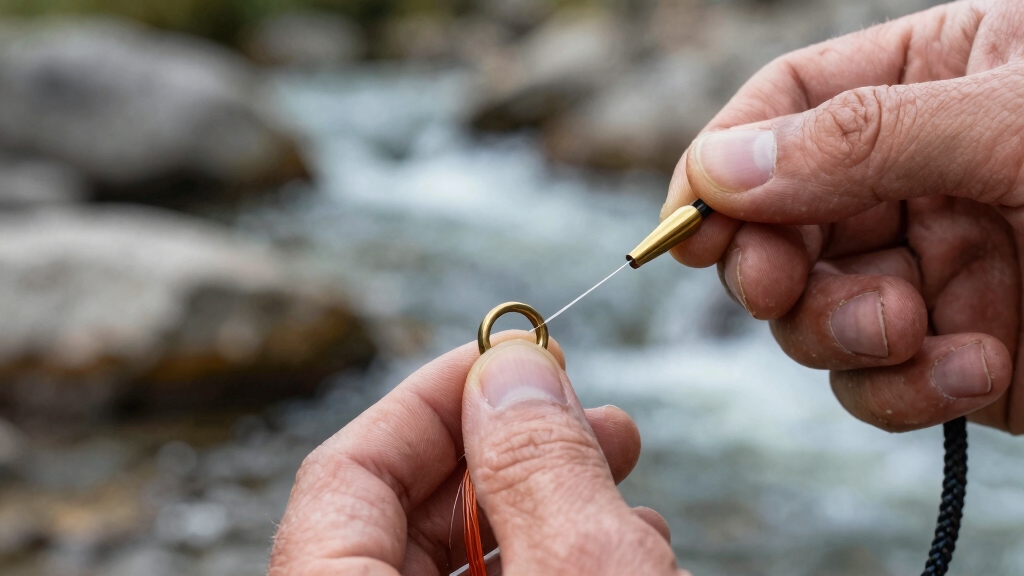
To use a tippet ring, tie it securely to your leader’s end with a strong clinch knot. Then attach your tippet to the opposite side using another clinch knot.
This setup lets you swap tippets quickly without retieing the leader and reduces wear from repeated knot tying. You can also add multiple fly droppers to the ring for a versatile rig.
Choosing the right ring size and positioning it properly minimizes drag and fish spook. Exploring setup tips and when to avoid them can improve your fishing success.
Key Takeaways
- Tie the tippet ring to the leader’s end using a strong clinch knot, passing the leader through the ring first.
- Attach the tippet to the opposite side of the ring with another clinch or improved clinch knot for quick fly changes.
- Add multiple short droppers to the ring with clinch knots for effective multi-fly rigs and natural fly movement.
- Choose a ring size (1–5 mm) that matches target species and leader thickness to minimize drag and maintain flexibility.
- Keep tippet lengths short and trim knots neatly to reduce tangling, drag, and spooking fish during presentations.
What Is a Tippet Ring and Why Use It?
Although small in size, a tippet ring plays an essential role in fly fishing by connecting your leader to the tippet with a simple clinch knot.
A tippet ring, though tiny, is key for securing your leader to the tippet with ease.
This tiny metal ring, usually made from nickel alloy and measuring 1 to 5mm, helps you extend leader life by preventing cuts from repeated knot tying.
You’ll find it floats well and handles 25-30 lbs, suitable for most freshwater species.
Using a tippet ring simplifies swapping tippet sizes quickly and reduces knot tying time since you only need clinch knots.
It also makes multi-fly rigs easier to manage by providing a stable, strong junction point.
While it adds a small extra component to your setup, its benefits in durability and convenience often outweigh this minor drawback.
Additionally, using a tippet ring facilitates easy fly switching without the need to re-tie your leader, enhancing fishing efficiency.
Tying a Tippet Ring to Your Leader
Start by securely tying the tippet ring to the end of your leader using a clinch knot, which offers a strong, reliable connection.
Pass the leader line through the ring, wrap it around itself 5-7 times, then thread the tag end back through the loop near the ring.
Tighten firmly and trim excess. This assures a durable link without weakening the leader.
To ensure the knot holds under tension, maintain tight wraps during the tying process.
| Step | Action | Tip |
|---|---|---|
| 1 | Pass leader through ring | Use 5-7 wraps for strength |
| 2 | Wrap line around itself | Avoid overlaps for security |
| 3 | Thread tag end through loop | Moisten knot before tightening |
Following this method makes your rig robust and ready for quick tippet attachment.
Adding Tippets and Flies With a Tippet Ring
When you’re getting ready to fish, attaching your tippet to the ring is super important. A good way to do this is by using a reliable clinch knot. It’s quick and secure, which is exactly what you need. And don’t forget about your fly! Make sure it’s tied firmly to the tippet end. You definitely don’t want it slipping off when you’re casting or when a fish strikes.
Now, taking the time to properly fasten both the tippet and the fly is crucial. It helps ensure that your setup stays strong and ready when you’re out on the water. Trust me, a little extra care in these steps can make a big difference in your fishing experience! Using an Improved Clinch knot is ideal for monofilament tippets to keep your connections secure.
Attaching Tippets Efficiently
Attach the tippet ring to your leader’s end using a secure clinch knot. Then tie your tippet to the opposite side with another clinch knot.
This method keeps connections strong and minimizes line weakness. Use a fine tippet size that suits your target species and maintain consistent tension while tying to avoid slipping.
When attaching your tippet, keep the lengths manageable to prevent tangling or excess drag in the water. If you need to swap tippets quickly, just slide the knot off the ring and replace it without retying your leader.
This efficient approach saves time on the water and preserves your leader’s integrity. Always inspect knots for tightness and trim tag ends neatly to guarantee a streamlined setup. Choosing the right knot compatibility can enhance knot strength and reduce abrasion at connection points.
Securing Flies Properly
Once your tippet ring is secured with tight clinch knots, focus on tying your fly to the tippet end with equal care.
Use a strong, reliable knot like the improved clinch or a non-slip loop knot to ensure your fly stays firmly attached without slipping.
Keep the knot neat and trim any excess tag ends to prevent tangles or bulk that could spook fish.
Maintain smooth progressions between your leader, tippet ring, tippet, and fly to reduce drag and improve presentation. Always check knots for tightness before casting.
Properly securing flies via the tippet ring not only saves time but also preserves your leader’s integrity, allowing quick fly changes and enhancing your overall fishing efficiency.
Using proper knots like the Uni or Palomar can also increase knot strength and reduce the chance of line failure during casting or strikes.
Choosing the Right Tippet Ring Size for Your Fishing
When you’re out there fishing, it’s super important to choose a tippet ring size that matches the fish you’re targeting. This not only guarantees strength but also boosts your effectiveness on the water.
And hey, don’t forget about how the ring fits with your leader. A good fit ensures smooth casting and helps you avoid any annoying drag. Picking the right size really can make a difference, allowing you to fish efficiently without compromising your setup. So, take a moment to consider your options before heading out!
Selecting the appropriate tippet ring size also helps maintain knot strength and connection, which is crucial for preventing line slippage and breakage during fights.
Match Ring To Fish
Although tippet rings come in various sizes, matching the ring diameter to your target fish is crucial for peak performance.
For trout, stick with smaller rings, 1mm or 2mm, to maintain subtlety and avoid spooking wary fish.
If you’re after general species, a 3mm ring offers a solid balance of strength and invisibility.
When targeting larger, stronger fish like salmon or steelhead, opt for a 5mm ring to handle increased stress without failure.
Picking a ring too large can add unwanted weight and drag. One too small may weaken your rig.
Always consider the fish’s size and fighting power to make certain your tippet ring complements your setup efficiently, giving you confidence and control during the fight.
Choosing the right tippet ring size is especially important when pairing with rods like the 5 wt and 6 wt fly rods to optimize line control and fish handling.
Consider Leader Compatibility
Matching ring size to your target fish sets the stage, but guaranteeing your tippet ring works well with your leader is equally important.
You need to choose a ring diameter that complements your leader’s thickness without causing excessive bulk or stiffness.
For trout leaders, smaller 1-2mm rings minimize drag and maintain leader flexibility.
Heavier leaders for salmon or steelhead pair better with 3-5mm rings, which handle thicker tippets and stronger knots reliably.
Always check that your clinch knots snugly secure the ring without slipping or loosening.
If the ring is too large or heavy, it may impair your casting or spook fish.
Conversely, too small a ring can stress knots and shorten leader life.
Matching ring size and leader compatibility guarantees strong, streamlined rigs that perform consistently on the water.
Consider the fluorocarbon leader’s stiffness when selecting your ring size to ensure optimal knot strength and durability.
Setting Up Multi-Fly Dropper Rigs Using Tippet Rings
Setting up multi-fly dropper rigs using tippet rings lets you quickly add or remove flies without retying complex knots.
Start by tying a tippet ring to the leader’s end with a strong clinch knot. From the opposite side of the ring, attach your main tippet with another clinch knot.
Then, tie additional droppers to the ring itself using short lengths of tippet material secured with clinch knots. This setup lets you fish multiple flies at varying depths while maintaining easy fly changes.
Keep your dropper lengths manageable to prevent tangles and maintain natural fly movement. Using tippet rings simplifies multi-fly rigs, speeds up rig adjustments on the water, and preserves leader integrity by reducing knot clutter.
This method’s efficiency enhances your fishing experience, especially in active, multi-fly scenarios. For optimal presentation and strike sensitivity, pairing your rig with a moderate-fast action fly rod can greatly improve your nymphing success.
Minimizing Fish Spook and Drag From Tippet Rings
When you use tippet rings, you need to be mindful of how they might spook fish or create unwanted drag in the water.
To minimize these issues, choose the smallest tippet ring size suitable for your target species. Smaller rings reduce visibility and water resistance.
Use lightweight, nickel alloy rings that float and blend better with your leader. Position the ring close to the leader’s end to keep it from dangling and causing extra drag.
Tie knots tightly to prevent movement that can catch water or catch fish attention. Also, keep your tippet lengths short past the ring to limit drag and tangling.
Regularly check your setup in calm water to observe any unnatural movement and adjust accordingly for stealth and smooth drift. Using mono leaders with their buoyancy and translucency can further reduce visibility and drag around tippet rings.
When to Avoid Tippet Rings and What to Use Instead?
Although tippet rings offer many benefits, you should steer clear of them in clear, calm water where fish are easily spooked or when targeting big game species that demand maximum stealth and strength.
Avoid tippet rings in clear water or when fishing for big game requiring stealth and strength.
In these situations, the extra weight and slight drape from a tippet ring can alert wary fish or weaken your setup’s overall toughness.
Instead, rely on direct line-to-line knots like the improved clinch or Uni knot, which minimize visibility and maintain line strength.
For big game, consider heavy-duty leaders and strong knot connections without added components.
When you need quick tippet changes without spooking fish, pre-tied tippets or fluorocarbon tippets tied directly to the leader work best.
Avoiding tippet rings here guarantees a cleaner, more effective presentation and stronger hook sets.
Frequently Asked Questions
Can Tippet Rings Be Used in Saltwater Fly Fishing?
Yes, you can use tippet rings in saltwater fly fishing, but choose ones made from corrosion-resistant materials like nickel alloy.
Pick a size that handles stronger fish, typically 3mm or 5mm. They help extend your leader’s life and simplify quick tippet changes.
Just remember, they add slight weight and might be more noticeable to wary saltwater species.
How Do Tippet Rings Affect Casting Distance and Accuracy?
You might be surprised how a tiny tippet ring can subtly influence your casting.
While it adds a slight bit of weight and can affect line drape, it generally won’t drastically reduce your casting distance or accuracy.
However, if you rely on delicate presentations, that extra component might cause slight drag or distraction.
To keep your casts sharp, choose a small, lightweight ring and practice; the impact is minor but worth considering for precision.
Are Tippet Rings Reusable After Catching a Fish?
Yes, you can reuse tippet rings after catching a fish as long as they remain undamaged.
Inspect the ring for any bends, cracks, or corrosion before reusing it.
Since they’re made from durable nickel alloy and rated for 25-30 lbs strength, they usually withstand multiple uses.
Just retie your clinch knots securely on both sides, and your tippet ring is ready for another round on the water.
What Materials Are Tippet Rings Made From Besides Nickel Alloy?
Besides nickel alloy, tippet rings are sometimes made from stainless steel or titanium, offering durability and corrosion resistance.
You’ll find brass or bronze options too, though they’re less common due to weight.
These materials keep the rings strong while minimizing impact on your rig.
When choosing, consider the fishing environment; saltwater anglers often prefer titanium for its toughness and lightness, helping maintain a natural presentation.
Can Tippet Rings Be Combined With Other Terminal Tackle Components?
Yes, you can combine tippet rings with other terminal tackle components like swivels, dropper loops, and split shots.
This allows you to build versatile rigs, add multiple flies, or control line action.
Just make sure your knots are secure using clinch or fisherman’s knots.
Also, consider the added weight or drag.
Combining components helps you customize setups for different fishing scenarios effectively.
The Bottom Line: Tippet Rings Save Time and Sanity
Now that you know how to use a tippet ring, you might think it’s just another fancy fishing gadget. But once you realize it actually makes rigging easier and keeps your flies dancing naturally, you’ll see its value.
Sure, you could skip it and wrestle with knots all day, but why? Using tippet rings saves time and frustration, letting you focus on what matters—catching fish. So go ahead, give it a try. Your line and your patience will thank you.