Fishing on High Rock Lake: Seasonal Tips for Every Angler
You’ll find High Rock Lake offers excellent largemouth and striped bass fishing, with these species making up over half the sport fish population.
Bass grow well here, supported by balanced regulations like slot limits and seasonal restrictions that protect juveniles and spawners.
Multiple boat ramps and shore access points serve anglers targeting various species year-round. The fishery’s carefully managed to maintain water quality and habitat, ensuring sustainable angling experiences. Explore further to understand seasonal patterns, regulations, and access details.
Key Takeaways
- High Rock Lake hosts abundant largemouth bass and striped bass, comprising about 52% of its sport fish population with stable size distribution.
- Black and white crappie show improved growth, while catfish and sunfish spawn in warmer months near submerged structures.
- Fishing regulations enforce size, bag, and seasonal limits, prohibiting snagging and spearing, with special rules for tournament anglers.
- Major boat ramps at Southmont and Tamarac Marina provide year-round launches, with additional access for bank, kayak, and paddleboard fishing.
- Fishery management uses science-based strategies to sustain populations, improve water quality, and protect critical habitats for successful fishing.
High Rock Lake Fish Species and Seasonal Patterns
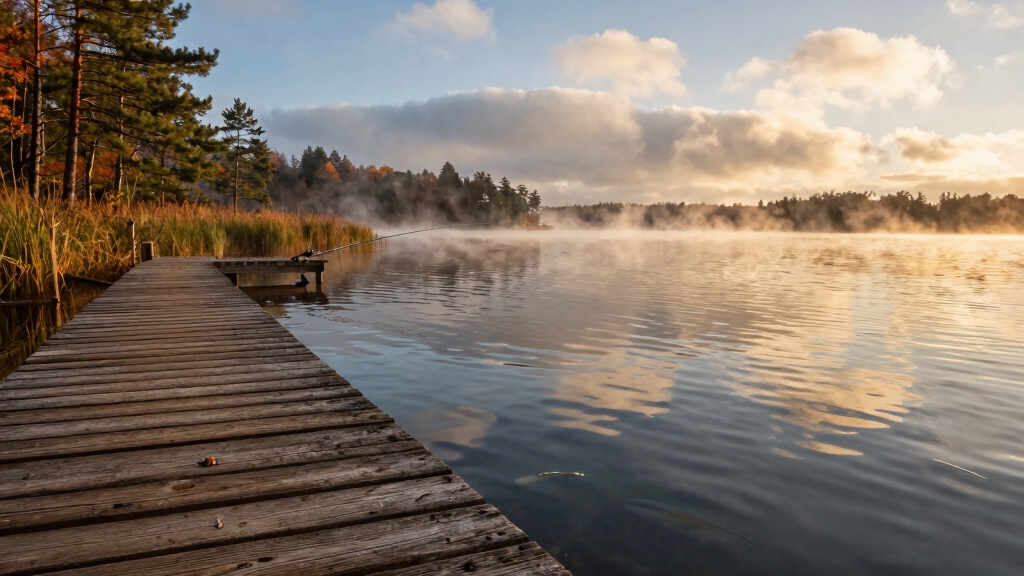
Frequently, anglers targeting High Rock Lake encounter a diverse assemblage of fish species exhibiting distinct seasonal behaviors. Black and white crappie populations dominate, with black crappie historically showing slow growth and stunting due to limited forage. However, recent samples reveal improved growth in age-2 and age-3 fish. In addition, largemouth bass growth rates are consistently above average, making them a prime target for anglers throughout the year. Recognizing the seasonal timing of fish activity can significantly enhance fishing success.
Crappie densities exceed regional averages, especially after 2016 when regulations were removed. Catfish species, including flathead, blue, and channel, exhibit spawning at precise temperature ranges (70-82°F), with peak feeding aligning with late spring and summer.
Bluegill and other sunfish spawn between 70-75°F, offering consistent panfish opportunities near submerged structures. Striped bass, stocked annually, display seasonal migrations to cooler or shallower waters, thriving in cold seasons. Approximately 79,000 striped bass fingerlings are released annually to support the population, since they cannot reproduce naturally in the lake. Understanding these patterns helps you target species effectively throughout the year.
Largemouth Bass Population and Fishing Regulations
While largemouth bass thrive in many Piedmont reservoirs, High Rock Lake stands out with its above-average bass densities and growth rates.
Triennial surveys by the NC Wildlife Resources Commission confirm a stable population with a balanced size structure, small, medium, and large bass, indicating robust recruitment and survival.
Largemouth bass, combined with striped bass, constitute about 52% of the sport fish population here.
Regulations align with North Carolina state rules, enforcing minimum size and creel limits designed to protect juveniles and breeding fish.
Slot limits may apply to maintain optimal size distribution.
These rules adapt based on survey data to sustain the population’s health.
Your adherence to these measures supports continued growth rates and size diversity, ensuring High Rock Lake remains a premier bass fishery.
For anglers targeting bass here, selecting the right fishing gear, such as a baitcaster reel for precision and control, can enhance the fishing experience.
Fishing Regulations and Compliance on High Rock Lake
Maintaining a healthy largemouth bass population on High Rock Lake relies heavily on adherence to established fishing regulations and compliance standards. You must understand and follow size limits, bag limits, and seasonal restrictions to sustain fish populations effectively. Responsible anglers should also practice proper fish handling techniques to minimize stress and promote survival after release, supporting fish population health.
Tournament anglers face additional rules, including restricted fishing hours and prohibitions on using professional guides in amateur events. For example, the Amateur Division excludes anyone deriving income from taking people fishing in the last two years. Illegal methods such as snagging and spearing are prohibited to protect fish integrity.
Key compliance points include:
- Verify species-specific daily bag and size limits before fishing.
- Respect tournament-specific fishing hours and weigh-in deadlines.
- Use only permitted fishing gear and techniques.
- Avoid fishing during closed seasons and adhere to conservation practices like catch and release.
Strict enforcement guarantees penalties for violations, emphasizing responsible angling on High Rock Lake. Additionally, all legal waters on High Rock Lake are open for fishing except during designated off-limits periods starting 4:00 pm the day of the pre-tournament meeting.
Access Points and Amenities for Anglers
Explore High Rock Lake through its well-distributed public access points that cater to a range of angling activities.
You’ll find major ramps like Southmont off Highway 8 and the upgraded North Carolina Wildlife Ramp near Tamarac Marina. Both offer ample parking, docks, and year-round boat launching. To ensure safety and comfort, anglers should consider wearing a wading belt when fishing in deeper waters.
Buddle Creek combines boat access with a summer swimming beach, while Pebble Beach features a protected swim zone separated by a floating boom.
For bank or kayak fishing, Goodman Lake Road provides a quieter, smaller parking area, though you’ll need to respect adjacent private lands. Additionally, the nearby York Hill access offers historic views from the Wilcox Bridge and serves as a launch point for motor boats and kayaks upstream or downstream along the Yadkin River York Hill Yadkin River Access.
Many sites include picnic tables, trails, shaded areas, and restrooms to support extended visits.
Access points accommodate motorboats, kayaks, and paddleboards, with no motor size or hour restrictions, ensuring versatile and convenient angler access across the lake’s 12,265 acres.
Environmental Health and Fishery Management Practices
Because High Rock Lake‘s ecological balance directly impacts its fishery resources, effective environmental health and fishery management practices are essential. These practices also consider species-specific habitat needs, such as the preference of lake trout for cold, deep waters.
You’ll notice these efforts focus on maintaining fish populations and water quality through science-based strategies and regulatory adjustments. Key initiatives include:
Adjusting crappie harvest regulations to optimize population structure and fish growth.
Implementing nutrient management rules to reduce algal blooms and improve water clarity.
Coordinating multi-jurisdictional fishery management with data-driven assessments and adaptive stocking. This approach aligns with the consensus requirement that ensures cooperative action among multiple jurisdictions.
Enforcing shoreline and sedimentation controls to protect critical fish habitats and spawning grounds.
Frequently Asked Questions
What Are the Best Bait and Tackle for High Rock Lake Fishing?
You know what they say: “The early bird catches the worm.” For High Rock Lake, use soft plastics like red or Texas-rigged worms near docks, and black tube grubs by muddy banks.
Combine 1/8 ounce weights with paddle tail grubs for shoreline casts. Spinnerbaits with white skirts excel around brush piles, while live minnows work best for crappie.
For catfish, live shad or cut bait is unmatched. Match tackle to cover for peak results.
Are There Guided Fishing Tours Available on High Rock Lake?
Yes, you can book guided fishing tours on High Rock Lake. These charters typically last 4 to 8 hours and focus on catfish and striped bass.
Guides like Captain Marc Gioeli and Peter Malec provide all-inclusive trips with gear, bait, and expert instruction. Prices start around $350.
You’ll find booking options online, often needing advance reservations for weekends. Guides bring local knowledge and personalized attention to maximize your fishing success.
What Is the Average Water Temperature Throughout the Year?
You’ll find the average water temperature at High Rock Lake ranges from about 54°F in January to 90°F in July, peaking near 86°F by late August.
Throughout the year, temperatures fluctuate seasonally. They’re coolest in mid-February around 54°F and warm steadily to 70°F by late May.
These precise temperature shifts markedly influence aquatic behavior and habitat. Tracking them helps you understand fish activity patterns and optimize your timing.
Can You Fish From a Kayak or Canoe on High Rock Lake?
Yes, you can fish from a kayak or canoe on High Rock Lake.
Public ramps provide easy launches, and regulations treat paddlecraft anglers like others, requiring PFDs and adherence to “No Wake” zones.
Kayaks and canoes let you access shallow, secluded spots ideal for bass, crappie, and catfish.
Always follow safety rules, respect environmental guidelines, and monitor weather to guarantee a secure, productive fishing experience on the lake.
Are There Any Fishing Tournaments Held at High Rock Lake?
Absolutely, you can join numerous fishing tournaments at High Rock Lake.
Imagine your kayak as a sleek battlestation amid a sea of competitors, each casting lines like precision-guided missiles.
Events like the National Crappie League in February and the Big Bass Bash by ACM in late May offer serious competition with hefty prizes.
Access points like Southmont Access and Tamarac Marina serve as your strategic launchpads.
Perfect your gear and timing; you’re entering a well-oiled tournament machine.
Plan Your Next Adventure on High Rock Lake Today
When you fish on High Rock Lake, you’re engaging with a carefully balanced ecosystem that thrives under thoughtful management and respectful angling.
By following regulations and appreciating seasonal patterns, you help preserve this vibrant aquatic community. Access points and amenities are designed to enhance your experience without compromising environmental integrity.
Your mindful participation guarantees that future anglers can enjoy the lake’s abundant resources, sustaining both the sport and the serene beauty that makes High Rock Lake truly special.