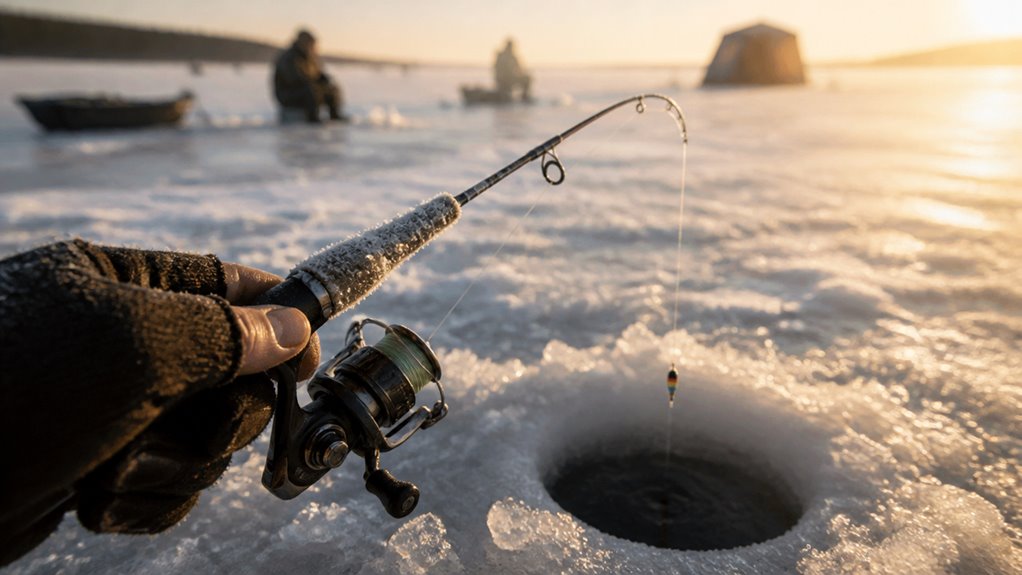
What Size Reel for Ice Fishing: Choose the Perfect Setup
You’ll want a reel size that matches your target species and rod length for peak ice fishing performance. Use 500–1000 series reels with ultralight rods for panfish and finesse.
For walleye and mid-sized predators, use 1000–2500 reels paired with medium rods. For larger trout and pike, opt for 2500–3000 reels.
Heavy-duty 3000–4000 reels suit trophy fish and heavy lines. Setting drag at about 25% of your line test guarantees smooth control. Details on matching gear and maintenance can enhance your setup further.
Key Takeaways
- For panfish and ultralight ice fishing, use 500–1000 series reels with 2–6 lb line and light drag for sensitivity and control.
- Medium rods (24–36 in) pair best with 1000–2500 reels supporting 4–10 lb line for targeting walleye and mid-sized trout.
- Large species like pike or lake trout require 2500–3000 reels with 6–15 lb line and robust drag systems.
- Heavy-duty fishing for trophy gamefish uses 3000–4000 reels accommodating 15–30 lb test and longer rods (35–50 in).
- Match reel size to rod length and line test to optimize drag performance, reduce fatigue, and improve hook-setting efficiency.
Choosing the Right Ice Fishing Reel Size: A Step-by-Step Guide
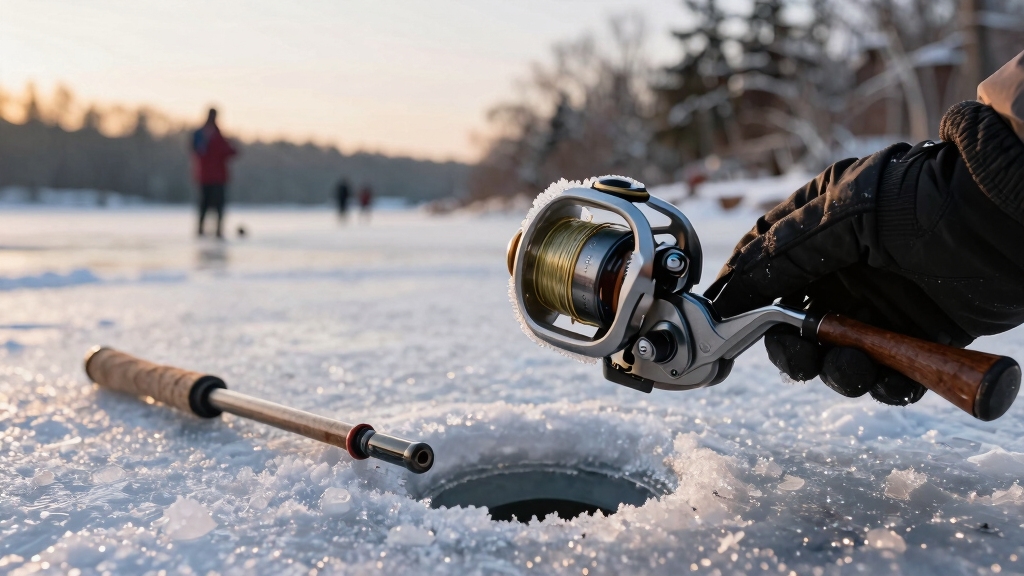
When selecting the right ice fishing reel size, you need to take into account the target species and corresponding line test ratings carefully.
Choosing the right ice fishing reel size means considering your target species and appropriate line test ratings.
Start by identifying the fish you intend to catch. Panfish require reels sized 500 to 1000, supporting 2 to 6 lb lines with light drag.
For walleye or mid-sized predators, look for 1000 to 2500 reels that handle 4 to 10 lb lines and offer stronger drag.
Larger species like lake trout and pike demand 2500 to 3000 reels with 6 to 15 lb line capacity and robust drag systems.
You’ll rarely need sizes above 3000. Always match reel size to line test rating and rod length to guarantee peak drag performance and line capacity for your specific ice fishing conditions.
Also, consider reels with corrosion-resistant materials to ensure durability and smooth performance in cold, wet environments.
General Reel Size Principles and Standards for Ice Fishing
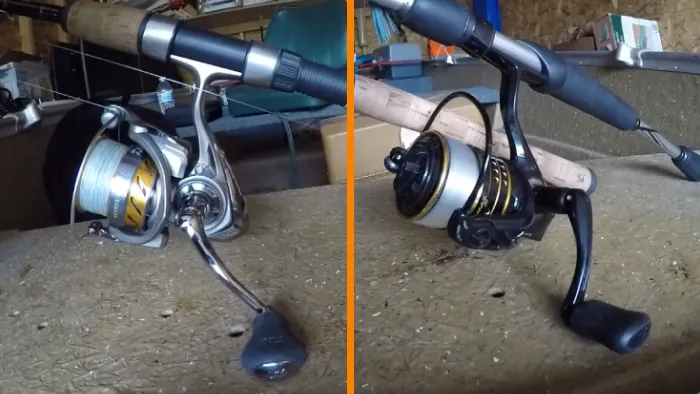
Although ice fishing reels come in a wide range of sizes, standard spinning reels typically span from the 500 Series up to the 8000 Series. Most ice fishing applications don’t exceed the 4000 Series.
The 2500 Series serves as a versatile, catch-all option. The 1000 Series is the most popular all-around choice.
Keep these principles in mind:
- Reel size directly determines line capacity, accommodating various test strengths in both mono and braid.
- Ice fishing reels usually require lighter drag settings, roughly 25% of the line’s pound test, assuring precise control.
- Smaller reels provide better handling on ice. Regular open-water reels can be adapted by replacing oil with grease.
Additionally, reels with smooth drag systems and corrosion-resistant materials perform best in cold, wet ice fishing conditions.
Following these standards guarantees you match reel performance with typical ice fishing demands efficiently.
Matching Reel Size to Rod Length and Action
When you’re out on the ice, it’s super important to match your reel size with your rod length and action. Trust me, it makes a big difference!
For those shorter, ultralight rods, you’ll want to go for smaller reels, like the 500 to 1000 series. They pair perfectly together.
Now, if you’re using medium to heavy rods, you’ll need to step up to larger reels. This is crucial because they’ll handle stronger drag and give you the line capacity you need.
Choosing the right combo not only ensures you have the balance you’re looking for but also gives you the sensitivity and control that can make or break your ice fishing experience.
Keep in mind that using heavy-duty reels designed for strong drag systems can improve your chances when targeting powerful fish.
Rod Length Compatibility
Matching the reel size to your rod length and action guarantees peak performance and control while ice fishing. To make certain ideal compatibility, consider these technical guidelines:
- Rod Length: Use 500 to 1000 size reels for 20-30 inch ultralight rods. For 24-36 inch medium rods, choose 1000 to 2500 reels. For 36-42 inch medium-heavy rods, go with 2500 to 3000 reels. Matching line capacity to rod length maintains balance and sensitivity.
- Action Type: Pair lighter reels with faster, more sensitive rods to enhance tip response. Heavier reels suit rods designed for power and longer casts.
- Line Capacity: Ensure your reel’s line capacity corresponds with the rod’s recommended test line. This avoids drag inefficiencies and maintains smooth retrieves.
Aligning these parameters helps you maximize control, reduce fatigue, and improve hook-setting efficiency under ice fishing conditions. Additionally, regular routine maintenance of your reel ensures consistent performance and longevity in harsh ice fishing environments.
Action Strength Matching
Consider the rod’s action strength carefully when selecting your reel size to guarantee peak performance on the ice.
Matching reel size to rod length and action assures balanced handling, optimal drag control, and effective line management.
Ultralight rods need smaller reels with lighter drag, while medium to heavy rods require larger reels with reinforced drag systems.
| Rod Action | Rod Length (in) | Recommended Reel Size | Line Test (lb) |
|---|---|---|---|
| Ultralight | 20 – 30 | 500 – 1000 | 2 – 6 |
| Medium | 24 – 36 | 1000 – 2500 | 4 – 10 |
| Medium-Heavy | 36 – 42 | 2500 – 3000 | 6 – 15 |
| Heavy | 35 – 50 | 3000 – 4000 | 15 – 30 |
Make certain your reel complements your rod’s power to maximize efficiency and control on the ice. Removing the reel before cleaning and regularly inspecting the rod and reel can help maintain optimal performance and prolong their lifespan.
Optimal Reel Pairing
Optimize your ice fishing setup by pairing reel size precisely with rod length and action. Matching these components guarantees peak drag performance, line capacity, and control when targeting specific species.
- For ultralight rods (20-30 inches) with light action, choose a 500 to 1000 size reel. It supports 2-6 lb test lines and provides finer drag suitable for panfish like bluegill and perch.
- Medium action rods (24-36 inches) pair best with 1000 to 2500 size reels. These handle 4-10 lb lines and stronger drag, ideal for walleye and mid-sized trout.
- For medium-heavy action rods (36-42 inches), select 2500 to 3000 size reels. They accommodate 6-15 lb lines and offer ample capacity and drag for large trout and pike.
Choosing between 2500 and 3000 reels depends on factors such as line capacity and handle design, which can affect your fishing efficiency and comfort on the ice.
This precise pairing maximizes fish-fighting efficiency on the ice.
Best Reel Sizes for Panfish and Ultralight Ice Fishing
When you’re out there chasing panfish and engaging in ultralight ice fishing, picking the right reel size is key. A reel in the 500 to 1000 size range really shines in this scenario. It pairs perfectly with line strengths from about 2lb to 6lb, which is just what you need for those delicate bites.
Plus, this size offers a lighter drag system that’s perfect for handling the subtle nudges panfish are known for. You’ll find that it works seamlessly with ultralight rods that are between 20 and 30 inches long. So, when you choose the right reel, you’re not just making a choice; you’re ensuring precise control and efficient line management while you’re out on the ice.
Choosing lines with low stretch and thin diameters enhances sensitivity and improves bite detection, making your setup even more effective.
Happy fishing!
Ideal Reel Size
Selecting a 500 to 1000 size reel perfectly matches the demands of panfish and ultralight ice fishing.
These reels are engineered to handle light lines from 2lb to 6lb test and provide a lighter drag system necessary for finesse presentations.
When choosing the ideal reel size, consider these three technical factors:
- Line Capacity: A 500 to 1000 reel efficiently holds the moderate line amount needed for bluegill, crappie, and trout.
- Drag Precision: The lighter drag settings maintain tension without overpowering small panfish, preventing line breakage.
- Rod Compatibility: These reels pair best with ultralight rods ranging from 20 to 30 inches, optimizing sensitivity and control.
Many of the top ultralight spinning reels in this size range feature corrosion-resistant materials to enhance durability in wet and icy environments.
Line Strength Options
Understanding the appropriate line strength is key when pairing with 500 to 1000 size reels, especially for panfish and ultralight ice fishing setups.
These reels optimally handle 2lb, 4lb, and 6lb test lines, aligning perfectly with species like bluegill, crappie, and perch.
You want a lighter drag system calibrated to roughly 25% of your line’s lb test, so a 4lb test line matches about 1lb drag.
This maintains line integrity without sacrificing sensitivity.
Using heavier line reduces reel performance and adds unnecessary bulk, compromising finesse.
The 500 to 1000 reels excel with 20- to 30-inch ultralight rods, offering precise control and smooth drag engagement.
Selecting the correct line strength guarantees peak casting, efficient hook sets, and minimizes line breakage during delicate ice fishing conditions.
A multi-disc drag system enhances smoothness and control even on lighter reels, improving performance during subtle strikes.
Best Reel Sizes for Walleye and Mid-Sized Predators
Targeting walleye and mid-sized predators demands a reel that balances strength and finesse, typically within the 1000 to 2500 size range.
For walleye and mid-sized predators, reels sized 1000 to 2500 offer the perfect blend of strength and finesse.
These reels support 4lb to 10lb test lines and offer a stronger drag system critical for medium-power fish.
To optimize your setup, consider these points:
- Line Capacity: Choose reels that hold adequate line for 4lb, 6lb, 8lb, or 10lb test lines, matching the species’ strength and depth.
- Drag Strength: Set drag to about 25% of your line’s test to prevent line breakage while maintaining control during fights.
- Rod Compatibility: Pair with 24- to 36-inch medium-action rods for balanced sensitivity and leverage.
This size range represents the most versatile choice for general predator ice fishing.
It delivers efficient performance without excess bulk.
For improved control during fights, prioritize reels with smooth drag systems to reduce line slap and premature breakage.
Benefits of Larger Reels for Trout, Pike, and Big Fish
While reels sized between 1000 and 2500 work well for mid-sized predators, stepping up to larger reels offers significant advantages when you’re after trout, pike, or other big fish.
Larger reels, specifically in the 2500 to 3000 range, provide greater line capacity, stronger drag systems, and compatibility with heavier test lines (6-15 lb). This allows you to handle fish exceeding 20 pounds with confidence, especially in deeper waters.
| Reel Size | Line Capacity (lb) | Ideal Rod Length (in) |
|---|---|---|
| 2500 | 6, 8, 10, 12, 15 | 36 – 42 |
| 3000 | 6, 8, 10, 12, 15 | 36 – 42 |
| 4000 | 15, 20, 25, 30 | 35 – 50 |
| Drag Power | Stronger for big fish | Precise control |
| Line Type | Mono & Braid | Optimized for heavy use |
Opt for larger reels to maximize control and line endurance against robust species.
When to Use Heavy-Duty Ice Fishing Reels for Heavy Gamefish?
Choose heavy-duty ice fishing reels when you’re pursuing the largest and most powerful gamefish, such as trophy-sized pike or large sharks under the ice.
Select heavy-duty ice fishing reels for targeting massive, powerful gamefish like trophy pike and large ice sharks.
These reels, typically sized 3000 to 4000, are engineered to handle intense pressure and heavy line tests of 15 to 30 pounds.
You’ll benefit from their reinforced drag systems and increased line capacity, critical for controlling strong, deep-dwelling fish.
Consider these factors when selecting a heavy-duty reel:
- Line Capacity: Make certain the reel holds enough 20-30lb test line to prevent breakoffs during long runs.
- Drag Strength: Opt for models with durable, smooth drag mechanisms to maintain consistent tension.
- Rod Compatibility: Pair with heavy-action rods between 35 and 50 inches for peak leverage and control.
Selecting the right heavy-duty reel maximizes your success with formidable ice fish.
Understanding Drag Settings and Line Test Strength
Because properly setting drag is essential for protecting your line and landing fish efficiently, you need to match drag settings to your line’s test strength.
Set drag at about 25% of the line’s pound test. Too tight risks line breakage, and too loose lets fish run freely. Adjust the drag knob until a 1 lb weight lifts with a distinct ‘tink’ sound for a 4 lb test line.
| Line Test (lb) | Drag Setting (lb) |
|---|---|
| 4 | 1 |
| 6 | 1.5 |
| 8 | 2 |
| 10 | 2.5 |
This precision guarantees peak drag performance and line longevity during ice fishing.
Ice Fishing Reel Maintenance Tips for Cold Conditions
Proper drag settings protect your line and improve fish handling. Maintaining your reel for cold-weather performance guarantees those settings stay reliable.
Ice and freezing temperatures can stiffen moving parts and degrade lubricants, impacting reel function. To assure peak performance:
- Use cold-weather grease instead of standard oil to prevent thickening and freezing of internal components.
- Regularly clean and dry your reel after each outing to remove ice, snow, and moisture that cause corrosion and mechanical binding.
- Store reels in a temperature-controlled environment to avoid brittleness and protect drag systems from damage caused by extreme cold.
Following these maintenance steps preserves smooth drag action and reel responsiveness, essential for effective ice fishing in harsh conditions.
Frequently Asked Questions
How Does Reel Weight Affect Ice Fishing Performance?
Reel weight directly impacts your ice fishing performance by influencing fatigue and control. A lighter reel lets you fish longer with less strain, especially during ultralight techniques targeting panfish.
Heavier reels can offer durability but reduce sensitivity and quick response. You’ll want a balance that’s light enough for comfort and precision, yet sturdy enough to handle your target species and line strength.
This optimizes your overall effectiveness on the ice.
Can Spinning Reels Be Used for Jigging Through Ice?
Spinning reels can absolutely be your trusty dance partner when jigging through ice. They offer smooth line release and retrieval, essential for the subtle movements jigging demands.
Their lightweight design lets you feel every nibble beneath the ice’s silent surface. Just make certain you swap standard oil for grease to prevent freezing.
With proper drag settings and matched line strength, spinning reels provide precise control and responsiveness vital for effective ice jigging.
What Materials Are Best for Ice Fishing Reel Durability?
You’ll want reels made from corrosion-resistant materials like aluminum or graphite to handle harsh ice fishing environments.
Aluminum offers durability and strength without excessive weight, while graphite provides lightweight corrosion resistance.
Look for sealed drag systems and stainless steel components to prevent ice and moisture damage.
Using reels with quality grease instead of standard oil also enhances longevity by resisting freezing and wear during cold conditions.
How to Prevent Reel Freezing in Extreme Cold?
Imagine you’re ice fishing on a -20°F morning, and your reel freezes solid. To prevent this, you should regularly apply a specialized grease designed for low temperatures instead of standard oil. Standard oil thickens and causes freezing.
Also, keep your reel covered when not in use to block moisture and wind. Wipe off ice buildup frequently. Avoid submerging your reel in water to maintain smooth drag and operation in extreme cold conditions.
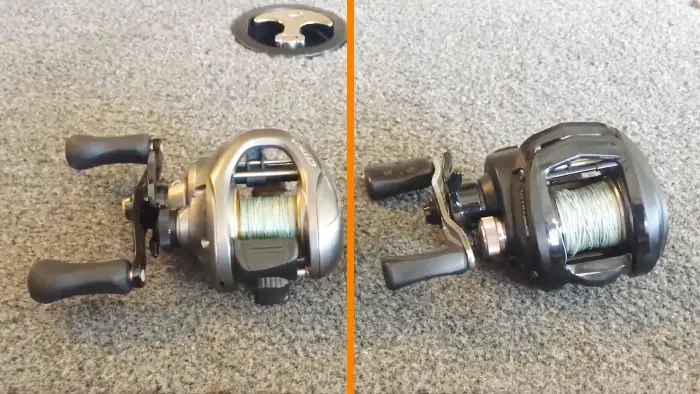
Are Baitcasting Reels Suitable for Ice Fishing?
Baitcasting reels aren’t ideal for ice fishing due to their complexity and tendency to freeze in cold conditions.
You’ll find spinning reels more reliable because they handle ice buildup better and offer smoother drag adjustments.
Baitcasters have tighter tolerances, which can cause jams when moisture freezes inside.
If you prefer baitcasting, you must regularly clean and grease the reel to prevent freezing.
However, spinning reels remain your best technical choice for consistent ice fishing performance.
Match Your Ice Fishing Reel to Your Target Species
Choosing the perfect ice fishing reel size isn’t just important—it’s absolutely mission-critical. Using the wrong reel is like bringing a butter knife to a sword fight; you’ll lose fish, time, and patience faster than you can say “ice hole.”
Match your reel to your rod, target species, and line strength with surgical precision. Nail this, and your ice fishing game will be unstoppable, even when the cold tries to freeze your gear and your luck.