Is Bonita Fish Good to Eat: Taste, Nutrition & Cooking Tips
You can enjoy bonita fish for its rich, oily texture and stronger flavor compared to other tunas. It has a streamlined body and dark, oily meat linked to its predatory diet.
However, because bonita tends to accumulate higher mercury and PCB levels, it’s best to limit your intake to once or twice weekly. Trim the darkest parts before cooking. Proper handling and seasoning help balance its intense taste. Exploring its culinary potential reveals even more.
Key Takeaways
- Bonita fish has a richer, stronger, and oilier flavor than common tunas, appealing to those who enjoy bold fish tastes.
- Its dark, oily meat can be an acquired taste but trimming the darkest portions improves flavor and reduces intensity.
- Proper handling, like immediate bleeding and thorough icing, is essential to maintain freshness and taste quality.
- Due to its predatory nature, bonita accumulates mercury and PCBs, so consumption should be limited to once or twice weekly.
- Cooking methods like quick pan-searing or foil-roasting with light seasoning best highlight bonita’s natural flavor and texture.
What Is Bonita Fish?
Bonita fish, scientifically known as Sarda chiliensis, belongs to the mackerel family and is closely related to tunas.
You’ll find this species along the Pacific coast, ranging from Mexico to Oregon, inhabiting inshore to offshore waters.
Typically, Bonita weigh between 5 to 25 pounds, with Atlantic specimens smaller than their Pacific counterparts.
Their bodies are streamlined with a silver belly, dark back, and distinctive stripes.
Bonita are piscivorous, feeding on smaller fish similarly to barracuda and mackerel.
They live relatively short lives, rarely exceeding eight years.
Despite their classification as small tunas, they show unique physiological traits like lacking scales.
Understanding these biological and ecological characteristics helps you appreciate Bonita’s place in marine ecosystems and informs responsible consumption and fishing practices.
How Bonita Fish Tastes Compared to Other Tuna?
Although it shares a close relation with tunas, this fish offers a distinctly stronger and more pronounced flavor profile due to its dark, oily meat.
Compared to yellowfin or blackfin tuna, you’ll notice its richer, fishier taste, which some consider an acquired preference. The higher oil content intensifies its flavor, making it less mild but more robust.
Its richer, fishier flavor and higher oil content create a bold taste that some acquire and others adore.
When prepared properly, especially trimmed to remove the darkest portions, its taste can rival that of yellowfin tuna, particularly in raw or seared forms.
Its deeper red coloration also reflects a denser, oilier texture. While general consumers might find it overpowering, seafood enthusiasts appreciate its complexity.
You’ll find that light seasoning complements rather than masks its natural flavor, allowing you to experience the full character of this species.
For those interested in sourcing similar high-quality tuna, regions like the Gulf of Mexico oil rigs provide year-round access to robust yellowfin populations that share some flavor characteristics with bonita.
Preparing and Cooking Bonita Fish for Best Flavor
Start by bleeding the fish immediately after catch and icing it thoroughly to preserve freshness and reduce strong odors. Proper handling minimizes blood accumulation, which can otherwise intensify the fishy flavor.
When preparing bonito, trim away the dark, oily core to improve taste and texture. You can enhance flavor without overpowering it using light seasonings. Consider these methods for peak results:
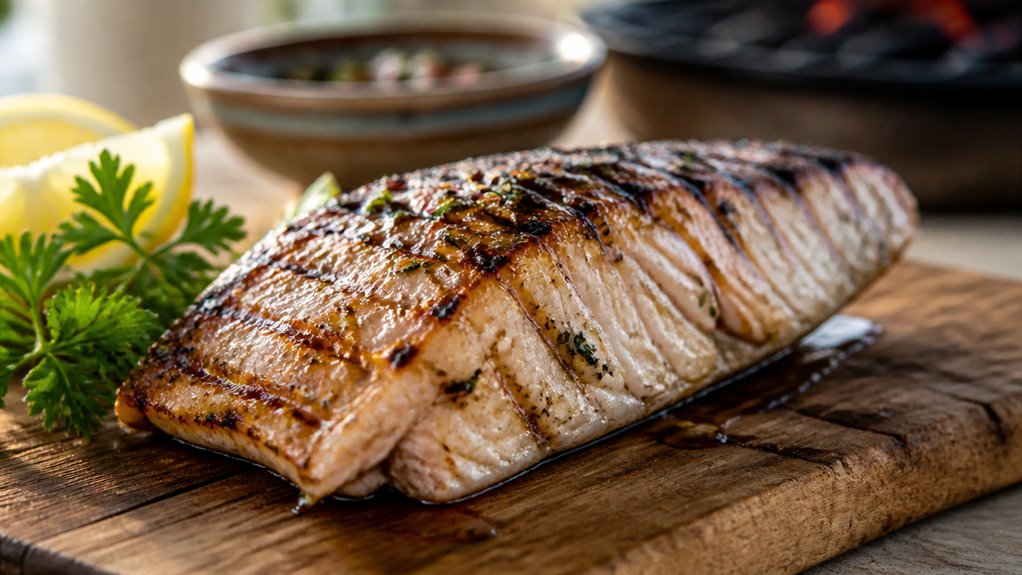
Serve raw or seared with the center remaining rare to highlight its rich, red flesh. Pan-sear fillets quickly, preserving moisture and natural oils. Cook foil-encased fillets about 15 minutes per side until flaky and opaque. Marinate with lemon juice, olive oil, garlic, salt, and pepper to balance the strong flavor.
Using light seasonings modeled after those effective for lures like the Bomber Mullet slow-sinking twitch can subtly enhance natural flavors without masking them.
Following these steps guarantees you enjoy bonito’s unique taste scientifically and objectively.
Can You Eat Bonita Fish Safely Every Week?
You should limit your consumption of bonita fish to once or twice weekly due to its high oil content and dietary similarities with other piscivorous species like barracuda and mackerel.
These fish accumulate higher levels of environmental contaminants such as mercury and PCBs because of their predatory nature. Although bonita is safe to eat when properly trimmed and prepared, frequent consumption may increase your exposure to these toxins.
Scientific guidelines for similar species recommend moderate intake to minimize health risks. Additionally, trimming the dark, oily portions reduces contaminant levels and improves safety. It is important to follow local consumption advisories to ensure safe eating practices.
Top Recipes to Enjoy Bonita Fish
When preparing bonita fish, separating the lighter outer meat from the dark, oily core is essential to enhance texture and flavor. This step reduces bitterness and improves palatability.
You can enjoy bonita using precise methods that highlight its natural taste and oily richness without overpowering seasonings.
Pan-sear fillets quickly, leaving the center raw to retain moisture and color. Use a marinade of lime juice, olive oil, and chipotle rub for balanced acidity and spice.
Roast fillets wrapped in foil with garlic, lemon juice, and potatoes for even cooking. Serve raw or seared with complementary ingredients like cherry tomatoes, olives, and capers.
These approaches guarantee peak flavor extraction while respecting the fish’s oily composition and delicate texture. Despite changes in texture, oily fish like bonita still provide valuable omega-3 fatty acids and nutrients beneficial for health.
Frequently Asked Questions
Where Is Bonita Fish Commonly Found and Caught?
You’ll commonly find bonita fish along coastal Pacific waters from Mexico to Oregon, thriving in both inshore areas and offshore platforms.
Atlantic populations grow up to 30 inches and 12 pounds, while Pacific specimens reach 40 inches and 25 pounds.
These fish school seasonally during summer and fall but may appear year-round during El Niño events.
Anglers often catch them via trolling, sight-casting, or live bait in these habitats.
How Do You Properly Clean and Bleed Bonita Fish?
Cleaning and bleeding bonita fish is like revealing a hidden treasure beneath its oily surface.
You start by bleeding the fish immediately after catching. Cut the gills and let blood drain into ice water to preserve freshness.
Next, thoroughly ice the fish to slow spoilage. When cleaning, separate the lighter meat from the dark, bloody core to reduce bitterness and fishiness.
This ensures peak flavor and texture for cooking or raw preparation.
What Is the Average Size and Weight of Bonito Fish?
You’ll find bonito fish typically range from 30 to 40 inches in length, with weight varying between 12 to 25 pounds depending on the region.
Atlantic bonito average about 30 inches and 12 pounds, while Pacific bonito can reach up to 40 inches and 25 pounds.
Their streamlined, aerodynamic bodies feature a silver belly and dark back with distinctive stripes, adapting them well for fast swimming in coastal and offshore waters.
Why Is Bonita Fish Often Considered a “Trash” Fish?
You’ll find bonita fish often labeled as “trash” because of its dark, oily, and bloody meat, which many consider unappealing.
Its strong fishy flavor and high oil content make it less popular with casual consumers.
However, if you trim the dark portions properly and prepare it carefully, you’ll reveal a rich, flavorful experience prized by seafood enthusiasts and chefs alike.
The stigma comes mainly from underutilization and improper cleaning.
What Types of Gear Are Best for Fishing Bonita?
Looking to land a bonita? You’ll want trolling gear, spinning tackle for sight-casting, and live bait rigs.
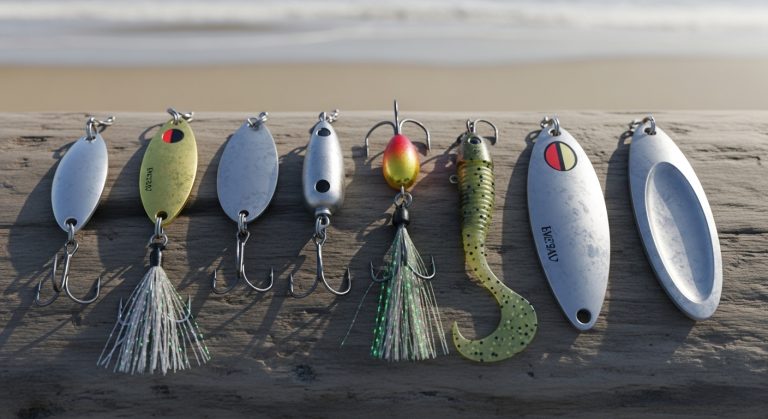
Flashy spoons or small lures work well to mimic their prey. Choose medium-action rods paired with reels capable of handling fast, aggressive runs.
Why settle for less when targeting these swift, schooling fish? Proper gear increases your chances of success, especially since bonita favor inshore waters and offshore platforms where speed and precision matter.
Bonita Fish Offers a Delicious Balance of Flavor and Nutrition
If you think of Bonita fish as a reliable runner in a relay race, its flavor is the steady handoff between milder tuna and bolder mackerel.
Scientific studies show Bonita contains moderate mercury levels, so eating it weekly is generally safe but requires balance.
By preparing it carefully, you’ll reveal its nuanced taste. Enjoying Bonita thoughtfully guarantees you get the best flavor without compromising health.