Ice Fishing Crappie at Night: Smarter Fishing Tactics
When ice fishing crappie at night, focus on deep basins around 15–20 feet where weed edges or steep slopes meet. Use a 32–36 inch medium rod with 4 lb braid and glow jigs tipped with live minnows.
Position bright, steady lights to attract zooplankton and crappie. Employ slow, deliberate jigging motions to entice strikes. These targeted tactics boost your catch rate.
There’s more to master about gear, behavior, and subtle lure manipulation to sharpen your night fishing skills.
Key Takeaways
- Target deep basins (15–20 feet) near weed edges or steep slopes where crappie gather at night.
- Use glow jigs tipped with live or scented minnows to attract crappie feeding on nocturnal prey.
- Position bright, steady glow lights near the hole to attract zooplankton and crappie closer.
- Employ slow, steady jigging initially, then faster, shorter strokes once fish are detected.
- Utilize a 32–36 inch M or ML rod with light braid and fluorocarbon leader for sensitivity and control.
How to Find the Best Nighttime Ice Fishing Spots for Crappie
When targeting crappie at night through the ice, start by focusing on deep basins around 15 to 20 feet of water that are bordered by shallower areas or steeper drop-offs.
These basins attract zooplankton, drawing crappie to feed. Prioritize spots where deep water meets weed edges or steep slopes, as crappie use these features for cover and ambush.
Use your sonar or fish finder to identify sparser weed patches first. Grid drill holes about five feet apart to systematically explore thicker vegetation.
Avoid shallow flats with no structure. They rarely hold crappie at night. By pinpointing these strategic locations, you maximize your chances of encountering active fish feeding near the bottom or suspended just above it.
This sets you up for a productive night on the ice. Remember that crappie often suspend near oxygenated zones during winter, so adjusting your jig depth accordingly can improve your catch rate.
Understanding Crappie Behavior for Night Ice Fishing Success
Locating prime nighttime spots sets the stage, but understanding how crappie behave after dark sharpens your approach.
At night, crappie move shallower, targeting weeds where nocturnal insects and small minnows abound. They suspend mid-to-upper water columns, feeding actively on zooplankton and baitfish, unlike their daytime bottom-hugging stance.
At night, crappie rise to shallower weeds, actively feeding on insects and minnows suspended midwater.
Depths vary nightly, so you must adapt by probing the full water column, especially deep basins where zooplankton concentrate. Crappie’s heightened night vision lets them target prey with minimal movement, so your presentation should mimic subtle, natural motions.
Recognize their shifting positions—tight to cover in sparse weeds early, then thicker clumps later—and adjust your strategy accordingly. Mastering these behavioral patterns gives you a tactical edge, turning your night ice fishing into a calculated, productive pursuit.
Using a fishing net with a rubberized mesh can improve catch-and-release success by reducing injury and minimizing hook snags during landing.
Choosing the Best Gear and Baits for Night Ice Fishing Crappie
Select your gear and baits with precision to maximize your success on the ice at night.
Use a 32-36 inch M or ML rod paired with 4 lb braid and a fluorocarbon leader for sensitivity and stealth.
Spool a 1000-size spinning reel with 4-6 lb mono if you expect heavy cover.
Choose 1/8-oz glow jigs in white or chartreuse to stand out in low light.
Always charge glow baits thoroughly before use.
Tip your jig with a full crappie minnow hooked through the back to mimic natural prey.
Incorporate small plastics with tiny appendages that imitate zooplankton for finesse presentations.
This strategic gear and bait setup lets you fish efficiently and tempt cautious night-crappies, increasing your catch rate while minimizing missed strikes.
For improved bite detection and hook-setting power, consider using braided fishing lines with low stretch and high sensitivity in your rig.
How to Use Light and Scent to Catch More Crappie at Night?
After gearing up with the right rods, lines, and glow jigs, enhancing your setup with effective lighting and scent strategies can markedly boost your catch rate.
Boost your catch rate by combining the right gear with smart lighting and scent techniques.
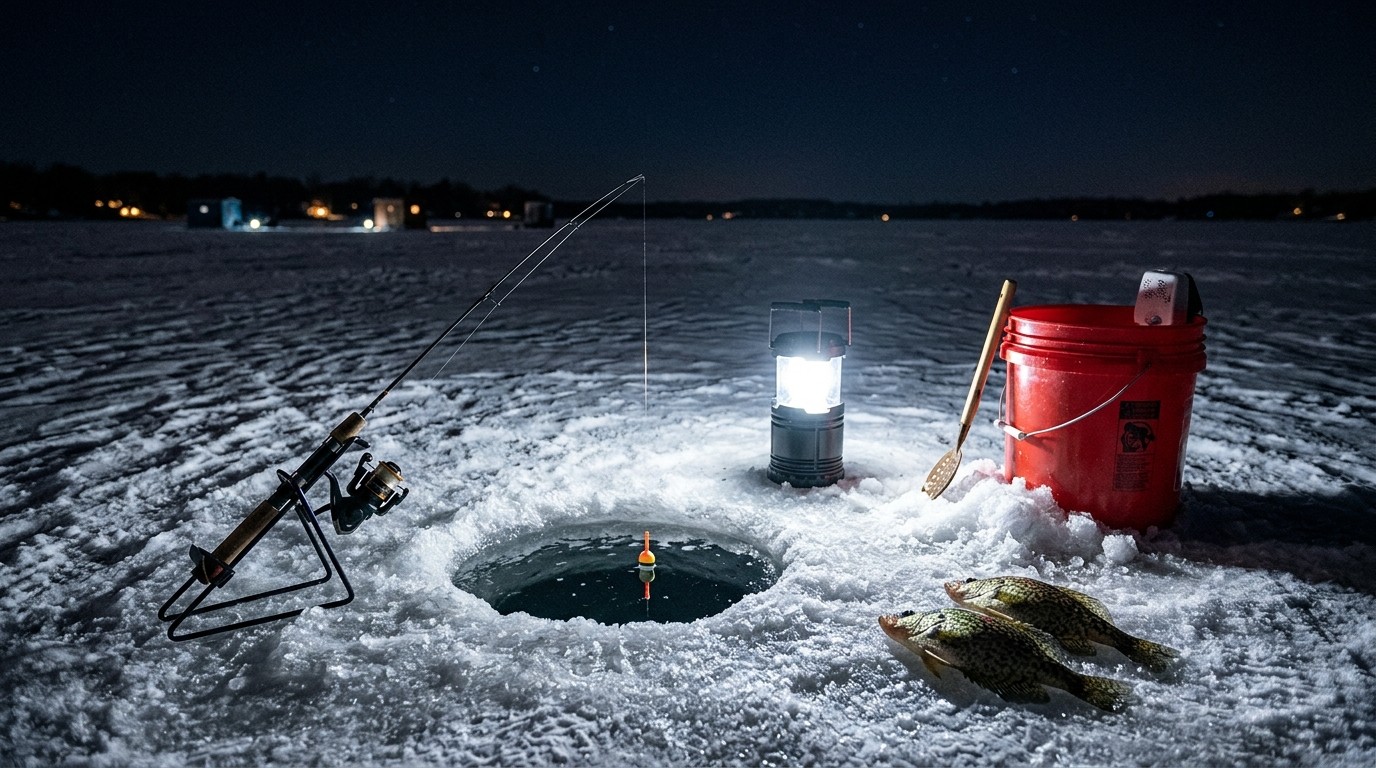
Position a bright camping lantern or underwater light near your hole to attract zooplankton, which in turn draws crappie closer.
Choose lights that emit a steady glow without excessive flicker to avoid spooking fish.
Complement this by applying scent—minnow scent or synthetic attractants—on your jigs to trigger feeding instincts.
Tip your glow jigs with live or scented minnows, hooking them through the back to imitate natural baitfish movement.
This combination of strategic illumination and scenting increases your lure’s visibility and appeal, enticing crappie to investigate and strike in low-light conditions typical of night ice fishing.
Using bright or scented lures can simulate natural prey and improve your chances in low-visibility conditions.
Proven Jigging Techniques for Nighttime Ice Fishing Crappie
Mastering jigging techniques is essential when targeting crappie at night through the ice, as their behavior and light conditions demand a nuanced approach.
Start with slow, steady lifts, raising your jig 2-3 feet in big sweeping strokes. Then let it fall freely to mimic fleeing prey.
When you mark fish, switch to quicker, shorter strokes to trigger strikes. If they hesitate, deadstick your bait to avoid spooking them.
Keep your jig just above the fish to minimize unnecessary chase in low light. As crappie approach, lift the bait slightly to simulate escape, provoking pursuit.
Use glow jigs tipped with a full crappie minnow for added realism. This strategic jigging sequence maximizes your chances of enticing bites in the challenging nighttime ice-fishing environment.
Using a reel with a smooth drag system can help maintain steady pressure during fights, increasing your landing success in cold conditions.
Frequently Asked Questions
What Is the Best Time of Night to Start Ice Fishing for Crappie?
You should start ice fishing for crappie just after dusk when they begin moving shallower to feed on nocturnal insects and small minnows.
Crappie are more active at night, especially in shallow weeds, so targeting this time maximizes your chances.
Use bright lights to attract zooplankton and baitfish, drawing crappie into your strike zone.
Early night hours offer prime feeding behavior before they settle deeper later on.
How Do Weather Changes Affect Crappie Movement Under the Ice?
When the weather changes, you know “a rolling stone gathers no moss.”
Crappie adjust quickly under ice, moving shallower with warming temps and seeking deeper basins as cold fronts drop oxygen levels.
Sudden shifts in barometric pressure can push them off their usual spots, so you must track these patterns closely.
Adapt your depth and location accordingly, focusing on where baitfish and oxygen concentrate to maximize your catch during unstable conditions.
Can Crappie Be Caught Through Ice During Early Winter Months?
Yes, you can catch crappie through ice in early winter.
Focus on deep basins around 15-20 feet where zooplankton gather, since crappie follow their food.
Use slow, steady jigging with glow jigs tipped with minnows.
Maintain your bait just above the fish.
Target sparser weeds first, then thicker cover.
Employ bright underwater lights to improve visibility and trigger feeding.
This will boost your chances during these colder months.
How Do I Safely Drill Holes for Ice Fishing Crappie at Night?
Don’t bite off more than you can chew. Always check ice thickness before drilling.
Use a sharp, well-maintained auger to create clean holes about 6-8 inches wide. Space holes 5 feet apart in a grid pattern to cover sparser and thicker weed areas effectively.
Wear ice cleats for traction and bring a buddy for safety. Keep a rescue rope and ice picks handy. Shine a strong light around your drilling area to spot thin spots.
What Are the Signs of Active Crappie Beneath the Ice Surface?
You’ll notice consistent, subtle taps or light strikes on your bait, indicating crappie are actively feeding nearby.
Watch for sudden, small depth changes on your fishfinder, signaling movement.
If your line twitches or your jig feels lighter, that’s another sign.
Also, steady bites following slow jigging strokes mean crappie are engaged.
Finally, if fish suspend mid-water rather than hugging the bottom, you’ve found active crappie ready to strike.
Light, Scent, and Precision: The Winning Formula for Night Crappie
By focusing on crappie behavior and using the right gear, you’ll boost your nighttime ice fishing success. For example, imagine Mark, who switched to scented jigs and LED tip-ups after struggling in the dark.
Within an hour, his catch rate doubled. Strategic use of light and scent helps crappie zero in on your bait, while precise jigging keeps them hooked.
Keep adapting these tactics, and you’ll consistently find the best nighttime ice fishing spots for crappie.