Trout Fishing in Portugal: Best Rivers, Seasons and Tactics
If you’re targeting trout fishing in Portugal, focus on wild brown trout in mountain rivers and tailwaters from March to August when activity peaks.
Use precise dry fly techniques with drag-free presentations, matching local insects.
Fish in prime rivers like the Zêzere, Lima, or Minho while respecting strict licensing and catch-and-release rules to protect trout populations.
Approach stealthily to avoid spooking these wary fish. To fine-tune your strategy, knowing specific river habitats, regulations, and ethical handling tips will give you an edge.
Key Takeaways
- Wild brown trout thrive in Portugal’s pristine mountain rivers and tailwaters, especially in Serra da Estrela and Peneda-Gerês regions.
- Prime trout fishing season spans March to August, with peak activity in spring and early summer during abundant insect hatches.
- The Zêzere, Minho, and Lima Rivers are top locations for robust brown trout and Atlantic salmon fishing.
- Dry fly fishing with drag-free presentation, upstream casting, and careful approach is essential for success with wary wild brown trout.
- A valid freshwater fishing license is required; follow catch-and-release best practices to protect trout populations and ensure sustainable fishing.
The Best Trout Species to Target in Portugal’s Rivers
When fishing Portugal’s rivers, brown trout stand out as the prime target due to their abundance, strength, and intelligence.
Brown trout dominate Portugal’s rivers, prized for their abundance, resilience, and cunning nature.
You’ll find wild brown trout thriving in pristine mountain rivers and tailwaters, making them a reliable and challenging catch.
Their strategic behavior, often remaining stationary, demands precise presentation and keen observation.
Rainbow trout appear less frequently but offer an exotic alternative, especially in stocked waters.
Seatrout inhabit northern coastal waters, providing a unique saltwater-freshwater challenge, while Atlantic salmon concentrate in specific river systems like the Lima and Minho.
Focusing on wild brown trout maximizes your chances for a rewarding experience, as their adaptability and environment-specific markings require advanced fly fishing techniques.
Prioritize rivers with cold, oxygen-rich waters to encounter these prime specimens.
Understanding the feeding behavior of trout species can significantly improve your lure and bait selection for more effective fishing.
When Is the Prime Season for Trout Fishing in Portugal?
Targeting wild brown trout in Portugal means aligning your fishing efforts with their most active periods.
The prime season spans from March through August, peaking in spring and early summer when water temperatures and food availability maximize trout activity.
You’ll find the best fly fishing conditions during this window, especially in mountain rivers and tailwaters.
Beyond August, trout activity declines as water warms, reducing feeding intensity.
| Month | Trout Activity Level | Fishing Conditions |
|---|---|---|
| March | High | Cool waters, rising insects |
| April | Very High | Optimal water clarity |
| May | Peak | Abundant insect hatches |
| June | High | Stable flows, dry fly ideal |
| July | Moderate | Warmer waters, selective feeding |
Plan your trips accordingly for technical success. Understanding how water temperature influences trout activity can help you adjust your tactics for better results.
Top Rivers and Spots for Trout Fishing Across Portugal
Portugal’s diverse river systems offer exceptional trout fishing opportunities, catering to anglers seeking both wild and uniquely marked brown trout.
You’ll find prime fishing in the Zêzere River, renowned for its distinctively patterned brown trout populations. The Minho and Lima Rivers, while famous for Atlantic salmon, also host robust trout stocks in upper tributaries.
For pristine wild brown trout, target mountain rivers in the Serra da Estrela and Peneda-Gerês regions, where cold, oxygen-rich waters create ideal habitats.
Tailwaters below dams provide consistent flows, favoring dry fly fishing techniques. Northern coastal rivers offer seatrout runs, extending your options beyond freshwater.
Each spot demands precise casting and careful presentation, given trout’s wary nature. By focusing on these key locations, you optimize your chances for a challenging, rewarding trout fishing experience in Portugal. Trout in these cold environments often benefit from cooler water temperature, which helps extend their lifespan and improve their condition.
Key Fly Fishing Techniques to Catch Trout
When you’re out there trying to catch wild brown trout in Portugal’s tailwaters, mastering effective dry fly methods is absolutely essential.
Trust me, the way you read water currents can make all the difference. Trout tend to position themselves in spots where the flow creates those subtle feeding zones.
So, keep an eye on the water!
Adjusting your cast and how you present your fly is key. You want to mimic natural insect behavior as closely as possible.
Using a drag-free presentation with your dry fly can significantly increase your chances of enticing a strike.
This little tweak can seriously boost your chances of getting a strike.
Effective Dry Fly Methods
Mastering dry fly fishing requires understanding trout behavior and water conditions, especially in tailwater environments where this technique excels.
You’ll want to select flies that imitate local insect hatches precisely. Matching size, shape, and color is vital.
Present your fly with a drag-free drift, maintaining a delicate, natural float to avoid spooking trout.
Position yourself upstream to control the line and reduce tension, allowing subtle strikes to register clearly.
Watch for rising fish and adjust your cast length and angle accordingly.
Use a lightweight rod with sensitive tip action to detect gentle takes.
Finally, switch flies quickly if fish show disinterest, adapting to changing conditions and hatch variations.
Applying these methods increases your hookup rate while minimizing disturbance, essential for catching wild Portuguese brown trout.
Using an appropriately sized tippet length can further enhance presentation and improve success rates.
Reading Water Currents
When targeting trout with a fly, understanding water currents becomes essential for placing your fly where fish are likely to feed.
You need to identify seams where fast and slow water converge; these are feeding lanes for brown trout, who hold in calmer water but strike in the current.
Focus on eddies behind rocks or submerged logs. Trout use these as rest spots while waiting for food to drift by.
Reading riffles is pivotal; insects hatch here, so casting upstream and allowing your fly to drift naturally can trigger strikes.
Pay attention to current speed and direction, as trout adjust their position accordingly.
Mastering these subtleties enhances your ability to present flies effectively in Portugal’s mountain rivers and tailwaters, improving your catch rate markedly.
Wearing a waterproof and breathable wading jacket can keep you comfortable and dry, allowing you to focus on reading water currents without distraction.
Fishing Licenses and Regulations in Portugal
Although fishing in Portugal offers diverse opportunities, you must obtain the appropriate licenses to stay compliant with regulations.
Fishing in Portugal requires the proper licenses to ensure compliance with local regulations.
For freshwater trout fishing, secure the Licença de Pesca Desportiva em Águas Interiores, valid nationwide with regional variations.
Pay attention to specific permissions if targeting restricted or special areas, especially as a non-resident angler.
Portuguese law forbids freshwater night fishing entirely, so plan your trips accordingly.
You may use up to two rods per license, aligning with local guidelines.
Saltwater fishing requires a separate Sports Fishing License.
Species-specific and seasonal restrictions apply, so consult official resources before fishing.
Observing catch and release policies, particularly when guided, preserves wild trout populations.
Adhering to these precise rules guarantees a legal and responsible fishing experience across Portugal’s diverse freshwater environments.
Employing proper catch and release techniques helps minimize harm and supports sustainable trout populations.
Identifying and Approaching Wild Brown Trout for Trout Fishing
Frequently, identifying wild brown trout requires keen observation of their subtle markings and behavior within pristine mountain rivers and tailwaters.
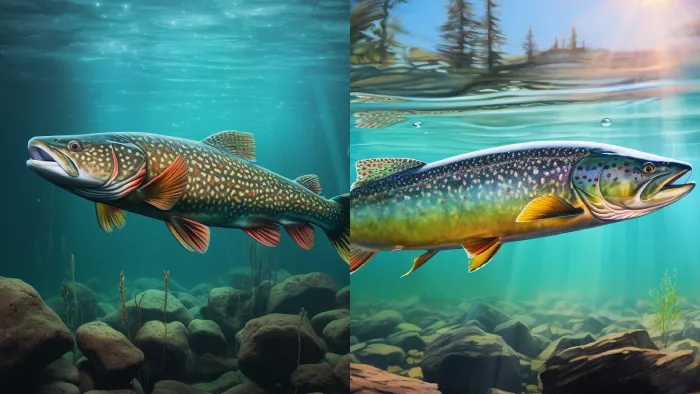
You’ll notice their brownish-gold coloration interspersed with black and red spots, often ringed in pale halos.
Their habit of remaining stationary, camouflaging against rocks and submerged logs, challenges you to distinguish them from underwater debris.
Approach slowly, minimizing shadow and surface disturbance, as sudden movements spook these wary fish.
Use polarizing sunglasses to reduce glare, enhancing visibility beneath the surface.
Position yourself upstream and cast carefully, targeting seams and eddies where trout ambush prey.
Recognizing their subtle rise forms and feeding patterns enables precise fly presentation.
Mastering these techniques sharpens your ability to identify and effectively approach wild brown trout in Portugal’s demanding mountain streams.
Be mindful that trout are sensitive to handling stress, so minimizing disturbance during your approach helps protect their delicate health.
Catch-and-Release Best Practices for Ethical Trout Fishing
Successfully identifying and approaching wild brown trout sets the foundation for responsible angling that prioritizes fish welfare.
Recognizing and carefully approaching wild brown trout is key to ethical angling and fish conservation.
When practicing catch-and-release, your goal is to minimize stress and injury to assure trout survival after release.
Handle fish gently and efficiently, using wet hands or gloves to protect the slime coat.
Follow these best practices:
Use barbless hooks to reduce tissue damage and ease removal.
Limit air exposure to under 15 seconds by preparing tools beforehand.
Revive fish in calm water, holding them facing upstream until strong enough to swim away.
Avoid fishing in extreme temperatures or spawning areas to reduce mortality risk.
Applying these techniques assures ethical trout fishing, sustaining wild populations in Portugal’s pristine rivers.
Remember that water temperature significantly affects trout survival during handling, so always consider ambient conditions when fishing.
Frequently Asked Questions
What Gear Is Recommended for Trout Fishing in Portuguese Mountain Rivers?
You’ll want a 9-foot, 5-weight fly rod paired with a floating line for precision casting in mountain rivers.
Use tapered leaders around 9 feet, with tippet sizes between 4X and 6X to match wild brown trout’s cautious nature.
Equip yourself with dry flies imitating local insects, plus nippers and forceps for quick hook removal.
Waders with good grip soles are essential for traversing slippery rocks safely.
Are Live Bait or Lures Allowed for Trout Fishing in Portugal?
You might think live bait or lures are allowed, but Portugal’s freshwater trout fishing primarily emphasizes fly fishing techniques, often excluding live bait.
Regulations focus on artificial flies, especially for wild brown trout, to protect delicate ecosystems.
Using lures or live bait is generally restricted or discouraged to maintain fish health and support catch-and-release practices.
Always check specific local rules since licensing and conservation policies can impose strict limitations.
Can I Fish for Trout at Night in Portugal’s Inland Waters?
No, you can’t fish for trout at night in Portugal’s inland waters. Freshwater night fishing is strictly prohibited under Portuguese regulations, regardless of species.
You’ll need to plan your trips during daylight hours, adhering to fishing seasons and local restrictions. This rule guarantees sustainable fish populations and complies with conservation efforts.
Always check for the most current licensing and legal requirements before heading out to avoid penalties.
What Are Common Trout Predators to Watch Out for When Fishing?
Oh, you’re not alone in wanting that trout dinner. Nature’s got plenty of competitors.
Watch for herons, kingfishers, and otters lurking along the banks; they’re skilled predators targeting trout.
Also, keep an eye on larger fish like pike or bass that ambush from below. Understanding these predators’ behaviors helps you adjust your tactics, improving your catch rate while respecting the ecosystem’s balance.
How Do Water Temperature Changes Affect Trout Behavior in Portugal?
You’ll notice trout become less active as water temperatures drop, especially below 10°C, slowing their metabolism and feeding.
Between 12°C and 18°C, trout peak in activity, aggressively pursuing prey, which makes this ideal for fly fishing.
When temperatures rise above 20°C, trout seek cooler, oxygen-rich waters, often retreating to deeper pools or shaded areas.
Adjust your tactics accordingly to match these behavioral shifts for better success.
Plan Your Next Trout Fishing Adventure in Portugal
Trout fishing in Portugal is like unveiling a hidden puzzle. Each river and season reveals new challenges and rewards.
By targeting the right species, mastering precise fly fishing techniques, and respecting regulations, you’ll elevate your angling skills.
Approach wild brown trout with patience and practice ethical catch-and-release to preserve the ecosystem.
With knowledge and care, you’ll turn every cast into an opportunity, making your time on Portugal’s waters both productive and sustainable.