
Spey vs Switch Rod: Key Differences Every Angler Should Know
You’ll find Spey rods longer (13+ ft) and heavier, built for large rivers, heavy lines (6-10 weight), and long casts without backcasts. They are ideal for salmon and steelhead.
Switch rods, around 10-12 ft and about 30% lighter, handle lighter lines (5-8 weight) and offer versatility for tighter waters and delicate presentations.
Their stiffer butts and softer tips balance Spey and overhead casting styles. Understanding these key differences will help refine your rod choice for specific water and fish targets.

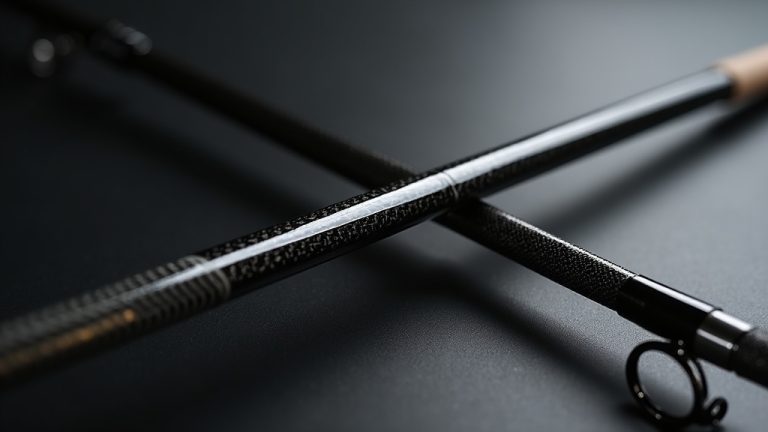
- Carbon Spey Fly Fishing Rod with Double Handed.
- Six pieces section, choice of 13ft 8-9wt and 14ft 9-10wt.
- The rod is built for long cast, classic cork grips.

- AFFORDABLE CASTER-FRIENDLY TWO HANDED ROD: Designed to make a two handed rod with high performance…
- EXCLUSIVE MAXCOMMAND BLANK TECHNOLOGY: Pure 24T mixed 30T carbon fiber. With mixed 7 layers of…
- LONG DISTANCE and ACCURACY: This rod is a Medium fast action rod that is stiff in the tip and with a…
Key Takeaways
- Spey rods are longer (12’6” to 15’+) and designed for heavy lines and long-distance casts on large rivers.
- Switch rods are shorter (10’6” to 12’6”) and about 30% lighter, ideal for smaller waters and versatile casting styles.
- Spey rods have a progressive flex with softer tips, optimized for smooth, water-anchored two-handed casts.
- Switch rods feature a softer tip and stiffer butt, enabling both Spey and overhead casts with quicker recovery.
- Spey rods excel in large rivers for salmon and steelhead; switch rods offer better control and delicacy in tight, confined streams.
Comparison at a Glance for Spey versus Switch Rod
| Feature | Spey Rod | Switch Rod |
|---|---|---|
| Typical Length | 12’6”–15’+ for maximum reach | 10’6”–12’6”, compact and maneuverable |
| Rod Weight | Heavier build for power and distance | About 30% lighter, easier to handle |
| Line Weights | 6–10 wt; heavier grain loads (420–650+) | 5–8 wt; moderate grain loads (300–510) |
| Casting Style | Designed for two-handed Spey casting | Works for Spey and overhead casting |
| Rod Action | Progressive flex, smooth loading | Faster action, softer tip with stiffer butt |
| Ideal Water Conditions | Best for large, wide rivers | Ideal for smaller or tighter streams |
| Line Control | Excellent long-range line mending | Strong drift control in confined waters |
| Fly Size Capability | Handles large flies and heavy sink tips | Better for lighter rigs and delicate presentations |
| Casting Distance | Excels at long-distance delivery | Balanced distance with improved versatility |
| Angler Skill Use | Great for specialized two-handed technique | Flexible for anglers who switch styles |
Rod Length and Weight Comparison
While both Spey and switch rods serve specialized casting needs, their differences in length and weight directly influence their performance and suitability for various fishing environments.
Spey rods typically range from 12’6” to 15’+, designed for heavy lines (350+ grains) and large flies, making them ideal for long-distance casts on large rivers. Their longer length also helps keep the line away from obstacles and manage line control effectively through water anchors. This length also provides greater leverage and control when handling larger, more powerful fish commonly found in big river systems.
Spey rods, 12’6” to 15’+, excel with heavy lines and large flies for long-distance river casting.
Switch rods, shorter at 10’6” to 12’6”, generally cast lighter lines (275-390 grains) and weigh about 30% less than Speys, favoring versatility in tighter, smaller water. This makes them well-suited for delicate presentations and precise casting often required in confined or calm water environments.
Spey rods often fall between 6-10 weight classes, while switch rods span 5-8 weights, with some specialized models reaching 420 grains. The weight range reflects the intended target fish size and the casting power needed for various fishing conditions.
Differences in Casting Techniques
Because Spey and switch rods are engineered for distinct casting methodologies, their techniques differ markedly in mechanics, load distribution, and line control.
When you use a Spey rod, you maintain continuous load along the mid-section and butt. This leverages a powerful tip and flexible backbone to execute water-anchored casts without backcasting.
You’ll keep the rod tip low, line tight, and use two hands for enhanced control and range.
In contrast, switch rods feature a softer tip and stiffer butt.
This allows both Spey and overhead casts with smoother loops and better timing.
Techniques like Double Spey and Snake Roll rely on precise anchor management via low rod tip positioning.
Switch rods also provide superior line mending and drift control, benefiting from their longer lever advantage and versatile taper.
Similar to how Smith and Maui Jim sunglasses are designed with different technologies to optimize performance for specific environments, Spey and switch rods are crafted to maximize efficiency in distinct casting techniques through their unique construction and flexibility, highlighting the importance of specialized design features in fishing equipment.
Ideal Water Types for Each Rod
When you’re out fishing in large rivers, you’ll really appreciate using Spey rods. They give you that extra reach and help with line control, which is super helpful when you’re trying to cast across those wide, fast-flowing waters.
It can make a big difference in your catch rate! Spey rods are particularly effective because they allow you to use standard spey casting techniques with waterborne or aerialized anchors and “D” loops, optimizing your presentation in these environments. Cleaning and maintaining your gear properly, like learning how to clean felt shoes effectively, can also enhance your fishing experience and equipment longevity.
On the flip side, if you find yourself in smaller streams, switch rods are the way to go. They’re perfect for those tight spots where you need to make shorter, more precise casts. Plus, they’re versatile enough to handle restricted backcast spaces, which is a real game-changer. Keeping your gear in good condition, such as by doing gentle hand washing on delicate equipment, ensures better performance when fishing in these environments.
Large Rivers Advantages
Although large rivers present diverse challenges, choosing between a Spey rod and a switch rod hinges on the specific water conditions and casting demands you face.
Spey rods excel on wide, fast-flowing rivers with limited overhead clearance. They allow you to cast 75–140 feet without back casts while maintaining precise line control and effective mending in strong currents. Their ability to reduce inflammation in shoulder muscles also makes them ideal for long fishing days on challenging waters, providing added physical comfort. Additionally, anglers often pair Spey rods with fluorocarbon leaders for enhanced abrasion resistance and stealth around heavy cover.
They handle heavy sink tips and large streamers, making them ideal for deep pools and aggressive fish like salmon and steelhead.
Conversely, switch rods offer a lighter, more versatile option for medium to large rivers with moderate overhead clearance. Their flexibility and sensitivity make them compatible with a variety of line and leader combinations, including fluorocarbon lines that provide excellent bite detection.
At around 11 feet, they balance power and portability, enabling efficient roll casts and controlled fly swings with Skagit or Scandi heads. This makes them suitable for diverse species and less extreme river conditions.
Small Streams Benefits
Moving from the challenges of large rivers, small streams present a distinctly different set of conditions that markedly influence rod choice.
Spey rods, typically exceeding 13 feet, struggle in narrow, brushy environments due to limited maneuverability and the need for expansive casting space. Their long, sweeping casting style is impractical for tight quarters, and they often overpower the smaller fish species common in these waters.
Conversely, switch rods, ranging from 10 to 12 feet, excel in small streams. They offer versatile casting, single or two-handed, with overhead, roll, and Spey-style casts adapted for confined spaces. Their shorter length facilitates precise presentations under overhanging branches and dense vegetation.
Switch rods also handle varied fly sizes effectively, targeting brook and brown trout or smallmouth bass with greater control and enjoyment. This adaptability reflects the importance of matching rod size to specific fishing applications for optimal performance in different environments.
Additionally, organizing and maintaining your fishing gear efficiently can enhance your experience on small streams by reducing setup time and ensuring you have the right tackle in easy reach, a key aspect of tackle box organization.
Line Weight and Casting Load Capacities
Since line weight directly affects casting performance and rod loading, understanding the distinctions between Spey and switch rods is essential for ideal selection.
Spey rods typically accommodate heavier line weights, ranging from 6- to 10-weight or more, especially for rods 13 feet and longer that demand 7-weight or higher lines. These rods use heavier grain weights, 420 to 650+ grains, to optimize two-handed casting and distance. Line weight recommendations are tailored to each model and line style to ensure optimal performance. This emphasis on precision and technique reflects angling’s focus on skillful casting.
In contrast, switch rods usually employ lighter to mid-range weights, commonly 5-7 weight, with grain loads between 300 and 510 grains. This matches their shorter lengths under 12 feet. Proper line weight selection guarantees efficient loading, casting accuracy, and adaptability to wind or presentation needs.
Additionally, modular systems enable quick adjustments of line grain and tip density, enhancing versatility across different casting scenarios without sacrificing performance.
Rod Action and Design Characteristics
When selecting between Spey and switch rods, you’ll find their action and design characteristics considerably influence casting performance and handling. Both types require durable materials that can withstand various environmental conditions, similar to the corrosion resistance found in premium fishing sunglasses.
Spey rods offer a progressive flex, loading power gradually from tip to butt. This makes them ideal for long, smooth casts with limited backcast space.
Switch rods have a faster action with a softer tip and stiffer butt, balancing Spey and overhead casting demands. Their shorter length and lighter weight enhance versatility but require precise timing. A true switch rod is designed to be as long as possible for double hand use while remaining manageable for single hand casting, typically not exceeding 11 feet to avoid fatigue and wrist strain, highlighting its versatile design.
| Feature | Spey Rods | Switch Rods |
|---|---|---|
| Action Profile | Progressive, smooth loading | Faster tip, stiffer butt |
| Length (ft) | 12+ | 10.5–12.5 |
| Flex & Power | Softer tip, deep curve | Stiffer butt, quicker recovery |
| Casting Style | Spey casting, limited backcast | Spey & overhead, versatile |
Advantages Over Single-Handed Rods
You’ll find that spey and switch rods really amp up your casting power. They do this by utilizing their longer length and that two-handed grip, which makes it easier to make longer, more controlled casts without straining yourself. Pretty neat, right? Using the rod’s specified lure weight range ensures you can maximize casting efficiency without risking damage.
Plus, their design helps with line management. This means you can handle heavy flies and complex rigs with precision, even when conditions are less than ideal. Their ability to cast heavy rigs, such as sink tips and weighted flies, is greater than that of single-hand rods due to their casting power.
Enhanced Casting Power
Although single-handed rods offer convenience, Spey and switch rods deliver enhanced casting power by leveraging their extended lengths and heavier line weights. Their longer lever arm and ability to cast lines weighing 275 to 350 grains enable you to achieve significantly greater distances, up to 70 feet with Spey rods.
This power translates into more efficient presentations, especially in challenging conditions like wind or when casting nymphing rigs.
| Rod Type | Typical Length | Line Weight (grains) | Casting Distance |
|---|---|---|---|
| Spey | 12’6″–14’+ | 350+ | Up to 70 feet |
| Switch | 10’6″–12’6″ | ~275 | Substantial gain |
| Single-hand | ~9′ | ~185 | Limited (~50 feet) |
| Switch | 11′ | 275 | Optimized 33’ head |
This enhanced power allows you to cast heavier flies and handle demanding fishing scenarios more effectively. For anglers who also use trolling gear, selecting a rod holder with 360-degree rotation can greatly improve rod control and stability during casting and retrieval.
Improved Line Management
Beyond enhanced casting power, Spey and switch rods give you superior line management capabilities compared to single-handed rods. Their longer lengths and dual-handed grips allow precise line control and effortless mending, enabling drag-free drifts essential in river fishing. Switch rods, in particular, have handles scaled with front grips about 11 inches, providing comfortable and effective handling for various casting styles.
You can easily pick line off the water to manage slack and place flies accurately in seams or currents. Spey techniques reduce back casting, minimizing line fouling and tangles, especially in confined spaces. Proper cleaning and maintenance of rod guides help preserve this line control by ensuring smooth line flow and reducing snags.
Switch rods, though shorter, maintain these advantages without causing fatigue, thanks to ergonomic design. Both rod types handle heavier lines and weighted flies better, providing enhanced leverage and power.
This versatility, combined with improved line mending efficiency and ergonomic benefits, lets you fish longer and more effectively in complex river environments than with single-handed rods.
Choosing the Right Rod for Your Fishing Style
When selecting between Spey and switch rods, consider how your fishing environment and target species influence rod length, weight, and casting technique.
If you fish large western rivers for steelhead or Atlantic salmon, a full Spey rod (13+ feet, 6-10 weight) offers superior reach and power for swinging heavy sink tips and large flies.
For smaller tributaries or Great Lakes steelhead, switch rods (10–12 feet, 7–8 weight) provide versatility, allowing both two-handed and single-hand overhead casts, ideal for nymphing and indicator fishing. Switch rods are particularly useful in confined or complex environments where maneuverability is crucial.
Spey rods excel in tight quarters by eliminating back casts, while switch rods balance weight, about 30% lighter, enhancing maneuverability.
Match your rod choice to the water type, target species, and preferred casting style to optimize performance and efficiency.
Frequently Asked Questions
Can Spey Rods Be Used Effectively for Saltwater Fishing?
You generally can’t rely on Spey rods for effective saltwater fishing. Their heavy lines and rod weight reduce sensitivity, making it hard to detect subtle bites.
The equipment’s weight and flex also compromise delicate presentations needed in shallow, clear saltwater.
While two-handed rods can work with overhead casting, traditional Spey strokes perform poorly against strong ocean gamefish, especially from boats or beaches.
For saltwater, consider specialized gear designed for marine conditions instead.
How Do Maintenance Needs Differ Between Spey and Switch Rods?
You’ll find that Spey rods often require more vigilant care due to their longer length and intricate multi-piece construction. This means you should carefully inspect ferrules and guides for wear.
Switch rods, being shorter and often lighter, demand less frequent adjustments. However, they still need regular cleaning of guides and reel seats.
Both benefit from thorough rinsing after use, especially in saltwater. But Spey rods need extra attention to prevent ferrule corrosion and maintain smooth assembly.
Are There Significant Price Differences Between Spey and Switch Rods?
Yes, you’ll find significant price differences between spey and switch rods.
Spey rods typically cost $1,110 to $1,775 or more due to their advanced engineering, longer lengths, and heavy-line capacity.
Switch rods, by contrast, fall between $379 and $605, offering lighter construction and versatility at a more accessible price.
If you prioritize specialized long-distance casting, expect to invest more.
If you want multi-use functionality without breaking the bank, switch rods serve you well.
Do Spey or Switch Rods Perform Better for Dry Fly Fishing?
Switch rods perform better for dry fly fishing because they offer greater accuracy, finesse, and line control than Spey rods.
You’ll appreciate their lighter action and shorter length, which enable precise, delicate presentations and effective mending.
Spey rods, being longer and stiffer, are less suited for short casts and delicate flies.
What Are the Best Reel Types Compatible With Spey and Switch Rods?
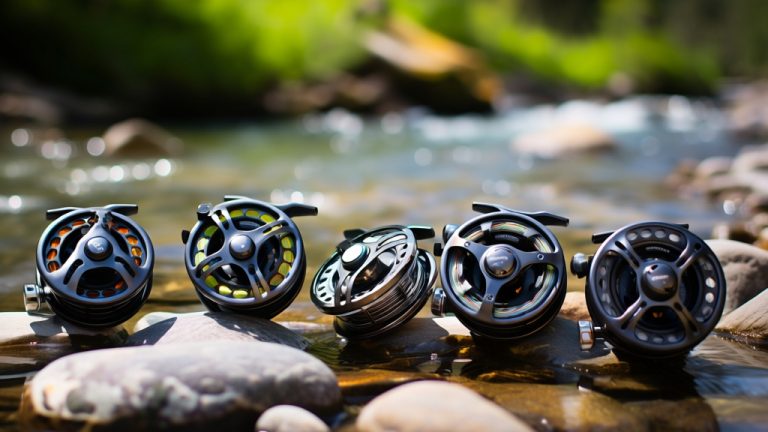
If you’re hunting for reels that perfectly match spey and switch rods, you’ll want large arbor, full-frame designs with smooth, sealed carbon fiber drags.
Models like the Redington Behemoth and Waterworks Lamson Remix HD offer heavy-duty construction and excellent backing capacity.
Their durable aluminum alloy builds withstand corrosion, while oversized rims prevent line slippage.
Choosing reels with adjustable, strong drag systems guarantees you can handle aggressive steelhead runs effortlessly.
Choose the Right Rod for Your Waters
When choosing between Spey and Switch rods, you’ll want to match your gear to your fishing environment and technique precisely.
Spey rods excel in longer, smoother casts on wider rivers, while Switch rods offer versatility in tighter spaces with single or double-handed casting.
Remember, the right rod can make or break your game. Assess rod length, action, and line capacity carefully to optimize your performance on the water.

- Gloss blue steel blank
- Med Fast Action
- SIC stripping guides and hard chrome snake guides

- Toreon 4pc Carbon blank
- High-recovery high-performance action
- AAA Cork handle
Last update on 2026-03-06 / Affiliate links / Images from Amazon Product Advertising API