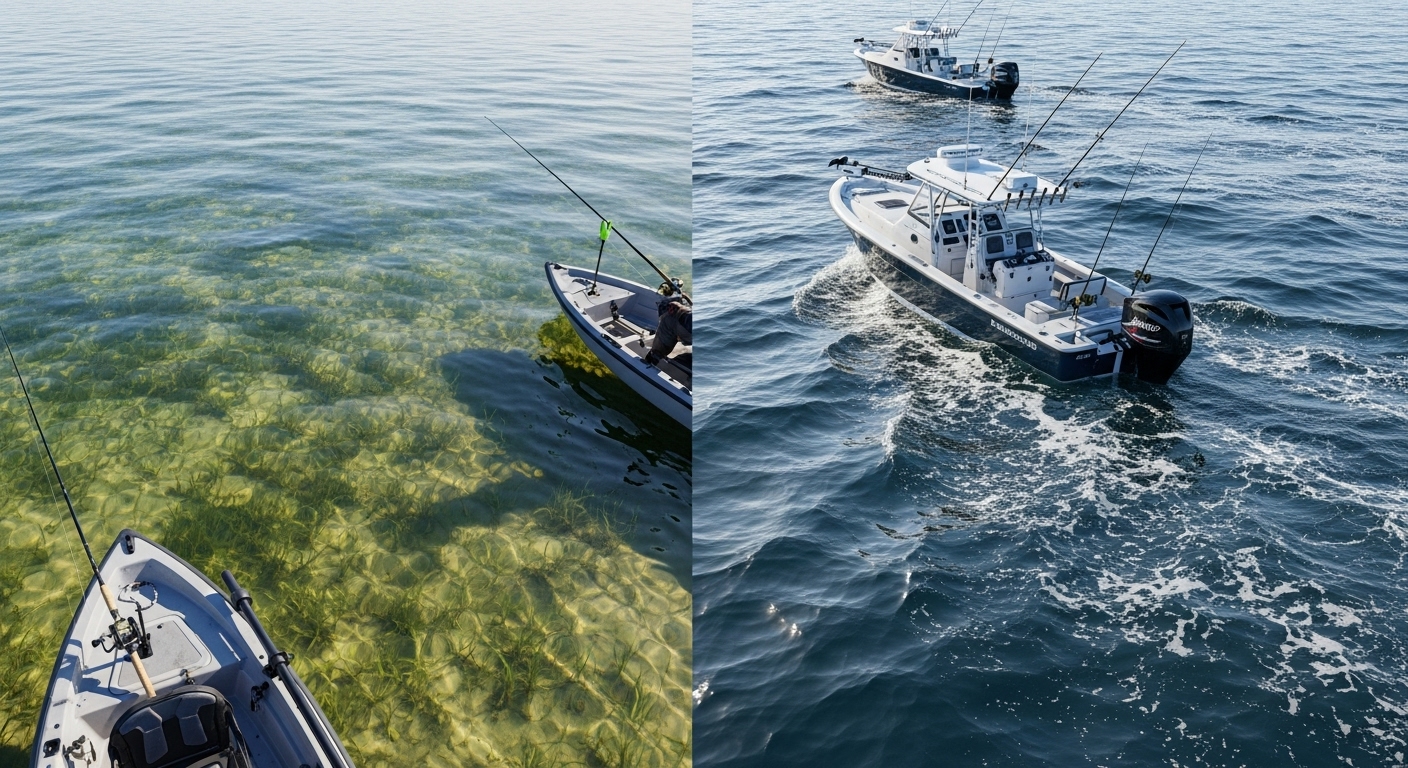
Inshore vs Nearshore: Essential Differences for Anglers
Inshore fishing keeps you close to shore in calm, shallow waters targeting species like redfish and snook.
It’s perfect for beginners or family outings with lighter gear and shorter trips. Nearshore fishing ventures farther offshore into deeper, sometimes rougher seas, chasing bigger trophy fish like snapper and grouper.
This requires sturdier boats and heavier tackle. Your choice depends on your skill, gear, and species wanted. Exploring these differences helps you decide which fishing adventure suits you best.
Key Takeaways
- Inshore fishing occurs in shallow, protected waters within a few miles of shore, ideal for beginners and family trips.
- Nearshore fishing happens 5 to 15 miles offshore in deeper, sometimes choppier waters targeting larger species.
- Inshore targets include redfish, snook, and trout in estuaries and flats; nearshore targets include snapper, grouper, and billfish near reefs.
- Inshore gear is lighter and more sensitive, while nearshore requires heavier, corrosion-resistant tackle for bigger, stronger fish.
- Inshore trips are shorter (4–6 hours) with quick shore access; nearshore trips last longer (6–8+ hours) needing larger boats and more preparation.
Key Differences Between Inshore and Nearshore at a Glance
| Feature | Inshore Fishing | Nearshore Fishing |
|---|---|---|
| Distance from Shore | Within a few miles | 5–15 miles offshore |
| Water Depth | Shallow, calm waters | Deeper, sometimes rough waters |
| Target Species | Redfish, snook, trout | Snapper, grouper, sharks |
| Boat Size | Small boats, kayaks | Larger boats for rough seas |
| Gear Requirements | Lightweight rods, basic tackle | Heavy-duty rods, corrosion-resistant tackle |
| Trip Duration | 4–6 hours | 6–8+ hours |
| Skill Level | Beginner-friendly | Suited for experienced anglers |
| Weather Sensitivity | Less affected, easier to manage | Highly sensitive, careful planning needed |
| Fishing Experience | Quick, family-friendly outings | Challenging, trophy hunting potential |
| Safety Considerations | Easy shore access, calmer waters | Requires safety gear, rough water navigation |
What’s the Difference Between Inshore and Nearshore Fishing?
Although both inshore and nearshore fishing take place relatively close to land, they differ markedly in distance, water depth, target species, and boat requirements.
Inshore fishing happens within a few miles of shore, in calm, shallow waters up to 30 meters deep, often in bays or estuaries. It generally involves small boats or kayaks, making it accessible even from shore. Saltwater rods, known for their versatility and durability, can be effectively used in these freshwater inshore environments.
You’ll target species like redfish, trout, and snook using small boats or even from shore, with lighter tackle and simple gear.
Nearshore fishing takes you 5 to 15 miles offshore into deeper waters where reefs and structures attract bigger fish like snapper and grouper. You’ll need a slightly larger boat built for bumpier conditions, with gear suited for stronger fish.
Inshore suits beginners and families, while nearshore offers more challenge and variety for experienced anglers.
Best Locations for Inshore and Nearshore Fishing
Knowing the differences between inshore and nearshore fishing helps you choose the right spot to cast your line. For inshore fishing, places like Venice, Louisiana, and Islamorada, Florida, offer rich estuaries and shallow flats.
Venice, Louisiana is particularly notable for its nutrient-rich river-fed waters that support plentiful baitfish and predatory game fish. These areas often have transition zones where fish gather to feed, making them prime locations for anglers.
Nearshore spots such as the Florida Keys and Great Abaco, Bahamas, provide reefs and bluewater fishing. Each location delivers unique environments perfect for your preferred fishing style.
| Location | Inshore Features | Nearshore Features |
|---|---|---|
| Florida Keys | Flats fishing for bonefish | Reefs, bluewater fishing |
| Venice, Louisiana | Estuaries for speckled trout | Offshore trophy marlin |
| Costa Rica (Quepos) | Kayak shore fishing | Offshore sailfish |
| Great Abaco, Bahamas | Flats and reefs | Bluewater, white marlin runs |
| Montauk, New York | Striped bass inshore | Deep-sea fishing |
Choose wisely based on your target environment.
Target Species in Inshore vs Nearshore Waters
Target species in inshore and nearshore waters differ markedly in size, habitat, and behavior, shaping your fishing experience.
Inshore, you’ll target smaller fish like snook, redfish, trout, and seasonal tarpon thriving in shallow, warm bays and estuaries. These species favor calm, mangrove-lined shores, letting you use light tackle and enjoy sight fishing. Inshore fishing is especially ideal for families and beginners due to these calmer water conditions and shorter trip durations. Many inshore species exhibit localized movement patterns, staying close to estuaries and surf zones year-round.
Nearshore waters, deeper and more diverse, offer larger fish such as snapper, sheepshead, sharks, goliath groupers, mackerel, and amberjack. This transitional zone combines species from shallow and offshore habitats, giving you access to bigger catches without venturing far offshore.
Nearshore trips usually cover waters within 5 to 10 miles from the coast, providing a balance of excitement and comfort. Species like permit and pompano may also be targeted nearshore, with permit preferring slightly deeper flats and pompano favoring sandy surf zones.
Choosing between inshore and nearshore fishing hinges on your preference for species size, fighting style, and water conditions, ensuring every outing matches your angling goals.
Essential Gear for Inshore and Nearshore Fishing
When you gear up for inshore or nearshore fishing, selecting the right rod and reel combo is essential to match the conditions and species you’ll encounter.
Choosing the perfect rod and reel combo is key for successful inshore and nearshore fishing adventures.
A 7-foot medium action rod paired with a Shimano Spheros Inshore 3000 reel offers durability and saltwater resistance at a budget-friendly price. Titanium guides and CoreProtect technology enhance performance and longevity.
For versatility, consider Daiwa Black Gold 2500–3000 reels or Shimano Baitrunner reels with Trevala rods, balancing casting and fish-handling. Use braided line for strength and sensitivity, complemented by fluorocarbon leaders to stay stealthy in clear waters.
Lightweight graphite or fiberglass rods reduce fatigue, while high-speed reels facilitate active retrievals. Choosing gear tailored to inshore and nearshore environments makes sure you’ll land more fish with less hassle.
Both Daiwa and Shimano reels are known for their durability and water resistance, making them reliable choices in harsh saltwater conditions.
How Weather and Trip Length Affect Inshore and Nearshore Fishing?
When you’re planning a fishing trip, it’s really important to understand how the weather can impact both inshore and nearshore conditions.
You know, inshore trips tend to be more forgiving when it comes to variable weather and shorter durations. These trips often use lighter gear that is easier to manage in changing conditions.
On the other hand, nearshore excursions really require calmer seas and a bit more prep time. Monitoring barometric pressure trends can help anticipate fish feeding activity and improve trip success.
Getting a handle on these differences can be a game-changer. It helps you pick the right time and place to fish, so you can maximize your catch and keep everyone safe. Plus, who doesn’t want to have a successful fishing adventure?
Weather Impact Differences
Although weather affects both inshore and nearshore fishing, the impact varies markedly due to differences in water depth, temperature stability, and trip length. You’ll notice:
- Inshore waters heat and cool quickly, stressing fish outside their preferred temperature ranges. Nearshore fish can find comfortable temperatures by moving vertically. Thermoclines often create sharp temperature gradients nearshore, allowing fish to hold just above or below these layers.
- Falling barometric pressure triggers aggressive feeding in both zones. However, rising pressure drives fish deeper and less active.
- Wind direction affects water clarity differently. East winds clear nearshore waters, pushing fish closer, while north winds bring cold fronts that increase nearshore species’ activity but scatter inshore fish.
- Overcast skies and light rain boost feeding in both areas. Heavy rain impacts inshore fishing more due to shallower waters and runoff.
Understanding these differences helps you choose the best conditions for your targeted fishing zone.
Trip Duration Comparison
Weather conditions not only influence fish behavior but also shape the length and nature of your fishing trips inshore and nearshore.
Inshore trips typically last 4 to 6 hours, offering quick access and maximizing fishing time, even in moderate weather. You can fit these half-day charters into tight schedules, making them ideal for families or beginners.
Nearshore trips run longer, 6 to 8 hours, due to extended travel several miles offshore and often require full-day commitments.
Choppy seas and open water exposure can shorten nearshore outings, while inshore trips rarely cancel unless weather worsens markedly.
Because travel eats into nearshore fishing time, you need stamina and gear for these longer trips.
Choosing between inshore and nearshore depends on your available time, weather tolerance, and fishing goals.
For extended trips offshore, using a trolling motor with efficient brushless motor technology can improve battery life and reduce noise, enhancing the fishing experience.
Safety Considerations
Because fishing trips vary in duration and location, safety considerations must adapt accordingly.
When you fish inshore, calmer waters and proximity to shore allow quick returns if weather shifts, making shorter trips safer and more flexible. Inshore fishing also offers a balance of action and relaxation that suits both beginners and experienced anglers. Additionally, rising tides during inshore trips expand water coverage, providing fish with more feeding grounds and improving catch opportunities.
Nearshore fishing exposes you to rougher seas and requires vigilant weather monitoring and experienced navigation due to unpredictable conditions and longer trip lengths. Understanding the tidal cycles and their effect on fish behavior can enhance nearshore fishing success while ensuring safety.
Keep these points in mind:
- Inshore trips handle variable local weather well with quick access to shore and less severe wind impact.
- Nearshore outings demand calm seas for safety and involve extended exposure to elements.
- Smaller boats and lighter gear suit shallow inshore waters, reducing accident risks.
- Nearshore requires robust safety gear and skilled operators to manage deeper, rougher conditions.
Adjust your plans to match these safety realities.
Pros and Cons of Inshore vs Nearshore Fishing
Inshore fishing is a great choice, especially if you prefer calm waters and quick access. It’s perfect for beginners or those looking for shorter trips. The water is generally shallower and less turbulent, making it easier to manage for many anglers in calmer conditions. Additionally, inshore environments often require medium-power rods with fast action to effectively target species like stripers in shallow areas.
However, keep in mind that there can be some obstacles like rocks and plants that you need to navigate around.
On the other hand, nearshore fishing opens up the opportunity to target bigger species that are found farther out. It can be a bit more challenging, though, since it usually involves longer travel times and dealing with rougher waters. These trips often require larger boats equipped for deeper water and can last 6–12 hours or more, demanding more preparation and endurance from the angler. Using durable trolling rods designed for medium-heavy power and corrosion resistance is recommended to handle the conditions encountered nearshore.
Advantages Of Each
Although both inshore and nearshore fishing offer unique benefits, choosing between them depends largely on what you want from your outing. Consider these advantages:
- Inshore fishing grants quick access with short boat rides or even shore fishing, letting you spend more time catching fish and less traveling.
- You’ll find abundant species like trout and redfish in nutrient-rich, sheltered waters, perfect for consistent action. The largest coastal marshland in the contiguous United States provides a uniquely fertile ecosystem that supports this abundance.
- Inshore waters are calmer, making your trip comfortable and ideal if you’re new to fishing or prone to seasickness.
- Nearshore fishing opens the chance to hook trophy species like billfish and mahi, offering thrilling battles farther from shore.
Pick inshore for ease and variety, or nearshore for bigger fish and adventure.
Challenges And Limitations
Both inshore and nearshore fishing come with their own set of challenges that can impact your experience on the water.
Inshore spots often get crowded, especially popular areas like Port Royal Sound. This leads to competition and overfished zones. Additionally, inshore waters are generally within 10–15 miles of the shoreline, which limits how far you can venture out.
You’ll need to navigate shallow waters carefully to avoid damaging fragile grass flats. Weather changes can limit your options since you can’t quickly head to deeper water.
Nearshore fishing demands specialized gear for trolling and jigging and requires precise knowledge of bottom structures. Offshore vessels typically have larger hulls and greater fuel capacity, but nearshore boats need to balance size for maneuverability and range.
While nearshore waters offer more space and deeper refuge during storms, you face stricter regulations on species like snapper and grouper.
Both styles demand you balance equipment, environment, and rules. Preparation is key to a successful outing.
Which Fishing Style Fits Your Skill Level and Goals?
Wondering which fishing style suits your experience and ambitions best? Choosing between inshore and nearshore fishing hinges on your skill level and what you want to achieve.
Deciding on inshore or nearshore fishing depends on your skills and what you hope to catch.
If you’re a beginner or fishing with family, inshore’s calm, protected waters and shorter trips offer an easy, enjoyable experience with quick action and simple gear. This environment is ideal for families and first-timers because of the calm water and consistent bites. Many anglers enhance their inshore outings by using adjustable rod holders to keep gear secure and hands free.
For quick catches, inshore fishing’s consistent bites and shorter runs maximize your time on the water.
Experienced anglers seeking a challenge will appreciate nearshore fishing’s deeper waters, bigger species, and advanced techniques like trolling and jigging.
If trophy fish excite you, nearshore’s access to snapper, sharks, and goliath grouper delivers thrilling, larger catches without full offshore commitment.
Pick the style that matches your skills and goals to make every cast count.
Tips for Choosing Between Inshore and Nearshore Fishing
To choose between inshore and nearshore fishing, consider key factors like distance from shore, target species, water conditions, boat equipment, and trip duration.
If you want quick, family-friendly trips close to shore targeting species like redfish and trout, inshore fishing suits you. It offers calm, shallow waters and easier handling with lighter tackle. Many anglers prefer medium power, fast action rods with carbon fiber blanks for the best sensitivity and control in these environments.
Additionally, inshore fishing typically takes place in shallow, protected waters, making it ideal for beginners and families.
However, if you’re after larger, diverse fish such as snapper or amberjack and don’t mind traveling 5-10 miles offshore, nearshore fishing is your best bet. Be prepared for deeper, sometimes choppier waters and stronger tackle.
Nearshore trips take longer and require more experience but reward you with exciting catches.
Evaluate your skill level, comfort with water conditions, and desired catch to pick the right style confidently.
Frequently Asked Questions
How Does Fishing License Requirements Differ for Inshore and Nearshore Areas?
You need a Basic Fishing License to fish in inshore waters.
However, nearshore fishing demands both Basic and Saltwater Fishing Licenses.
If you’re targeting species like tunas or groupers in nearshore areas, you also require a Recreational Offshore Landing Permit (ROLP).
Charter passengers don’t need the ROLP, but captains must have a Charter ROLP.
Thus, nearshore fishing involves more permits due to species regulations and federal requirements.
What Are Common Safety Precautions Specific to Inshore Versus Nearshore Fishing?
Think of inshore and nearshore fishing as two sides of the same coin, each demanding unique safety moves.
When you fish inshore, limit intensive explorations, register your canoe, and check your boat’s watertight integrity regularly.
Nearshore, you’ve got to gear up with flotation devices, install machine guards, and watch for oxygen issues onboard.
Both need sunscreen and emergency stops, but your tactics shift depending on where the waves take you.
Can You Use the Same Bait for Both Inshore and Nearshore Fishing?
Yes, you can use some of the same baits for both inshore and nearshore fishing, like shrimp, minnows, and cut bait. They’re versatile and effective in various environments.
However, you’ll want to adjust based on species and water conditions. Nearshore often demands larger live baits like oama for bigger predators.
Inshore favors smaller live shrimp or minnows. Matching bait to target fish and technique maximizes your success.
How Does Water Salinity Impact Fish Behavior in Inshore and Nearshore Zones?
Water salinity shapes fish behavior by influencing where they choose to live and feed.
You’ll notice fish moving toward salinity levels that suit their osmoregulatory needs.
In higher salinity nearshore zones, species like speckled trout thrive, while in lower salinity inshore waters, others like redfish adapt better.
Changes in salinity can cause fish to relocate, alter swimming performance, and affect feeding and reproduction.
Understanding these shifts helps you target fish effectively.
Are Catch-And-Release Practices Different Between Inshore and Nearshore Fishing?
You’ll notice catch-and-release differs greatly between inshore and nearshore fishing.
In calm, shallow inshore waters, you can gently unhook redfish with wet hands, minimizing stress.
Nearshore, battling stronger currents and deeper depths, requires quicker de-hooking and special gear to handle pressure changes and protect fish from injury.
Adapting your techniques to each environment boosts survival rates and guarantees you’re respecting the fish’s natural habitat every time.
Decide Your Ideal Fishing Zone Based on Skills and Goals
Whether you’re drawn to the calm embrace of inshore waters or the adventurous spirit of nearshore fishing, both offer rewarding experiences that gently challenge your skills.
By understanding the subtle distinctions and selecting gear that suits your journey, you’ll find yourself casting with confidence and reeling in memories.
Embrace the waves that best match your goals, and let each trip be a smooth sail toward becoming the angler you aspire to be.