How to Nymph Fish? Practical Tips for Real-World Success
To nymph fish effectively, choose your rig based on water depth, clarity, and current. Tight line setups work well in fast water, while indicator rigs help in murkier spots.
Cast upstream with a low rod tip to achieve a natural drift and manage slack to detect subtle strikes. Adjust weight to keep your nymph near the bottom without dragging and match fly size to local insect life. Master these basics, and you’ll soon refine your technique with advanced strategies.
Key Takeaways
- Choose the right rig and weight to keep your nymph fly in the strike zone matching water depth and current speed.
- Use a tight line or indicator rig to detect subtle strikes and maintain natural drift without drag.
- Cast upstream with a low rod tip and manage slack by mending line and stripping at current pace for lifelike presentation.
- Select fly patterns matching local insect stages, adjusting size and color for water clarity and seasonal hatches.
- Use moderate to fast action rods with light lines and properly placed split shot to improve sensitivity and control.
What Is Nymphing and Why Rig Choice Matters?
While nymphing might seem straightforward, choosing the right rig can make or break your success on the water.
Nymphing targets underwater insect stages, so presenting your fly at the trout’s level with a natural drift is pivotal. The rig you select affects depth control, strike detection, and how naturally the fly moves.
For example, a tight line setup lets you feel subtle strikes, while an indicator rig simplifies strike detection in murky conditions. You’ll want to adjust weight carefully—too much sinks the fly unnaturally; too little leaves it out of reach.
Understanding rig types and their impact on presentation helps you adapt to current, depth, and trout behavior. Master this, and you’ll consistently put your nymph right where the fish can’t resist it.
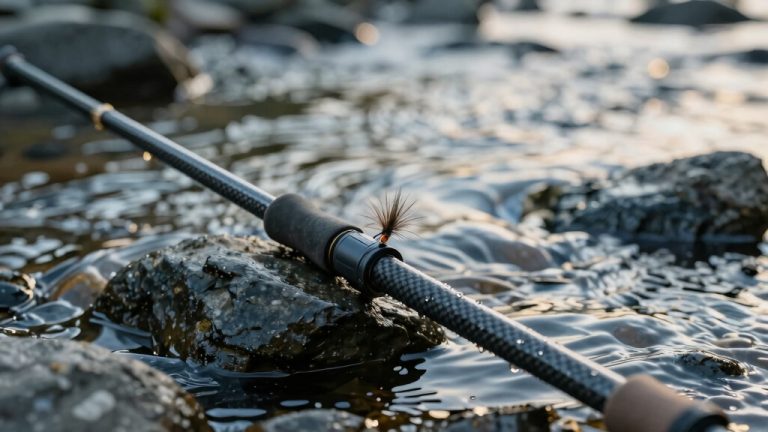
Using a moderate to fast action rod around 10 to 11 feet can greatly enhance sensitivity and control when nymph fishing.
How to Choose the Right Nymph Rig for Your Fishing Spot?
Choosing the right nymph rig depends largely on the specific conditions of your fishing spot. If the water is clear and trout are wary, try a dry dropper rig to keep your nymph just below the surface. Use the dry fly as a natural indicator.
In deeper or faster runs, a tight line setup with split shot added 18 inches above the fly helps reach the strike zone quickly and maintain control.
For turbulent pools or sculpin-heavy waters, bigger bead-head nymphs rigged on a double nymph rig work best.
When you want subtle strike detection without an indicator, consider Euro-nymphing with a sighter on the leader. Always match your rig to depth, current speed, and clarity to maximize natural drift and improve your chances.
Using a moderate-fast action rod like those in the Temple Fork Fly Rods lineup can greatly enhance your casting precision and strike detection while nymph fishing.
How to Cast Nymphs Naturally for Better Presentation?
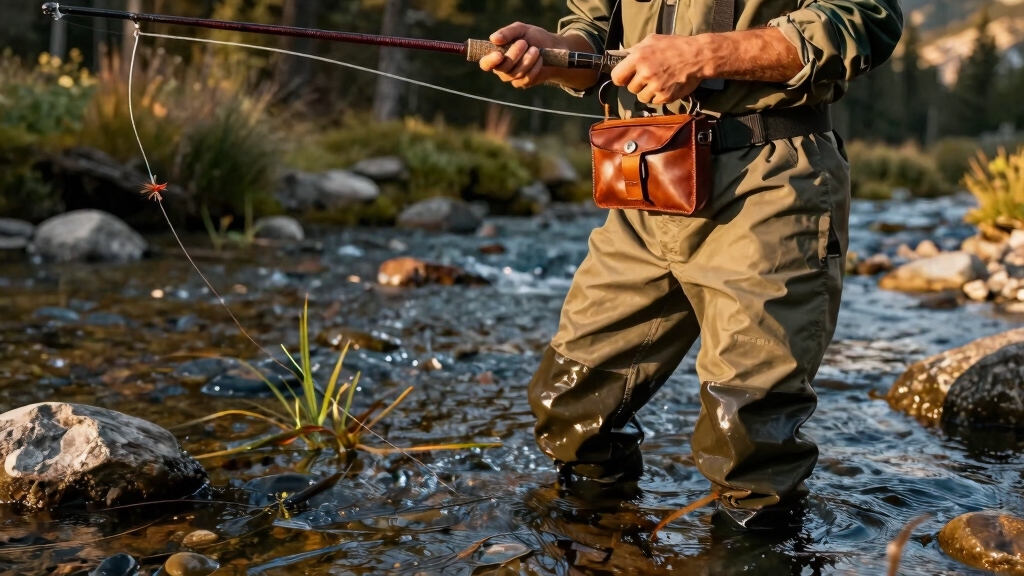
To cast nymphs naturally, you want to begin by casting upstream. Keep your rod tip low and strip the line at the speed of the current. This way, your nymph will drift just like the real thing. It’s all about that lifelike movement, you know?
Now, managing slack in your line is super important. You’ve got to keep an eye out for any unnatural movements. If your line twitches unexpectedly, it could spook the trout or give away that a strike is happening. So, stay alert!
Using the appropriate tippet length can greatly improve your presentation and increase your chances of success.
Upstream Casting Techniques
Because trout often face upstream, casting your nymphs directly against the current lets you achieve the most natural drift possible.
Position yourself slightly downstream or opposite the trout’s feeding zone, then cast beyond your target. This allows your flies to drift naturally toward them.
Keep your rod tip low to maintain tight line control and strip in line at the current’s speed, avoiding any unnatural drag.
Use short, controlled casts to reduce slack and enhance sensitivity to strikes.
Stop your forward cast high and angle your wrist downward slightly. This tuck cast lets your fly land softly, mimicking natural insect behavior.
Incorporating a dead-drift presentation helps ensure your nymph mimics the natural movement of subsurface insects, increasing strike chances.
Managing Line Drift
Although casting upstream sets the foundation for a natural drift, managing your line’s movement on the water is just as critical for fooling wary trout.
You need to keep slack to a minimum by mending the line, lifting your rod tip upstream or downstream to reposition slack and prevent unnatural drag.
Short casts help you control the line better, reducing sideways skids that spook fish.
Use the tuck cast to softly place the fly, then adjust your rod tip to follow the fly’s path, slowing any sideways drift.
Strip line at the current’s speed to match the fly’s natural movement.
Consistent practice and proper fly casting techniques greatly improve your ability to present nymphs naturally and increase your catch rate.
How to Control Depth and Keep Your Nymph in the Strike Zone?
When you want your nymph to consistently reach the strike zone, controlling depth becomes a precise game of inches.
Start high in the water column and gradually refine your drift downward without letting the fly drag on the bottom.
Add split shot incrementally until you feel bottom contact, then remove one to keep the nymph just off the substrate.
Adjust your indicator length based on water speed and depth to maintain proper positioning.
Use a top-down approach, beginning with higher drifts and moving deeper to find trout holding points.
Begin with flies high, then work downward.
Add or remove split shot for subtle depth tweaks.
Set indicator length proportionate to water depth and speed.
Avoid constant bottom contact to prevent drag.
Test strike zone limits by varying drift depth gradually.
Selecting the right tippet material can enhance your presentation and sensitivity when nymph fishing.
How to Adjust Nymph Weight and Fly Choice for Water Conditions?
When you’re out there nymphing, it’s super important to match your nymph’s weight to the speed of the current. This way, you can keep it in that sweet spot—the strike zone—without it dragging along the bottom. You definitely want your fly to be where the fish are, right?
Now, let’s talk about fly patterns. Choosing the right one is just as crucial. If you’re fishing in deeper or faster water, go for those larger bead-heads. They’ll help your nymph sink quickly and stay in the zone.
On the flip side, if you’re in calm, shallow runs, lighter and more natural patterns are the way to go. Using flies with tungsten beads can greatly improve your ability to reach feeding lanes efficiently in fast-moving water.
Matching Fly Weight
Adjusting your nymph’s weight is essential for achieving a natural drift and proper depth in varying water conditions. If your fly sinks too fast, it’ll spook fish; too slow, and it won’t reach the strike zone.
Here’s how to match fly weight effectively:
Use small split shots to fine-tune sinking speed without overloading your leader. Add bead-head flies or larger nymphs in faster, deeper currents for quicker descent. In shallow or slow water, choose lighter flies to keep your presentation natural near the surface.
Remove weight incrementally once you contact bottom to stay in the trout’s feeding zone. Adjust your indicator position to reflect changes in weight and water depth for accurate strike detection.
Mastering these adjustments keeps your nymph at the right depth, maximizing your chances of a solid hookup. Understanding how weighted components affect sinking and presentation can further enhance your nymph fishing success.
Selecting Fly Patterns
Fine-tuning your nymph’s weight sets the stage for choosing the right fly patterns that match the water conditions and trout preferences.
In fast, turbulent currents, you’ll want heavier bead-head nymphs or flies with added split shot to reach the strike zone quickly.
In slower or shallow water, lighter patterns or unweighted flies let you maintain a natural drift without dragging.
Consider local insect hatches: mayfly nymphs for spring, stoneflies for colder months, or midge larvae in slower pools.
Match size and color to natural prey, but don’t hesitate to go slightly larger in murky water for visibility.
Adjust your fly choice as water clarity and depth change, always balancing weight and profile to keep the fly near the bottom without snagging.
This increases your chances for a solid hookup.
Using lighter lines can improve sensitivity and reduce visibility, enhancing your ability to detect subtle strikes while nymph fishing.
How to Master Advanced Nymphing Techniques for Better Results?
Although nymph fishing may seem straightforward, mastering advanced techniques requires a keen understanding of subtle cues and precise control over your rig and presentation.
You’ll need to fine-tune your approach to detect strikes and adapt to varying water conditions effectively. Focus on these essentials to improve your results:
Employ tight line nymphing to feel subtle strikes without relying on indicators. Adjust split shot placement to control depth precisely and avoid constant bottom contact.
Use mends and rod tip adjustments to maintain natural drift and avoid drag. Combine upstream and downstream casts to cover feeding zones thoroughly.
Switch flies and rig setups, like hopper/dropper or Euro-nymphing, depending on water clarity and current speed. Master these, and you’ll consistently fool even the wariest trout.
Properly tie strong knots to secure your flies and tackle effectively, ensuring your rig maintains integrity during strikes and retrieves.
Frequently Asked Questions
How Do I Detect Subtle Strikes When Nymphing With a Tight Line?
You detect subtle strikes with a tight line by closely watching your sighter at the leader-running line connection.
Look for any unnatural movements, like sudden line jumps or the leader tightening. Your rod tip might also twitch or straighten the butt section.
Stay alert for any deviation from the natural drift because trout often nibble lightly. Maintaining a sensitive, taut line helps you feel even the slightest take instantly.
What Is the Best Way to Mend the Line During a Nymph Drift?
Like steering a delicate dance on water, the best way to mend your line during a nymph drift is to raise your rod tip or execute subtle side mends to prevent slack and maintain a natural fly speed.
Keep your casts short for precise control and mend upstream or downstream depending on current, ensuring the fly stays at trout’s level without drag.
This gentle adjustment keeps your presentation flawless and strike-ready.
How Do I Perform a Tuck Cast to Improve Fly Presentation?
To perform a tuck cast, stop your forward cast high in the air and quickly tip your wrist about 30 degrees downward.
This motion makes your fly land softly, or “splat,” on the water first, reducing drag and improving natural drift.
Practice this to keep your nymph at trout’s level longer, helping avoid suspicion.
It’s especially useful in tight spots where smooth presentation matters most.
When Should I Use a Dry Dropper Rig Versus a Double Nymph Rig?
Use a dry dropper rig when you want to fish nymphs just below the surface while a dry fly acts as an indicator and attracts trout visually.
Opt for a double nymph rig when you need to cover more water and depths, trailing a small nymph behind a larger unweighted pattern like a zonker or sculpin.
This setup works well in deeper or faster currents, increasing your chances of enticing strikes from different feeding zones.
How Do I Adjust My Indicator Position for Different Current Speeds?
Think of your indicator like a lighthouse guiding your fly through varied currents.
In slow water, position it about 1.5 times the water depth above your fly to keep it in the strike zone.
In faster currents, around 3 feet per second, raise it roughly 6 feet above with 2-3 split shots added.
This helps your nymph stay natural in the water, avoiding suspicion and increasing your chances of a solid strike.
Turn Subtle Takes Into Solid Hookups
Nymph fishing is like reading the water’s secret language. You just need the right rig, presentation, and depth control to release it.
By choosing the proper nymph rig and adjusting your weight and fly to match conditions, you’ll fish more confidently and effectively.
Keep practicing your casts and experimenting with techniques, and soon you’ll master nymphing, turning subtle strikes into steady catches. Stay patient and attentive, and the underwater world will reveal its hidden rewards to you.