Fly Fishing Steelhead Setup: Essential Gear for Every Angler
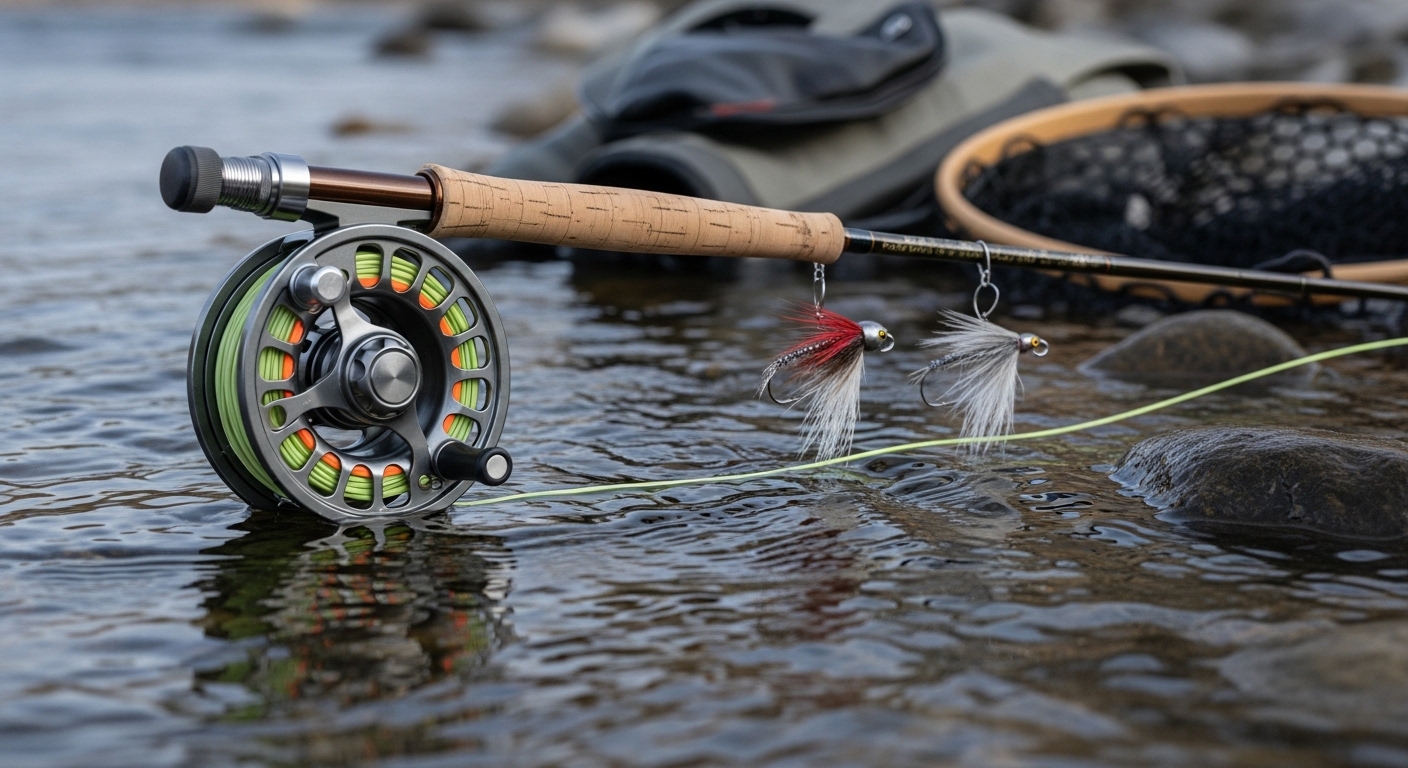
For a solid steelhead fly fishing setup, start with a 9- to 10-foot, 7- or 8-weight medium-fast action rod paired with a large arbor reel featuring a smooth, corrosion-resistant disc drag.
Match this with a weight-forward floating line or a heavier Skagit head for winter. Use 6–9 foot fluorocarbon leaders with 2–3 foot tippets in 1x–4x, plus egg-shaped strike indicators and split shots for precise depth control.
Ready yourself for varying conditions, and you’ll find setup finesse boosts hookup success.
Key Takeaways
- Use a 9 to 10-foot, 7- to 8-weight medium-fast action rod for balanced power and delicacy in most steelhead fishing conditions.
- Pair the rod with a large arbor reel featuring a smooth disc drag system and 20–30 pound test backing for handling strong steelhead runs.
- Select weight-forward floating fly lines matching or slightly exceeding rod weight; consider Skagit heads with heavy indicators for winter steelhead.
- Employ tapered fluorocarbon leaders (6–9 feet) and 2–3 foot tippets in 1x to 4x diameter, using two-fly rigs with strike indicators placed about 30 inches above the first fly.
- Carry essential accessories like egg-shaped strike indicators, split shot weights, polarized glasses, and organize gear in a waterproof sling pack for quick access.
Steelhead Fly Fishing Gear: What You Need to Know?
Choosing the right steelhead fly fishing gear sets the foundation for success on the water. You’ll want a dependable 7- to 8-weight rod around 9 to 10 feet long, tailored to the specific tributary or season.
Pair it with a large arbor reel that features a solid disc drag system to handle strong runs. Match your line weight to your rod, favoring weight-forward floating lines, and consider Skagit heads for winter fishing.
Use 20-30 pound test backing for added security. Leaders should be 6 to 9 feet, tapered with fluorocarbon tippets ranging from 1x to 4x for stealth.
Don’t forget essential accessories: strike indicators, split shot, polarized glasses, and a waterproof pack to keep your gear organized and accessible throughout your outing.
For durability and ease of transport, consider a four-piece rod design that offers excellent balance without sacrificing performance.
How to Choose the Right Fly Rod for Steelhead?
Choosing the right fly rod for steelhead can really make a difference in your fishing experience. It all starts with picking the right weight and length based on the kind of water you’ll be fishing in. For most of the Great Lakes tributaries, a 9 to 10-foot, 7-weight rod is a fantastic choice. It gives you excellent control and versatility, which is super helpful when you’re out there on the water.
Now, if you’re looking to set up a standard rig, a 10-foot, 8-weight rod is the way to go. It really covers all the basics for steelhead fishing.
But if you’re planning on targeting winter steelhead, you might want to think about going for a slightly shorter rod—something in the range of 9 to 9.5 feet and still in that 8-weight category. This adjustment can help you manage heavier flies and tackle those tougher winter conditions more effectively.
Many anglers prefer rods constructed from IM7 24T carbon fiber for their strength and sensitivity when targeting steelhead.
Rod Weight Recommendations
When targeting steelhead, selecting the proper rod weight can drastically improve your casting efficiency and control.
For most situations, a 10-foot 8-weight single-handed rod offers a balanced setup for both power and delicacy.
If you’re fishing Great Lakes tributaries, a 9- to 10-foot 7-weight rod provides excellent versatility.
Winter steelhead anglers benefit from a slightly shorter 9- to 9.5-foot 8-weight rod to handle heavier lines and more demanding conditions.
On smaller waters like Lake Superior tributaries, opt for a 7- or 8-weight rod to maintain finesse without sacrificing strength.
While switch and Spey rods have their place, beginners should stick to single-handed rods for straightforward handling and easier learning curves.
Choose a rod weight that matches your typical line and water conditions for peak performance.
For anglers seeking longer casts and heavy flies on large rivers, Spey rods with heavier weights and longer lengths provide specialized advantages.
Length Considerations
Although rod weight plays a crucial role, the length of your fly rod markedly influences your casting accuracy, line control, and overall fishing experience for steelhead.
For most anglers, a 10-foot 8-weight single-handed rod offers the ideal balance between reach and maneuverability, especially in standard setups.
If you’re fishing tributaries like those in Lake Superior, a slightly shorter 7 or 8-weight rod works best for tighter spaces.
Winter steelhead demand a 9 to 9.5-foot 8-weight rod, providing added line control in cold conditions.
For Great Lakes tributaries, a 9 to 10-foot 7-weight rod is standard.
While switch and Spey rods excel, single-handed rods remain preferable for entry-level anglers due to their versatility and ease of use.
Choose length based on water conditions and your casting style.
Selecting a rod with medium-fast action often provides the best balance of power and flexibility for effective steelhead casting.
How to Pick a Reel That Handles Steelhead?
Because steelhead demand both power and finesse during the fight, you’ll need a large arbor reel equipped with a solid disc drag system to handle sudden runs and long pulls effectively.
Steelhead fights require a large arbor reel with a reliable disc drag to manage powerful, sudden runs smoothly.
Choose a reel matched to your 7 or 8 weight rod to maintain balance and control. The large arbor design allows faster line retrieval, vital when steelhead make long, aggressive runs.
Prioritize reels with smooth, reliable drag mechanisms that let you adjust resistance precisely without jerks or snags. A sturdy, corrosion-resistant frame is essential for durability, especially in freshwater environments with abrasive conditions.
Consider reels that accept 20-30 pound backing, providing enough line buffer for prolonged battles. Avoid lightweight reels with weaker drags; they won’t hold up.
Investing in quality here guarantees you can confidently manage steelhead’s power without equipment failure. Models like the Redington Behemoth feature super-heavy-duty carbon fiber drag that delivers strong, smooth resistance ideal for steelhead fishing.
Choosing Fly Lines and Backing for Steelhead
Selecting the right fly line and backing plays a crucial role in managing steelhead’s unpredictable runs and delicate presentations.
When you choose your line, match or slightly exceed your rod weight with a weight-forward floating line for precise casts and smooth drifts.
For heavier indicators or winter steelhead, consider a 9 or 10 weight line on an 8 weight rod. Your backing should be strong, typically 20-30 pound test, to provide the security you need during long, powerful runs.
- Use weight-forward floating lines for versatility and control.
- Opt for Skagit heads in winter for heavy, effective presentations.
- Pair backing strength to handle steelhead’s sudden bursts.
- Verify line and backing compatibility with your reel’s capacity and drag.
Choosing a rod with a moderate to fast action complements the line for improved sensitivity and precise presentation.
This setup gives you confidence and control on the water.
Building Leaders and Tippets That Steelhead Won’t Spook
When you build leaders and tippets that steelhead won’t spook, you focus on subtlety and strength.
Use fluorocarbon leaders around 9 feet, 3x, which are less visible underwater and more abrasion-resistant.
Attach a 2-3 foot fluorocarbon tippet in 1x to 4x diameter for delicate presentation.
Maxima tippets in 8-15 pound test offer stiffness and durability, critical for controlling flies in current.
Choosing the proper tippet length based on water conditions and fly size further enhances presentation and control.
| Component | Recommendation |
|---|---|
| Leader Length | 6-9 feet tapered nylon |
| Leader Material | Fluorocarbon preferred |
| Tippet Length | 2-3 feet |
| Tippet Strength | 1x to 4x (Maxima 8-15 lb) |
This setup balances invisibility with the strength needed to handle steelhead’s powerful runs without spooking them.
Setting Up Rigs and Strike Indicators for Steelhead
When you’re fishing for steelhead, one of the first decisions you’ll need to make is whether to use egg-shaped strike indicators or yarn beads. It’s important to match their size to the water conditions you’re dealing with. This plays a huge role in achieving peak drift control.
Now, if you’re rigging a two-fly setup, you’ll want to space your flies out carefully—usually about 24 inches apart. Adding some split shot can really help you maintain the right depth, which is key to getting those strikes.
Getting these details right is crucial; it not only makes your presentation more natural but also significantly boosts your chances of hooking a steelhead. So, take your time to fine-tune your setup! Using weighted flies in combination with strike indicators helps to control depth and mimic natural insect movement effectively.
Strike Indicator Options
Dialing in the right strike indicator can make all the difference when targeting steelhead. You want an indicator that’s visible, sensitive, and doesn’t spook fish.
Here are four key options to contemplate:
- Egg-shaped foam indicators – Highly visible and buoyant, perfect for fast water and deep runs.
- Yarn or thread indicators – Offer subtle presentation in clear water but require careful tying for durability.
- Bead indicators – Durable and compact, ideal when you want a low-profile setup with solid sensitivity.
- Commercial strike indicators with adjustable buoyancy – Allow you to fine-tune floatation for various water conditions.
Each option suits different water types and steelhead behavior. Test and adjust your indicator weight and placement to maintain a natural drift without drag. This maximizes your hookup chances. Using lightweight materials in your setup can also help maintain sensitivity and reduce drag in the water.
Rigging Two-Fly Setups
Although rigging a two-fly setup might seem complex at first, mastering it greatly enhances your chances of enticing steelhead.
Start by attaching a strike indicator—egg-shaped beads or yarn work well—about 30 inches above your first fly.
Tie a barrel swivel with a snap swivel below the indicator to allow easy leader length adjustments.
Use a 5-8 pound test leader to connect your main fly, then add a dropper fly 24 inches below the first.
Place small split shot weights above the flies to control sink rate and presentation.
This setup lets you cover different depths and fly patterns simultaneously, increasing your chances of triggering a strike.
Practice casting and mend carefully to maintain natural drift and avoid drag.
Adding split shot weights helps you control the sink rate of your flies, which is crucial for effective presentation in varied water conditions.
Accessories and Seasonal Setup Tips for Steelhead
When targeting steelhead, equipping yourself with the right accessories is just as essential as selecting the proper rod and reel. Proper gear keeps you organized, comfortable, and prepared for variable conditions.
For seasonal success, adapt your setup with these essentials:
- Use egg-shaped strike indicators and split shot (#B to #5) to control fly depth precisely in fast, cold water.
- Carry a waterproof sling pack or vest to organize flies, leaders, and tippets, guaranteeing quick access.
- Wear polarized glasses to reduce glare and improve spotting fish in varying light.
- Prepare for colder months with warm, layered clothing and a 9 to 9.5 foot 8-weight rod paired with Skagit heads for heavy indicators.
This combination guarantees you stay efficient and effective throughout the steelhead season.
Frequently Asked Questions
What Are the Best Times of Day to Fish for Steelhead?
You’ll find the best times to fish for steelhead are early morning and late evening when water temperatures drop and fish become more active.
Overcast days and periods just after rain can also boost steelhead activity.
During winter, midday can work as fish seek warmer water.
Avoid bright, sunny afternoons since steelhead tend to retreat to deeper pools.
Adjust your timing based on water clarity and flow for peak success.
How Do Water Temperature Changes Affect Steelhead Behavior?
When water temperature shifts even slightly, steelhead react like lightning bolts darting through currents.
You’ll notice they become less active in colder water, slowing their metabolism and feeding less. Warmer temps can push them into shallower runs, searching for oxygen-rich spots.
Keep an eye on temperature changes because they dictate where and when you should cast. Adjust your tactics accordingly to stay one step ahead in the game.
What Are Common Mistakes Beginners Make in Steelhead Fishing?
You often make the mistake of using the wrong rod weight or line, which hampers casting and control.
Beginners also tend to overlook the importance of a solid drag reel, risking lost fish.
Many don’t properly match leaders and tippets to steelhead’s line-shy nature, leading to missed strikes.
Finally, neglecting essential accessories like strike indicators or polarized glasses limits your ability to detect subtle bites and read water effectively.
How to Properly Release a Steelhead to Ensure Survival?
To properly release a steelhead, handle it gently with wet hands or a wet glove to protect its slime coat.
Minimize air exposure by keeping the fish in water as much as possible.
Remove the hook carefully using pliers or a hook remover.
Support the fish upright in the water, facing upstream, allowing it to regain strength.
Release it only when it swims away strongly on its own, ensuring its survival.
Are There Local Regulations Specific to Steelhead Fishing Seasons?
Think of steelhead seasons as nature’s gatekeepers, opening and closing to protect these silver warriors.
Yes, you must follow local regulations strictly. They set specific fishing seasons that vary by region and river system.
Check with your state’s fish and wildlife agency before you cast. These rules guarantee sustainable populations and legal compliance.
Ignoring them risks fines and harms steelhead survival. So stay informed and respect the timing to fish responsibly.
Upgrade Your Rod, Reel, and Line for Peak Performance
Now that you’ve mastered the essentials of your steelhead fly fishing setup, you’re ready to tackle the river like a seasoned pro.
Remember, choosing the right rod, reel, line, and leader isn’t just about gear—it’s about respecting the fish and the water.
Like a knight preparing for battle, your careful preparation will make all the difference. Stay sharp, adapt to conditions, and your efforts will be rewarded with unforgettable steelhead runs.