Fly Fishing From a Boat: Expert Techniques for Clean Casts
For successful fly fishing from a boat, choose fast-action rods (7–11 weight) paired with corrosion-resistant reels and weight-forward floating or sink-tip lines matched to your target species.
Position your boat using precise rowing or anchoring to maintain ideal drift and casting angles. Communicate closely with your oarsman to avoid snags.
Use heavier fluorocarbon tippet with tippet rings and keep line controlled with stripping baskets or mats. Master tight-space casting techniques to prevent tangles.
Here’s how to refine each step for a smooth, effective trip.
Key Takeaways
- Use a fast action, corrosion-resistant rod and reel combo tailored to target species for powerful, accurate saltwater casts from a boat.
- Position the boat using crab strokes and lateral oar adjustments to maintain alignment with seams and avoid spooking fish.
- Communicate clearly with the oarsman to control drift speed and maintain natural fly presentation on seams, eddies, and drop-offs.
- Present the fly slightly above eye level and use varied casting angles to avoid tangles and navigate tight boat spaces effectively.
- Manage fly line on deck with stripping baskets or mats and keep line clean and stretched to prevent tangles and maintain smooth casts.
Choose the Best Fly Rod and Reel for Fly Fishing From a Boat
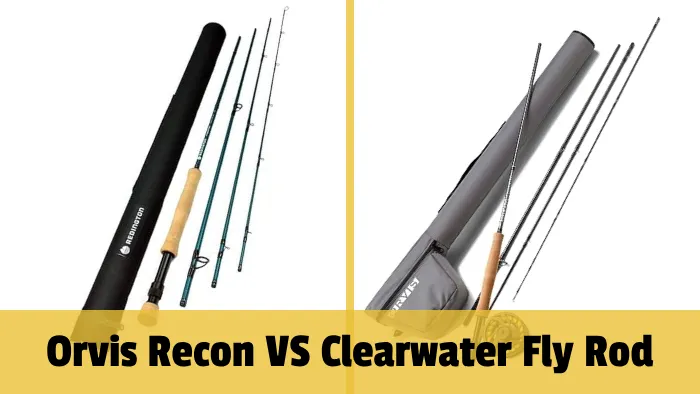
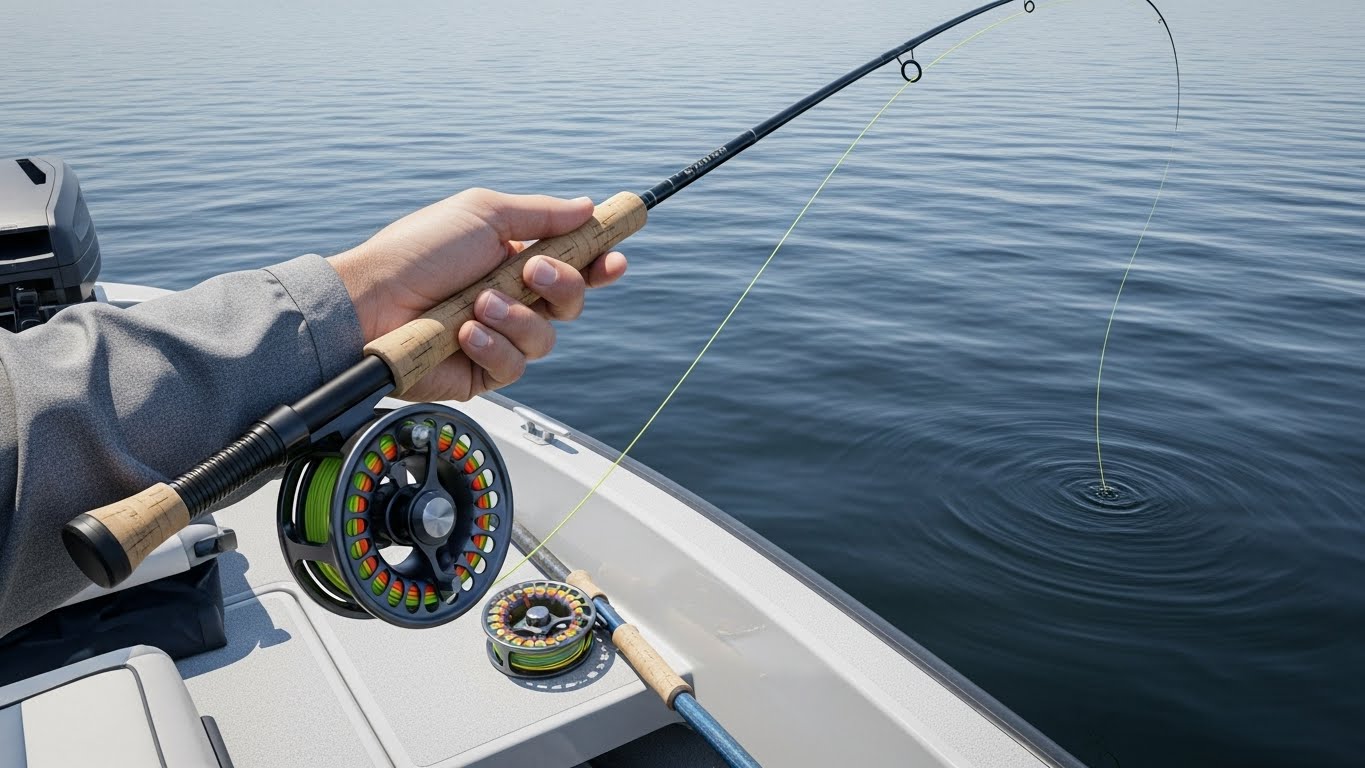
Selecting the right fly rod and reel is essential when fly fishing from a boat, as it directly affects your casting accuracy, control, and ability to handle tough saltwater species. Choosing a rod with a fast action taper helps deliver powerful and accurate casts, especially when targeting larger saltwater fish.
Choosing the right fly rod and reel boosts casting precision and helps manage challenging saltwater fish.
For bonefish, 7-8 weight rods work well, but if you target larger species like permit or tarpon, 9-12 weight rods are necessary. An 8-weight rod offers versatility for general use, while an 11-weight rod excels for tarpon-specific casting.
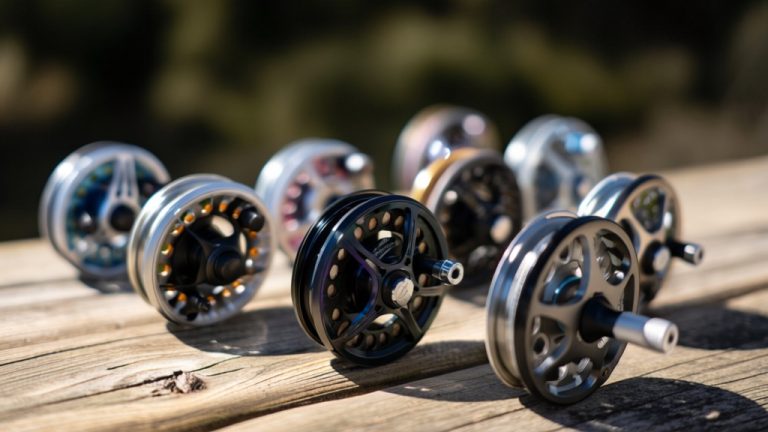
Prioritize lightweight, balanced rods like the Douglas Sky G or Lamson Cobalt for ease during extended trips. Your reel must have a sealed drag system to resist saltwater corrosion. Reels such as the Orvis Hydros provide a very durable, saltwater-sealed drag system with strong stopping power, ideal for the demands of boat fishing.
Options like the Redington Behemoth or Orvis Hydros combine durability with smooth drag performance, ensuring you manage strong fish without gear failure. Additionally, corrosion-resistant guides and components on rods and reels are crucial for longevity in harsh saltwater environments.
Select Quality Fly Lines and Leaders for Boat Fly Fishing
Mastering your choice of fly lines and leaders can make a significant difference when fishing from a boat, where presentation accuracy and depth control are critical.
Opt for weight forward taper floating lines for versatile depth control with longer 6-9 foot leaders, preventing premature fly rise during retrieval. Floating line effective lines are well suited for targeting trout in middle to upper water columns. Regular line maintenance helps preserve casting performance and prolongs line life during intensive boat fishing.
When targeting deeper zones, select sinking lines matched with shorter 4-5 foot fluorocarbon leaders to maintain descent and proper fly tracking. Sink tip lines are especially useful in faster currents and deep holes, common when fishing from drift boats.
Construct leaders with a three-section taper; heavier butt sections improve turnover of large streamers, essential for boat fishing.
Use clear monofilament or fluorocarbon materials to reduce visibility and enhance sink rates when needed.
Adjust leader length to balance casting ease in confined boat spaces without compromising control.
These choices optimize energy transfer, casting precision, and effective presentation in dynamic boat fishing environments.
Position Your Drift Boat for Accurate Casting
To cast accurately from your drift boat, it’s all about controlling its position.
You’ll want to use techniques like the crab stroke and make subtle adjustments to stay aligned with those target seams. Finding the right angle for your boat is key, so your cast can reach fish both ahead and behind you without getting your lines tangled up. Positioning your boat in natural windbreaks can also help reduce line tangling and improve casting accuracy during windy conditions.
Beginning to string up your rod at the boat ramp can save valuable time and allow you to focus on positioning the boat once on the water, improving overall trip flow efficient client prep.
Once you get the hang of these strategies, you’ll notice that your fly stays in the strike zone longer.
And guess what? That means your chances of hooking fish really improve!
Drift Control Techniques
When positioning your drift boat for accurate casting, you need to take into account how boat placement affects both access to prime water and the timing of your casts.
Master drift control by communicating clearly with your oarsman. Signal if the boat moves too fast or slow, so they can adjust speed to water conditions and your fishing rhythm.
Use techniques like the crab stroke to move laterally without progressing downstream, allowing you to fish seams and eddies effectively. Point the bow away from obstacles, then maneuver carefully to maintain balance with weight centered in your hip locks. Wearing proper safety gear adds an important layer of protection during these maneuvers. Remember that rowers keep the boat 20–30 feet from the bank to enable accurate presentations while avoiding spooking fish.
Anchor when dry fly fishing to target specific spots with multiple casts. Always face downstream, read water ahead, and coordinate casting sides to avoid interference and make certain natural fly presentations.
Optimal Casting Angles
In positioning your drift boat for accurate casting, understanding best casting angles plays an essential role in your success.
For standard casts, aim to present your fly slightly above eye level, which reduces splashdown and conserves line energy. This ensures a softer, more precise presentation. To improve accuracy, cast beyond the target and then trap the line with your line hand by forming an O ring with your thumb and first finger around the line to stop the fly over the target. Monitoring water temperature helps determine the best times for fish activity and improves overall catch rates.
When using fast-sinking lines or weighted flies, raise your casting angle above 45 degrees to keep the line and fly airborne longer. This maximizes distance and minimizes splash.
Conversely, lower your angle below 45 degrees to punch under overhangs or obstacles, especially when kneeling or casting from a low cockpit. This allows subtle placements beneath cover.
Vertical casting angles excel in narrow openings, delivering pinpoint accuracy, while sidearm casts suit windy conditions. Using a digital thermometer to measure water temperature can enhance your understanding of fish behavior during different times of the day.
Boat Positioning Strategies
Positioning your drift boat precisely sets the foundation for accurate casting and successful fly presentations.
As the front angler, place your bow to access prime water ahead; scan downstream to identify targets early. Then fish as far forward as possible, recasting when the boat catches up. Remember that drift boats are designed for stability and maneuverability in fast-moving rivers, so use this to your advantage when positioning. Understanding the boat’s hull shape can also help optimize your drift and control in varying currents.
The rear angler should fish upstream of the oars, timing casts to avoid interfering with the front’s downstream presentations. This also helps cover angles behind the front casts.
Communicate clearly with your oarsman to adjust drift speed and boat alignment. Signal if you need a slower or faster pace.
Use lateral oar strokes to fine-tune positioning without moving downstream. Align your boat for key features—seams, eddies, drop-offs—to maximize casting opportunities.
Maintain natural fly drifts for effective, precise presentations.
Master Casting Techniques for Fly Fishing in Tight Boat Spaces
Although casting space in a boat is limited, mastering precise techniques like the double haul and controlled backcast presentation lets you deliver accurate, tangle-free casts even in tight quarters.
Limited boat space demands precise techniques like the double haul and controlled backcast for accurate, tangle-free casting.
Use the double haul to increase line speed, enabling longer, wind-resistant casts essential in windy, saltwater environments. This technique involves hauling once on the back cast and again on the forward cast to generate extra power and distance, which is particularly important when fishing in the Florida Keys where wind speeds of 10–15 mph are common double haul technique.
Finish your cast on the backcast shoulder, right for right-handers and left for left-handers, to avoid snagging guides or yourself and lay the fly line down cleanly.
Maintain a ready position with a length of line past the rod tip, holding the line under your middle finger for quick delivery.
Avoid moving your feet to prevent tangles, and stop your rod abruptly at eye level for tight loops.
These fundamentals keep your casts efficient and precise in confined boat spaces.
Pick Flies That Match Hatch and Target Species
To get started, it’s super important to identify the hatch patterns happening in your fishing area.
You want to match the size, color, and shape of your flies to the insects that trout are actually feeding on. Selecting the right fly line buoyancy, such as floating lines, helps keep your fly presented naturally on the surface. Understanding seasonal and environmental considerations can further improve your timing and choice of flies.
It’s like a game of matchmaker for fish and flies!
Once you’ve got a handle on the hatch, think about the specific species you’re targeting.
Each fish has its own feeding habits and preferences, so choosing flies that cater to those can really boost your catch rate.
When you nail down these details, you’ll find that your fly choices become much more strategic and effective out on the water.
Hatch Pattern Identification
When matching hatch patterns to your target species, identifying the specific insects active on the water is essential.
Use seine nets or flip rocks to collect nymphs and crayfish for close inspection, noting size, color, body shape, legs, and wings. Live samples enable synchronization with hatches when no visible activity is present, helping anglers choose the most effective flies.
Watch for surface insects and trout rising to pinpoint feeding targets. Using the correct tippet size can improve presentation when imitating delicate insects.
Recognize mayflies by their elongated bodies and upright wings, midges by small size and color, and stoneflies by their shore migrations.
Match flies precisely to the insect’s life stage—nymph, emerger, dun, spinner, or pupa for effective imitation.
Rely on hatch charts and local fly shops to narrow down species by season and region.
Adjust your selection based on observed insect prevalence and weather conditions to maximize your catch from the boat.
Species-Specific Fly Selection
Identifying the insects active on the water sets the foundation for selecting flies that effectively imitate your target species’ natural food. You’ll increase your strike rates by matching size, color, and behavior closely.
For example, yellow PMD mayflies (#14–18) and overlapping yellow sallies can be covered by a single parachute-style dry fly. Roosterfish demand precise matches, so observe local food sources carefully.
Keep these points in mind:
- Use imitative patterns in slow, clear water where fish are selective.
- Employ hybrid patterns with visibility hot spots in pressured or food-rich waters.
- Adjust fly size slightly larger if needed, but prioritize accurate color.
- Match fly weight and profile to water clarity and feeding zone depth.
This strategy guarantees you pick flies that resonate with your target species’ feeding habits. Beginners should also ensure their gear simplifies setup to maintain smooth and successful fishing experiences.
Use Heavier Tippet and Tippet Rings to Reduce Fly Loss
Enhance your fly fishing success from a boat by opting for heavier tippet and incorporating tippet rings. These markedly reduce fly loss caused by abrasion and knot failure.
Use 3X to 4X tippet for larger flies and fast water, or 2X to 0X when fishing with sinking lines or targeting big species. Fluorocarbon tippets like TroutHunter provide superior abrasion resistance and invisibility underwater, essential around rough boat surfaces. Remember that tippet size is critical, with 0X being the thickest and higher X numbers indicating thinner tippet. Choosing the right fluorocarbon tippet also takes advantage of its abrasion resistance to prevent line damage in challenging conditions.
Tippet rings securely connect your tippet to the leader, minimizing knot failures and enabling quick tippet replacement without rebuilding the entire leader. They also prevent twisting when fighting larger fish.
This setup prolongs leader life, supports heavier flies without snapping, and enhances hookup rates in challenging boat conditions. Prioritize tippet diameter and strength over material to adapt effectively to your fishing environment.
Prevent Line Snags on Boat Fixtures During Fly Fishing
Reducing fly loss with heavier tippet and tippet rings lays a strong foundation, but managing your fly line on the boat is just as important to prevent snags that can ruin a cast or spook a fish.
Keep your line clean, stretch it before use, and wet it to reduce memory and tangles. Using line-dressings and cleaning devices regularly helps maintain optimal line condition and performance. Use stripping baskets or buckets to control loose line and prevent wraps around boat fixtures.
Stack your running line orderly from reel outwards to avoid crossing loops that cause knots.
To prevent line snags:
- Use stripping baskets or LineLair mats to contain loose line.
- Clean and stretch your fly line before casting.
- Stack line neatly, wetting it to minimize memory.
- Keep minimal loose line on deck and avoid excess slack.
Always clear loose line immediately after a hook set to avoid deck snags during the initial fish run clearing the line.
Coordinate With Your Oarsman for Smooth Drifts and Casts
When you coordinate closely with your oarsman, you guarantee smooth drifts that align perfectly with your casting rhythm.
Communicate your intended route and potential obstacles early, so your oarsman can position the boat for optimal casting angles and maintain stability.
The bow angler sets the fishing pace; the oarsman adjusts speed accordingly to avoid rushing or lagging behind targets.
Use clear verbal signals to synchronize movements. This teamwork prevents line tangles and ensures safe, efficient casts.
Anticipate hazards together, discussing plans before approaching tricky currents or obstructions. It is also important to remember that the front angler usually casts first to avoid tangles.
By working in unison, you create consistent, natural drifts that maximize presentation effectiveness.
Must-Have Gear and Safety Tips for Fly Fishing From a Boat
Although fly fishing from a boat offers unique advantages, you need specialized gear and safety equipment to maximize efficiency and protect yourself on the water.
Start with a 9-foot, 5-weight graphite rod paired with a reliable reel and both floating and sink-tip lines for versatile casting. Equip yourself with polarized sunglasses, nippers, and a fishing vest to keep essentials within reach. Including a waterproof rain jacket is essential to stay dry and comfortable in unpredictable weather conditions waterproof rain jacket.
Modify your boat with rod holders and casting platforms for stability and convenience. Safety is paramount: always wear a life jacket, carry a first aid kit, and have a throw bag handy for emergencies.
Key gear and safety essentials include:
- Versatile fly rod and reel setup
- Polarized sunglasses and maintenance tools
- Boat modifications like rod holders
- Personal flotation device and rescue equipment
Frequently Asked Questions
How Do Weather Changes Affect Fly Fishing Success From a Boat?
You’ll notice weather changes directly impact your fly fishing success.
Wind can push your boat and disrupt casts, so adjust your technique and lure choice accordingly.
Falling barometric pressure boosts fish activity, offering prime feeding times.
Temperature shifts alter fish depth and behavior; early mornings and evenings are best during heat.
Rain triggers insect hatches, increasing trout activity but reduces visibility.
Use lures with flutter patterns and prepare with quality rain gear.
What Are the Best Times of Day for Boat Fly Fishing?
Think of the day as a well-tuned clock for your fishing success.
You’ll find early morning ideal—cool temps and less boat traffic mean active fish and clear casting lanes.
Midday offers prime dry fly action between 10 a.m. and 2 p.m., perfect for multiple drifts.
Late afternoon brings intense hatches and surface feeding, so dial in on specific pockets.
Early evening’s “evening rise” provides thrilling topwater strikes before darkness falls.
How Can I Minimize Fish Stress During Catch and Release?
You can minimize fish stress by landing them quickly, aiming for under two minutes to avoid exhaustion.
Keep them in the water as much as possible, limiting air exposure to under 10 seconds.
Wet your hands and gear before handling, and avoid touching gills or squeezing.
Use barbless hooks for easier removal and employ dehooking tools.
Finally, revive fish in slow current facing upstream until they swim strongly before releasing them gently back.
What Maintenance Tips Keep My Boat Fishing-Ready Season After Season?
Think of your boat as a trusted fishing rod. Without proper care, it won’t perform.
To keep it fishing-ready, regularly inspect the fuel system for leaks and replace worn hoses.
Check belts, fluid levels, and spark plugs annually. Don’t forget electrical connections and battery health.
Examine the hull, propeller, and steering for damage or wear.
Finally, maintain safety gear and keep a detailed post-trip checklist.
Consistent care guarantees your boat’s reliability season after season.
Are There Specific Knots Recommended for Tying Flies When Boat Fishing?
Yes, you should use knots that balance strength and fly movement. The Improved Clinch Knot is great for a slim profile and strong hold, reducing drag during boat casting.
For more natural fly action, try the Duncan Loop. Leave it open for free swing or close it tight.
Also, the Non-Slip Mono Loop enhances streamer movement. Practice these with your actual tippet and flies to assure reliability when fighting powerful boat-caught fish.
Build Confidence and Control While Fly Fishing From a Boat
With the right rod, line, and a keen eye on your drift, you’ll glide through the water like a whisper.
Casting with precision even in tight boat spaces, picture your fly dancing just above the surface, tempting wary fish beneath.
By syncing smoothly with your oarsman and mastering these techniques, you’ll turn every trip into a seamless ballet of skill and patience. Equip yourself well, and the river will reward you generously.