Crayfish Fly Pattern: Size, Color, Motion Matters
You’ll catch more trout when your crayfish fly matches the size, color, and movement of local crayfish.
Focus on natural shades like olive, rust, and tan. Use weighted eyes or lead wire to help the fly sink and move realistically along riffles and rocky bottoms.
Incorporate silicone legs for lifelike motion that triggers strikes. Pay attention to local crayfish variations and durability in your tying.
Keep exploring to master patterns, materials, and fishing techniques that boost your success.
Key Takeaways
- Effective crayfish fly patterns mimic shape, size, color, and movement to trigger trout predation near riffles and rocky bottoms.
- Use natural hues like olive, rust, brown, and tan with subtle orange or blue highlights to match local crayfish colors.
- Incorporate weighted components such as lead wire and dumbbell eyes to control sink rate and maintain natural bottom orientation.
- Silicone legs and rubber details add dynamic movement and a lifelike underwater silhouette that attract trout.
- Durable tying techniques include monofilament tail wraps, segmented dubbing, and strong finishes for long-lasting fly performance.
Why Crayfish Patterns Work for Trout?
Because crayfish make up a significant part of many trout diets, using crayfish fly patterns can greatly increase your chances of success.
Crayfish patterns are key to boosting your trout fishing success.
Trout actively hunt crayfish in streams and rivers, especially near riffles and rocky bottoms where crayfish hide. These patterns mimic the shape, size, and movement of crayfish, triggering a natural predatory response.
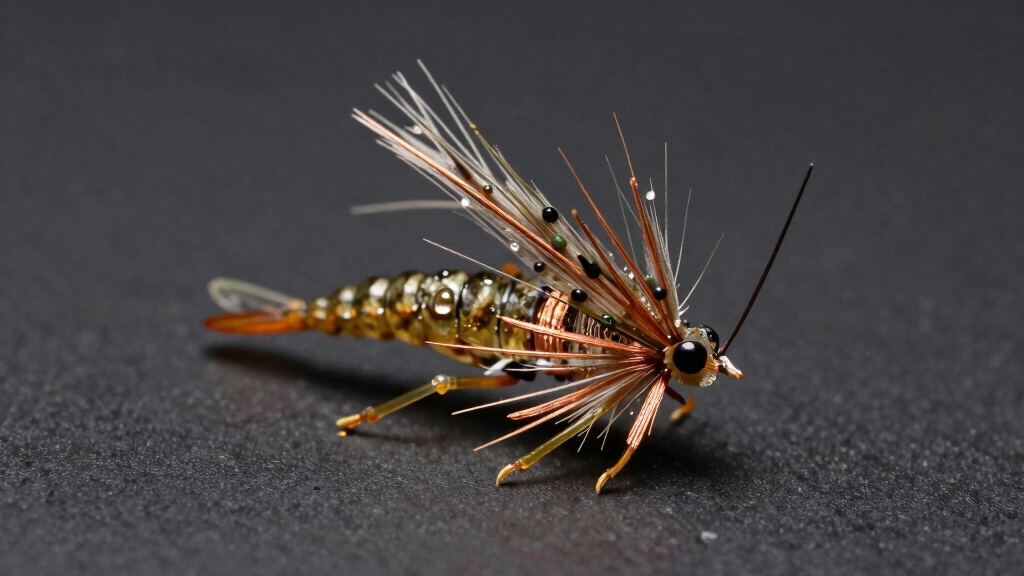
When you present a crayfish pattern with realistic features like segmented bodies and lifelike legs, you match what trout recognize as prey.
Additionally, weighted patterns help your fly sink and move naturally along the bottom, where trout expect to find crayfish.
For optimal presentation, using split shot above the flies can control sink rate and enhance natural movement along the bottom.
Effective Crayfish Fly Patterns to Tie and Fish
When it comes to fishing for crayfish, you really can’t go wrong with some tried-and-true patterns like the Clouser Crayfish and Wooly Bugger. These flies are versatile and have a solid track record for success.
Now, if you want to take your tying skills up a notch, there are a couple of key techniques you should master. For instance, using weighted dumbbell eyes can really help your flies sink and move more naturally. And don’t forget about dubbing! Creating a segmented body will make your flies look much more lifelike, and, let’s be honest, fish are more likely to go for something that looks real. Additionally, choosing flies tied on high-carbon steel hooks ensures durability and reliable hook penetration when targeting aggressive trout.
Best Patterns Overview
When selecting crayfish fly patterns to tie and fish, focusing on effectiveness and adaptability is key. The Clouser Crayfish stands out for dead-drifting in riffles and runs. The Wooly Bugger offers versatility in streams teeming with crayfish.
The Clouser Minnow, easy to tie, excels in muted colors for trout. For durability, Svend’s Cray Cray uses monofilament tail wrapping. Blake’s Crawfish features furry foam bodies with segmented dubbing for realism.
Prioritize patterns with inverted hooks and lead dumbbell eyes to reduce snagging and guarantee lifelike sink. Incorporate silicone legs and weighted tails for natural movement. Stick to colors like olive, rust, and brown to match local crayfish.
These patterns provide practical, reliable options for varied fishing conditions without unnecessary complexity. Selecting hooks with needle-sharp points and corrosion-resistant materials enhances bait presentation and hookup success in fly tying.
Tying Techniques Tips
Mastering key tying techniques can markedly improve the realism and durability of your crayfish fly patterns.
Start by tying antennae and dubbing a small ball behind them to splay outward naturally.
Dub body segments between foam tie-ins to create lifelike segmentation.
Use monofilament wrapping over the tail for added strength, preventing unraveling during fishing.
When attaching eyes, fold and tie fishing line in an X shape to keep them separated and aligned.
Manage multiple materials efficiently with potato or hair clips, ensuring neat assembly.
Finish with a whip finish between the hook eye and foam body, then brush dubbing to add texture.
These precise steps help your fly mimic natural crayfish movement and withstand tough conditions, making your patterns both effective and long-lasting.
Additionally, selecting durable, UV-resistant materials can significantly enhance the longevity of tied flies in harsh fishing environments.
Key Materials for Realistic Crayfish Patterns
To create realistic crayfish patterns, it’s essential to start with silicone legs in natural colors like olive, rust, and tan. These shades really help mimic the movement of real crayfish.
Next up, consider adding some weighted components, like lead wire and dumbbell eyes. These not only help your fly sink correctly but also minimize the chances of snagging.
And don’t forget about the tail! Using monofilament wrapping can really boost durability while keeping that lifelike action intact. Trust me, it makes a difference!
For optimal tying efficiency, keep your materials organized in modular storage units to ensure quick access and prevent clutter.
Essential Silicone Leg Colors
Silicone leg colors play an essential role in making your crayfish fly patterns convincingly lifelike. Choosing the right hues helps replicate the natural appearance and behavior of crayfish, increasing your chances of enticing trout.
Focus on these essential colors:
- Olive – Mimics the common freshwater crayfish tone, blending seamlessly with underwater vegetation.
- Rust – Adds a rusty orange tint that triggers aggressive strikes in many trout species.
- Brown – Provides a natural earthy base, perfect for murkier waters or shaded riverbeds.
- Tan – Offers a subtle contrast, replicating lighter undersides and enhancing overall realism.
Incorporating colors that complement the natural appearance of crayfish can significantly improve your fly’s effectiveness in diverse water conditions.
Weighted Components Importance
While selecting the right silicone leg colors sets the foundation for a realistic crayfish fly, adding weighted components brings the pattern to life underwater.
You want to use lead wire or dumbbell eyes to add precise weight, ensuring the fly sinks naturally and lands in a lifelike attack position.
Weighted tails help your crayfish pattern mimic the natural bottom movement, making it more attractive to fish.
Position the dumbbell eyes on top to reduce snagging and maintain proper orientation.
Incorporate lead wire wraps near the hook bend to fine-tune sinking speed without compromising the fly’s profile.
For optimal performance, consider using materials with high sensitivity and corrosion resistance similar to those found in carbon fiber blanks used in premium fishing rods.
Durable Tail Wrapping
Enhance your crayfish pattern’s durability and lifelike movement by focusing on the tail wrapping technique. Using monofilament for tail wrapping is key to reinforcing the fly’s structure without sacrificing flexibility.
This method prevents unraveling and withstands aggressive strikes.
When wrapping, make sure you:
- Start tightly at the tail base to secure materials firmly.
- Wrap evenly with moderate tension to avoid cutting fibers.
- Overlap wraps slightly for maximum durability and shape retention.
- Finish with a strong whip finish or head cement to lock the wrap.
This precise approach not only extends your fly’s life but also preserves realistic tail movement. This is essential for triggering strikes.
Mastering durable tail wrapping elevates your crayfish pattern’s effectiveness on the water. Selecting the proper tippet material can further enhance durability and presentation.
Tying Durable Crayfish Flies
Focus on reinforcing key stress points when tying durable crayfish flies to ensure they withstand aggressive strikes and rough underwater terrain.
Start by securely wrapping the tail with monofilament; this adds strength and holds materials tightly during use.
Use lead wire or dumbbell eyes to add weight without compromising the fly’s structure.
When attaching foam bodies or dubbing, tie in multiple times at critical junctions, especially where the body meets the hook shank and tail.
Keep your wraps tight and consistent to prevent unraveling.
Finish with a strong whip finish and consider applying a thin coat of head cement for extra durability.
Proper tension and material selection are essential, so avoid overloading the hook, which can weaken the fly’s integrity and reduce its lifespan.
For storing your finished crayfish flies, consider using high-density foam fly boxes that prevent damage and maintain fly shape during transport.
How Silicone Legs and Rubber Details Add Movement?
Because lifelike movement is essential for fooling wary fish, incorporating silicone legs and rubber details into crayfish fly patterns greatly boosts their effectiveness.
When you tie these materials, they add natural, subtle motion that mimics real crayfish behavior.
Here’s why you should use them:
- Silicone legs flex and close on the strip, then open on the pause, simulating swimming action.
- Rubber details bulk up simple patterns, enhancing the fly’s silhouette underwater.
- These materials move independently, creating an irresistible, dynamic profile.
- They’re durable and maintain their shape, ensuring consistent performance over multiple casts.
Additionally, using double nymph rigs with larger bead-heads can further increase the presentation’s effectiveness in turbulent pools or sculpin-heavy waters.
Choosing the Best Colors for Crayfish Flies
When selecting colors for your crayfish flies, you want to match the natural hues found in the local environment to increase your chances of success.
Focus on olive, rust, brown, and tan shades; they mimic common crayfish tones effectively. Incorporate subtle highlights like orange or blue to add realism without overdoing brightness.
Choose olive, rust, brown, and tan hues with subtle orange or blue highlights for natural crayfish fly colors.
Rusty orange, in particular, has proven highly effective in many patterns. Keep your choices muted for freshwater trout environments, as flashy colors can spook fish.
Use combinations that reflect what you see along stream banks and gravel bottoms, enhancing your fly’s natural appeal.
Matching Your Fly to Local Crayfish Variations
Understanding local crayfish variations plays a crucial role in selecting or tying flies that truly trigger strikes. You want your fly to match the size, color, and behavior of the crayfish around your fishing spot. Here’s how to do it:
- Observe local crayfish colors: use olive, rust, brown, or tan to mirror natural hues.
- Note size and shape: match your fly’s proportions for a convincing imitation.
- Adjust patterns to behavior: if crayfish are active, choose flies with dynamic silicone legs for movement.
- Incorporate subtle highlights: add orange or blue accents if local crayfish display these tones.
Weighted Eyes and Tail for Crayfish Flies
Add weighted eyes and a weighted tail to your crayfish fly to improve its sink rate and presentation. Using lead dumbbell eyes not only adds essential weight but also orients the hook inverted, reducing snags on rocks.
Position these weighted eyes on top of the hook shank to keep your fly balanced and natural as it sinks. Incorporate a weighted tail section to guarantee your fly lands in a lifelike, attack-ready posture.
You can add lead wire wraps or small tungsten beads near the tail to achieve this effect. This combination helps your fly reach the bottom quicker and maintain a realistic crayfish profile in currents.
Best Techniques for Fishing Crayfish Flies
Mastering the presentation of crayfish flies means casting quartering upstream and employing a dead-drift with a strip-pause retrieve to imitate natural crayfish movement.
To fish these patterns effectively, focus on these key techniques:
- Cast upstream at a 45-degree angle to let the fly drift naturally with the current.
- Use a strip-pause retrieve, stripping slowly to open legs and pausing to let them close, mimicking crayfish swimming.
- Hop the fly gently along sand or gravel bottoms to imitate crayfish scuttling.
- Target runs and riffles where crayfish hide, casting across and allowing the fly to bump the bottom for a realistic approach.
Apply these precise methods, and you’ll trigger more strikes by convincing trout that your crayfish fly is the real deal.
Frequently Asked Questions
How Do Water Temperature Changes Affect Crayfish Fly Effectiveness?
Like a clock’s steady tick, water temperature shifts dictate crayfish activity and feeding habits, directly influencing your fly’s effectiveness.
When water warms, crayfish become more active, so you’ll want to fish more aggressively with lively retrieves.
Cooler water slows them down, calling for slower drifts or subtle twitches.
Adjust your fly colors too; darker, muted tones work better in cold, clear water, while brighter hues attract attention in warmer, murkier conditions.
Can Crayfish Patterns Be Used for Saltwater Fishing?
Yes, you can use crayfish patterns in saltwater fishing, but you’ll need to adapt them.
Saltwater crayfish differ in size and color, so choose brighter, more durable materials to withstand harsh conditions.
Use corrosion-resistant hooks and weighted eyes to handle stronger currents.
Matching local saltwater crustaceans with color variations like orange or blue increases your chances.
What Is the Shelf Life of Tied Crayfish Flies?
You can expect tied crayfish flies to last several fishing seasons if you store them properly and avoid excessive exposure to moisture and UV light.
Durability depends on materials and tying quality; monofilament tail wrapping and silicone legs improve longevity.
After use, rinse them with fresh water and let them dry fully before storing.
Regularly inspect for wear or damage and retie if necessary to keep them effective and reliable on the water.
How to Store Crayfish Flies to Maintain Durability and Shape?
Think of your crayfish flies as delicate sculptures. You want to preserve their form. Store them in a rigid fly box with individual compartments to prevent crushing and tangling.
Keep them dry by adding silica gel packs to avoid moisture damage. Avoid direct sunlight, which can fade colors and weaken materials. Handle them gently and separate heavier weighted flies from lighter ones to maintain their shape and durability over time.
Are Crayfish Flies Effective During Different Trout Spawning Seasons?
Yes, crayfish flies remain effective during different trout spawning seasons because trout actively feed on crayfish year-round.
You’ll want to adjust your fly colors and sizes to match local crayfish and water conditions. During spawning, trout might be more selective, so using muted, natural tones works best.
Also, focus on techniques like dead-drift and jig retrieves near gravel beds where trout spawn for higher success rates.
Take Your Crayfish Fly Pattern to the Next Level
When you tie and fish with crayfish fly patterns, you’re casting a lifelike invitation that trout can’t resist.
Like a well-crafted key unfastening a hidden door, these flies match the natural movement and colors of real crayfish, increasing your chances of success.
By using durable materials, adding silicone legs, and weighting your flies properly, you’ll create patterns that not only look authentic but also perform effectively in any trout stream.