Best Tide for Surf Fishing: Maximize Your Catch Today
For the best surf fishing, focus on the two-hour window bracketing peak high tide.
This period maximizes water movement, activating prey like sand crabs and baitfish near submerged structures.
High tide lets you cast closer to kelp beds, sandbars, and gutters where predatory fish hunt.
Avoid slack tide, as minimal current reduces fish activity.
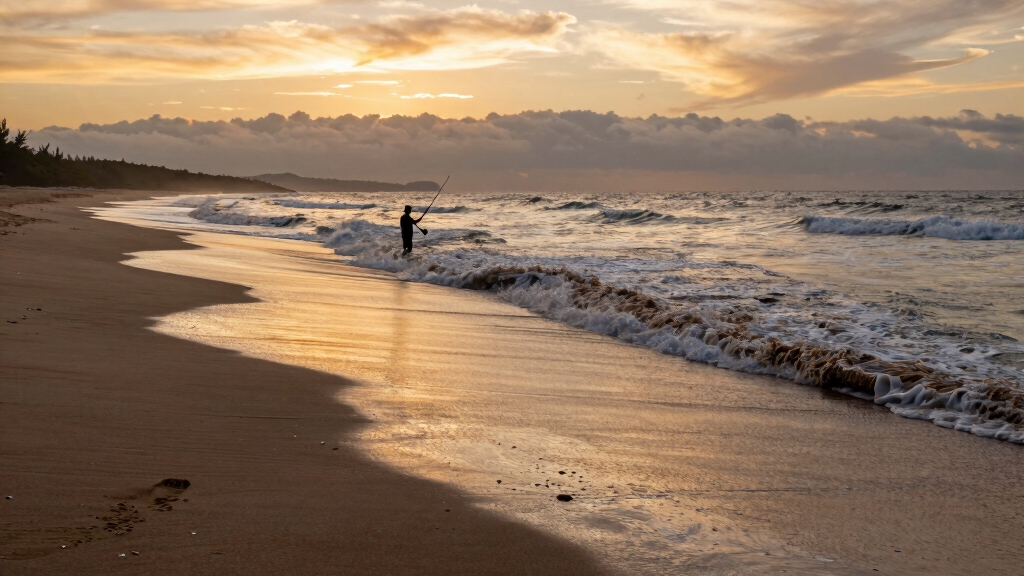
Aligning high tide with dawn or dusk further enhances feeding behavior due to low-light ambush conditions.
Keep exploring to uncover how moon phases and tide shifts influence your catch.
Key Takeaways
- The best surf fishing occurs during the two-hour window before and after peak high tide due to increased water movement and prey activity.
- Avoid slack tide periods near peak high or low tides when water flow slows and fish feeding activity decreases significantly.
- Incoming high tides activate submerged structures and sand crab beds, bringing fish closer to shore and improving catch rates.
- Dawn or dusk combined with high tide enhances fish activity in low-light conditions, extending the prime feeding window.
- Transition tides mobilize baitfish and crustaceans, increasing predator encounters and making these periods highly productive for surf fishing.
Why Tides Matter in Surf Fishing?
Because tidal movements directly influence water depth, current strength, and prey availability, understanding tides is essential for surf fishing success.
You’ll find that high tide brings deeper water closer to shore, allowing fish to access submerged structures and sand crab beds without requiring long casts.
During the peak tidal flow, particularly the third and fourth hours, you can expect the strongest water movement, which activates prey species and triggers predatory feeding.
The prime fishing window typically spans two hours before and after peak high tide, especially when coinciding with dawn or dusk.
By mastering these tidal dynamics, you can strategically target periods of increased fish activity, improving your catch rates and efficiency in the surf zone.
Ignoring tides means missing critical feeding opportunities dictated by natural water movement patterns.
Tidal phases also influence fish behavior by expanding or concentrating feeding grounds, making flood tides particularly productive times for surf fishing.
When to Avoid Slack Tide in Surf Fishing?
While high tide offers prime fishing opportunities due to strong water movement and prey activity, not all moments within the tidal cycle are equally productive.
High tide creates ideal fishing conditions, but productivity varies throughout the tidal cycle.
You should avoid slack tide, the roughly 30-minute period before and after high or low tide, because water current nearly ceases, drastically reducing baitfish movement and predator feeding triggers.
During slack tide, the minimal water flow leads to decreased oxygenation and stagnation, causing fish to become less active.
Your bait will sit motionless, failing to entice strikes from predatory species that rely on current-driven prey.
To maximize your catch, focus on periods of pronounced tidal flow where currents activate crustaceans and baitfish.
Avoid slack tide to prevent wasted effort when the water’s lack of movement suppresses fish feeding behavior and markedly lowers bite rates.
Additionally, targeting fishing times around peak tidal flows such as high tide near moonrise or moonset can significantly increase fish movement and feeding activity.
Advantages of High Tide for Surf Fishing
When high tide arrives, it brings deep water closer to shore, allowing you to cast shorter distances and target fish congregating near structures and sand crab beds now submerged.
The ideal fishing window spans two hours before to two hours after peak high tide, maximizing water movement and prey activation.
During the third and fourth hours of tidal flow, current strength peaks, transporting baitfish and crustaceans shoreward and prompting predatory feeding.
High tide paired with dawn or dusk enhances success due to increased fish activity in low-light conditions.
You’ll find dredged areas and natural features like kelp beds particularly productive now, as they receive full water coverage.
Sustained wind patterns during high tide can concentrate plankton and baitfish near shore, further increasing feeding activity and catch rates.
Using Low Tide to Scout Prime Fishing Spots
Low tide frequently offers an invaluable opportunity to thoroughly scout beach structure, enabling you to identify key features like holes, gutters, and sandbars that influence fish behavior.
During this period, exposed crab beds and sandbars become visible, allowing you to pinpoint prime feeding zones for species such as corbina.
By mapping these underwater contours, you can strategically plan your casting locations during subsequent tides.
Pay attention to the depth and shape of holes and gutters, as these often concentrate baitfish and attract predators.
Low tide also reveals subtle current channels that facilitate bait movement, critical for targeting active fish.
Incorporating low tide reconnaissance into your routine enhances your understanding of beach morphology, directly improving your surf fishing efficiency and success during higher tide stages.
Additionally, combining this scouting with precise casting techniques can maximize your catch by accurately targeting identified hotspots.
How Moon Phases Affect Tide Strength and Fish Activity?
Because the moon’s phases directly influence tidal strength, understanding their effects is essential for optimizing surf fishing success.
During new and full moons, lunar gravity intensifies tidal swings, creating the largest high and low tides that occur roughly twice monthly.
These amplified tides increase water movement, which in turn activates prey species, enhancing fish feeding behavior.
Full moons elevate nighttime illumination, shifting fish activity later into the evening, while new moons trigger earlier morning feeding.
The resulting stronger tidal currents facilitate prey displacement and predator foraging, providing ideal conditions for surf fishing.
Scientific consensus suggests that lunar effects on fish activity are subtle and species-specific, so anglers should consider local conditions as well.
How Tides and Currents Drive Baitfish and Predator Behavior?
Tidal forces not only shape water levels but also generate dynamic currents that directly influence the movement and behavior of baitfish and their predators.
You’ll notice baitfish exploit incoming tides, moving shoreward with nutrient-rich water. This, in turn, triggers predator feeding frenzies.
Understanding this interaction sharpens your fishing strategy by targeting periods of heightened activity.
Key points to contemplate:
- Strong incoming currents concentrate baitfish along shorelines.
- Outgoing tides disperse prey, reducing predator encounters.
- Slack tides cause diminished water movement, lowering feeding intensity.
- Accelerated currents stimulate crustacean activity, attracting baitfish.
- Predators position themselves strategically along current edges to ambush prey.
Additionally, wind-driven water oxygenation increases fish comfort and activity levels, enhancing feeding opportunities during optimal tidal conditions and wind influence.
Mastering these dynamics helps you predict where and when fish will feed. This maximizes your surf fishing success.
Fish Species That Feed Best at High Tide
When high tide approaches, several surf fish species increase their feeding activity due to the ideal water depth and enhanced prey availability near shore.
Species like surfperch exploit the deeper water to access buried sand crabs and small crustaceans, which become more active as the tide covers sandbars and submerged structures.
Halibut also take advantage of high tide’s increased water coverage over flats, allowing them to ambush prey more effectively.
Whiting move into shallow troughs during the peak tidal window, feeding on invertebrates stirred by the strong incoming currents characteristic of the third and fourth hours of flood tide.
You’ll find that targeting these species during the two-hour window before and after peak high tide maximizes your catch rate, especially when combined with dawn or dusk low-light conditions.
Using durable, scented baits like Fishbites E-Z Shrimp can significantly increase your success during these prime feeding times.
Fish Species More Active Around Low Tide
Did you know that corbina become more active around low tide? It’s pretty fascinating!
During the transition from low to high tide, they really ramp up their feeding. They love foraging over those exposed crab beds, which makes this time ideal for fishing.
Using bait and lures with the right corrosion-resistant materials can improve your chances of success during these active periods.
Corbina Feeding Patterns
Frequently, corbina exhibit heightened feeding activity during the shift from low tide to high tide. They capitalize on exposed crab beds and shallow water access. You’ll find these fish actively foraging as the tide rises, exploiting crustaceans disturbed by the water’s movement.
Understanding their feeding patterns lets you target them effectively during this changeover. Key factors influencing corbina feeding include:
- Accessibility to sand crab beds during low to rising tides
- Increased prey visibility in shallow, oxygenated water
- Elevated activity triggered by tidal water movement
- Preference for sandy beach structure with nearby gutters or holes
- Reduced feeding during slack tide periods around peak low or high tides
Similar to corbina, pompano feed on small, soft benthic invertebrates like shrimp and crabs, often near surf zones where tidal movements increase prey availability.
Transition Tide Benefits
Corbina’s activity during the rising tide highlights how certain species exploit changing water levels to feed efficiently.
As water covers exposed crab beds, corbina aggressively forage, capitalizing on concentrated prey.
You’ll find that many species become more active during tidal-change tides, especially the period moving from low to high tide.
Shifting currents mobilize baitfish and crustaceans.
This increased water movement triggers predatory feeding despite shallower depths.
By targeting these windows, you maximize encounter rates with feeding fish exploiting newly inundated structures like gutters and sandbars.
Avoid slack tide phases near the peak or trough of the tide, as feeding activity drops sharply.
Instead, focus your efforts within the two-hour window bracketing the tidal-change to harness peak current strength and prey availability.
This approach elevates your surf fishing productivity markedly.
Using specialized gear like adjustable tension planer boards can help maintain optimal bait presentation in changing currents during these key feeding times.
Why Timing High Tide With Dawn or Dusk Boosts Your Catch?
When high tide aligns with dawn or dusk, fish exhibit heightened feeding activity due to ideal light conditions and increased prey movement.
You’ll find that low light levels reduce fish caution, while tidal currents concentrate baitfish near shore, triggering predator response.
To maximize your catch, focus on these factors:
- Increased water depth covers sand crab beds, attracting feeding fish.
- Prime feeding window extends two hours before and after peak high tide.
- Predatory fish exploit shaded conditions to ambush prey effectively.
- Incoming tide during twilight amplifies water movement, stimulating bait activity.
- Fish exhibit crepuscular feeding patterns, peaking at dawn and dusk combined with tidal flow.
Environmental Factors Enhancing Tide Fishing Success
When it comes to tide fishing, there are a few factors that can really boost your success. For starters, if you notice wave heights sitting comfortably between 1 and 2 feet, you’re in luck.
Pair that with an incoming tide, and you’ve got the makings of some excellent feeding and casting conditions.
Now, let’s talk about water temperature. Ideally, you want to be fishing when the water is between 63°F and 67°F.
This temperature range tends to get fish a bit more active, especially during those prime tidal windows.
So, understanding how these environmental factors work together with the stages of the tide can really sharpen your surf fishing strategy.
It’s all about timing and being in the right place at the right time!
Optimal Wave Heights
Although tidal movement plays a critical role in surf fishing success, ideal wave heights between 1 and 2 feet markedly enhance fish activity by stimulating prey movement and improving water oxygenation.
You’ll find these moderate waves generate enough turbulence to dislodge sand crabs and baitfish without creating excessive disturbance that scares fish away.
They also facilitate oxygen-rich water circulation, which boosts feeding behavior.
Key effects of optimal wave heights include:
- Activation of benthic prey species through sediment agitation
- Increased water oxygen levels supporting fish metabolism
- Enhanced visibility of baitfish in shallow surf zones
- Balanced current flow aiding fish positioning near shore
- Reduced water clarity that conceals anglers and fishing gear
Ideal Water Temperatures
Peak wave heights not only stimulate prey movement but also influence water temperature stability. This plays a significant role in fish feeding patterns.
You’ll find that water temperatures between 63°F and 67°F create an ideal thermal environment, enhancing metabolic rates for many surf fish species.
This temperature range guarantees optimal oxygen solubility and energizes baitfish and crustaceans, which in turn triggers predatory activity.
When combined with appropriate tidal stages, especially incoming tides, you maximize feeding intensity.
Deviations outside this range can reduce fish responsiveness and alter species distribution.
By monitoring localized temperature fluctuations alongside tidal movements, you can precisely time your surf fishing sessions for peak success.
Frequently Asked Questions
How Do Tides Impact Surf Fishing Gear Selection?
Tides dictate the gear you choose by influencing water depth and current strength.
During high tides, you’ll want heavier weights to keep bait stable amid stronger currents.
At low tide, lighter tackle suffices since currents weaken.
Slack tide requires finesse gear for subtle presentations.
You should also adjust rod length and line strength to match tidal flow.
Strong incoming tides demand sturdier setups to handle active baitfish and aggressive predators effectively.
Can Tide Charts Predict Fish Size or Just Activity?
Tide charts primarily predict fish activity rather than size. They indicate when water movement and feeding behaviors peak, helping you target times when fish are most active.
However, fish size depends on factors like species, habitat, and season, which tide charts don’t reveal. You can use tide data to optimize catch rates, but it won’t guarantee larger fish.
Integrating tide charts with local knowledge improves your chances of landing bigger specimens.
What Are the Best Bait Types for Different Tidal Phases?
You should match bait types to tidal phases for best results.
During incoming tides, use live crustaceans like sand crabs or shrimp to mimic active prey brought shoreward.
At low tide, switch to cut bait near exposed crab beds to entice feeding corbina.
For outgoing tides, soft plastics or small baitfish imitations work well, drifting naturally with the current.
Adjust your bait choice based on species targeted and tidal movement for precise effectiveness.
How Does Tidal Salinity Variation Affect Fish Behavior?
Tidal salinity variation directly influences fish osmotic regulation and habitat preference.
As salinity fluctuates during tidal cycles, you’ll notice fish adjusting their location to maintain ideal internal balance.
Lower salinity near shore during high freshwater influx can reduce species diversity, while stable higher salinity during incoming tides attracts marine predators.
You should expect altered feeding patterns since salinity changes affect prey distribution, compelling fish to shift foraging zones dynamically throughout tidal phases.
Are There Specific Tides Better for Night Surf Fishing?
Think of the night tide as nature’s spotlight, illuminating hidden activity beneath the waves.
You’ll find full moon tides ideal for night surf fishing since the increased illumination and stronger tidal currents boost prey movement and feeding intensity.
The pronounced tidal swings during full and new moons trigger peak fish activity.
Target the two hours before and after high tide when water movement is prime, and pair it with calm conditions for the best results.
Next Steps: Track Local Tides to Fish Smarter
You’ll find that high tide offers prime feeding opportunities for many species, while low tide reveals hidden spots perfect for scouting.
Avoid slack tide’s stagnant conditions, as fish activity drops markedly.
By aligning high tides with dawn or dusk, you maximize your chances of success, especially when moon phases amplify tidal strength.
Balancing these factors with environmental conditions sharpens your strategy, making every surf fishing trip more precise and productive.