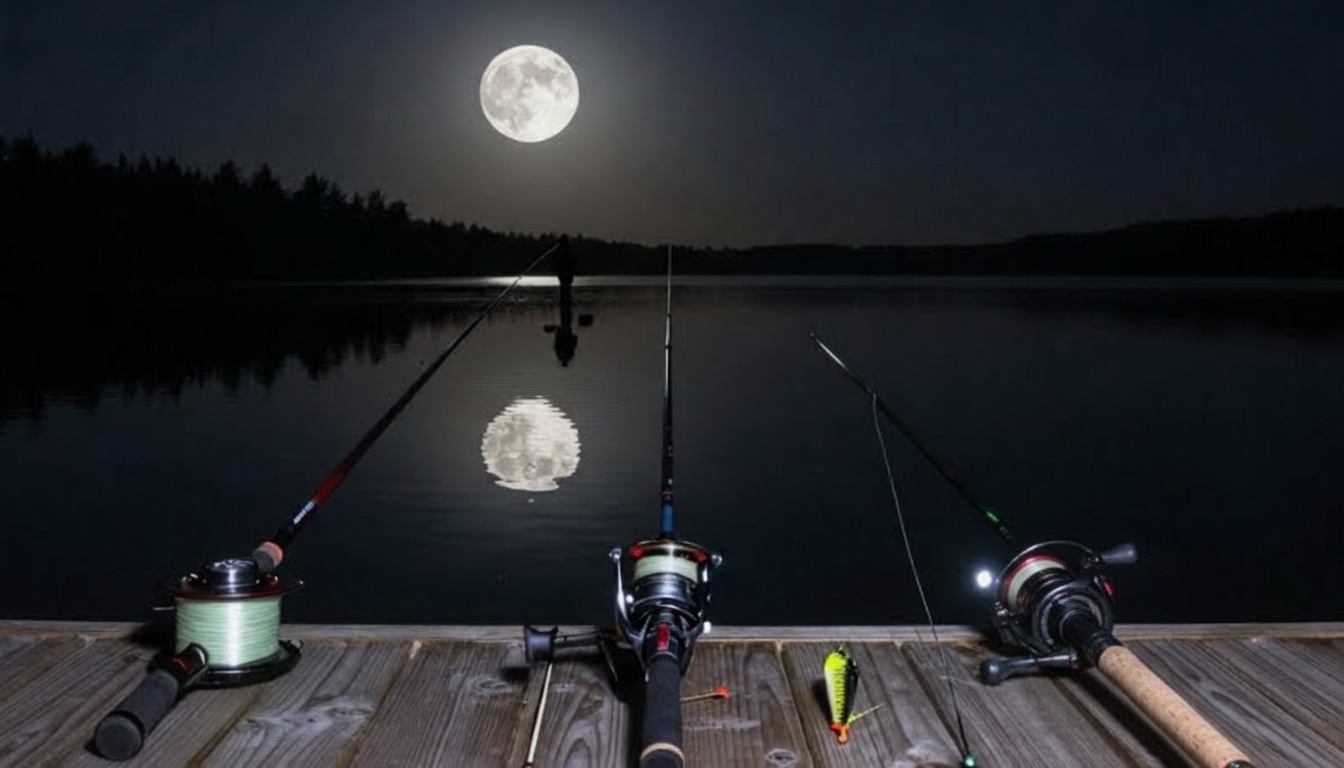
Is It Good Fishing on a Full Moon: Skill or Just a Myth?
Yes, fishing around a full moon can boost your catch because lunar tides and increased moonlight markedly influence fish behavior. Stronger spring tides stir up food and concentrate prey, while brighter illumination alters depth and feeding patterns.
Target high tides near moonrise or moonset for peak activity. However, effects vary by species and gear type; some fish and methods perform better than others.
Understanding these dynamics will sharpen your strategy and improve your results on full moon nights.
Key Takeaways
- Full moons trigger spring tides, increasing water movement and concentrating prey, often enhancing fishing opportunities.
- Many fish species alter depth and feeding behavior due to increased moonlight, sometimes reducing catchability.
- Prime fishing times are typically days before and after the full moon, especially during high tide and twilight.
- Catch rates vary by species; for example, tilefish often increase near full moon, while red grouper catch rates may decline.
- Overall, lunar effects on fishing are subtle and species-specific, with no guaranteed consistent improvement during full moons.
How The Full Moon Affects Fish Behavior?
Although fish behavior varies widely across species, the full moon consistently influences certain patterns you should consider when planning your fishing trips.
During a full moon, elevated tidal ranges, or spring tides, enhance water movement. This increases food availability by disturbing benthic substrates and concentrating prey.
Many saltwater fish relocate to new feeding grounds during these higher tides, altering their distribution. Species like Tilefish show increased catch rates near the full moon, while Red Grouper catches decrease on bottom longlines.
In freshwater, predators such as bull trout exploit the increased nocturnal visibility of salmon smolts migrating downstream. However, some pelagic species like tuna may dive deeper, reducing catchability.
Understanding these behavioral shifts tied to lunar illumination and tidal dynamics helps you optimize your approach. This allows you to tailor gear and timing to species-specific responses during the full moon.
Additionally, a fall feeding frenzy in freshwater species often coincides with increased activity around cold fronts near full moons, enhancing catch opportunities.
When Is Fishing Best During The Full Moon?
Timing your fishing efforts around the full moon requires understanding the nuanced interplay between lunar phases, tidal cycles, and species-specific activity patterns.
Prime fishing often occurs within a few days before and after the full moon, coinciding with peak tidal activity and enhanced feeding behavior.
For example, speckled trout bite best 4-2 days before the full moon, while tilefish catch rates peak near and during the waning phase following the full moon.
You should also consider tidal strength; spring tides produce stronger currents, stirring prey and concentrating fish.
Additionally, just as trout respond to environmental changes like barometric pressure shifts to increase feeding activity, fish behavior during the full moon can be influenced by similar natural cues.
| Species | Best Full Moon Timing |
|---|---|
| Speckled Trout | 4-2 days before full moon |
| Tilefish | Full moon & waning phase |
| Muskellunge | Near full moon |
| Tarpon | Leading up to full moon |
| Salmon Smolts | On full moon night |
Best Locations And Times To Fish On Full Moon Nights
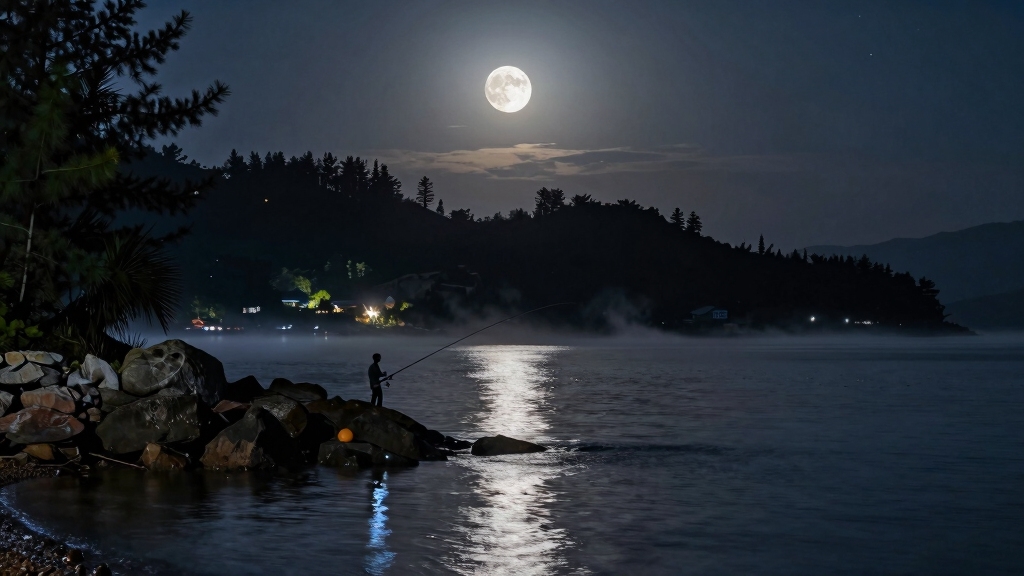
When fishing on full moon nights, you’ll want to focus on locations where tidal influence and lunar illumination combine to concentrate fish activity.
Target coastal areas with strong spring tides, such as estuaries and tidal channels, where higher-than-average water levels churn nutrients and attract prey species.
Focus on estuaries and tidal channels with spring tides to find nutrient-rich waters teeming with prey.
These conditions funnel predators into predictable zones.
River mouths and shallow flats also become prime spots as fish exploit newly accessible feeding grounds.
Time your efforts around peak tidal flows, typically high tide near moonrise or moonset, when fish movement intensifies.
Avoid deep offshore zones where some species retreat to darker depths during full moons.
Instead, prioritize structurally complex habitats illuminated by moonlight, offering ambush points for nocturnal feeders.
Precision in location and timing maximizes your chances of success under full moon conditions.
Understanding the semilunar rhythm helps predict the timing and strength of tides for optimal fishing opportunities.
Which Fish Species Bite Better During A Full Moon?
Understanding which fish species respond more actively during a full moon can substantially enhance your catch rates.
Species like Tilefish show increased catch rates near the full moon, especially using bottom longline gear. Muskellunge also exhibit a 5% rise in catch rates around full moons due to heightened activity.
Pacific salmon smolts migrate more frequently downstream on full moon nights, attracting predators like bull trout, which you can target effectively.
Conversely, Red Grouper catches decline near full moons, particularly with bottom longline methods.
Offshore, grandsers and marlin peak during full moons, while tarpon bite improves in the days leading up to it.
However, species such as Atlantic swordfish prefer full moons, unlike their Eastern Pacific counterparts.
Knowing these species-specific lunar patterns sharpens your strategy for full moon fishing.
Additionally, understanding how bull trout seasonal migration aligns with lunar cycles can improve targeting these freshwater predators during full moons.
How Different Fishing Gear Performs On Full Moon Nights?
So, here’s the deal: when it comes to bottom longline gear, you’ll see a drop in catch rates as the full moon approaches, especially with species like Red Grouper.
It’s interesting, though, because Tilefish catches tend to go up during the same time. Isn’t that fascinating? Now, if you look at vertical line methods, things get a bit more mixed.
Some species actually seem to be more active during the waning moon rather than the full moon. Understanding these specific trends for different types of gear is really key.
It can help you fine-tune your fishing strategy when the moon is shining bright. Using adjustable flag tension on planer boards can also improve subtle bite detection during varying lunar phases.
Bottom Longline Trends
Bottom longline gear shows distinct performance variations during full moon phases, particularly with certain species like Tilefish and Red Grouper.
You’ll notice Tilefish catch rates increase near the full moon and waning phases, aligning with elevated fishing effort during these periods.
Conversely, Red Grouper’s catch per unit effort (CPUE) on bottom longlines peaks near the new moon and dips during the full moon, indicating reduced feeding activity or gear efficiency under brighter conditions.
This pattern suggests that bottom longline targeting Red Grouper is less productive on full moon nights.
When deploying bottom longlines, consider these lunar influences: adjust timing to capitalize on Tilefish activity during full moons, but plan Red Grouper efforts closer to new moons for peak yields.
Understanding these trends sharpens your strategy and maximizes catch efficiency.
Additionally, using medium-heavy rods with appropriate line strength can improve handling when targeting aggressive species during varying lunar phases.
Vertical Line Variations
Although full moon nights create brighter conditions that can alter fish behavior, vertical line fishing shows distinct patterns worth noting. You’ll find catch rates for species like Red Grouper peak during the waning moon phase rather than the full moon, reflecting subtle lunar influences on feeding.
Tilefish catches, however, tend to rise near full moon periods, indicating species-specific responses. Red Grouper vertical line CPUE peaks during waning moon, dips at full moon.
Tilefish vertical line catch rates increase near full moon and waning phases. Muskellunge vertical line catch rates improve about 5% near full and new moons. Vertical line gear often outperforms bottom longlines for some species on full moon nights.
Understanding these nuances helps you optimize gear and timing for vertical fishing under lunar cycles. Using corrosion-resistant tools can enhance gear longevity and performance during these lunar fishing excursions.
How Tides Affect Your Full Moon Fishing?
When fishing during a full moon, understanding tidal patterns can markedly enhance your success. The full moon triggers spring tides, higher highs and lower lows, creating stronger currents and stirring up benthic food material.
These conditions push saltwater fish into new feeding zones, especially near spawning grounds, increasing your chances of locating active fish. Higher tides also grant access to otherwise unreachable areas, concentrating prey and predators alike.
Conversely, low tides can funnel fish into predictable pockets, simplifying targeting. You’ll want to time your fishing around these tidal highs and lows to exploit fish movement patterns effectively.
Sustained winds during the full moon period can further influence fish location by creating wind-driven currents that concentrate baitfish and increase feeding activity.
Myths And Facts About Full Moon Fishing
How reliable is the belief that full moon phases consistently boost fishing success? Scientific data and practical experience reveal a nuanced picture.
Scientific data and experience show fishing success varies with moon phases, lacking consistent patterns.
While some species like Tilefish show increased catch rates near full moons, others like Red Grouper peak during waning or new moon phases.
Tides influenced by the full moon do stir feeding activity, but temperature, weather, and seasonal factors often outweigh lunar effects.
Solunar predictions and folklore claims don’t consistently predict catch rates better than chance. Tilefish catch rates rise near full and waning moons; Red Grouper prefers new or waning phases.
Full moon causes higher tides, influencing fish feeding locations variably. Large studies find no consistent correlation between moon phase and catch success.
Solunar apps fail to outperform random fishing outcomes in controlled tests. The effects of moon phases on fish activity are subtle and species-specific, making it only one of several factors affecting fishing success.
Adjust Your Fishing Strategy For Full Moon Nights
When it comes to fishing on full moon nights, timing is everything! The higher tides and extra light really change how fish behave. It’s pretty interesting, right?
Species like tilefish and muskellunge, for instance, have specific activity patterns that are linked to the lunar phases. So, if you adjust your fishing strategy accordingly, you’re likely to have a much more successful outing.
Understanding these behavioral shifts is key. It helps you figure out the best times to drop your gear and when to expect those bites. So, keep an eye on the moon phases and tailor your approach—it’s a game-changer!
Additionally, fish often increase feeding activity during periods of falling barometric pressure, which can coincide with lunar cycles and further influence their behavior.
Timing Fishing Efforts
Frequently, anglers adjust their fishing strategies to capitalize on the unique conditions presented by full moon nights.
You should time your efforts to coincide with peak fish activity, which often aligns with higher tides and increased visibility.
Consider these tactics to optimize your timing:
- Fish during the high tide window created by the full moon’s gravitational pull for better feeding access.
- Target twilight periods near moonrise or moonset, when fish show increased movement.
- Plan for the days just before and after the full moon, as some species exhibit heightened activity then.
Adjust your fishing schedule to exploit stronger currents during spring tides, which concentrate prey and predators alike.
Target Species Behavior
Understanding the timing of your fishing efforts sets the stage for adapting to the specific behaviors of target species during full moon nights. Many species adjust their depth and feeding patterns in response to increased illumination and tidal shifts.
For example, salmon migrate faster in shallower waters under full moon visibility, while tilefish show elevated catch rates during the full and waning moon phases. Conversely, red grouper catch rates dip near full moons, requiring you to shift gear or location.
Predatory species like bull trout exploit salmon smolts more actively, enhancing night fishing success. You should factor in these nuanced behaviors, altering depth, bait presentation, and timing to optimize catch rates. Ignoring these patterns risks missed opportunities despite prime lunar conditions.
Frequently Asked Questions
Does the Full Moon Influence Freshwater and Saltwater Fishing Differently?
Yes, the full moon influences freshwater and saltwater fishing differently.
In freshwater, species like salmon smolts migrate more actively, improving night fishing opportunities.
Saltwater fish respond to higher tides and stronger currents during full moons, which concentrate prey and access new feeding grounds.
However, species-specific responses vary, with some saltwater fish moving deeper and becoming less catchable.
You’ll need to adjust tactics based on species behavior and local tidal effects for best results.
How Does Lunar Illumination Impact Nocturnal Fish Feeding Habits?
You’ll find lunar illumination markedly influences nocturnal fish feeding habits by increasing visibility during full moons.
This heightened light prompts species like salmon smolts to migrate more actively, while predators such as bull trout exploit the brightness to hunt efficiently.
However, some fish dive deeper or reduce feeding to avoid predation.
Are There Health or Safety Concerns Fishing During a Full Moon Night?
Sure, fishing under the full moon won’t summon werewolves, but you should still watch your step.
The extra brightness can betray your position to both fish and critters, increasing encounters with wildlife.
Higher tides mean stronger currents, so don’t underestimate water movement, especially if wading.
Also, glare and shadows can trip you up on slippery rocks.
Stay alert, wear proper gear, and respect nature’s nocturnal quirks for a safe outing.
What Historical or Cultural Beliefs Relate to Full Moon Fishing?
You’ll find that historically, many cultures believe full moons enhance fishing success due to higher tides and increased fish activity.
The Farmers’ Almanac promotes fishing during full moons, linking gravitational pulls to feeding.
Folklore often ties moonrise or moonset with sunrise or sunset to peak fish bites.
These beliefs, while widespread, lack consistent scientific backing but remain influential in traditional fishing practices worldwide.
Can Full Moon Fishing Improve Catch Rates for Beginners Versus Experts?
You might think full moon fishing guarantees better catches, but it’s not that simple.
For beginners, the heightened activity during full moons, like increased fish movement and higher tides, can improve catch rates by offering more opportunities.
Experts, however, rely on nuanced patterns beyond lunar phases.
Put the Full Moon to the Test on Your Next Trip
Fishing on a full moon isn’t just about luck. It’s about understanding subtle shifts in fish behavior, tides, and light. You’ll want to time your casts carefully, choose the right gear, and target species that thrive in moonlit conditions.
But here’s the twist: not every full moon guarantees a bite. Master these variables, and you could unleash some of the most productive nights on the water. Ready to see if the full moon’s magic works for you?