Flat Bottom vs V Hull Jon Boat: Key Differences Explained
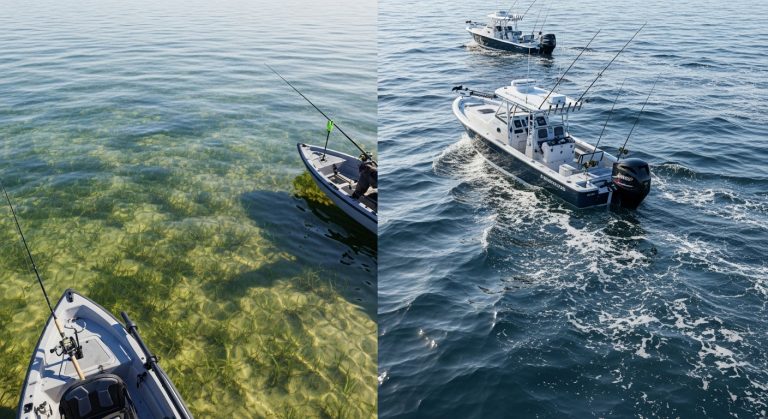
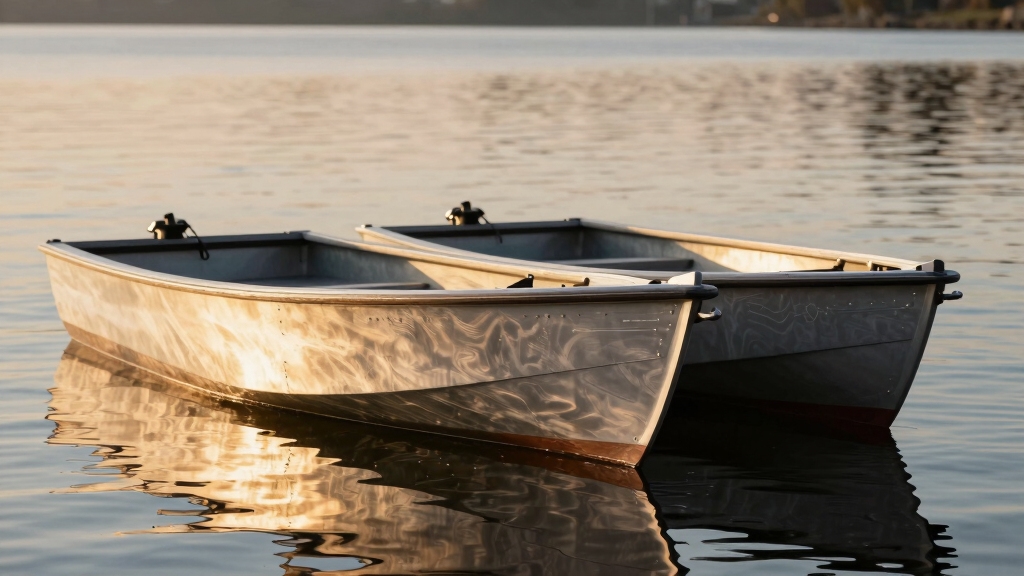
You’ll find flat bottom jon boats offer superior stability and shallow-water access, making them ideal for calm, stillwater fishing with easier standing and gear handling.
V-hull jon boats, meanwhile, provide better spray deflection, smoother rides, and enhanced tracking in rough or choppy waters, but usually require more horsepower and deeper draft.
Each hull suits different conditions and uses, so understanding their performance, size, and durability will help you pick the best boat for your specific needs.
Key Takeaways
- Flat bottom jon boats offer superior initial stability, especially in calm, shallow waters, ideal for standing and stillwater fishing activities.
- V-hull jon boats provide better handling in rough water, cutting through waves with improved spray deflection and directional control.
- Flat bottoms accelerate faster and use less fuel in calm conditions, while V-hulls need more horsepower but maintain smoother rides in chop.
- Flat bottom models suit smaller sizes (12–16 ft) with broad load distribution, whereas V-hulls start around 14–16 ft with higher load capacity.
- Construction-wise, flat bottoms use thicker aluminum for durability in shallow waters, while V-hulls have reinforced keels and chines for wave impact resistance.
Quick Performance Comparison of Flat Bottom vs V Hull Jon Boats
| Comparison Factor | Flat Bottom Jon Boat | V Hull Jon Boat |
|---|---|---|
| Hull Shape | Completely flat base for maximum surface contact | Angled V-shaped bow transitioning to keel |
| Initial Stability | Very high stability at rest, ideal for standing | Moderate stability, improves with size and speed |
| Water Depth Capability | Extremely shallow draft, excellent shallow access | Deeper draft, less suitable for ultra-shallow areas |
| Ride Comfort | Rougher ride in chop and waves | Smoother ride, cuts through rough water |
| Spray Deflection | Minimal spray control in choppy water | Superior spray deflection, keeps occupants drier |
| Tracking & Control | Less directional tracking, more slide | Strong tracking, better directional control |
| Speed Efficiency | Quick acceleration in calm water | Consistent speed in rough conditions |
| Fuel Behavior | Lower fuel use at low speeds | Higher power demand, steadier cruising |
| Interior Movement | Flat, level floor for easy movement | Angled interior, requires careful footing |
| Construction Focus | Thicker aluminum sheets for impact resistance | Reinforced keel and chines for wave stress |
Stability and Handling Comparison
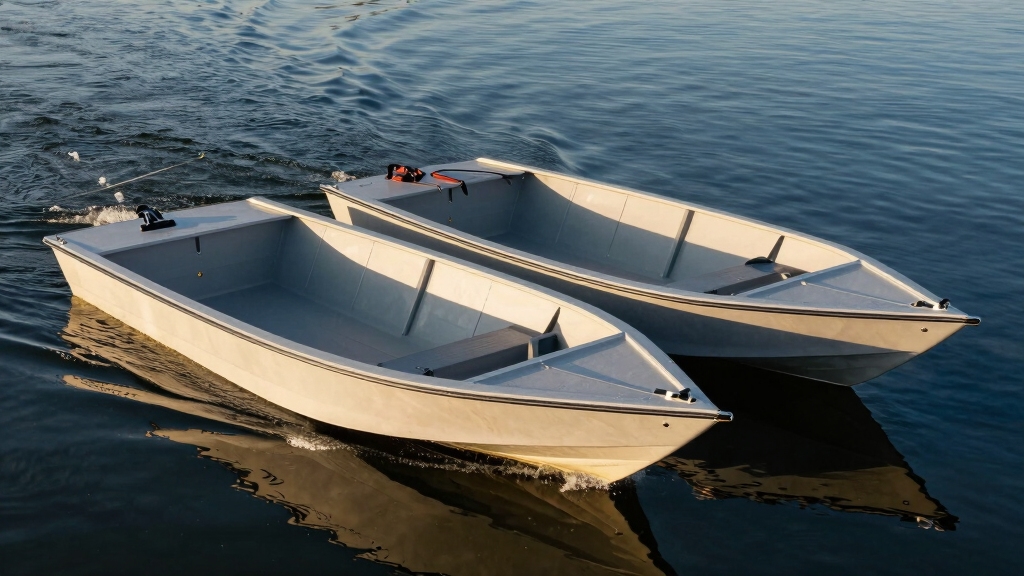
While flat bottom Jon boats excel in initial stability due to their broad, flat hulls, V-hull Jon boats trade some of that steadiness at rest for improved stability at higher speeds and in larger sizes.
Flat bottoms offer superior initial steadiness, while V-hulls gain stability as speed and size increase.
You’ll find flat bottoms offer a wide, flat surface distributing weight evenly, enhancing steadiness during standing and movement inside the boat. This design supports safer mobility, especially in smaller sizes (12-14 feet). The stability difference between flat and V-bottom boats is particularly significant in this size range, making flat bottoms the preferred choice for stability. However, proper load management is crucial in all boat types to maintain optimal balance and prevent undue wear on the hull.
Conversely, V-hulls, with their narrower flat surface and pointed bow, feel less stable when stationary, requiring more caution when moving. As V-hull size increases (16 feet+), their hull shape reduces rocking, improving stability.
Mod-V hulls provide a balance, offering better stability and weight distribution than semi-Vs. You must note flat bottoms handle weight shifts better, while V-hulls need careful load management to maintain balance.
Performance Across Water Conditions
Because water conditions vary widely, choosing between a flat bottom and a V-hull Jon boat markedly influences your boat’s performance.
Flat bottoms excel in calm, shallow water, offering minimal draft and a stable platform. However, they falter in choppy conditions with increased spray and reduced tracking. They are also known for their ability to operate in waters as shallow as ~4 inches when not overloaded, thanks to their shallow-water capability. For added comfort and protection during use, it is recommended to wear protective gear when fishing from these boats.
V-hulls, conversely, cut through rough water efficiently, improving ride smoothness and directional control. Though they require more power to plane.
| Water Condition | Flat Bottom Performance | V-Hull Performance |
|---|---|---|
| Calm/Shallow | Superior shallow water access, stable | Less draft, moderate stability |
| Rough/Choppy | Rough ride, poor spray deflection | Smooth ride, excellent spray deflection |
| Maneuverability | Easy slow turns, less tracking | Superior tracking, smooth carving turns |
Speed and Fuel Efficiency Differences
Although flat bottom jon boats generally reach higher speeds in calm water due to lower hull drag, you’ll find that V-hull jon boats maintain more consistent speeds in rough conditions by efficiently slicing through waves. Proper pairing of motor and hull design ensures optimal performance and fuel efficiency under varying conditions.
Flat bottom jon boats excel in calm water speed, while V-hulls offer steady performance in rough conditions.
Flat bottoms accelerate faster and use less fuel at low speeds because of reduced wetted surface area and drag. Conversely, V hulls demand higher horsepower to plane, increasing fuel consumption at top speeds but improving efficiency in choppy water by minimizing throttle fluctuations. It is noted that a 4 HP motor on a 14ft flat bottom produced approximately 7 mph upstream and 9 mph downstream, but such power was insufficient to achieve planing on either hull type under typical loads, highlighting the need for additional motor power for meaningful speed gains.
In rough conditions, flat bottoms require more power to sustain speed, raising fuel usage. V hulls’ smoother ride reduces energy loss and throttle adjustments, enhancing fuel economy at cruising speeds. Understanding equipment compatibility helps avoid performance issues and ensures the boat’s powertrain operates efficiently.
Matching motor power to hull design is essential to optimize speed and fuel efficiency based on your typical water conditions.
Size and Capacity Variations
Several critical factors influence how size and capacity vary between flat bottom and V-hull jon boats, affecting their stability, load limits, and practical use.
Flat bottom jon boats usually range from 12 to 16 feet, offering excellent stability at smaller sizes due to their wide hull, supporting 500-850 pounds. However, stability declines as length surpasses 18 feet despite increased load capacity. Their design is best suited for calm, shallow water environments where stability and load capacity are prioritized.
Conversely, V hull boats start around 14-16 feet, providing improved handling in rough water and maintaining ride quality as size and weight increase. Their load capacity typically matches or exceeds flat bottoms, ranging from 800 to over 1,200 pounds. V hulls are more suitable for larger bodies of water, balancing size and stability, while flat bottoms excel in shallow, calm conditions but become less practical as size grows. Additionally, many boaters prefer V hulls because they reduce spray and keep occupants drier in choppy conditions.
Ease of Movement and Accessibility
When you move around inside a flat bottom jon boat, you’ll notice its superior stability at smaller sizes (12-14 feet) makes footing more secure and reduces rocking. The flat, level floor provides a steady surface for standing or walking, ideal for fishing or gear handling.
In contrast, a V hull’s angled bottom creates less stable footing, increasing movement difficulty and rocking, especially in smaller models. Flat bottoms also excel in shallow water access due to their minimal draft and flat hull, allowing you to navigate tight, shallow areas without grounding.
Boarding is easier too, thanks to a lower freeboard and flat deck, simplifying gear transfer and entry. While V hulls offer advantages in rough water, flat bottoms prioritize ease of movement and accessibility in calm, shallow environments.
Some flat bottom jon boats, however, can feel tippy with two large occupants if the model is narrow, so width plays a key role in stability and usability. Choosing the right design ensures better comfort and safety during fishing or other water activities.
Durability and Construction Factors
Understanding the durability and construction factors of flat bottom and V-hull Jon boats helps you choose the right design for your environment and usage.
Flat bottoms use thicker aluminum to prevent flexing across their broad surfaces but risk dents from submerged objects. They are typically constructed from aluminum and designed for shallow water and for riding on top of the water, often referred to as bay boats. These boats generally have lower weight which can influence handling and ease of transport. V hulls employ reinforced chines and keel bracing to withstand wave impacts and hydrodynamic stress.
Both require high-quality welds, but V hulls face greater fatigue risk due to sharper angles and higher speeds.
| Aspect | Flat Bottom Jon Boat |
|---|---|
| Structural Integrity | Thicker aluminum, risk of dents |
| Stress Distribution | Even load, stress at corners |
| Environmental Resistance | Abrasion-tough, ideal for shallow water |
| Aspect | V-Hull Jon Boat |
| Structural Integrity | Reinforced keel/chines, internal bracing |
| Stress Distribution | Load along keel, impact stress on chines |
| Environmental Resistance | Spray control, needs protective coatings |
Choosing the Right Jon Boat for Your Needs
Although both flat bottom and V-hull Jon boats serve specific functions, selecting the right model depends on matching the boat’s design to your typical water conditions, intended use, and performance priorities.
If you primarily navigate shallow, calm waters like ponds or creeks, a flat bottom offers superior stability, minimal draft, and ease of movement. Flat bottom hulls have zero deadrise, which contributes to their shallow draft and high initial stability. Their design is similar in purpose to stout waders, which prioritize stability and durability in challenging environments.
Flat bottom Jon boats provide excellent stability and shallow draft ideal for calm, shallow waters like ponds and creeks.
Conversely, if you frequently encounter larger lakes with waves or river currents, a V hull excels by cutting through chop, providing a smoother ride and better tracking.
Consider your fishing style: flat bottoms suit stillwater, bowfishing, and shallow species, while V hulls handle longer distances and rougher conditions.
Assess draft requirements and speed preferences carefully to guarantee your Jon boat aligns precisely with your operational environment and performance expectations.
Frequently Asked Questions
How Do Flat Bottom and V Hull Jon Boats Differ in Maintenance Requirements?
You’ll find flat bottom jon boats need frequent algae cleaning due to their larger flat surfaces, but their simple hulls make structural maintenance easier.
V hulls require more checks for mechanical stress and complex repairs from wave impacts.
Engine maintenance varies: flats demand less power but careful prop protection in shallow water, while V hulls need powerful engines and more frequent servicing.
Stability differences influence wear on fittings, affecting maintenance focus accordingly.
Which Jon Boat Type Is Better for Winter or Icy Conditions?
When it comes to winter or icy conditions, you’ll find flat bottom jon boats better suited for shallow, partially frozen waters thanks to their shallow draft and stability.
They let you glide over thin ice like a skater on fresh ice, with lower power needs and easier boarding in heavy gear.
However, if you expect rough water and need better ice-cutting, a V-hull offers enhanced handling and spray protection.
Though it demands more power and careful maintenance.
Can I Customize the Seating Arrangement Differently in Flat Bottom Vs V Hull Boats?
You can customize seating more flexibly in flat bottom jon boats thanks to their flat, open floor, allowing seat mounts nearly anywhere with minimal structural concerns.
V hull boats, however, require careful seat placement around the keel and stringers to maintain stability and structural integrity.
While both support pedestal or swivel seats, flat bottoms let you install larger bench platforms.
V hulls favor integrated or console-mounted seating aligned with hull contours.
Are There Differences in Resale Value Between Flat Bottom and V Hull Jon Boats?
Picture a V hull Jon boat cutting through choppy water.
You’ll notice it usually commands higher resale value due to versatility and demand for rough-water performance.
While flat bottom boats hold value in niche shallow water markets, their resale is often lower.
You’ll find larger V hulls especially retain worth better.
How Does Noise Level Compare Between Flat Bottom and V Hull Jon Boats?
You’ll notice that flat bottom jon boats generally produce more noise at low speeds and in rough water due to increased hull contact and vibration reflection.
In contrast, V hull jon boats cut through waves more smoothly, reducing hull slap and dispersing engine vibrations. This results in quieter operation, especially at higher speeds.
Select the Right Jon Boat Hull for Long-Term Use
When choosing between a flat bottom and V hull jon boat, picture your ideal water journey: a steady, calm glide or a sleek cut through waves.
Each hull design offers its own nuanced balance of stability, speed, and handling, tailored to different conditions and needs.
By weighing their construction, capacity, and fuel efficiency, you’ll navigate towards the perfect vessel that fits your purpose, ensuring every outing feels less like a challenge and more like a seamless dance with the water.